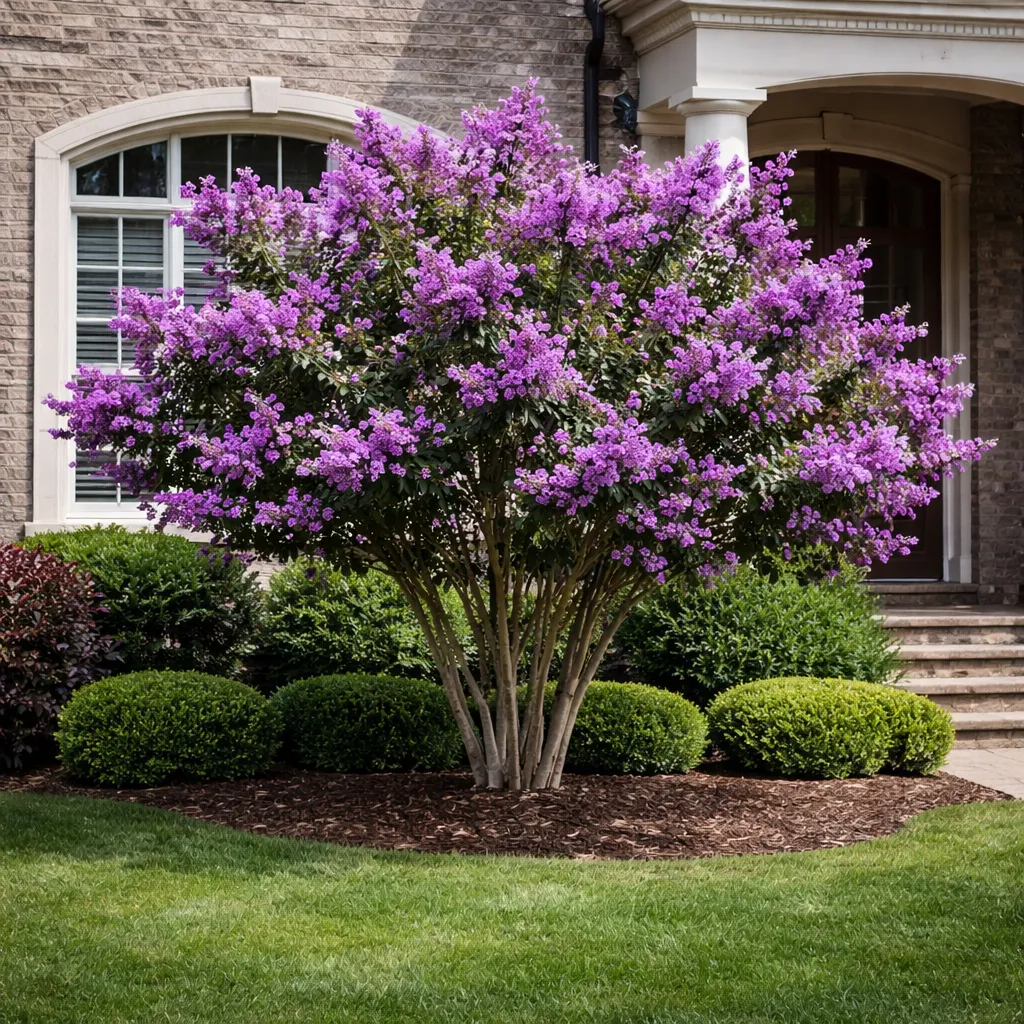
Catawba Crape Myrtle
Botanical name:
Lagerstroemia indica ‘Catawba’
Common name:
Catawba Crape Myrtle
Plant type:
Deciduous flowering ornamental tree / large shrub
Hardiness zone:
USDA Zones 7–10
(Zone 6 possible with protection, but tip dieback likely in your Northeast market)
Mature size
Height:
10–15'
Width:
10–12'
Growth rate:
Moderate
Growth habit
- Upright vase-shaped to rounded canopy
- Typically multi-trunk
- Denser canopy than shade-tree crapes (Autauga, Muskogee)
- Moderate interior branching visibility
- Reads as large shrub or small ornamental tree
Foliage
- Medium green summer foliage
- Smooth texture with good canopy density
- Attractive orange-red fall coloration possible (variable)
- Deciduous
Bloom characteristics
Bloom season:
Mid-summer through early fall
Bloom color:
Rich violet-purple
Flower form:
- Dense upright panicles
- Strong saturated color impact
- Heavy bloom coverage across canopy
Bark / winter interest
- Smooth exfoliating bark with age
- Attractive mottled tan-gray trunk coloration
- Multi-trunk structure provides winter interest
Light requirements
Full sun (required for best flowering and habit)
Soil requirements
- Adaptable to most soils
- Prefers well-drained sites
- Tolerates heat and moderate drought once established
Landscape uses
- Specimen ornamental tree
- Patio tree
- Small shade tree
- Accent lawn tree
- Foundation focal plant
- Streetscape use (where hardy)
Resistance / tolerance
Deer resistance:
Moderate
(occasional browsing possible but generally not preferred)
Drought tolerance:
Moderate once established
Urban tolerance:
Good
Disease resistance:
Moderate (powdery mildew possible in humid regions; less resistant than modern hybrids)
Pruning notes
- Flowers on new wood
- Can be trained as:
- multi-trunk tree
- single-trunk standard
- large shrub form
- Avoid heavy topping to preserve natural architecture
Category:
Trees & Shrubs
Sub-Category:
Crape Myrtle