

Botanical Name: Hydrangea paniculata ‘Pink Diamond’ (standard form)
Common Name: Pink Diamond Hydrangea Tree
Mature Height and Width:
8–12′ tall × 6–8′ wide (canopy dimension on grafted standard)
Growth Habit: Tree-form hydrangea trained to a single clear trunk. Broadly rounded to slightly irregular canopy with upright to slightly arching stems. Moderate to vigorous growth rate. More open structure than ‘Phantom.’
Foliage Description: Medium green ovate leaves with serrated margins. Moderate canopy density with visible branching between bloom clusters.
Flower Description: Large conical panicles emerging creamy white and maturing to medium to deep pink as season progresses. Panicles more open and airy than ‘Phantom,’ with visible individual florets and lighter texture.
Bloom Time: Mid-summer through early fall.
Fall Color: Panicles deepen to pink-red; foliage yellow-brown before leaf drop.
Light Requirements: Full sun to partial shade; strongest pink coloration in full sun.
Hardiness Zone: USDA Zones 3–8 (reliable in Northeast Zones 5–7).
Notable Landscape Uses: Lawn specimen; foundation accent; patio focal point; late-season flowering tree; mixed border anchor.
Deer Resistance: Moderate
Flower buds and new growth may be browsed in Northeast Zones 5–7.

Botanical Name: Hydrangea paniculata ‘Phantom’ (standard form)
Common Name: Phantom Hydrangea Tree
Mature Height and Width:
8–10′ tall × 6–8′ wide (canopy dimension on grafted standard)
Growth Habit: Tree-form hydrangea trained to a single clear trunk. Broadly rounded to slightly irregular canopy with strong upright stems supporting large panicles. Vigorous growth rate with substantial stem thickness compared to smaller cultivars.
Foliage Description: Medium to dark green ovate leaves with serrated margins. Larger leaf size than dwarf selections. Moderate canopy density with visible branching beneath bloom clusters.
Flower Description: Very large, dense conical panicles emerging creamy white, often aging to soft blush pink late in season. Panicles thicker and fuller than ‘Limelight,’ with broader base and heavier flower mass.
Bloom Time: Mid-summer through early fall.
Fall Color: Panicles age to pale pink; foliage yellow-brown before leaf drop.
Light Requirements: Full sun to partial shade; strongest stems and largest panicles in full sun.
Hardiness Zone: USDA Zones 3–8 (reliable in Northeast Zones 5–7).
Notable Landscape Uses: Foundation focal point; lawn specimen; patio accent; formal garden element; large late-season flowering feature.
Deer Resistance: Moderate
Flower buds and new growth may be browsed in Northeast Zones 5–7.

Botanical Name: Hydrangea paniculata ‘Limelight’ (standard form)
Common Name: Limelight Hydrangea Tree
Mature Height and Width:
6–8′ tall × 6–7′ wide (grafted standard form; canopy dimension only)
Growth Habit: Tree-form hydrangea trained on a single clear trunk with rounded to broadly oval flowering canopy. Dense upper branching with upright stems supporting large panicles. Moderate to fast growth rate.
Foliage Description: Medium green ovate leaves with serrated margins. Moderate leaf size and density. Leaves provide backdrop beneath large panicles.
Flower Description: Large conical panicles emerging lime-green, transitioning to creamy white, then soft pink to rose in late season. Panicles held upright on strong stems. Dense bloom coverage across canopy.
Bloom Time: Mid-summer through early fall.
Fall Color: Panicles age to pink to muted rose; foliage yellow-brown before leaf drop.
Light Requirements: Full sun to partial shade; strongest stems and bloom density in full sun.
Hardiness Zone: USDA Zones 3–8 (reliable in Northeast Zones 5–7).
Notable Landscape Uses: Foundation focal point; patio accent; small lawn specimen; formal garden element; entry planting.
Deer Resistance: Moderate
Flower buds and new growth may experience browsing pressure in Northeast Zones 5–7.

Botanical Name: Hydrangea serrata ‘MAKD’ (Tuff Stuff™)
Common Name: Tuff Stuff Hydrangea
Mature Height and Width:
2–3′ tall × 2–4′ wide
Growth Habit: Compact, rounded deciduous shrub with layered branching and moderate density. Broader than tall with slightly arching outer stems. Reblooming lacecap type.
Foliage Description: Medium green, ovate leaves with serrated margins; moderately coarse texture compared to spirea; matte surface.
Flower Description: Lacecap inflorescences with central fertile florets surrounded by larger sterile florets. Bloom color ranges from soft pink to lavender-blue depending on soil pH. Flower heads flattened rather than spherical.
Bloom Time: Late spring through summer on old and new wood (reblooming).
Fall Color: Yellow to bronze tones, variable.
Light Requirements: Partial sun to light shade; benefits from afternoon protection in hotter exposures.
Hardiness Zone: USDA Zones 5–9
Notable Landscape Uses:
Foundation planting; woodland edge; low hedge; border massing; container planting; mixed shrub borders.
Deer Resistance: Moderate
Hydrangeas may experience browsing in high-pressure deer areas, particularly on tender new growth.

Botanical Name: Hydrangea paniculata ‘NCHP1’
Common Name: Puffer Fish® Hydrangea
Mature Height and Width:
3–5′ tall × 3–5′ wide
Growth Habit: Compact, upright-rounded deciduous shrub with strong vertical stems and dense branching. Tighter and more uniformly structured than many paniculata cultivars. Moderate growth rate.
Foliage Description: Medium to dark green ovate leaves with serrated margins; matte surface; moderately coarse texture.
Flower Description: Dense, rounded to broadly conical panicles composed of tightly packed sterile florets. Blooms open creamy white and hold clean white coloration longer than many paniculata types before soft late-season blush.
Bloom Time: Early to mid-summer through fall on new wood.
Fall Color: Yellow to bronze foliage; blooms may develop faint blush late season.
Light Requirements: Full sun for strongest stem strength and fullest bloom production.
Hardiness Zone: USDA Zones 3–8
Notable Landscape Uses:
Foundation planting; low hedge; compact mass planting; mixed border anchor; patio-scale shrub; seasonal focal plant.
Deer Resistance: Moderate
Panicle hydrangeas may experience browsing on tender new growth under high deer pressure.

Botanical Name: Hydrangea paniculata ‘SMHPLQF’
Common Name: Little Quick Fire® Hydrangea
Mature Height and Width:
3–5′ tall × 3–5′ wide
Growth Habit: Compact upright-rounded deciduous shrub with strong vertical stems and moderate density. Slightly looser framework than Little Lime, with earlier bloom initiation.
Foliage Description: Medium green ovate leaves with serrated margins; matte surface; moderately coarse texture typical of paniculata cultivars.
Flower Description: Conical panicles emerging creamy white, transitioning quickly to pink and deep rose tones earlier in the season than most paniculatas. Panicles moderately elongated with clear taper.
Bloom Time: Early to mid-summer through fall on new wood; earlier color shift than Little Lime or Limelight.
Fall Color: Yellow to bronze foliage; blooms may retain rose tones into autumn.
Light Requirements: Full sun for strongest stem strength and fullest color development.
Hardiness Zone: USDA Zones 3–8
Notable Landscape Uses:
Foundation planting; compact hedge; mixed border anchor; early-season color focal shrub; patio-scale planting.
Deer Resistance: Moderate
Panicle hydrangeas may experience browsing on tender new growth under high deer pressure.

Botanical Name: Hydrangea paniculata ‘Jane’
Common Name: Little Lime® Hydrangea
Mature Height and Width:
3–5′ tall × 3–5′ wide
Growth Habit: Compact upright-rounded deciduous shrub with strong stems and dense branching. Smaller and more controlled than standard ‘Limelight’, with uniform canopy structure. Moderate growth rate.
Foliage Description: Medium green ovate leaves with serrated margins; matte surface; moderately coarse texture typical of paniculata types.
Flower Description: Conical panicles emerging soft lime-green, maturing to creamy white and eventually developing light pink tones in late season. Panicles proportionally shorter and slightly denser than ‘Limelight’.
Bloom Time: Mid-summer through fall on new wood.
Fall Color: Yellow to bronze foliage; blooms may retain soft pink hues.
Light Requirements: Full sun for strongest stem strength and fullest bloom development.
Hardiness Zone: USDA Zones 3–8
Notable Landscape Uses:
Foundation planting; compact hedge; mixed border anchor; mass planting; patio-scale shrub; seasonal focal plant.
Deer Resistance: Moderate
Panicle hydrangeas may experience browsing on tender new growth under high deer pressure.
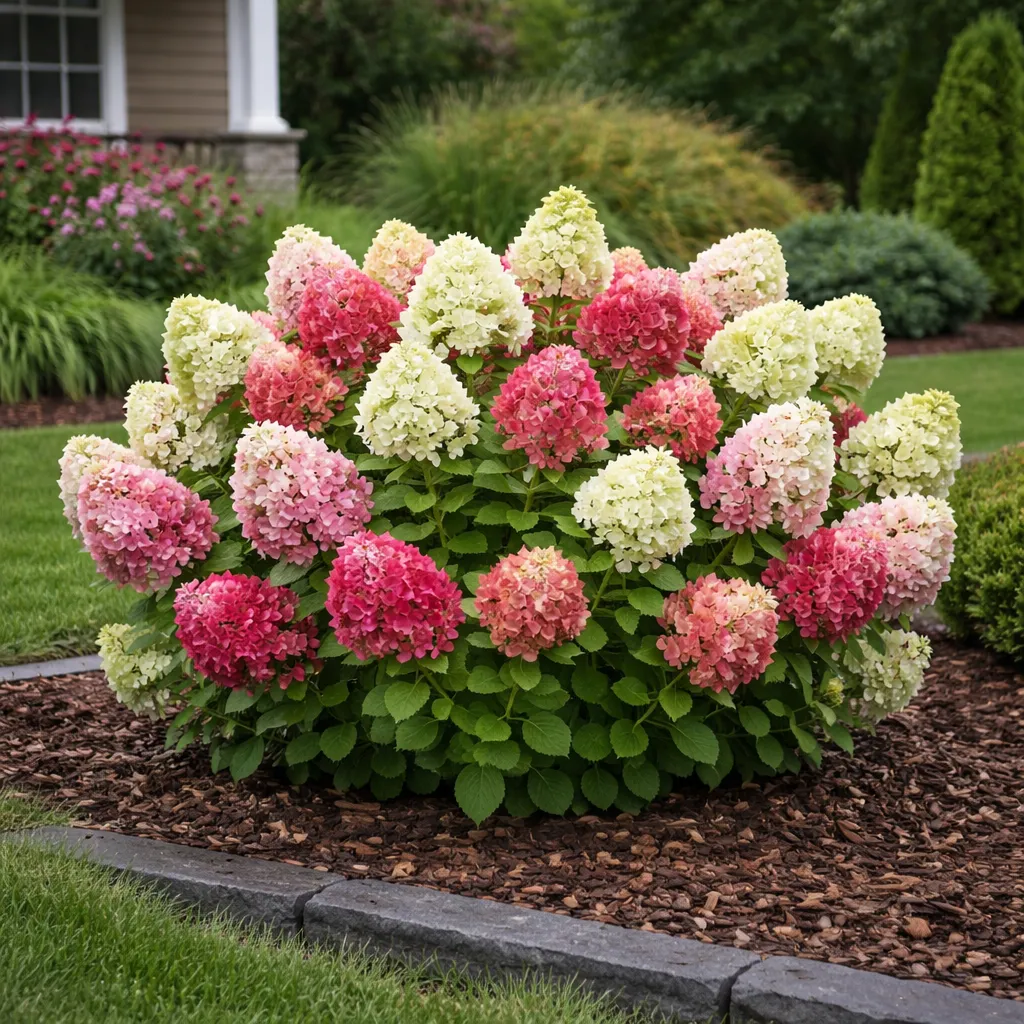
Botanical Name: Hydrangea paniculata ‘SMNHPK’
Common Name: Little Lime Punch® Hydrangea
Mature Height and Width:
3–5′ tall × 3–5′ wide
Growth Habit: Compact upright-rounded deciduous shrub with sturdy vertical stems. More structured and slightly taller than dwarf paniculata types, but smaller than standard ‘Limelight’. Moderate growth rate.
Foliage Description: Medium green ovate leaves with serrated margins; matte surface; moderately coarse texture typical of paniculata cultivars.
Flower Description: Conical panicles emerging lime-green, transitioning to creamy white, then progressively developing bright pink to deep red tones from the base upward. Distinct multi-color stage visible simultaneously during mid-to-late bloom period.
Bloom Time: Mid-summer through fall on new wood.
Fall Color: Yellow to bronze foliage; blooms retain saturated red tones into fall.
Light Requirements: Full sun for strongest stem strength and most pronounced color progression.
Hardiness Zone: USDA Zones 3–8
Notable Landscape Uses:
Foundation planting; compact massing; mixed border anchor; low informal hedge; patio-scale shrub; seasonal focal planting.
Deer Resistance: Moderate
Panicle hydrangeas may experience browsing on tender new growth under high deer pressure.

Botanical Name: Hydrangea paniculata ‘SMNHPPH’
Common Name: Limelight Prime® Hydrangea
Mature Height and Width:
4–6′ tall × 4–6′ wide
Growth Habit: Upright-rounded deciduous shrub with strong vertical stems and compact branching. More compact and earlier blooming than standard ‘Limelight’, with improved stem strength and tighter structure.
Foliage Description: Medium to dark green ovate leaves with serrated margins; matte surface; moderately coarse texture typical of paniculata types.
Flower Description: Large conical panicles emerging lime-green to creamy white, transitioning earlier and more intensely to deep pink and red tones than ‘Limelight’. Panicles dense and well-supported on sturdy stems.
Bloom Time: Early to mid-summer through fall on new wood; earlier color transition than ‘Limelight’.
Fall Color: Yellow to light bronze foliage; blooms develop saturated rose to red tones in late season.
Light Requirements: Full sun for strongest stem strength and most dramatic color transition.
Hardiness Zone: USDA Zones 3–8
Notable Landscape Uses:
Specimen shrub; foundation planting; mixed border anchor; mass planting; low informal hedge; seasonal color focal shrub.
Deer Resistance: Moderate
Panicle hydrangeas may experience browsing on tender new growth under high deer pressure.

Botanical Name: Hydrangea paniculata ‘SMNHPH’
Common Name: Fire Light Tidbit® Hydrangea
Mature Height and Width:
2–3′ tall × 2–3′ wide
Growth Habit: Extremely compact, dense, rounded deciduous shrub with strong upright stems. Dwarf panicle form with heavy bloom coverage relative to plant size. Maintains tight structure without flopping.
Foliage Description: Medium green ovate leaves with serrated margins; matte surface; proportionally smaller leaf scale than full-size paniculatas.
Flower Description: Dense, conical panicles emerging creamy white to soft green, quickly transitioning to blush pink and maturing to deeper rosy-pink tones. Panicles shorter and more compact than larger Fire Light selections.
Bloom Time: Mid-summer through fall on new wood.
Fall Color: Yellow to light bronze foliage; blooms may retain saturated pink tones into fall.
Light Requirements: Full sun for strongest stem strength and fullest color transition.
Hardiness Zone: USDA Zones 3–8
Notable Landscape Uses:
Low hedge; foundation border; mass planting; small garden accent; patio-scale shrub; foreground planting in mixed beds.
Deer Resistance: Moderate
Panicle hydrangeas may experience browsing on tender new growth under high deer pressure.

Botanical Name: Hydrangea paniculata ‘ILVOBO’
Common Name: Bobo® Hydrangea
Mature Height and Width:
2.5–3′ tall × 3–4′ wide
Growth Habit: Compact, dense, rounded deciduous shrub with heavy bloom coverage. Lower and tighter than most paniculata cultivars. Strong stems support blooms without excessive flopping.
Foliage Description: Medium green ovate leaves with serrated margins; matte surface; moderately fine texture relative to larger paniculata types.
Flower Description: Abundant conical panicles covering nearly the entire canopy. Blooms open creamy white and may develop soft blush pink in late season. Panicles relatively short and densely packed compared to Limelight.
Bloom Time: Early to mid-summer through fall on new wood.
Fall Color: Yellow to light bronze foliage; blooms may retain blush tones.
Light Requirements: Full sun to light shade; strongest bloom density in full sun.
Hardiness Zone: USDA Zones 3–8
Notable Landscape Uses:
Compact mass planting; low hedge; foundation border; front-of-border placement; small garden accent; patio planting.
Deer Resistance: Moderate
Panicle hydrangeas may experience browsing on tender new growth under heavy deer pressure.
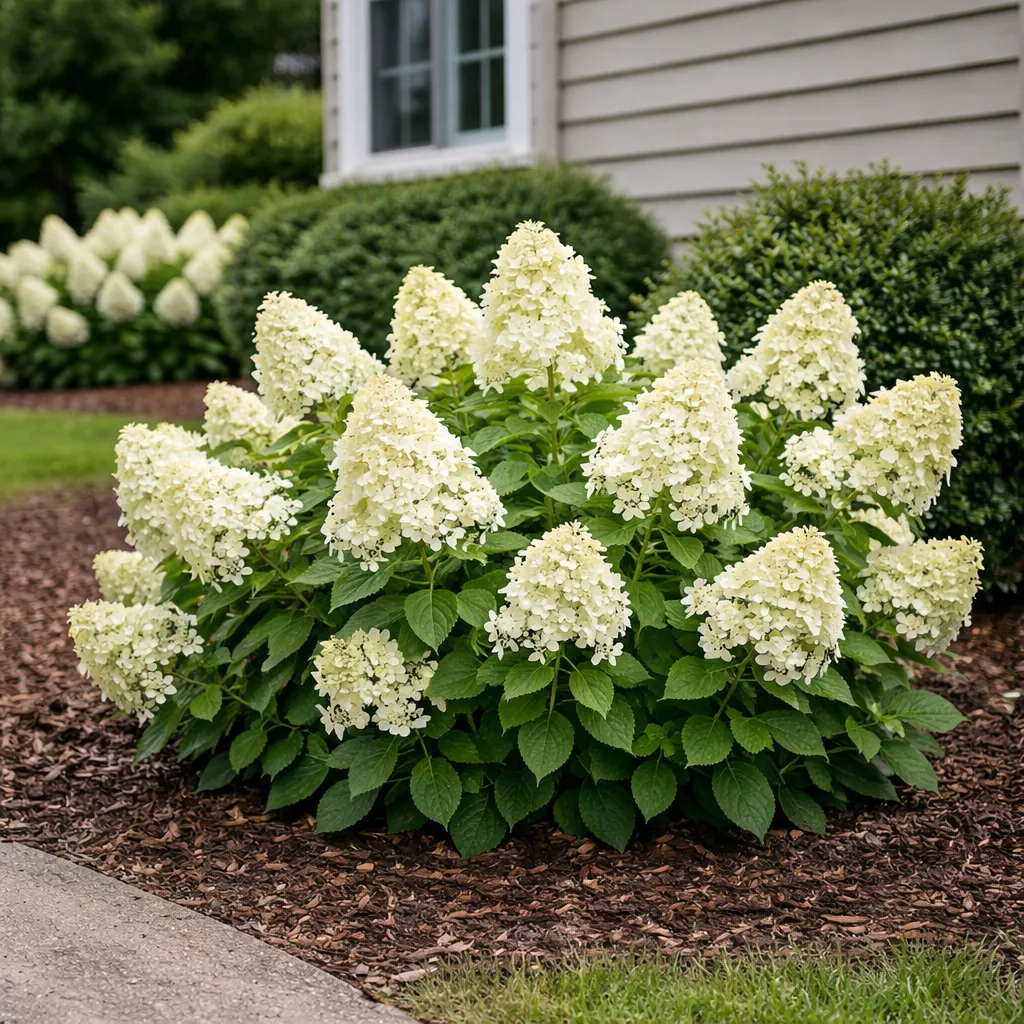
Botanical Name: Hydrangea paniculata ‘Bailpanone’
Common Name: Little Hottie Hydrangea
Mature Height and Width:
3–5′ tall × 3–5′ wide
Growth Habit: Compact, upright-rounded deciduous shrub with strong vertical stems. Denser and shorter than standard paniculata cultivars. Maintains structured form without excessive flopping.
Foliage Description: Medium green ovate leaves with serrated margins; matte surface; moderate texture.
Flower Description: Upright conical panicles of creamy white flowers that may develop light pink blush as they age. Panicles dense but not perfectly symmetrical.
Bloom Time: Mid-summer through early fall on new wood.
Fall Color: Yellow to light bronze tones, variable.
Light Requirements: Full sun to light shade; best flowering and strongest stems in full sun.
Hardiness Zone: USDA Zones 4–8
Notable Landscape Uses:
Foundation planting; low hedge; mass planting; perennial border anchor; compact panicle alternative for smaller spaces.
Deer Resistance: Moderate
Hydrangeas may experience browsing in high-pressure deer areas, particularly on tender new growth.
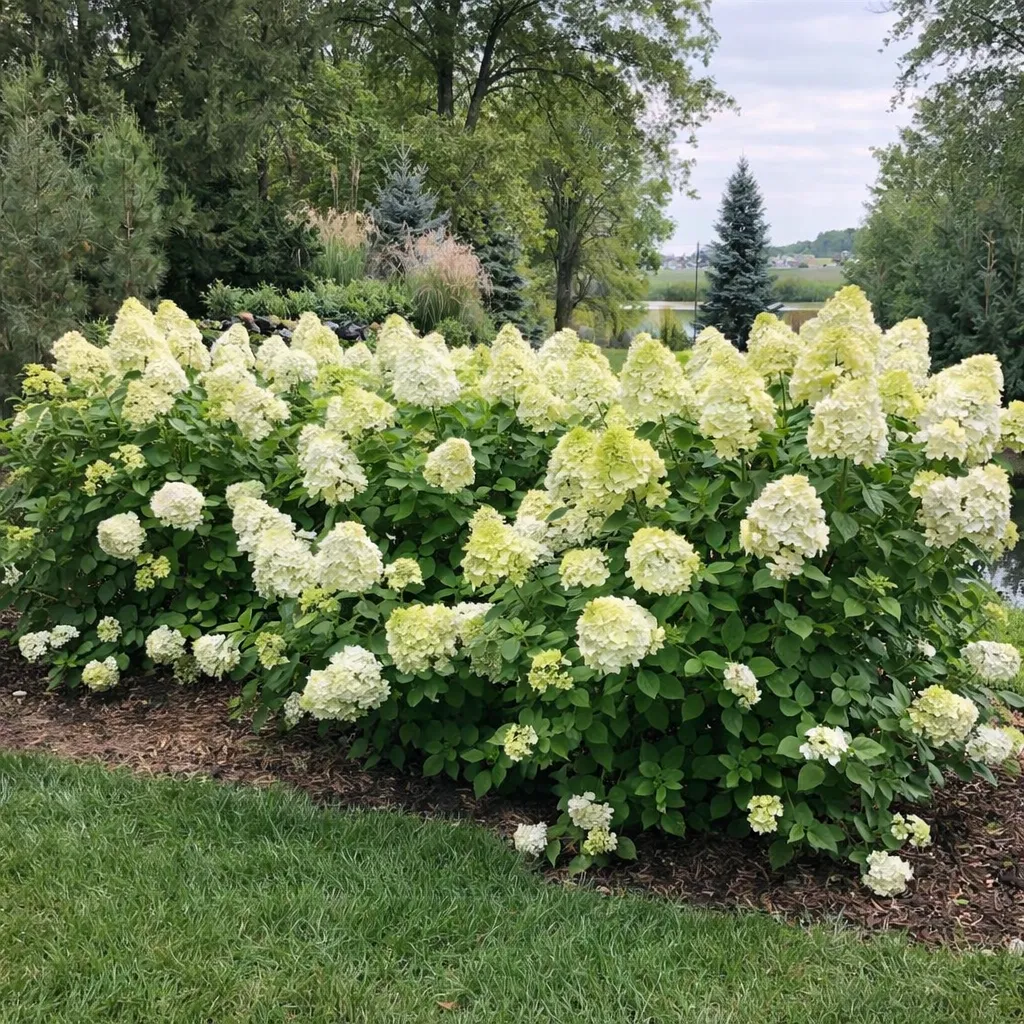
Botanical Name: Hydrangea paniculata ‘Limelight’
Common Name: Limelight Hydrangea
Mature Height and Width:
6–8′ tall × 6–8′ wide
Growth Habit: Large, upright-rounded deciduous shrub with strong vertical stems and substantial bloom mass. Broader and taller than compact paniculata selections. Moderate to fast growth rate.
Foliage Description: Medium green ovate leaves with serrated margins; matte surface; moderately coarse texture.
Flower Description: Large conical panicles emerging soft lime-green, maturing to creamy white and eventually developing pink to rose tones in late season. Panicles long, broad-based, and substantial.
Bloom Time: Mid-summer through fall on new wood.
Fall Color: Yellow to bronze foliage; blooms may retain rose tones into autumn.
Light Requirements: Full sun to light shade; best flowering and strongest stems in full sun.
Hardiness Zone: USDA Zones 3–8
Notable Landscape Uses:
Specimen shrub; property corner anchor; informal hedge; mixed border backdrop; large-scale mass planting; focal planting in lawn islands.
Deer Resistance: Moderate
Panicle hydrangeas may experience browsing on tender new growth in high-pressure deer areas.
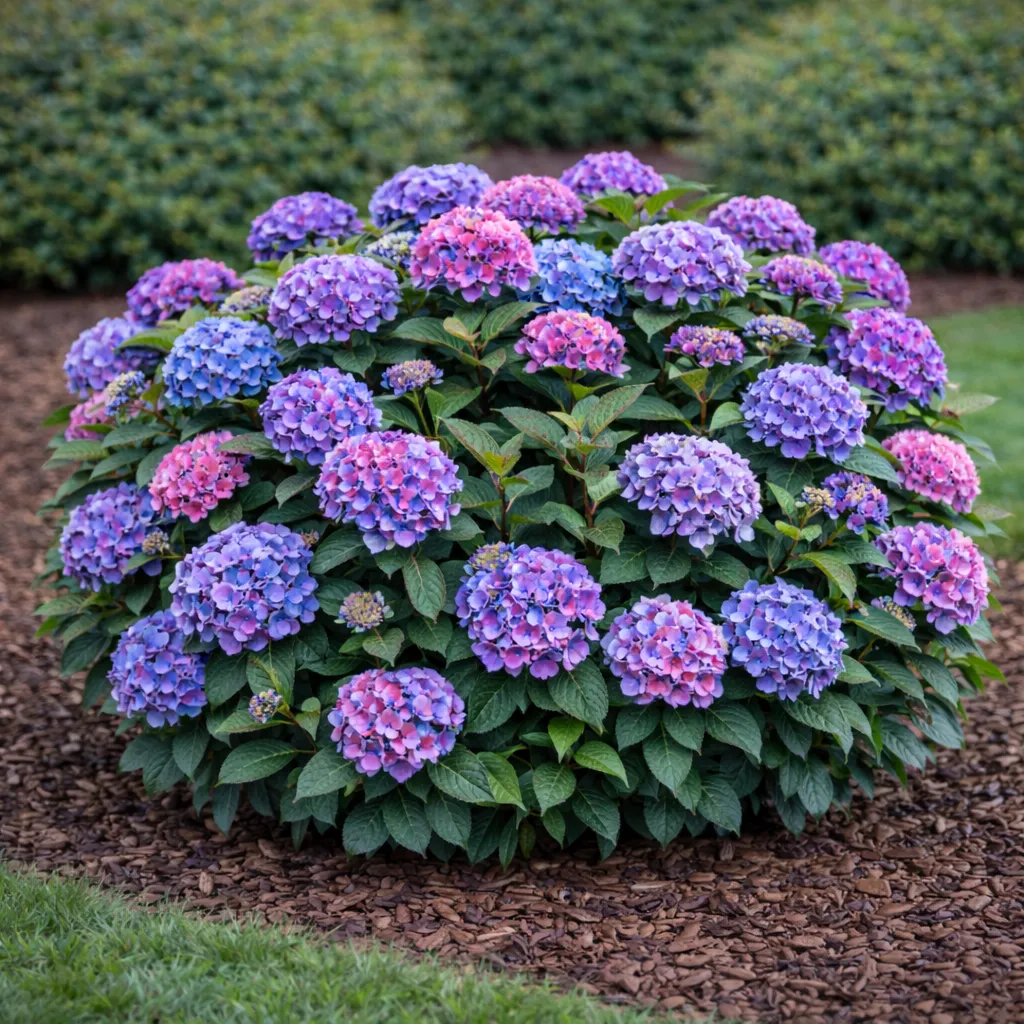
Botanical Name: Hydrangea macrophylla ‘PIIHM-I’
Common Name: Endless Summer® BloomStruck® Hydrangea
Mature Height and Width:
3–4′ tall × 3–4′ wide
Growth Habit: Compact, rounded deciduous shrub with strong, sturdy stems and moderate density. Slightly tighter and more compact than Endless Summer® Original. Reblooming on both old and new wood.
Foliage Description: Broad ovate leaves; dark green with a slight reddish cast to stems and petioles. Foliage moderately coarse; matte surface.
Flower Description: Large spherical mophead inflorescences with intensified coloration. Blooms range from deep rose-pink in alkaline soils to rich purple-blue in acidic soils. Color more saturated than Original.
Bloom Time: Late spring through summer; reblooming.
Fall Color: Yellow to light bronze; stems may retain reddish tone.
Light Requirements: Morning sun with afternoon protection; best performance in partial sun to light shade in Zones 5–7.
Hardiness Zone: USDA Zones 4–9
Notable Landscape Uses:
Foundation planting; compact massing; mixed shrub borders; seasonal focal shrub; cottage-style plantings; color accent in partial shade beds.
Deer Resistance: Moderate
Hydrangea macrophylla types may experience browsing in high-pressure deer areas, particularly on tender new growth.
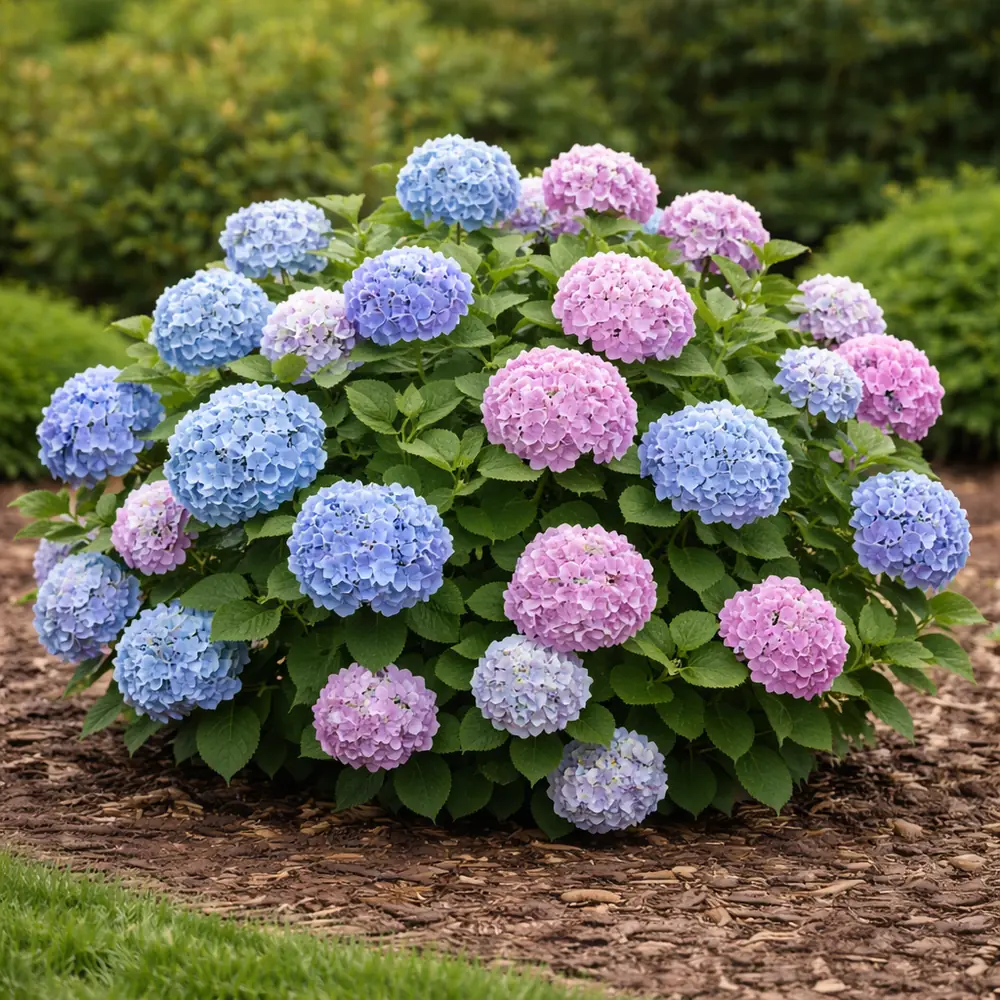
Botanical Name: Hydrangea macrophylla ‘Bailmer’
Common Name: Endless Summer® Original Hydrangea
Mature Height and Width:
3–5′ tall × 3–5′ wide
Growth Habit: Rounded deciduous shrub with moderately upright stems and dense foliage. Broadly mounded form with substantial bloom mass. Reblooming on both old and new wood. Moderate growth rate.
Foliage Description: Large, broad ovate leaves with serrated margins; medium to dark green; moderately coarse texture; matte surface.
Flower Description: Large spherical mophead inflorescences composed of densely packed sterile florets. Bloom color ranges from pink to blue depending on soil pH. Flower heads substantial and bold.
Bloom Time: Late spring through summer; reblooming.
Fall Color: Yellow to light bronze, variable and secondary to bloom.
Light Requirements: Morning sun with afternoon protection; performs best in partial sun to light shade in Zones 5–7.
Hardiness Zone: USDA Zones 4–9
Notable Landscape Uses:
Foundation planting; mixed shrub border; mass planting; accent shrub; cottage-style gardens; seasonal focal planting.
Deer Resistance: Moderate
Hydrangea macrophylla types may experience browsing in high-pressure deer areas, particularly on tender new growth.