
Welcome to our Plant Library! This is a new feature on our website to showcase the vast selection of plants that we carry across different seasons. We are continuously adding products, so if you are looking for a specific plant not listed below, we encourage you to call or visit to see if we have it in stock! 

Filter
Clear All
Categories
Sub-Categories
Tags
Trees & Shrubs

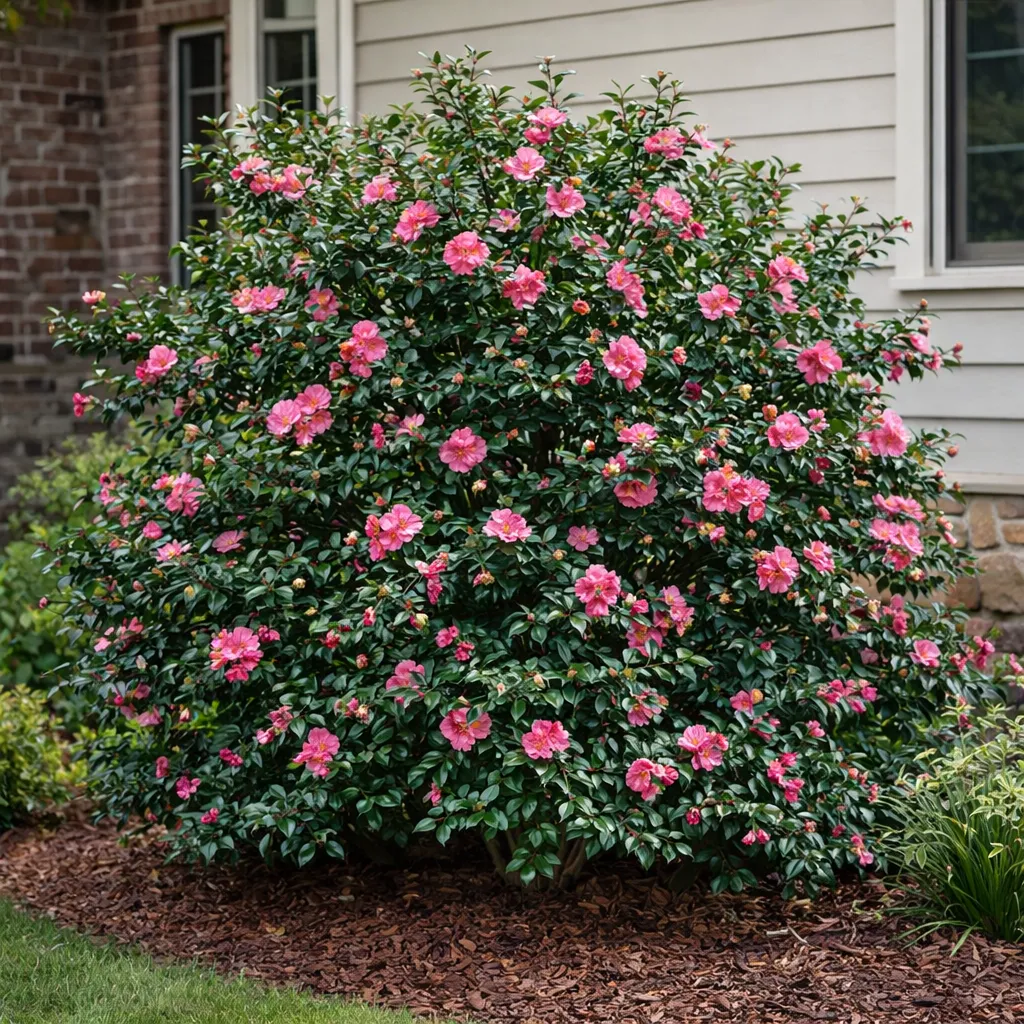
Botanical Name: Camellia sasanqua ‘Kanjiro’

Common Name: Kanjiro Camellia

Mature Height and Width:
8–12′ tall × 6–10′ wide

Growth Habit:
Upright to broadly spreading evergreen shrub with layered branching and moderate density. More open and flexible in structure than most japonica types. Moderate growth rate.

Foliage Description:
Small to medium glossy dark green leaves with fine serration. Leaves are thinner and slightly smaller than japonica types. Canopy maintains visible interior branching rather than forming a solid wall.

Flower Description:
Semi-double rose-pink flowers with deeper pink margins and prominent golden stamens. Flowers are 3–4″ wide and appear individually along branches rather than in tight clustered trusses. Petals slightly reflexed, informal rather than formal double.

Bloom Time:
Fall to early winter.

Fall Color:
Evergreen; no fall color.

Light Requirements:
Full sun to partial shade. More sun tolerant than japonica cultivars.

Hardiness Zone:
USDA Zones 7–9 (protected Zone 6 possible).

Notable Landscape Uses:
Foundation planting; informal hedge; espalier; woodland-edge accent; fall flowering screen; vertical evergreen structure in protected sites.

Deer Resistance:
Moderate
May experience browsing under heavy pressure, particularly on new growth.
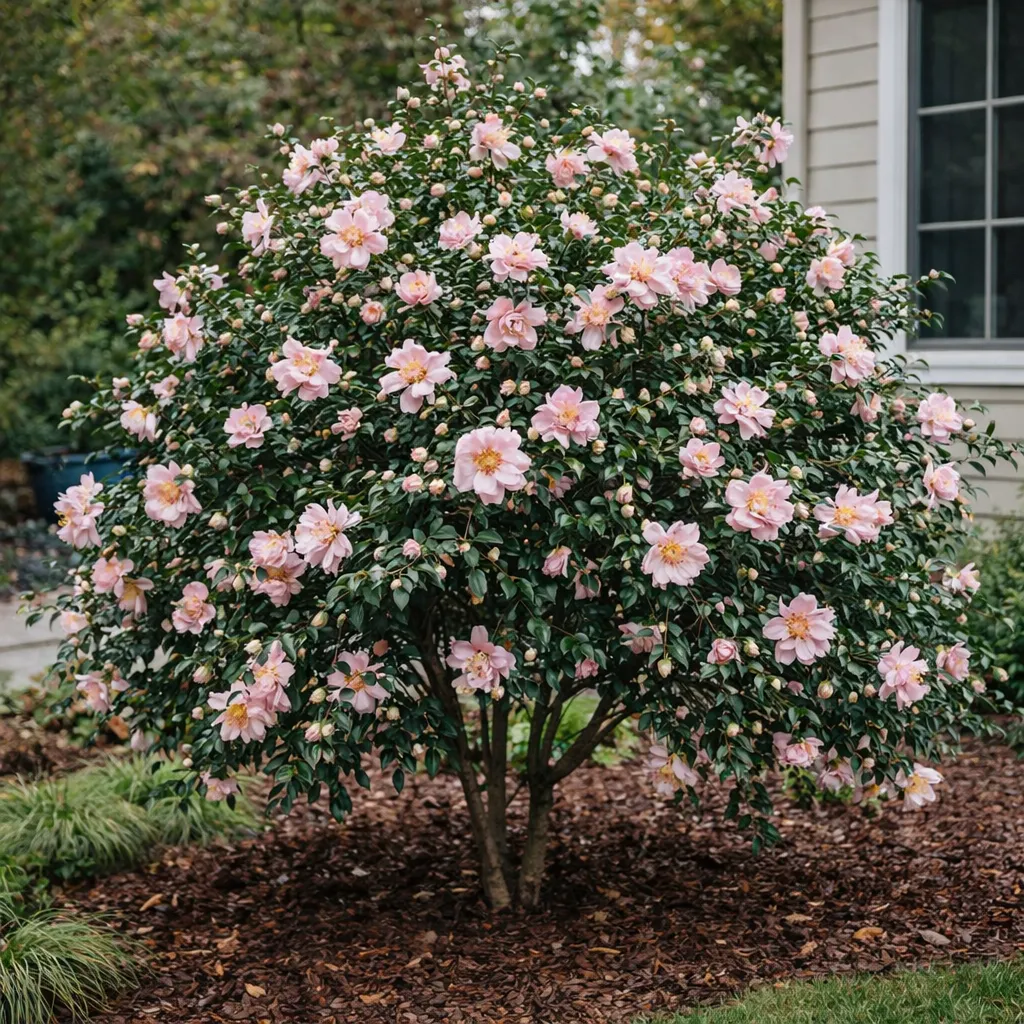
Botanical Name: Camellia sasanqua ‘Pink Snow’

Common Name: Pink Snow Sasanqua Camellia

Mature Height and Width:
8–10′ tall × 6–8′ wide

Growth Habit: Upright to slightly arching evergreen shrub with moderately open branching. Structure lighter and more flexible than japonica types. Develops an oval to softly rounded canopy with visible interior branching. Moderate growth rate.

Foliage Description: Small to medium dark green evergreen leaves with moderate natural sheen. Thinner and finer textured than japonica foliage. Leaves spaced along stems allowing visible structural depth.

Flower Description: Semi-double soft pink flowers with visible golden stamens. Petals lightly layered, not tightly formal. Blooms smaller and lighter in structure than japonica cultivars. Flowers distributed evenly along stems rather than clustered only at tips.

Bloom Time: Mid to late fall (occasionally extending into early winter in mild conditions).

Fall Color: Evergreen; foliage remains dark green year-round.

Light Requirements: Full sun to partial shade; more sun tolerant than japonica types.

Hardiness Zone: USDA Zones 7–9 (Zone 6 only in strongly protected microclimates).

Notable Landscape Uses: Foundation planting in protected exposures; espalier candidate; courtyard accent; fall-blooming evergreen structure; woodland-edge specimen.

Deer Resistance: Moderate
Evergreen foliage may experience browsing under heavy winter pressure in Northeast Zones 6–7.
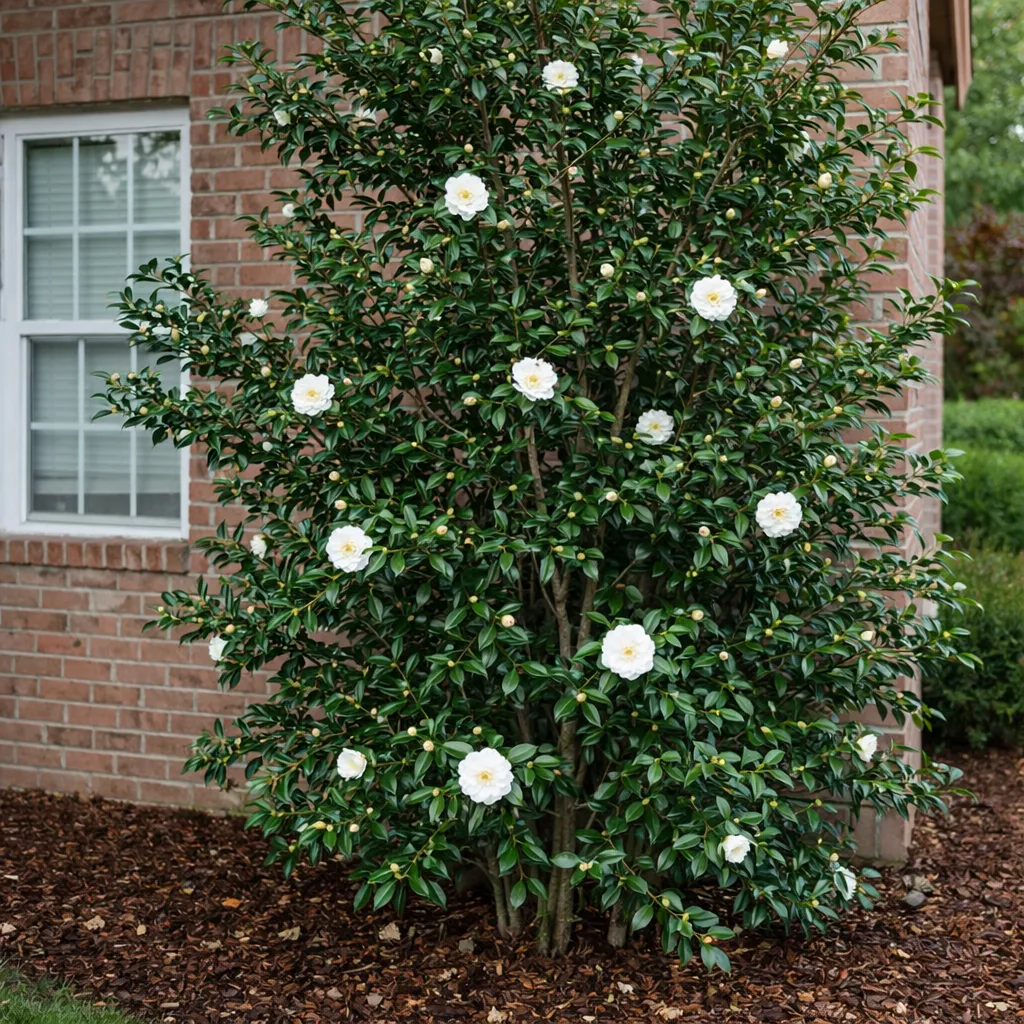
Botanical Name: Camellia japonica ‘Falling Stars’

Common Name: Falling Stars Camellia

Mature Height and Width:
8–12′ tall × 6–8′ wide

Growth Habit: Upright, multi-stemmed evergreen shrub to small tree with strong vertical branching and layered canopy structure. Naturally airy rather than compact. Moderate growth rate.

Foliage Description: Medium to dark glossy green leaves with pronounced sheen. Elliptical shape, moderately spaced along stems allowing visible interior structure.

Flower Description: Single white flowers with visible golden stamens. Blooms appear scattered and star-like across the canopy rather than densely clustered. Petals clean white, slightly rounded, not formal double.

Bloom Time: Late winter to early spring.

Fall Color: Evergreen; foliage remains glossy dark green year-round.

Light Requirements: Partial shade to filtered sun; protected exposure preferred in colder regions.

Hardiness Zone: USDA Zones 7–9 (Zone 6 with strong protection).

Notable Landscape Uses:
Foundation specimen; sheltered courtyard planting; espalier candidate; woodland-edge accent; vertical evergreen structure.

Deer Resistance: Moderate
Evergreen foliage may experience browsing under heavy pressure.
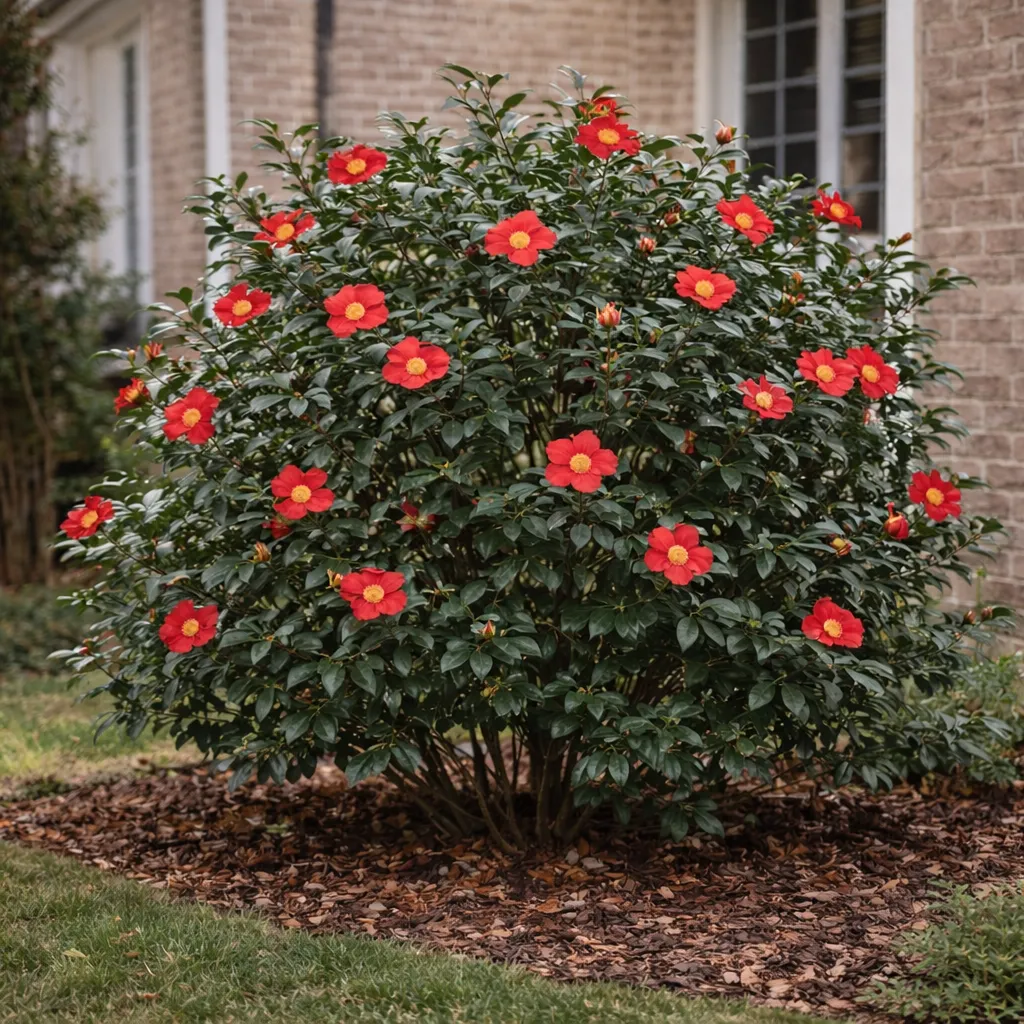
Botanical Name: Camellia sasanqua ‘Yuletide’

Common Name: Yuletide Camellia

Mature Height and Width:
8–10′ tall × 6–8′ wide

Growth Habit: Upright to slightly spreading evergreen shrub with layered branching and moderate density. More open and graceful than tightly clipped camellia forms. Moderate growth rate.

Foliage Description: Small to medium-sized, glossy dark green evergreen leaves with smooth margins. Dense along stems but not rigidly packed.

Flower Description: Single bright red flowers with prominent golden-yellow stamens at the center. Blooms are flat to slightly cupped and approximately 2.5–3 inches wide.

Bloom Time: Late fall into early winter

Fall Color: Evergreen

Light Requirements: Partial shade to filtered sun; tolerates morning sun. Protection from harsh winter wind recommended in Zones 6–7.

Hardiness Zone: USDA Zones 7–9 (protected Zone 6 locations possible)

Notable Landscape Uses:
Foundation plantings in protected sites; courtyard gardens; winter interest plantings; woodland-edge plantings; specimen shrub in sheltered landscapes; espalier potential.

Deer Resistance: Moderate
Camellias are not typically preferred browse, though tender new growth may be sampled under pressure. Established plants generally tolerate minor browsing.
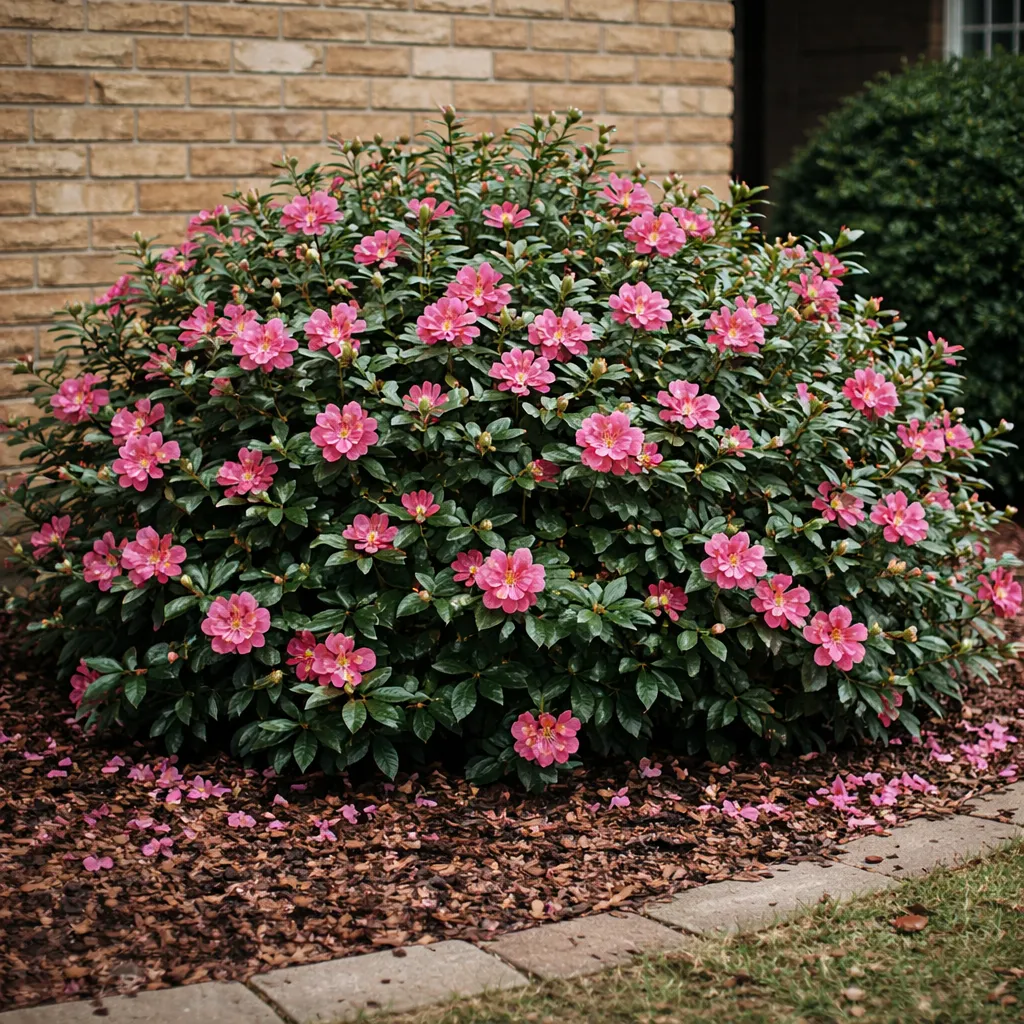
Botanical Name: Camellia sasanqua ‘Shishi Gashira’

Common Name: Shishi Gashira Camellia

Mature Height and Width:
4–5′ tall × 5–6′ wide

Growth Habit: Low, spreading evergreen shrub with dense branching and slightly arching outer stems. Broader than tall with compact, refined structure. Slow to moderate growth rate.

Foliage Description: Small to medium dark green leaves with glossy surface and fine serration. Dense evergreen canopy with tight leaf arrangement.

Flower Description: Semi-double to loose double pink flowers with visible golden stamens. Blooms moderately sized and borne abundantly across outer canopy. Petals slightly ruffled, not fully formal double.

Bloom Time: Fall into early winter.

Fall Color: Evergreen; foliage remains dark green year-round.

Light Requirements: Full sun to partial shade; best flowering with morning sun and protection from harsh afternoon exposure in colder regions.

Hardiness Zone: USDA Zones 7–9 (marginal in protected Zone 6).

Notable Landscape Uses:
Foundation planting; low evergreen hedge; espalier; container planting; fall seasonal accent; entry planting.

Deer Resistance: Moderate
Evergreen foliage may experience browsing under heavy pressure, though generally not highly preferred.
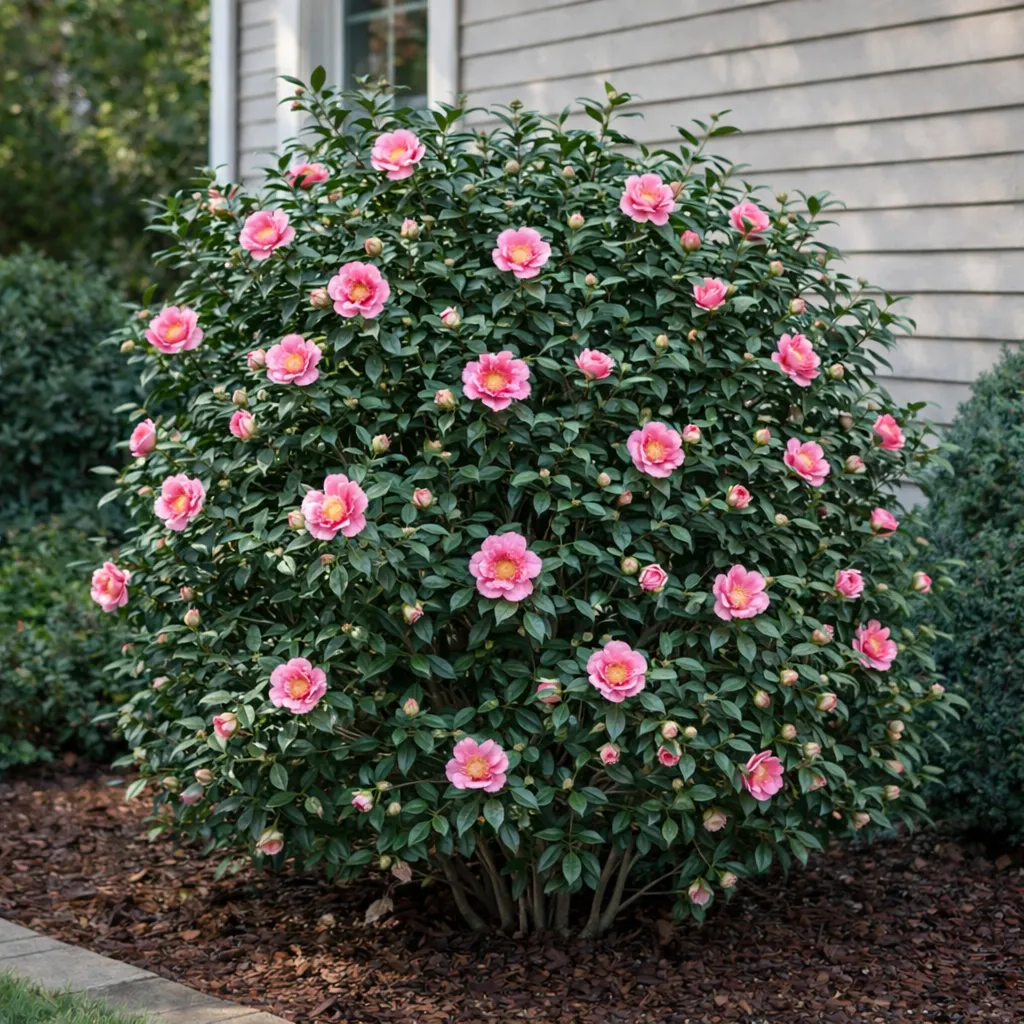
Botanical Name: Camellia japonica ‘Our Linda’

Common Name: Our Linda Camellia

Mature Height and Width:
6–8′ tall × 5–7′ wide

Growth Habit: Upright, dense, broadly oval evergreen shrub with a refined but naturally layered structure. More cold-tolerant and compact than many traditional japonicas. Moderate growth rate.

Foliage Description: Glossy, dark green, leathery evergreen leaves with a strong central vein and fine serration. Maintains year-round structure and deep coloration.

Flower Description: Large, semi-double to formal double blooms in bright rose-pink with prominent golden-yellow stamens visible in semi-double forms. Flowers typically 4–5 inches across.

Bloom Time: Early to mid-spring (often slightly later than traditional japonicas in colder climates)

Fall Color: Evergreen; no fall color change.

Light Requirements: Partial shade; best with morning sun and protection from harsh winter winds.

Hardiness Zone: USDA Zones 6–9

Notable Landscape Uses:
Protected foundation plantings; courtyard gardens; evergreen focal shrub; mixed evergreen borders; winter-to-spring interest gardens; sheltered patio plantings; Southern-style garden accents adaptable to colder climates.

Deer Resistance: Moderate
Camellias are not typically a preferred browse, though flower buds may be sampled in higher-pressure areas. Established plants generally retain structure but may require protection during bloom in deer-heavy sites.


Note: Best planted in a protected location in Zone 7. Shelter from winter wind and strong afternoon sun helps preserve buds and foliage.
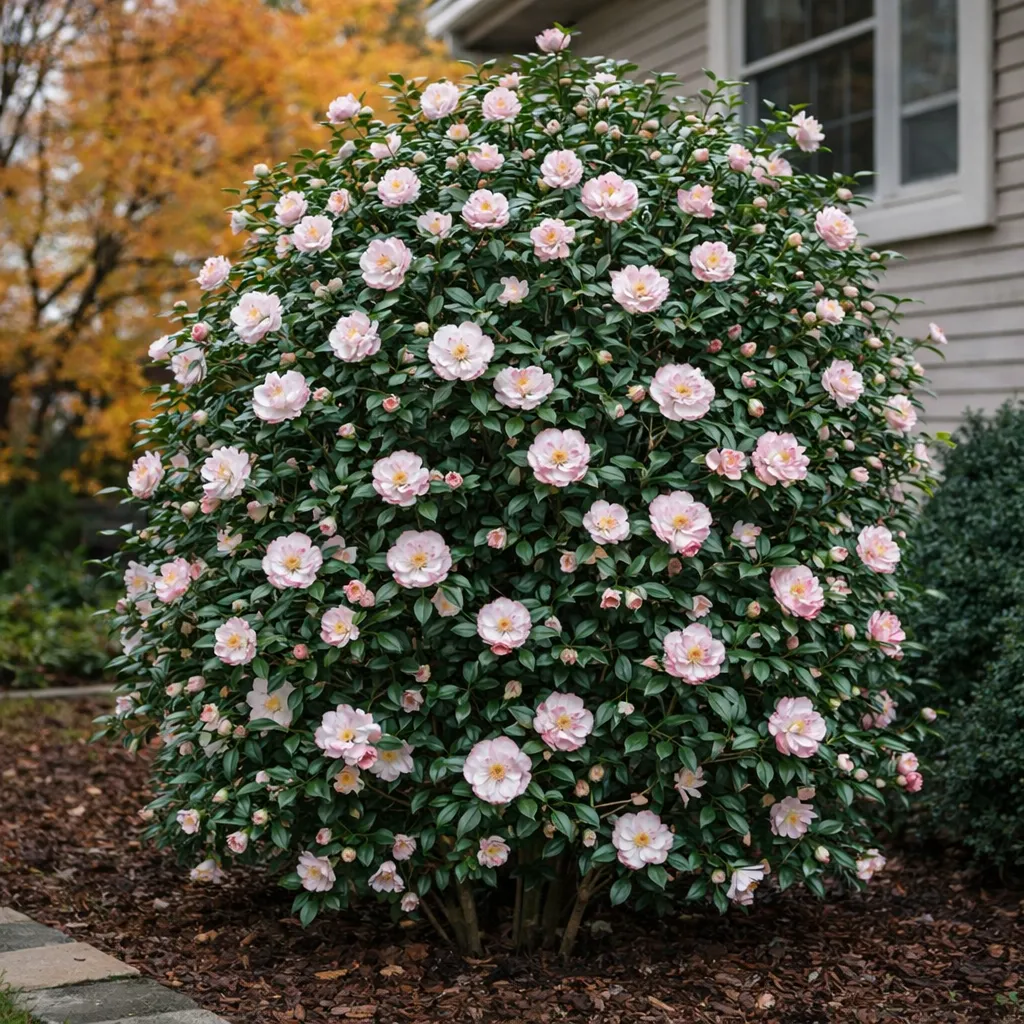
Botanical Name: Camellia japonica ‘Leslie Ann’

Common Name: Leslie Ann Camellia

Mature Height and Width:
8–12′ tall × 6–8′ wide

Growth Habit: Upright, dense, broadly pyramidal to oval evergreen shrub. Naturally layered branching with a refined but not rigid structure. Slow to moderate growth rate.

Foliage Description: Glossy, dark green, leathery evergreen leaves with fine serration along margins. Maintains strong year-round structure and color.

Flower Description: Large, formal double blooms in soft light pink. Petals are tightly layered in a symmetrical rosette pattern, 4–5 inches across. Flowers are borne singly along stems.

Bloom Time: Late winter to early spring

Fall Color: Evergreen; no fall color change.

Light Requirements: Partial shade; best with morning sun and afternoon shade. Protect from winter winds in Zones 6–7.

Hardiness Zone: USDA Zones 7–9 (protected Zone 6 microclimates possible)

Notable Landscape Uses:
Foundation plantings in protected sites; courtyard gardens; formal shrub borders; evergreen specimen; southern-style garden designs; patio-edge plantings; focal point in winter-interest landscapes.

Deer Resistance: Moderate
Camellias are generally not a preferred browse, though flower buds may be sampled in higher-pressure areas. Established plants typically maintain structure but may lose some blooms without protection.


Note: Best planted in a protected location in Zone 7. Shelter from winter wind and strong afternoon sun helps preserve buds and foliage.
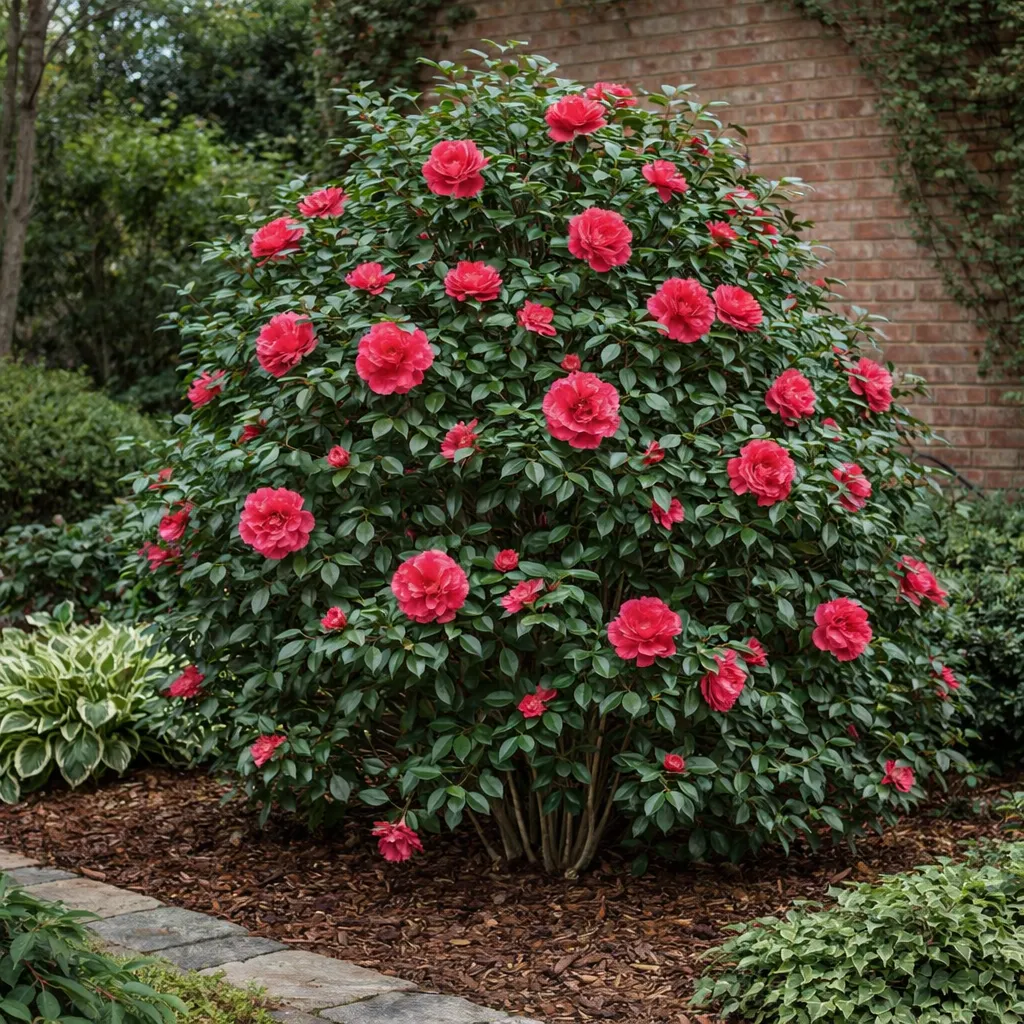
Botanical Name: Camellia japonica ‘Alabama Beauty’

Common Name: Alabama Beauty Camellia

Mature Height and Width:
8–12′ tall × 6–8′ wide

Growth Habit: Upright, dense, broad evergreen shrub with a naturally pyramidal to oval form. Slow to moderate growth rate. Structure is layered and refined, not loose or airy.

Foliage Description: Glossy, dark green evergreen leaves with a leathery texture and serrated margins. Foliage remains deep green year-round.

Flower Description: Formal double, deep red blooms with tightly layered petals arranged symmetrically in a peony-like form. Flowers are 3–5 inches across and held singly along branches.

Bloom Time: Late winter to early spring (depending on exposure)

Fall Color: Evergreen; no fall color change.

Light Requirements: Partial shade; best performance in morning sun and afternoon shade. Protect from harsh winter winds in Zones 6–7.

Hardiness Zone: USDA Zones 7–9 (marginal 6 with protection)

Notable Landscape Uses:
Foundation plantings; courtyard gardens; specimen shrub in protected locations; evergreen screening in mild climates; southern-style formal gardens; patio-edge plantings.

Deer Resistance: Moderate
Camellias are not a primary deer preference, though flower buds may be sampled in high-pressure areas. Established plants generally sustain limited structural damage but may lose buds if unprotected.

Note: Best planted in a protected location in Zone 7. Shelter from winter wind and strong afternoon sun helps preserve buds and foliage.

Trees & Shrubs
Botanical Name: Camellia sasanqua ‘Kanjiro’ Common Name: Kanjiro Camellia Mature Height and Width:8–12' tall × 6–10' wide Growth Habit:Upright to broadly spreading evergreen shrub with layered branching and moderate density. More open and flexible in structure than most japonica types. Moderate growth rate. Foliage Description:Small to medium glossy dark green leaves with fine serration. Leaves are thinner and slightly smaller than japonica types. Canopy maintains visible interior branching rather than forming a solid wall. Flower Description:Semi-double rose-pink flowers with deeper pink margins and prominent golden stamens. Flowers are 3–4" wide and appear individually along branches rather than in tight clustered trusses. Petals slightly reflexed, informal rather than formal double. Bloom Time:Fall to early winter. Fall Color:Evergreen; no fall color. Light Requirements:Full sun to partial shade. More sun tolerant than japonica cultivars. Hardiness Zone:USDA Zones 7–9 (protected Zone 6 possible). Notable Landscape Uses:Foundation planting; informal hedge; espalier; woodland-edge accent; fall flowering screen; vertical evergreen structure in protected sites. Deer Resistance:ModerateMay experience browsing under heavy pressure, particularly on new growth.
Botanical Name: Camellia sasanqua ‘Pink Snow’ Common Name: Pink Snow Sasanqua Camellia Mature Height and Width:8–10' tall × 6–8' wide Growth Habit: Upright to slightly arching evergreen shrub with moderately open branching. Structure lighter and more flexible than japonica types. Develops an oval to softly rounded canopy with visible interior branching. Moderate growth rate. Foliage Description: Small to medium dark green evergreen leaves with moderate natural sheen. Thinner and finer textured than japonica foliage. Leaves spaced along stems allowing visible structural depth. Flower Description: Semi-double soft pink flowers with visible golden stamens. Petals lightly layered, not tightly formal. Blooms smaller and lighter in structure than japonica cultivars. Flowers distributed evenly along stems rather than clustered only at tips. Bloom Time: Mid to late fall (occasionally extending into early winter in mild conditions). Fall Color: Evergreen; foliage remains dark green year-round. Light Requirements: Full sun to partial shade; more sun tolerant than japonica types. Hardiness Zone: USDA Zones 7–9 (Zone 6 only in strongly protected microclimates). Notable Landscape Uses: Foundation planting in protected exposures; espalier candidate; courtyard accent; fall-blooming evergreen structure; woodland-edge specimen. Deer Resistance: ModerateEvergreen foliage may experience browsing under heavy winter pressure in Northeast Zones 6–7.
Botanical Name: Camellia japonica ‘Falling Stars’ Common Name: Falling Stars Camellia Mature Height and Width:8–12' tall × 6–8' wide Growth Habit: Upright, multi-stemmed evergreen shrub to small tree with strong vertical branching and layered canopy structure. Naturally airy rather than compact. Moderate growth rate. Foliage Description: Medium to dark glossy green leaves with pronounced sheen. Elliptical shape, moderately spaced along stems allowing visible interior structure. Flower Description: Single white flowers with visible golden stamens. Blooms appear scattered and star-like across the canopy rather than densely clustered. Petals clean white, slightly rounded, not formal double. Bloom Time: Late winter to early spring. Fall Color: Evergreen; foliage remains glossy dark green year-round. Light Requirements: Partial shade to filtered sun; protected exposure preferred in colder regions. Hardiness Zone: USDA Zones 7–9 (Zone 6 with strong protection). Notable Landscape Uses:Foundation specimen; sheltered courtyard planting; espalier candidate; woodland-edge accent; vertical evergreen structure. Deer Resistance: ModerateEvergreen foliage may experience browsing under heavy pressure.
Botanical Name: Camellia sasanqua ‘Yuletide’ Common Name: Yuletide Camellia Mature Height and Width:8–10' tall × 6–8' wide Growth Habit: Upright to slightly spreading evergreen shrub with layered branching and moderate density. More open and graceful than tightly clipped camellia forms. Moderate growth rate. Foliage Description: Small to medium-sized, glossy dark green evergreen leaves with smooth margins. Dense along stems but not rigidly packed. Flower Description: Single bright red flowers with prominent golden-yellow stamens at the center. Blooms are flat to slightly cupped and approximately 2.5–3 inches wide. Bloom Time: Late fall into early winter Fall Color: Evergreen Light Requirements: Partial shade to filtered sun; tolerates morning sun. Protection from harsh winter wind recommended in Zones 6–7. Hardiness Zone: USDA Zones 7–9 (protected Zone 6 locations possible) Notable Landscape Uses:Foundation plantings in protected sites; courtyard gardens; winter interest plantings; woodland-edge plantings; specimen shrub in sheltered landscapes; espalier potential. Deer Resistance: ModerateCamellias are not typically preferred browse, though tender new growth may be sampled under pressure. Established plants generally tolerate minor browsing.
Botanical Name: Camellia sasanqua ‘Shishi Gashira’ Common Name: Shishi Gashira Camellia Mature Height and Width:4–5' tall × 5–6' wide Growth Habit: Low, spreading evergreen shrub with dense branching and slightly arching outer stems. Broader than tall with compact, refined structure. Slow to moderate growth rate. Foliage Description: Small to medium dark green leaves with glossy surface and fine serration. Dense evergreen canopy with tight leaf arrangement. Flower Description: Semi-double to loose double pink flowers with visible golden stamens. Blooms moderately sized and borne abundantly across outer canopy. Petals slightly ruffled, not fully formal double. Bloom Time: Fall into early winter. Fall Color: Evergreen; foliage remains dark green year-round. Light Requirements: Full sun to partial shade; best flowering with morning sun and protection from harsh afternoon exposure in colder regions. Hardiness Zone: USDA Zones 7–9 (marginal in protected Zone 6). Notable Landscape Uses:Foundation planting; low evergreen hedge; espalier; container planting; fall seasonal accent; entry planting. Deer Resistance: ModerateEvergreen foliage may experience browsing under heavy pressure, though generally not highly preferred.
Botanical Name: Camellia japonica ‘Our Linda’ Common Name: Our Linda Camellia Mature Height and Width:6–8' tall × 5–7' wide Growth Habit: Upright, dense, broadly oval evergreen shrub with a refined but naturally layered structure. More cold-tolerant and compact than many traditional japonicas. Moderate growth rate. Foliage Description: Glossy, dark green, leathery evergreen leaves with a strong central vein and fine serration. Maintains year-round structure and deep coloration. Flower Description: Large, semi-double to formal double blooms in bright rose-pink with prominent golden-yellow stamens visible in semi-double forms. Flowers typically 4–5 inches across. Bloom Time: Early to mid-spring (often slightly later than traditional japonicas in colder climates) Fall Color: Evergreen; no fall color change. Light Requirements: Partial shade; best with morning sun and protection from harsh winter winds. Hardiness Zone: USDA Zones 6–9 Notable Landscape Uses:Protected foundation plantings; courtyard gardens; evergreen focal shrub; mixed evergreen borders; winter-to-spring interest gardens; sheltered patio plantings; Southern-style garden accents adaptable to colder climates. Deer Resistance: ModerateCamellias are not typically a preferred browse, though flower buds may be sampled in higher-pressure areas. Established plants generally retain structure but may require protection during bloom in deer-heavy sites. Note: Best planted in a protected location in Zone 7. Shelter from winter wind and strong afternoon sun helps preserve buds and foliage.
Botanical Name: Camellia japonica ‘Leslie Ann’ Common Name: Leslie Ann Camellia Mature Height and Width:8–12' tall × 6–8' wide Growth Habit: Upright, dense, broadly pyramidal to oval evergreen shrub. Naturally layered branching with a refined but not rigid structure. Slow to moderate growth rate. Foliage Description: Glossy, dark green, leathery evergreen leaves with fine serration along margins. Maintains strong year-round structure and color. Flower Description: Large, formal double blooms in soft light pink. Petals are tightly layered in a symmetrical rosette pattern, 4–5 inches across. Flowers are borne singly along stems. Bloom Time: Late winter to early spring Fall Color: Evergreen; no fall color change. Light Requirements: Partial shade; best with morning sun and afternoon shade. Protect from winter winds in Zones 6–7. Hardiness Zone: USDA Zones 7–9 (protected Zone 6 microclimates possible) Notable Landscape Uses:Foundation plantings in protected sites; courtyard gardens; formal shrub borders; evergreen specimen; southern-style garden designs; patio-edge plantings; focal point in winter-interest landscapes. Deer Resistance: ModerateCamellias are generally not a preferred browse, though flower buds may be sampled in higher-pressure areas. Established plants typically maintain structure but may lose some blooms without protection. Note: Best planted in a protected location in Zone 7. Shelter from winter wind and strong afternoon sun helps preserve buds and foliage.
Botanical Name: Camellia japonica ‘Alabama Beauty’ Common Name: Alabama Beauty Camellia Mature Height and Width:8–12' tall × 6–8' wide Growth Habit: Upright, dense, broad evergreen shrub with a naturally pyramidal to oval form. Slow to moderate growth rate. Structure is layered and refined, not loose or airy. Foliage Description: Glossy, dark green evergreen leaves with a leathery texture and serrated margins. Foliage remains deep green year-round. Flower Description: Formal double, deep red blooms with tightly layered petals arranged symmetrically in a peony-like form. Flowers are 3–5 inches across and held singly along branches. Bloom Time: Late winter to early spring (depending on exposure) Fall Color: Evergreen; no fall color change. Light Requirements: Partial shade; best performance in morning sun and afternoon shade. Protect from harsh winter winds in Zones 6–7. Hardiness Zone: USDA Zones 7–9 (marginal 6 with protection) Notable Landscape Uses:Foundation plantings; courtyard gardens; specimen shrub in protected locations; evergreen screening in mild climates; southern-style formal gardens; patio-edge plantings. Deer Resistance: ModerateCamellias are not a primary deer preference, though flower buds may be sampled in high-pressure areas. Established plants generally sustain limited structural damage but may lose buds if unprotected. Note: Best planted in a protected location in Zone 7. Shelter from winter wind and strong afternoon sun helps preserve buds and foliage.
Scroll to Top