
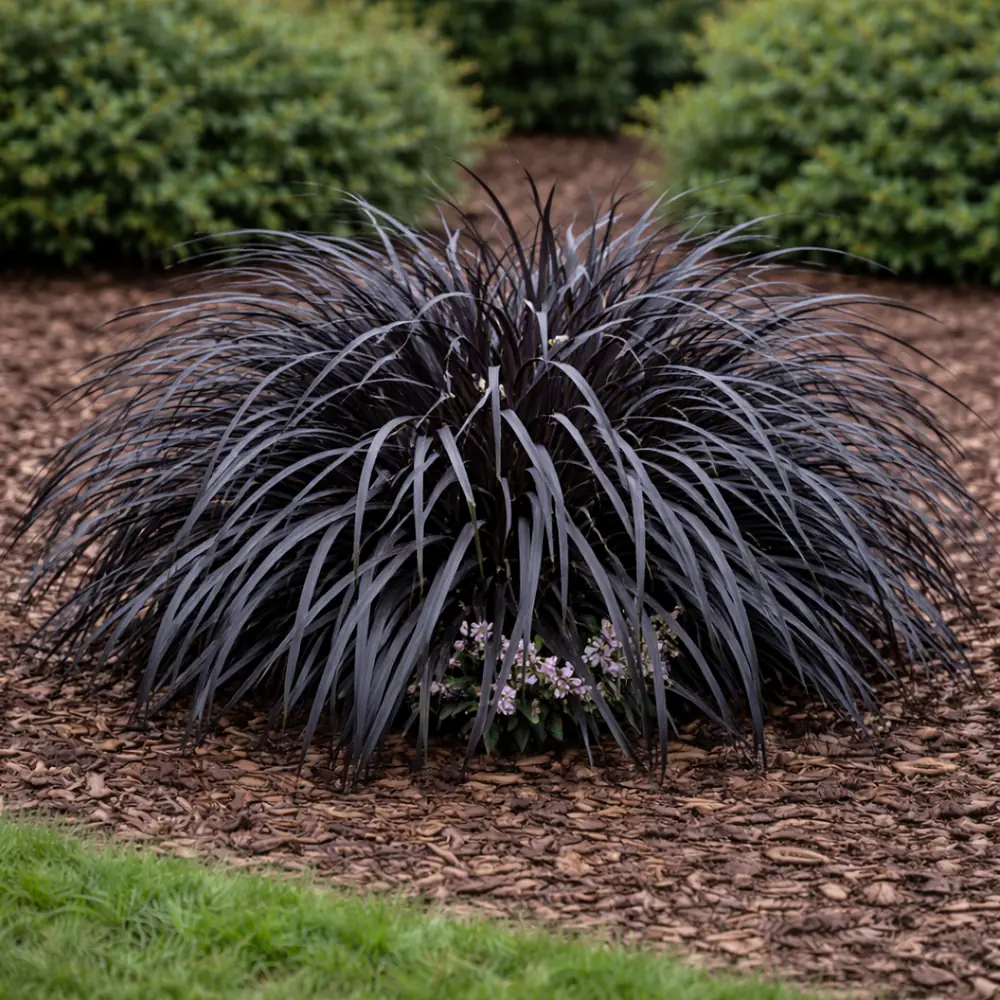
Black Mondo Grass
Ophiopogon planiscapus ‘Nigrescens’
- Mature Size: 6–8″ H × 10–12″ W
- Light Requirements: Part shade to full shade; tolerates morning sun
- Ideal Soil Conditions: Moist, well‑drained, organically rich soil
- Notable Characteristics: Dramatic deep black foliage in low mounding clumps. Produces small lilac flowers and blue berries. Excellent contrast plant in shade borders, rock gardens, or containers.
- Deer Resistance: Moderate to High
Black Mondo Grass
Ophiopogon planiscapus ‘Nigrescens’
- Mature Size: 6–8″ H × 10–12″ W
- Light Requirements: Part shade to full shade; tolerates morning sun
- Ideal Soil Conditions: Moist, well‑drained, organically rich soil
- Notable Characteristics: Dramatic deep black foliage in low mounding clumps. Produces small lilac flowers and blue berries. Excellent contrast plant in shade borders, rock gardens, or containers.
- Deer Resistance: Moderate to High
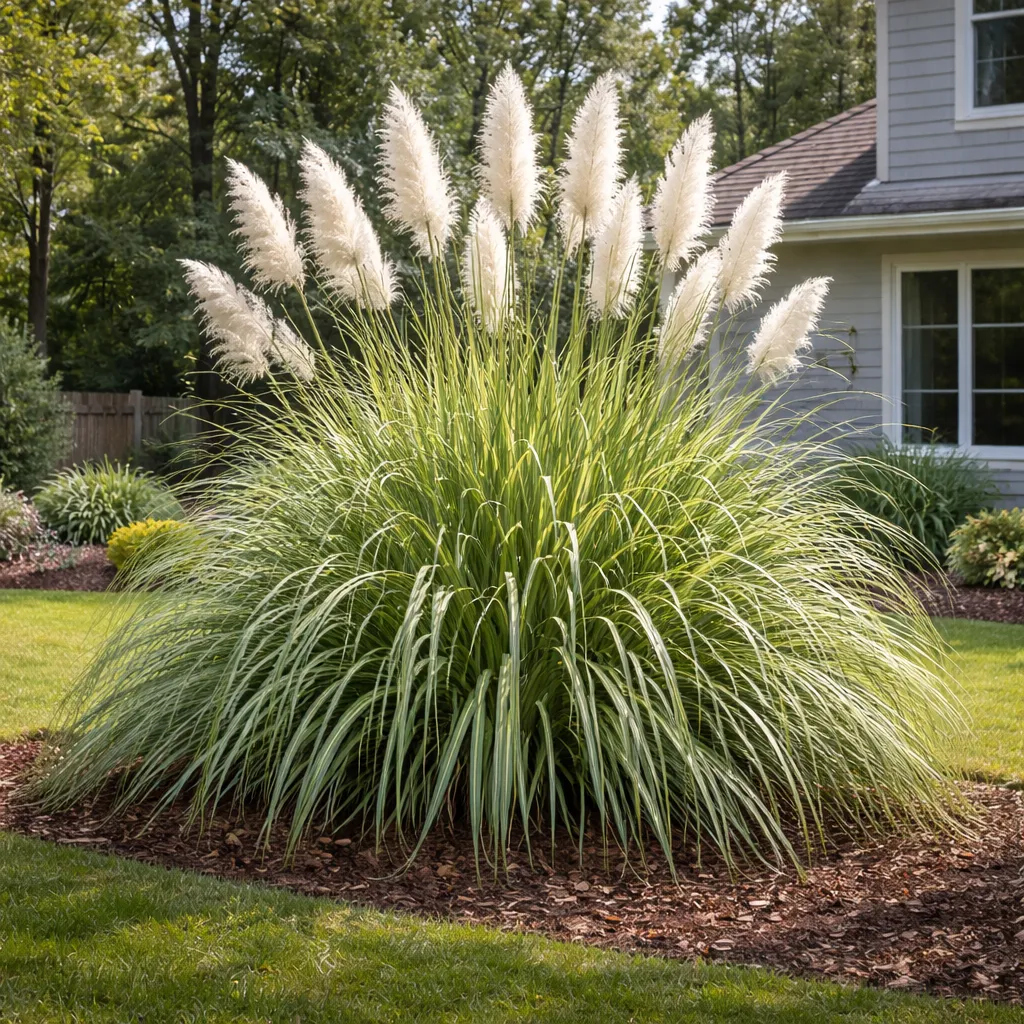
Botanical Name: Cortaderia selloana
Common Name: White Pampas Grass
Mature Height and Width:
6–8′ tall × 6–8′ wide (foliage)
8–12′ tall in bloom
Growth Habit: Large, bold, clump-forming ornamental grass with a dense basal crown and strongly arching blades. Forms a substantial, fountain-like mass with dramatic vertical plume display. Fast-growing in warm climates.
Foliage Description: Long, coarse-textured, gray-green blades with sharp margins. Leaves arch outward aggressively from a dense central clump, creating a wide footprint. Semi-evergreen in mild winters (Zone 7); foliage may brown back in colder winters.
Flower Description: Large, feathery white plumes held well above the foliage on tall, sturdy stems. Plumes are full, soft, and upright at emergence, gradually loosening slightly with age.
Bloom Time: Late summer to early fall
Fall Color: Foliage may transition to tan; plumes persist into winter if left standing.
Light Requirements: Full sun for best plume production and strongest structure.
Hardiness Zone: USDA Zones 7–10 (marginal Zone 6 with protection)
Notable Landscape Uses:
Large specimen grass; property line screening; driveway island focal point; coastal plantings; bold architectural accent; large-scale massing; modern landscape designs.
Deer Resistance: High
Large ornamental grasses such as Pampas are rarely browsed by deer. Established plants typically experience minimal damage even in moderate pressure areas.
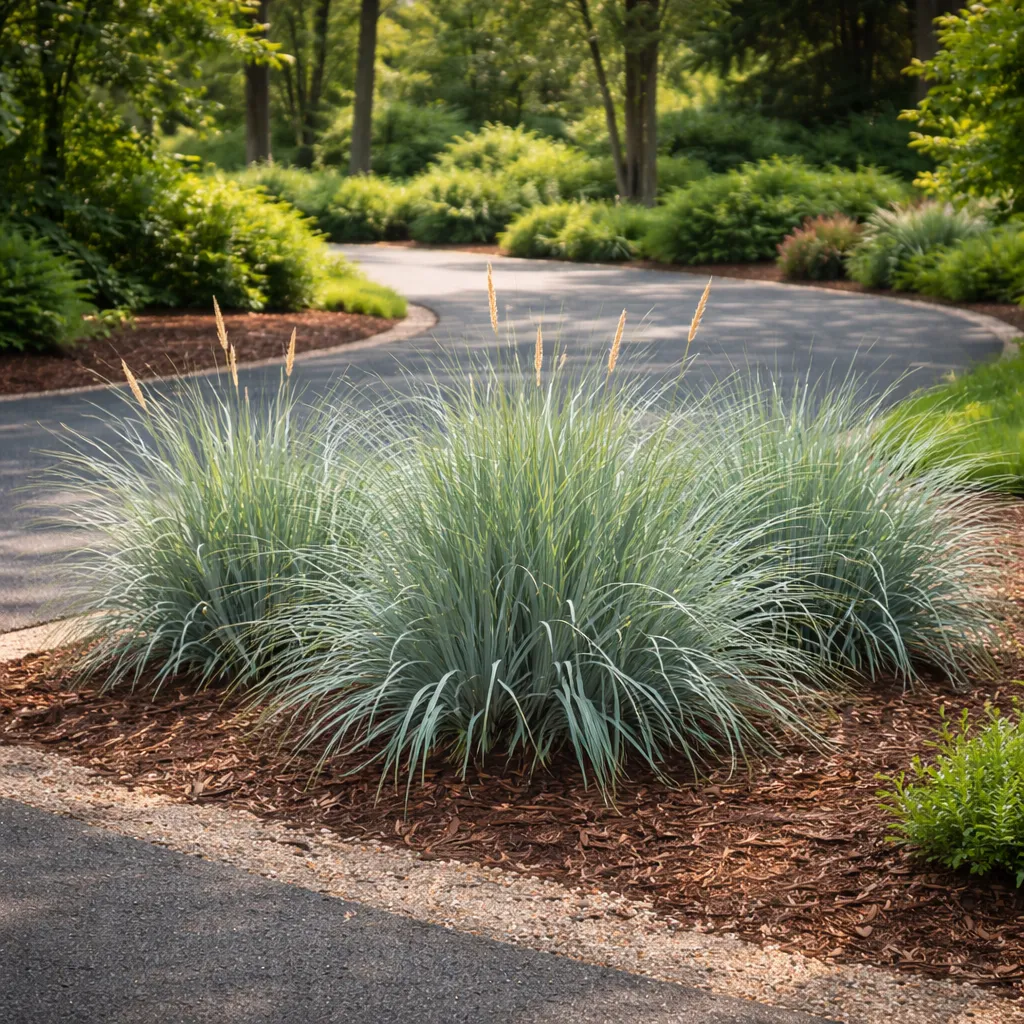
Botanical Name: Leymus arenarius ‘Blue Dune’
Common Name: Blue Dune Lyme Grass
Mature Height and Width: 2–3′ tall × 3–4′ wide (spreading)
Growth Habit: Clump-forming ornamental grass with strong horizontal rhizomes. Forms upright, arching blades in dense clumps but will gradually spread in open soils. Bold, structural presence.
Foliage Description: Broad, strap-like blades in powdery silver-blue to steely blue. Leaves are thick-textured and upright to slightly arching, maintaining color throughout the growing season.
Flower Description: Upright wheat-like tan flower spikes held above foliage in early to mid-summer. Flower heads age to light straw color.
Bloom Time: Early to mid-summer
Fall Color: Foliage remains blue into fall; may tan slightly in winter. Semi-evergreen in milder areas.
Light Requirements: Full sun for best blue coloration and strongest structure.
Hardiness Zone: USDA Zones 4–9
Notable Landscape Uses:
Coastal plantings; dune stabilization; driveway island beds; xeriscape designs; modern landscapes; mass plantings; erosion control; bold texture contrast in perennial borders.
Deer Resistance: High
Ornamental grasses are generally avoided by deer, and Blue Dune Lyme Grass is rarely browsed. Established plants sustain minimal damage even in higher-pressure areas in Zones 5–7.
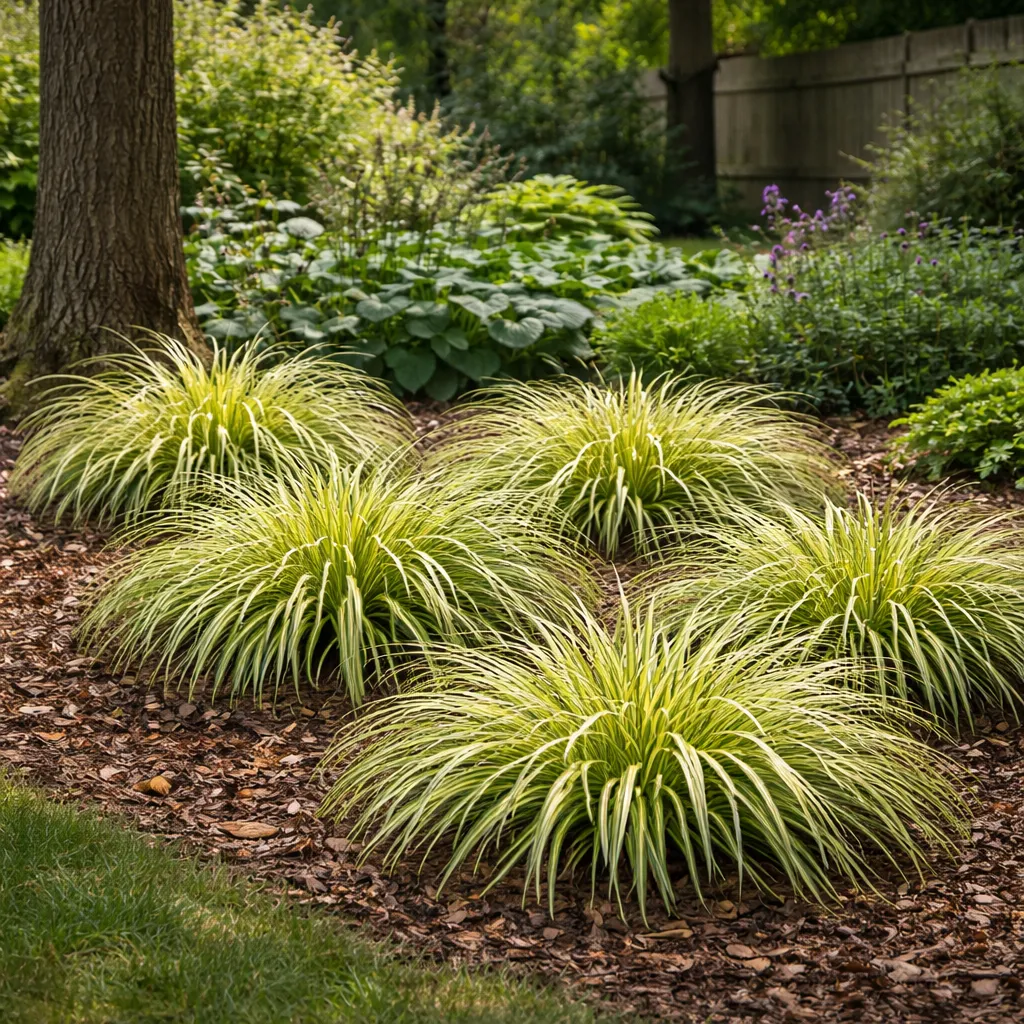
Botanical Name: Carex oshimensis ‘Evergold’
Common Name: Evergold Sedge
Mature Height and Width: 12–18″ tall × 18–24″ wide
Growth Habit: Low, arching, clump-forming evergreen sedge. Forms a graceful, cascading mound with blades that spill outward from a dense central crown. Slow to moderate growth rate.
Foliage Description: Narrow, arching blades with creamy yellow centers and dark green margins. Variegation is bold and high-contrast. Foliage remains evergreen in Zones 6–7 and maintains strong color through winter. Fine texture with soft movement.
Flower Description: Inconspicuous brownish flower spikes in spring; not ornamentally significant.
Bloom Time: Mid to late spring
Fall Color: Evergreen; maintains variegated coloration year-round.
Light Requirements: Partial shade to full shade; tolerates morning sun but prefers protection from harsh afternoon sun.
Hardiness Zone: USDA Zones 5–9
Notable Landscape Uses:
Shade foundation plantings; woodland garden edges; border edging; container plantings; groundcover in shaded beds; underplanting for trees and shrubs; Japanese-inspired gardens; courtyard plantings.
Deer Resistance: Moderate to High
Sedges are generally not a preferred deer browse. ‘Evergold’ typically sustains minimal damage in Zones 5–7, though tender new growth may occasionally be sampled.
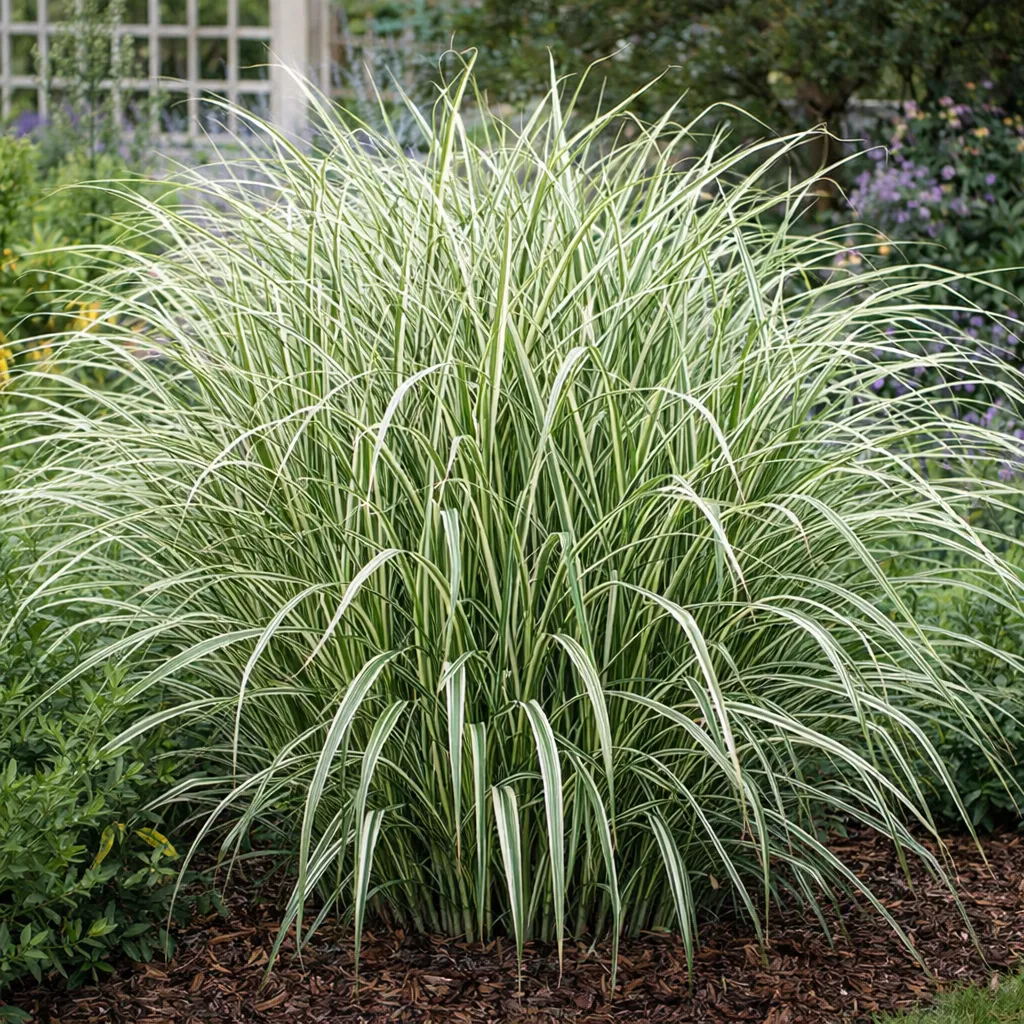
Botanical Name: Miscanthus sinensis ‘Variegatus’
Common Name: Variegated Japanese Silver Grass
Mature Height and Width:
4–6′ tall × 3–5′ wide (foliage)
6–8′ tall in bloom
Growth Habit: Upright, vase-shaped clump-forming ornamental grass with arching upper blades. Forms a dense base with a graceful outward flare. Moderate growth rate.
Foliage Description: Narrow green blades with bold creamy-white vertical striping along the margins. Variegation appears clean and consistent, creating a bright, luminous texture in the landscape. Fine to medium texture with strong vertical presence.
Flower Description: Soft reddish-copper plumes emerging in late summer, maturing to silvery-tan. Plumes are airy and held above the foliage canopy.
Bloom Time: Late summer to early fall
Fall Color: Foliage transitions to golden-tan; plumes persist into winter.
Light Requirements: Full sun for best variegation intensity and strongest upright structure.
Hardiness Zone: USDA Zones 5–9
Notable Landscape Uses:
Specimen grass in open lawn; mass plantings; privacy screening; mixed perennial borders; architectural accent in modern landscapes; seasonal structure in fall gardens; driveway island beds.
Deer Resistance: High
Miscanthus species are generally not preferred by deer. Established clumps of Variegated Japanese Silver Grass typically sustain minimal browsing in Zones 5–7.
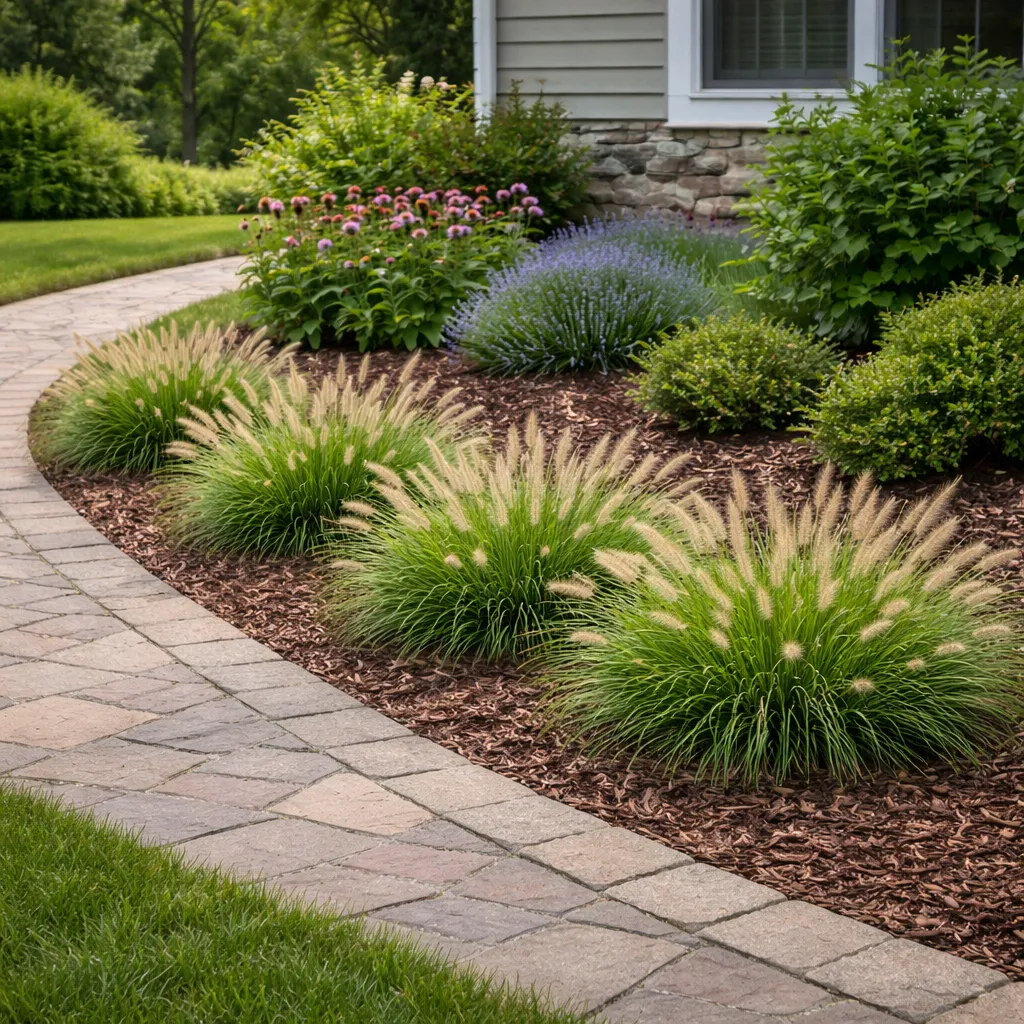
Botanical Name: Pennisetum alopecuroides ‘Piglet’
Common Name: Piglet Dwarf Fountain Grass
Mature Height and Width:
12–18″ tall × 18–24″ wide (foliage)
18–24″ tall in bloom
Growth Habit: Compact, low-growing, fountain-shaped ornamental grass forming tight clumps with a dense basal crown. Naturally rounded with gently arching blades. Moderate growth rate.
Foliage Description: Fine-textured, narrow green blades emerging upright and arching outward evenly. Foliage maintains a soft, flowing appearance through summer before transitioning to warm tan in fall.
Flower Description: Abundant soft buff to light tan bottlebrush plumes held just above the foliage. Plumes are compact and cylindrical, appearing earlier and lower than larger fountain grass cultivars.
Bloom Time: Mid to late summer
Fall Color: Foliage transitions to golden-tan; plumes persist into fall and early winter.
Light Requirements: Full sun for best density and bloom production.
Hardiness Zone: USDA Zones 5–9
Notable Landscape Uses:
Front-of-border plantings; mass plantings; edging along walkways; patio plantings; small-space gardens; container plantings; low-maintenance landscapes; slope plantings.
Deer Resistance: High
Fountain grasses are generally not preferred by deer. ‘Piglet’ typically experiences minimal browsing even in moderate deer pressure areas in Zones 5–7.
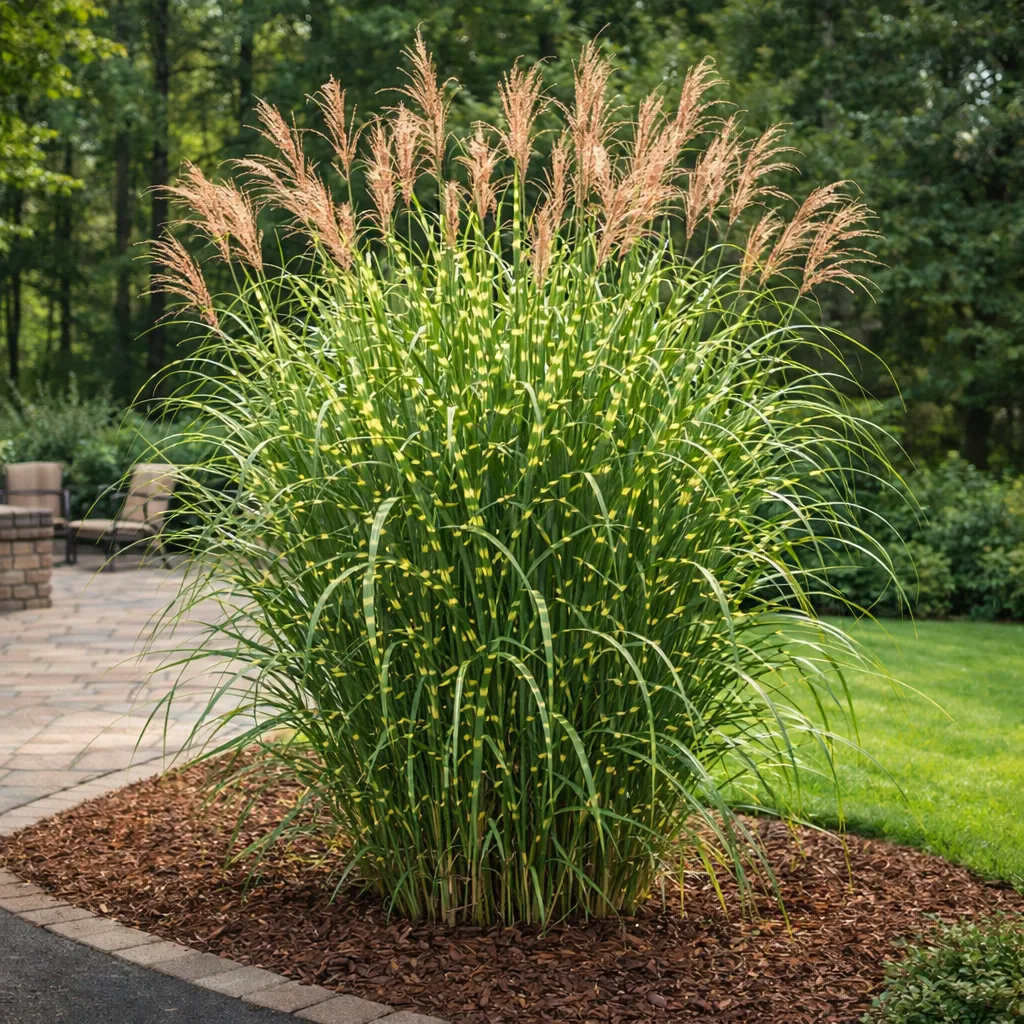
Botanical Name: Miscanthus sinensis ‘Zebrinus’
Common Name: Zebra Grass
Mature Height and Width:
4–6′ tall × 4–5′ wide (foliage)
6–8′ tall in bloom
Growth Habit: Bold, upright clump-forming ornamental grass with arching upper blades and a strong vertical presence. Forms a dense base with a slightly flaring, vase-shaped silhouette. Moderate growth rate.
Foliage Description: Broad green blades distinctly banded with irregular horizontal yellow striping across the leaf surface. Variegation appears uneven and naturally spaced along each blade. Foliage is coarse-textured and architectural.
Flower Description: Soft coppery-pink plumes in late summer that mature to tan. Plumes rise above the foliage and gradually lighten as they age.
Bloom Time: Late summer to early fall
Fall Color: Foliage transitions to golden-tan; plumes persist into winter.
Light Requirements: Full sun for best striping intensity and strongest vertical habit.
Hardiness Zone: USDA Zones 5–9
Notable Landscape Uses:
Specimen grass in open lawn; driveway island beds; privacy screens; mixed perennial borders; bold architectural accent in modern landscapes; fall structure and seasonal interest; mass plantings.
Deer Resistance: High
Miscanthus species are generally not preferred by deer. Established Zebra Grass clumps typically experience minimal browsing in Zones 5–7.
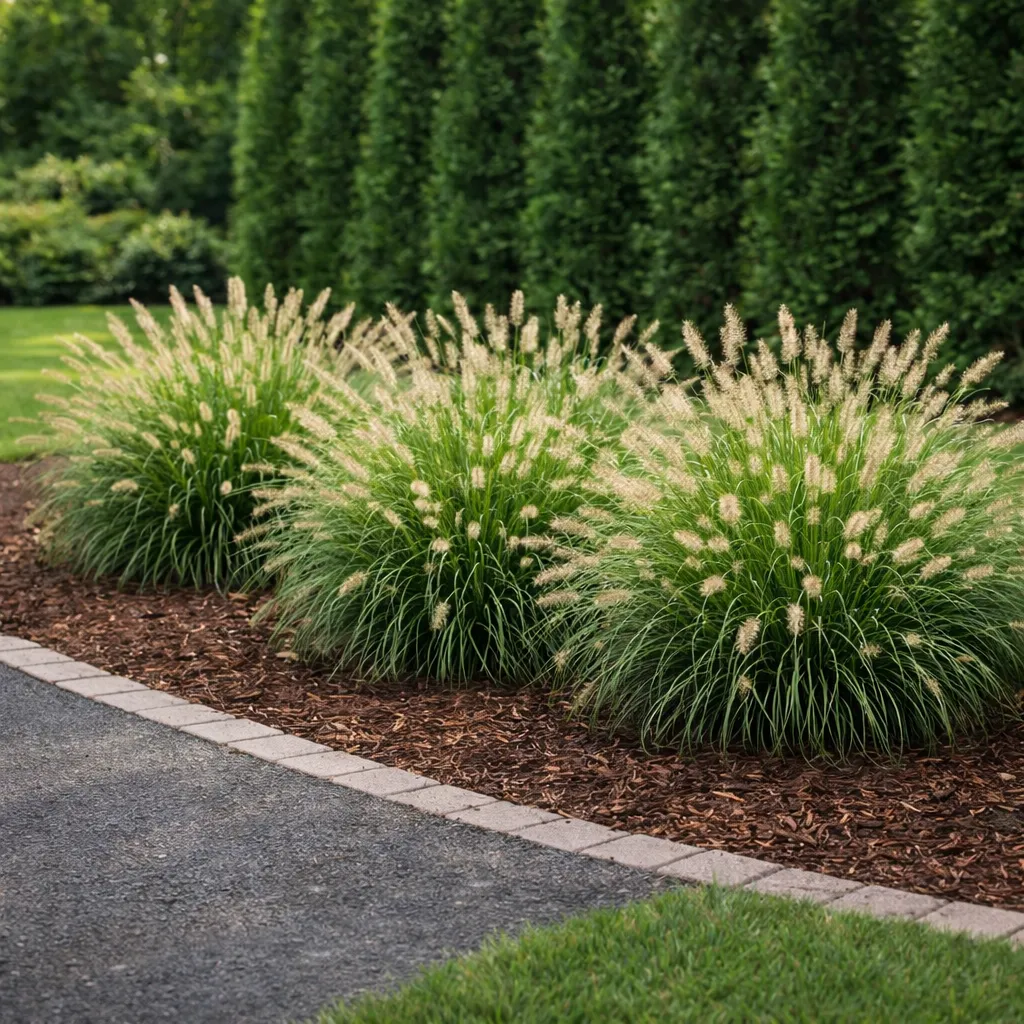
Botanical Name: Pennisetum alopecuroides ‘Hameln’
Common Name: Hameln Fountain Grass
Mature Height and Width:
2–3′ tall × 2–3′ wide
3–4′ tall in bloom
Growth Habit: Compact, rounded fountain-shaped ornamental grass with a dense base and gracefully arching foliage. Forms tidy clumps with strong basal density and soft outward flare. Moderate growth rate.
Foliage Description: Fine-textured, narrow medium-green blades forming a soft, flowing mound. Foliage emerges upright from the base and arches outward evenly, maintaining a refined but natural structure.
Flower Description: Abundant soft tan to buff-colored bottlebrush plumes held just above the foliage. Plumes are compact and cylindrical, appearing fluffy and upright before arching slightly with age.
Bloom Time: Mid to late summer
Fall Color: Foliage transitions to warm golden-tan in fall; plumes persist into early winter.
Light Requirements: Full sun for best form and bloom production.
Hardiness Zone: USDA Zones 5–9
Notable Landscape Uses:
Mass plantings; driveway edge beds; border edging; patio plantings; mixed perennial borders; low privacy screens; modern and naturalistic landscapes; erosion control on slopes.
Deer Resistance: High
Fountain grasses are generally avoided by deer. Established clumps of ‘Hameln’ typically experience minimal browsing in Zones 5–7.
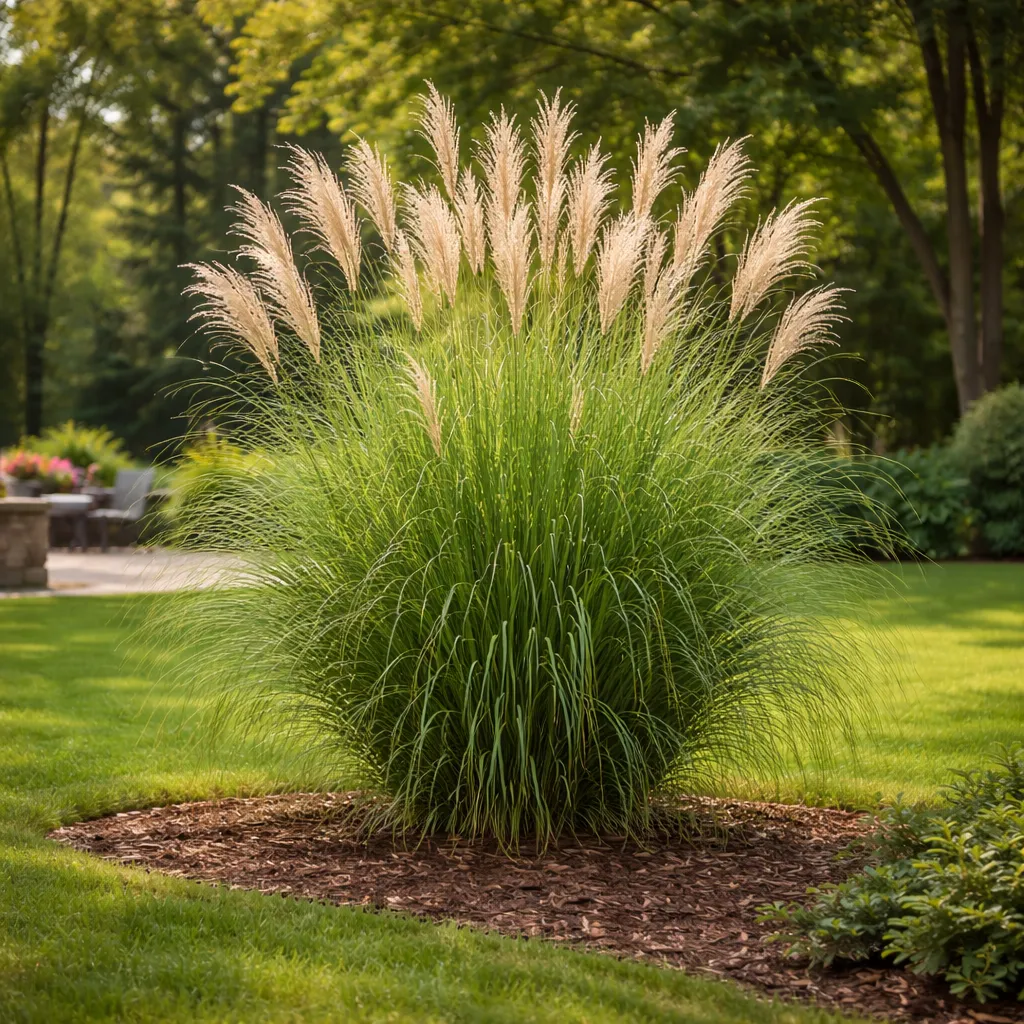
Botanical Name: Miscanthus sinensis ‘Graziella’
Common Name: Graziella Maiden Grass
Mature Height and Width:
4–5′ tall × 3–4′ wide (foliage)
6–7′ tall in bloom
Growth Habit: Upright, vase-shaped ornamental grass with strong vertical structure and arching upper blades. Forms a dense clump with a narrow base and slightly flaring crown. Moderate growth rate.
Foliage Description: Fine-textured, narrow green blades with a subtle silvery midrib. Foliage maintains clean vertical lines through summer before developing soft tan tones in fall.
Flower Description: Tall, soft tan to creamy plumes held above foliage. Plumes are feathery and full but not overly heavy, aging to a light buff color.
Bloom Time: Late summer to early fall
Fall Color: Foliage transitions to golden-tan tones, with plumes persisting into winter.
Light Requirements: Full sun for strongest vertical habit and best flowering.
Hardiness Zone: USDA Zones 5–9
Notable Landscape Uses:
Specimen grass in open lawn; driveway island plantings; large mixed borders; privacy screens; seasonal structure in modern landscapes; fall interest focal point; mass plantings.
Deer Resistance: High
Ornamental grasses, including Miscanthus, are rarely browsed by deer. Established clumps typically sustain minimal damage even in higher-pressure areas in Zones 5–7.
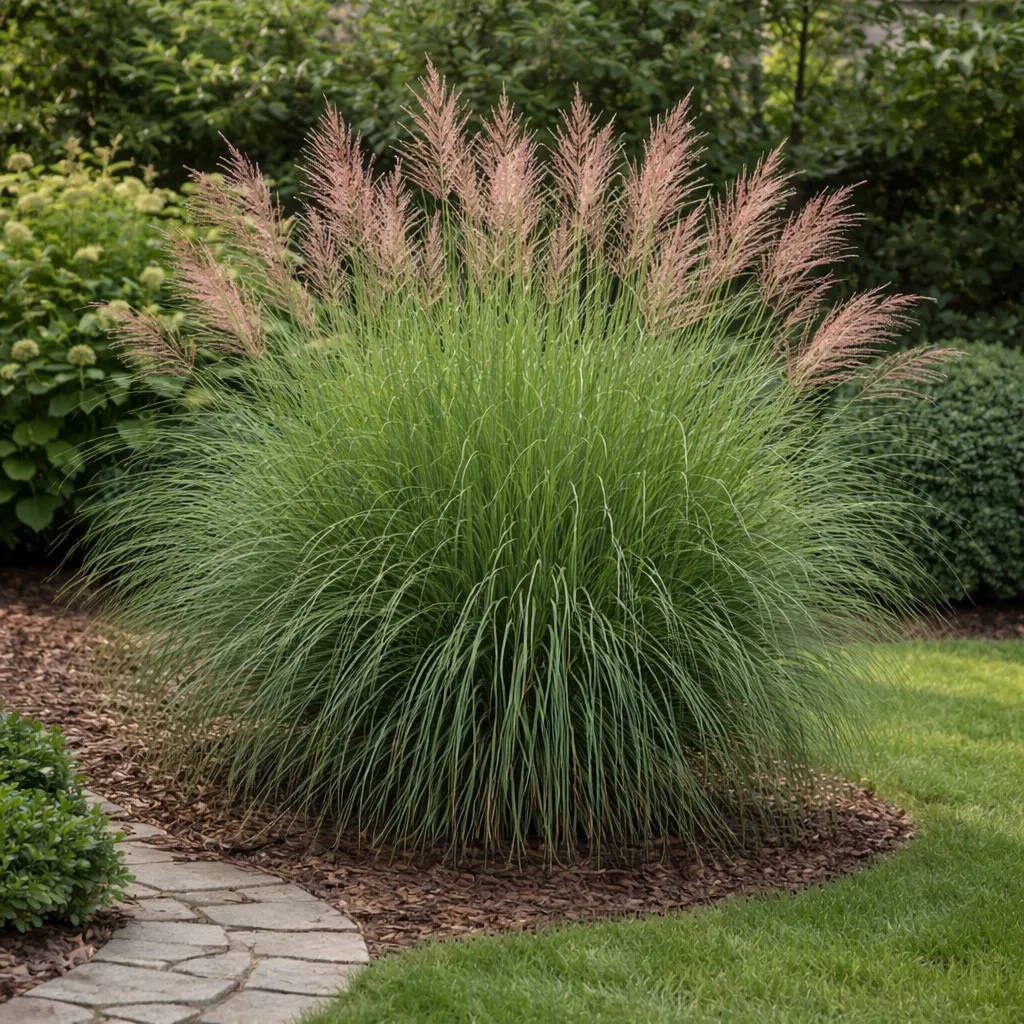
Botanical Name: Miscanthus sinensis ‘Gracillimus’
Common Name: Gracillimus Maiden Grass
Mature Height and Width:
4–6′ tall × 3–4′ wide (foliage)
6–7′ tall in bloom
Growth Habit: Upright, narrow vase-shaped clump with fine-textured foliage and a refined, flowing silhouette. Forms a dense base with a soft outward flare at mid-height. Moderate growth rate.
Foliage Description: Very narrow, fine-textured green blades with a subtle silvery midrib. More delicate and airy in appearance than broader Miscanthus cultivars. Maintains strong vertical structure through summer.
Flower Description: Coppery-pink plumes emerging in late summer, maturing to silvery-tan. Plumes are narrower and more refined than many other cultivars, rising just above the foliage canopy.
Bloom Time: Late summer to early fall
Fall Color: Foliage transitions to warm golden-tan; plumes persist into winter.
Light Requirements: Full sun for best density and flowering.
Hardiness Zone: USDA Zones 5–9
Notable Landscape Uses:
Specimen grass in island beds; driveway edges; mass plantings; privacy screening; mixed perennial borders; modern landscapes; fall-structure focal point; large-scale plantings.
Deer Resistance: High
Miscanthus cultivars are generally not preferred by deer. Established clumps of ‘Gracillimus’ typically sustain minimal browsing in Zones 5–7.