
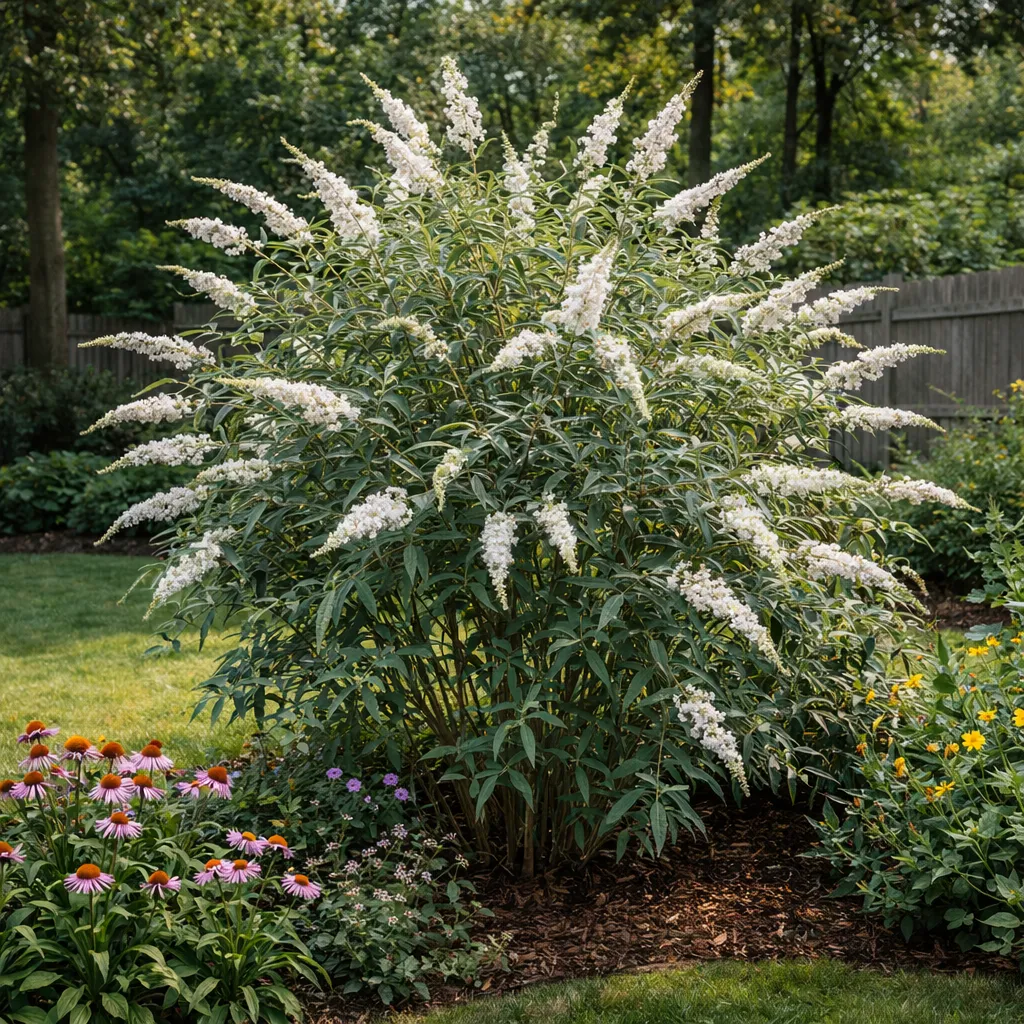
Botanical Name: Buddleja davidii ‘White Profusion’
Common Name: White Profusion Butterfly Bush
Mature Height and Width:
6–10′ tall × 5–8′ wide
Growth Habit: Upright, arching deciduous shrub with an open, vase-shaped structure. Long flowering panicles are borne on new growth. Naturally loose and slightly airy, not dense or compact. Fast-growing.
Foliage Description: Lance-shaped gray-green leaves with a slightly silvery underside. Medium texture with a soft, matte finish. Deciduous in Zones 5–7.
Flower Description: Long, tapering panicles of pure white flowers with small yellow-orange eyes. Flower spikes can reach 8–12 inches long and arch slightly outward. Highly attractive to pollinators.
Bloom Time: Mid-summer through early fall (on new wood)
Fall Color: Foliage typically drops without significant fall coloration.
Light Requirements: Full sun for best flowering and strongest structure.
Hardiness Zone: USDA Zones 5–9
Notable Landscape Uses:
Pollinator gardens; mixed shrub borders; backyard focal plant; mass plantings; informal hedges; cottage gardens; summer color anchor; naturalized plantings.
Deer Resistance: Moderate
Butterfly bush is not typically a preferred browse, though tender new growth may be sampled under pressure. Established plants usually recover quickly from minor damage in Zones 5–7.
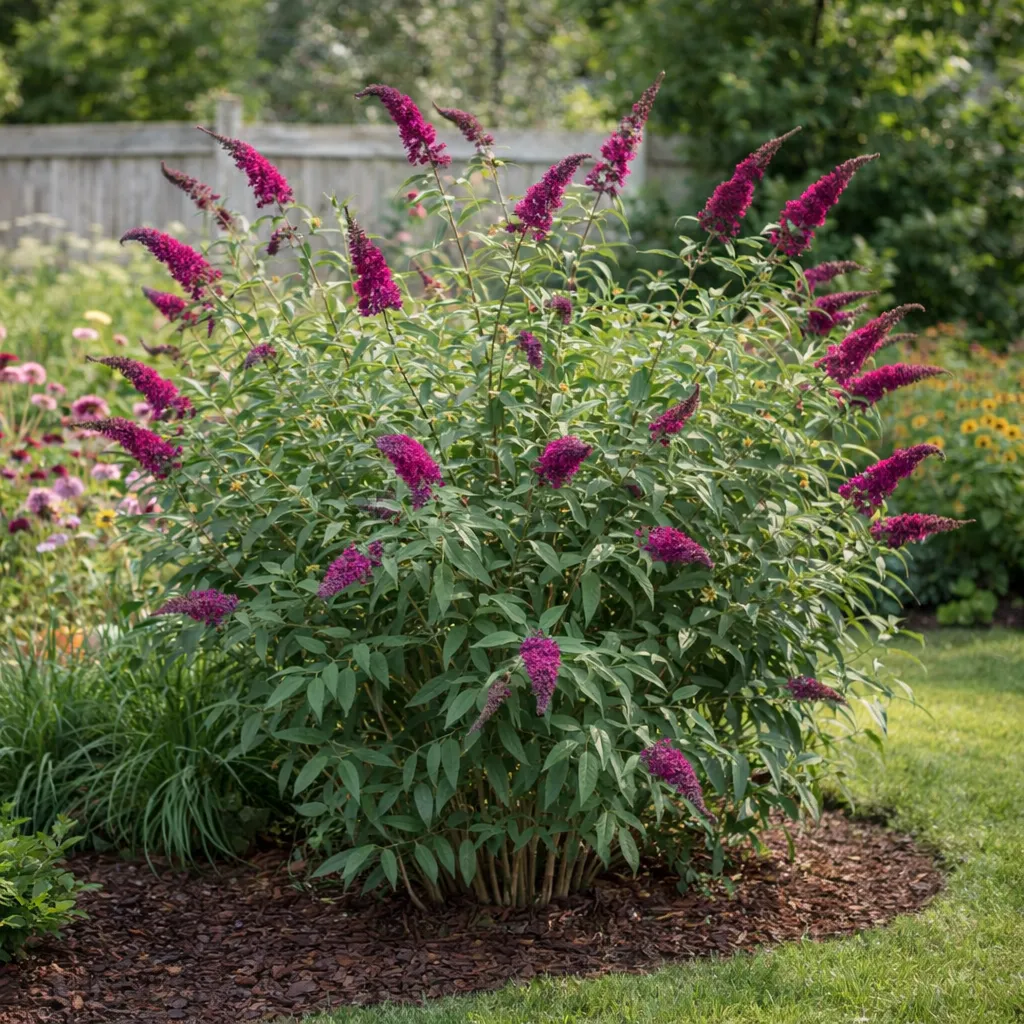
Botanical Name: Buddleja davidii ‘Royal Red’
Common Name: Royal Red Butterfly Bush
Mature Height and Width:
6–8′ tall × 5–6′ wide
Growth Habit: Upright, arching deciduous shrub with an open, vase-shaped structure. Produces long flowering panicles on new growth. Naturally airy and layered rather than dense or mounded. Fast-growing.
Foliage Description: Lance-shaped gray-green leaves with a soft, matte texture and slightly lighter undersides. Medium texture. Deciduous in Zones 5–7.
Flower Description: Long, tapering panicles of deep magenta-purple flowers with small orange throats. Flower spikes are typically 8–12 inches long and arch outward slightly. Color reads richer and darker than many standard purple selections.
Bloom Time: Mid-summer through early fall (blooms on new wood)
Fall Color: Foliage drops without significant fall coloration.
Light Requirements: Full sun for best bloom production and strongest structure.
Hardiness Zone: USDA Zones 5–9
Notable Landscape Uses:
Pollinator gardens; backyard focal shrub; mass plantings; informal hedges; cottage gardens; summer color anchor in mixed borders; wildlife gardens; naturalized plantings.
Deer Resistance: Moderate
Butterfly bush is generally not a preferred browse, though tender new growth may be sampled in high-pressure areas. Established plants typically recover quickly from minor browsing in Zones 5–7.
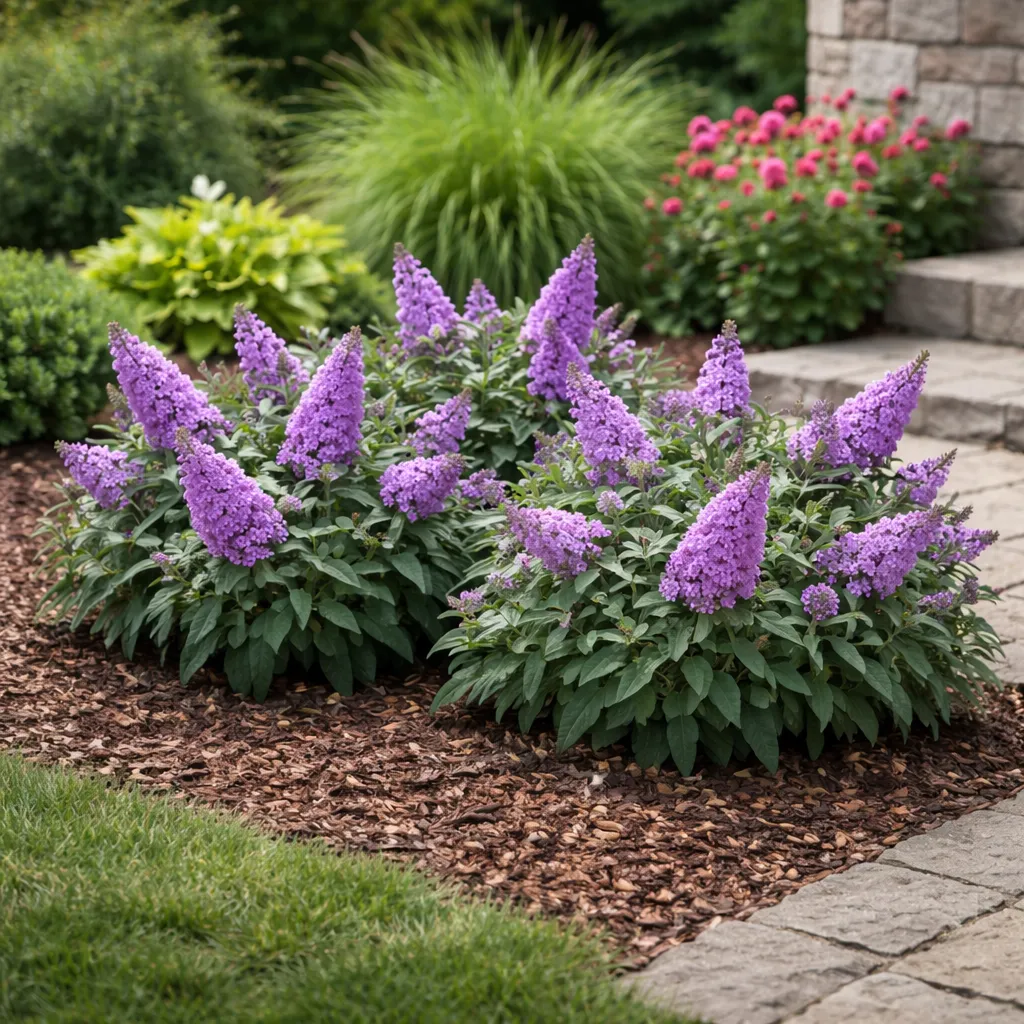
Botanical Name: Buddleja ‘SMNBDBT’
Common Name: Pugster® Amethyst Butterfly Bush
Mature Height and Width:
2–3′ tall × 2–3′ wide
Growth Habit: Compact, dense, rounded deciduous shrub with sturdy, thick stems and tight branching. Naturally low and broad with a solid, compact presence. Moderate growth rate.
Foliage Description: Lance-shaped gray-green leaves with a slightly silvery underside. Leaves are proportionally smaller and more densely arranged than larger butterfly bush cultivars.
Flower Description: Large, thick, cone-shaped panicles in rich amethyst-purple. Flower spikes are proportionally large for the plant’s compact size and are held upright above the foliage canopy.
Bloom Time: Early summer through early fall (blooms on new wood)
Fall Color: Foliage drops without significant fall coloration.
Light Requirements: Full sun for strongest flowering and compact growth.
Hardiness Zone: USDA Zones 5–9
Notable Landscape Uses:
Front-of-border plantings; patio-edge accents; container plantings; mass plantings; small-space gardens; pollinator gardens; low seasonal hedge.
Deer Resistance: Moderate
Butterfly bush is generally not a preferred browse, though tender new growth may be sampled under heavy pressure. Established plants typically recover well in Zones 5–7.
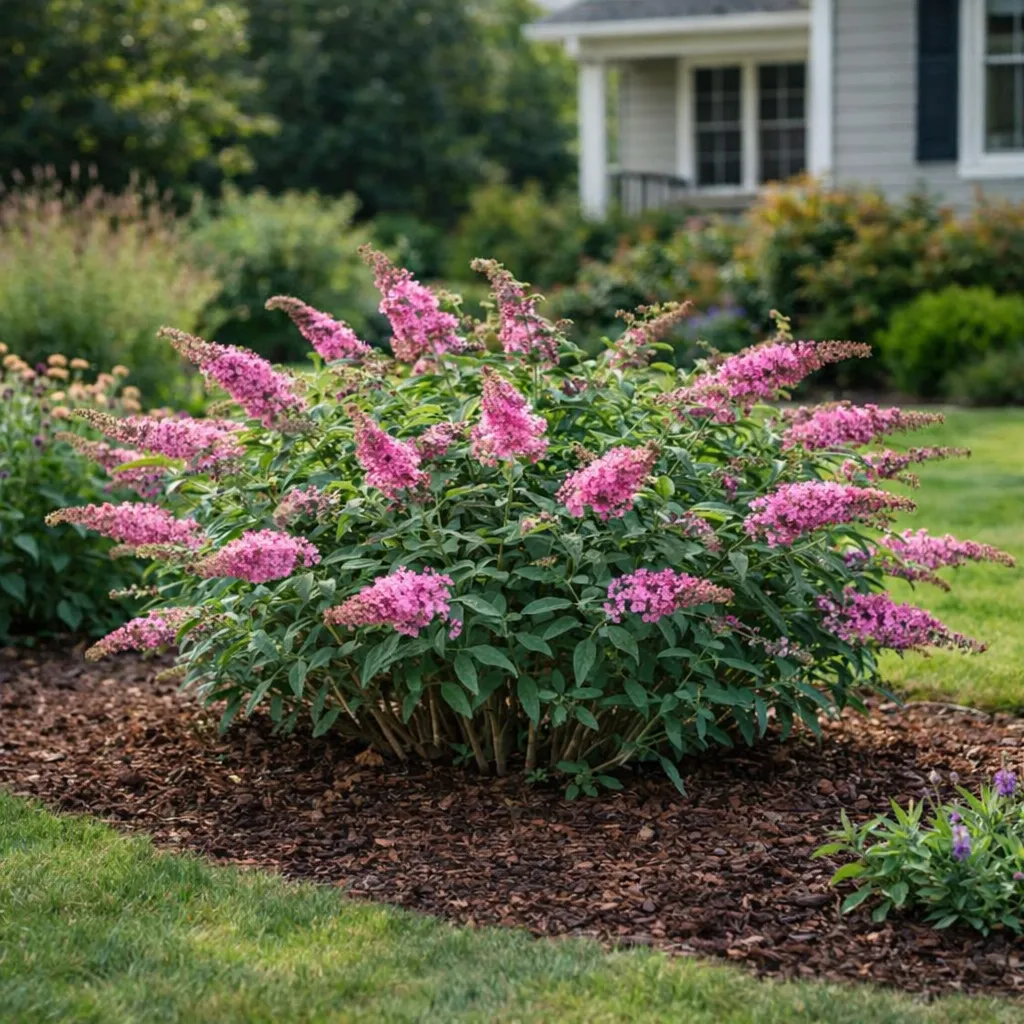
Botanical Name: Buddleja ‘SMNBDBP’
Common Name: Pugster® Pinker® Butterfly Bush
Mature Height and Width:
2–3′ tall × 2–3′ wide
Growth Habit: Compact, dense, rounded deciduous shrub with sturdy, thick stems and tight branching. Naturally forms a low, broad mound with strong structural support for large flower panicles. Moderate growth rate.
Foliage Description: Lance-shaped gray-green leaves with a soft matte texture and lighter undersides. Foliage is dense and proportionally compact relative to plant size.
Flower Description: Thick, cone-shaped panicles in vibrant clear pink, brighter and warmer than magenta-toned cultivars. Flower spikes are proportionally large for the shrub’s compact size and are held upright above the foliage canopy.
Bloom Time: Early summer through early fall (blooms on new wood)
Fall Color: Foliage drops without significant fall coloration.
Light Requirements: Full sun for strongest flowering and compact structure.
Hardiness Zone: USDA Zones 5–9
Notable Landscape Uses:
Front-of-border plantings; patio-edge accents; container plantings; mass plantings; small-space gardens; pollinator gardens; low seasonal hedge.
Deer Resistance: Moderate
Butterfly bush is generally not a preferred browse, though tender new growth may be sampled under heavy pressure. Established plants typically recover well in Zones 5–7.
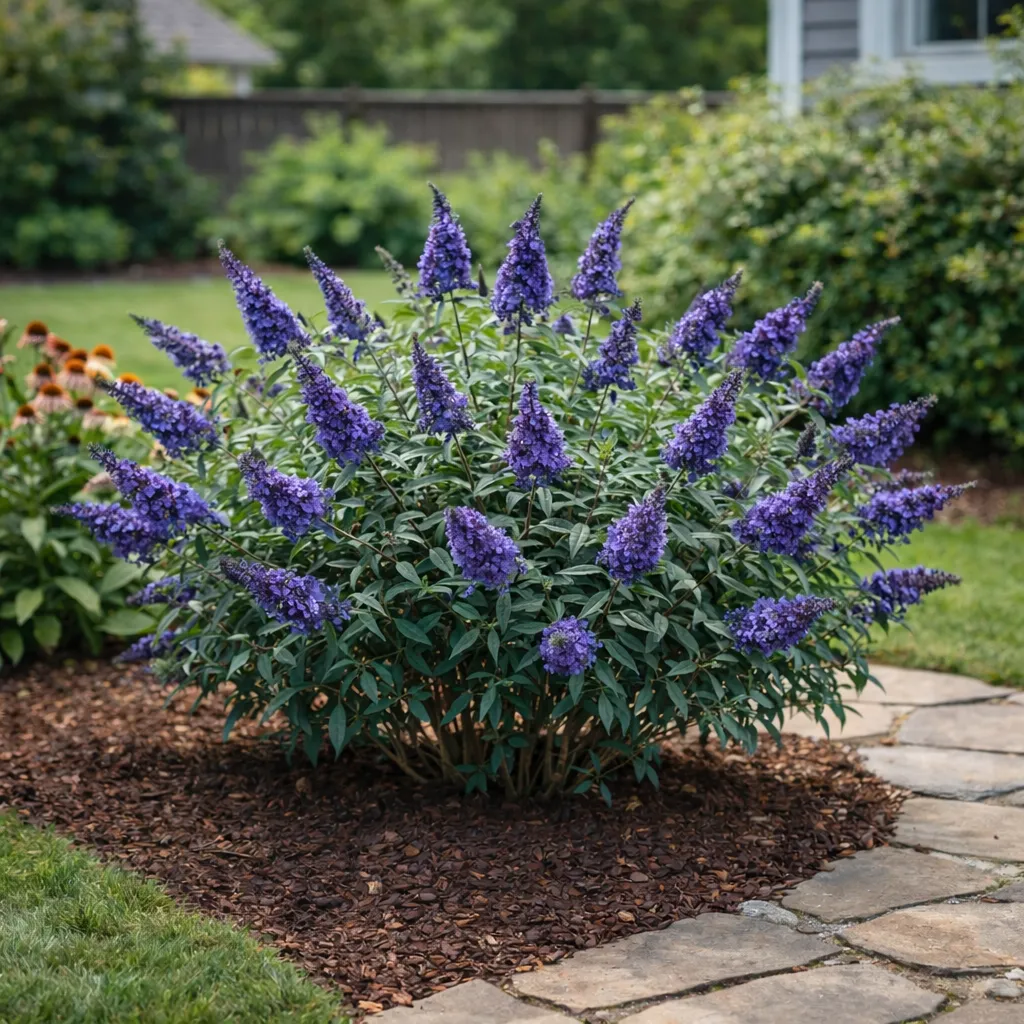
Botanical Name: Buddleja x ‘SMNBDBT’ (Pugster® Blue)
Common Name: Pugster Blue Butterfly Bush
Mature Height and Width: 2–3′ tall × 2–3′ wide
Growth Habit: Compact, mounded habit with thick, sturdy stems. Unlike older butterfly bush types, maintains a dense, dwarf form without becoming leggy.
Foliage Description: Lance-shaped gray-green leaves with a slightly silvery cast. Dense foliage held tightly along sturdy stems. Deciduous in Zones 5–7.
Flower Description: Large, full violet-blue flower panicles with bright orange eyes. Blooms are disproportionately large relative to plant size, held upright on thick stems. Highly attractive to pollinators.
Bloom Time: Early summer through fall (blooms on new wood).
Fall Color: Insignificant; foliage drops after frost.
Light Requirements: Full sun; requires at least 6+ hours of direct sunlight for best flowering and compact growth.
Hardiness Zone: USDA Zones 5–9
Notable Landscape Uses:
Front-of-border perennial beds; small foundation plantings; patio edge plantings; pollinator gardens; mass plantings for summer color; container use; compact accent in tight residential spaces.
Deer Resistance: High
Butterfly bush is generally avoided by deer due to aromatic foliage and coarse texture. Browsing is uncommon even in moderate deer pressure areas in Zones 5–7.
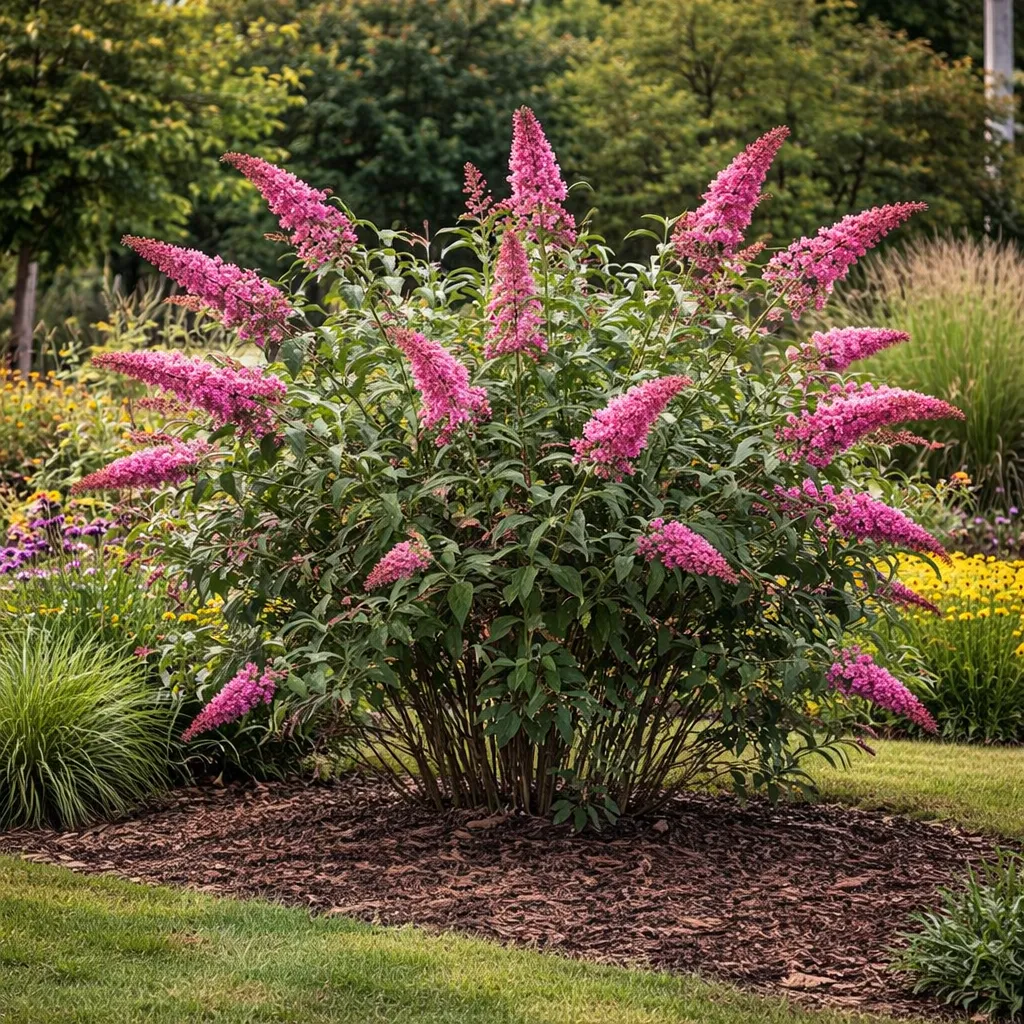
Botanical Name: Buddleja davidii ‘Pink Delight’
Common Name: Pink Delight Butterfly Bush
Mature Height and Width:
6–8′ tall × 5–7′ wide
Growth Habit: Upright, arching deciduous shrub with an open, vase-shaped structure. Strong vertical stems with outward-curving secondary branching. Fast-growing.
Foliage Description: Lance-shaped gray-green leaves with lighter undersides. Medium texture with slightly looser foliage spacing than compact cultivars.
Flower Description: Long, tapered panicles in bright rosy-pink. Flower spikes are slender to moderately thick and typically 8–12 inches long, often arching slightly outward.
Bloom Time: Mid-summer through early fall (blooms on new wood)
Fall Color: Foliage drops without significant fall coloration.
Light Requirements: Full sun for strongest flowering and upright structure.
Hardiness Zone: USDA Zones 5–9
Notable Landscape Uses:
Pollinator gardens; mixed shrub borders; informal hedges; summer anchor plant; cottage gardens; naturalized plantings; large-scale perennial borders.
Deer Resistance: Moderate
Butterfly bush is generally not a preferred browse, though tender new growth may be sampled in high-pressure areas. Established plants typically recover well in Zones 5–7.
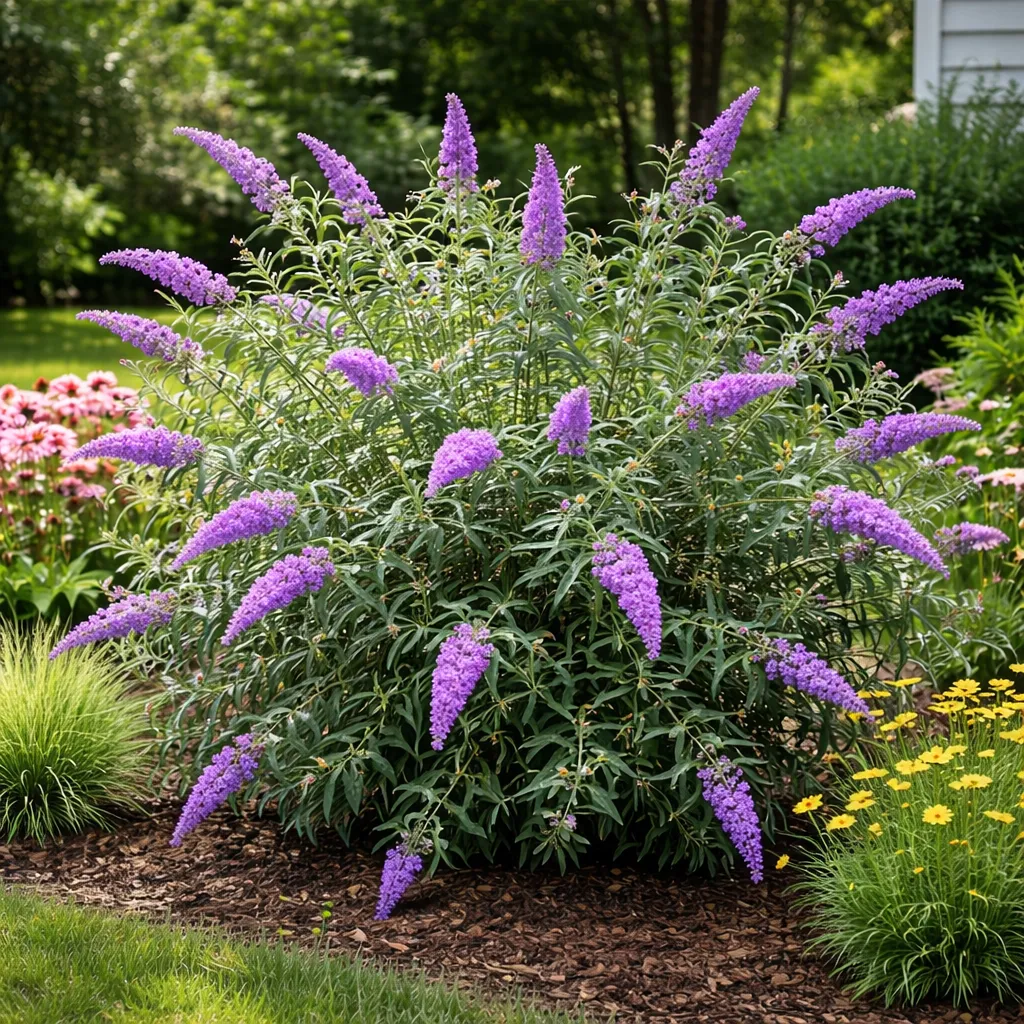
Botanical Name: Buddleja davidii ‘Nanho Purple’
Common Name: Nanho Purple Butterfly Bush
Mature Height and Width: 4–6′ tall × 4–6′ wide
Growth Habit: Upright to arching, airy shrub with slender, outward-spreading branches. Open framework with a soft, fountain-like appearance. Moderate to fast growth rate.
Foliage Description: Narrow, lance-shaped gray-green leaves with a slightly silvery underside. Foliage has a fine texture and contrasts well with flowering spikes. Deciduous in Zones 5–7.
Flower Description: Long, slender panicles of soft lavender-purple flowers with orange throats. Flower spikes are narrower and more refined than older butterfly bush cultivars. Highly attractive to pollinators.
Bloom Time: Mid-summer through early fall (blooms on new wood).
Fall Color: Insignificant; foliage drops after frost.
Light Requirements: Full sun; requires direct sunlight for best flowering and compact growth.
Hardiness Zone: USDA Zones 5–9 (may die back to ground in Zone 5 winters and regrow from base).
Notable Landscape Uses:
Perennial borders; pollinator gardens; mass plantings; informal hedges; cottage gardens; mixed shrub borders; summer color accent in foundation beds; patio-adjacent plantings where fragrance and pollinator activity are desired.
Deer Resistance: High
Butterfly bush is generally avoided by deer due to aromatic foliage and texture. Browsing is uncommon in Zones 5–7, even in moderate deer pressure areas.
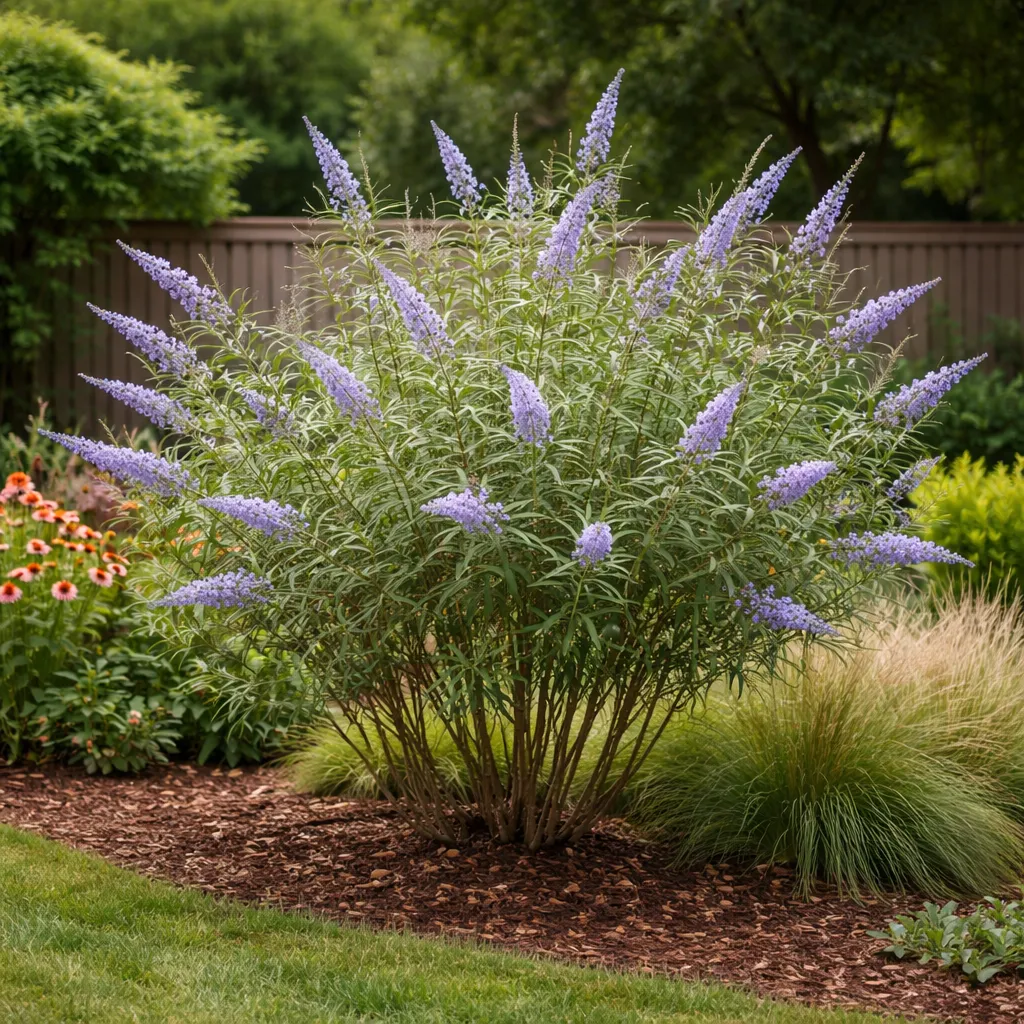
Botanical Name: Buddleja davidii ‘Nanho Blue’
Common Name: Nanho Blue Butterfly Bush
Mature Height and Width:
4–6′ tall × 3–5′ wide
Growth Habit: Upright, airy deciduous shrub with a somewhat narrower, vase-shaped structure. More refined and open than larger, heavier-blooming cultivars. Moderate growth rate.
Foliage Description: Narrow, lance-shaped gray-green leaves with a soft matte texture and lighter undersides. Finer texture than many standard Buddleja selections.
Flower Description: Slender, elongated panicles of soft violet-blue flowers with small orange throats. Flower spikes are narrower and lighter in appearance than thick, heavy cultivars like Miss Molly.
Bloom Time: Mid-summer through early fall (blooms on new wood)
Fall Color: Foliage drops without significant fall coloration.
Light Requirements: Full sun for best flowering and structure.
Hardiness Zone: USDA Zones 5–9
Notable Landscape Uses:
Pollinator gardens; mixed perennial borders; informal hedges; cottage gardens; mass plantings; wildlife gardens; summer color anchor in medium-scale landscapes.
Deer Resistance: Moderate
Butterfly bush is generally not a preferred browse, though tender new growth may be sampled in high-pressure areas. Established plants typically recover well in Zones 5–7.
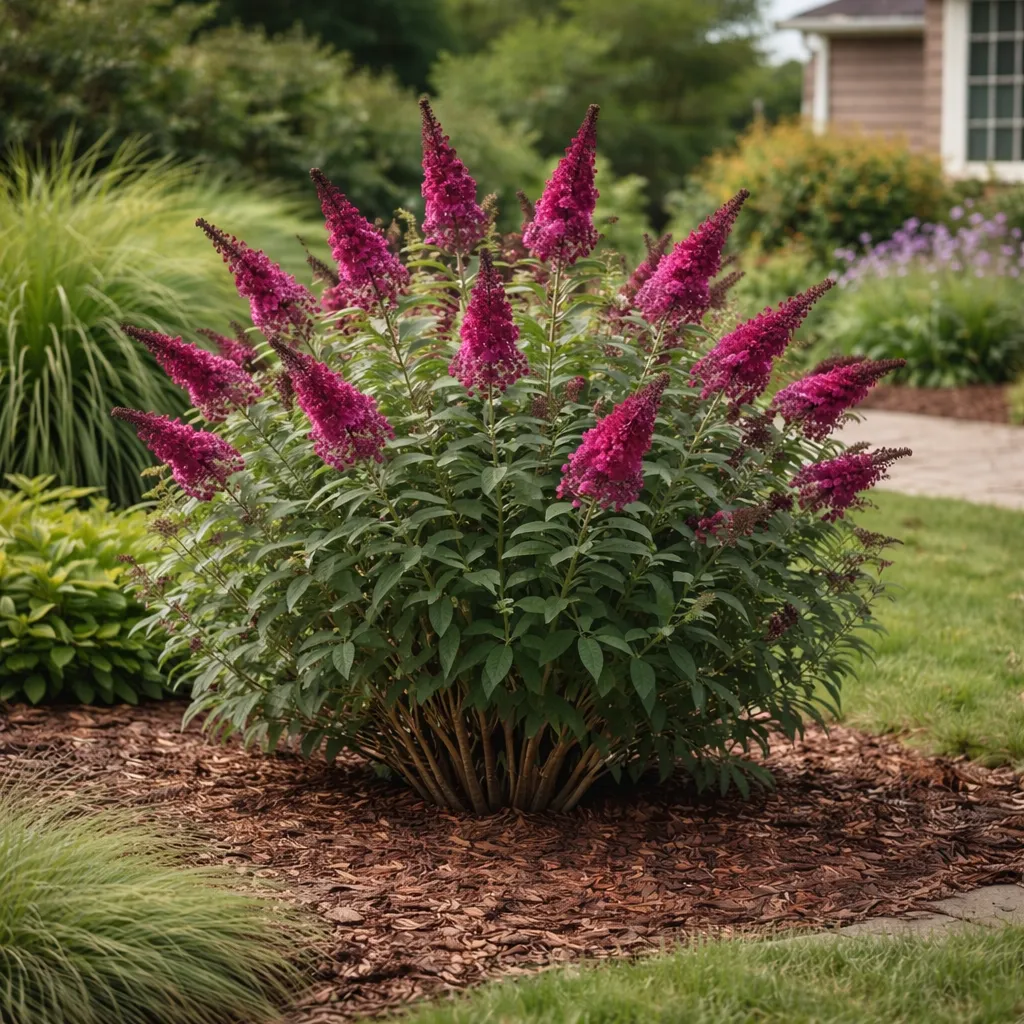
Botanical Name: Buddleja davidii ‘Miss Molly’
Common Name: Miss Molly Butterfly Bush
Mature Height and Width:
4–5′ tall × 4–5′ wide
Growth Habit: Compact, upright-rounded deciduous shrub with dense branching and a strong central framework. More substantial and upright than dwarf series selections. Moderate growth rate.
Foliage Description: Lance-shaped dark green leaves with a slightly lighter underside. Foliage is proportionally broader and denser than smaller dwarf cultivars. Deciduous in Zones 5–7.
Flower Description: Thick, cone-shaped panicles in vibrant raspberry-red to magenta-red. Flower spikes are dense, upright, and highly saturated in color. Typically 6–10 inches long.
Bloom Time: Early to mid-summer through early fall (blooms on new wood)
Fall Color: Foliage drops without significant fall coloration.
Light Requirements: Full sun for strongest color and bloom production.
Hardiness Zone: USDA Zones 5–9
Notable Landscape Uses:
Pollinator gardens; mixed shrub borders; patio-edge plantings; mass plantings; cottage gardens; backyard focal shrub; low informal hedge.
Deer Resistance: Moderate
Butterfly bush is generally not a preferred browse, though new growth may be sampled in high-pressure areas. Established plants typically recover well in Zones 5–7.
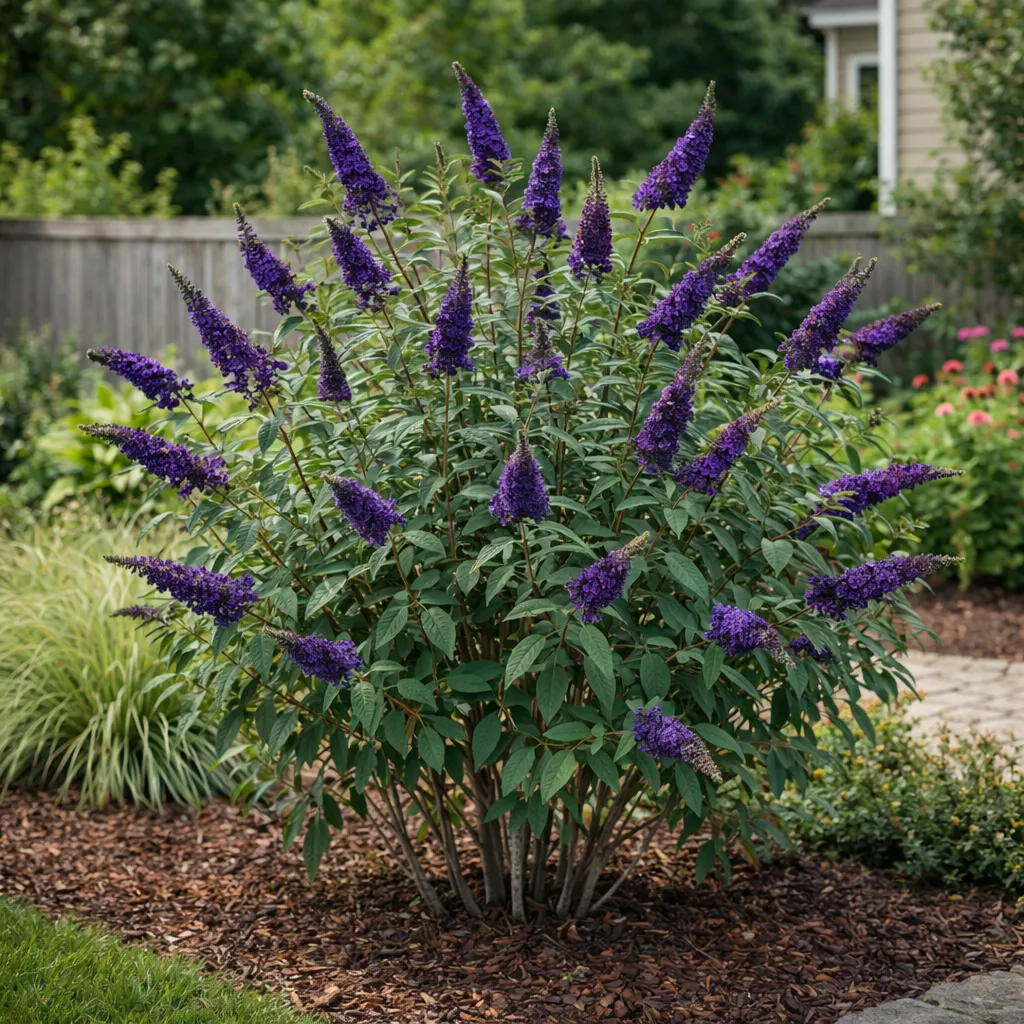
Botanical Name: Buddleja davidii ‘Black Knight’
Common Name: Black Knight Butterfly Bush
Mature Height and Width:
6–8′ tall × 5–7′ wide
Growth Habit: Upright, arching deciduous shrub with an open, vase-shaped structure. Produces long flowering panicles on new growth. Naturally airy and layered with visible interior branching. Fast-growing.
Foliage Description: Lance-shaped gray-green leaves with a slightly silvery underside. Medium texture with a soft matte appearance. Deciduous in Zones 5–7.
Flower Description: Long, tapering panicles in deep, dark violet-purple — among the darkest of butterfly bush cultivars. Flowers feature small orange centers. Panicles typically 8–12 inches long and arch slightly outward.
Bloom Time: Mid-summer through early fall (blooms on new wood)
Fall Color: Foliage drops without significant fall coloration.
Light Requirements: Full sun for best flowering and strongest structure.
Hardiness Zone: USDA Zones 5–9
Notable Landscape Uses:
Pollinator gardens; mixed shrub borders; backyard focal shrub; informal hedges; cottage gardens; summer anchor plant; naturalized plantings; large-scale perennial borders.
Deer Resistance: Moderate
Butterfly bush is generally not a preferred browse, though tender new growth may be sampled under pressure. Established plants typically recover well in Zones 5–7.