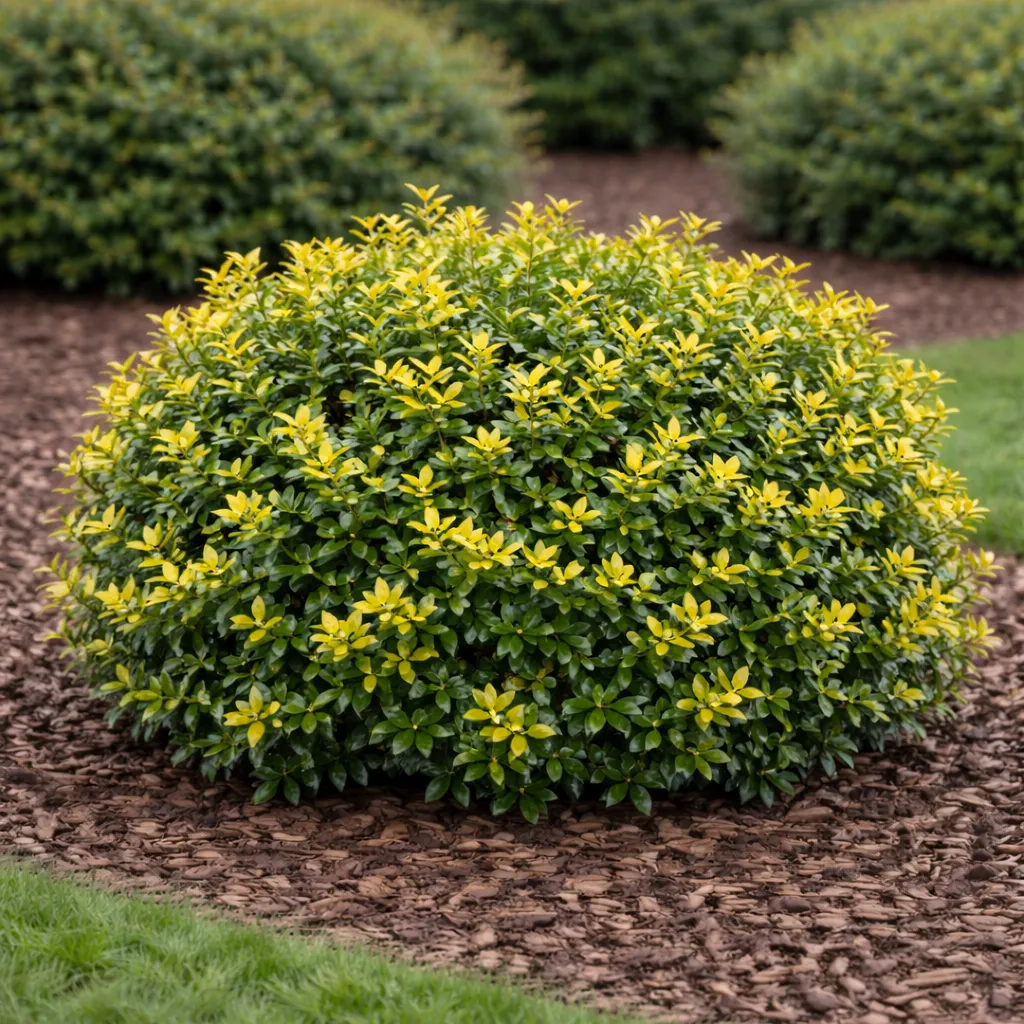
Touch of Gold™ Holly
Ilex crenata ‘ANNYS1’ (Touch of Gold™)
- Mature Size: 2–3′ H × 3–4′ W
- Light Requirements: Full sun to part shade; brightest golden color in full sun
- Ideal Soil Conditions: Moist, well-drained, slightly acidic soil; adaptable to clay or sandy soils, but avoid soggy conditions
- Notable Characteristics: Compact, mounding evergreen with dense golden-yellow foliage that holds its color year-round. Finer texture than most hollies and excellent color contrast in borders, low hedges, or foundation plantings. Naturally tidy with little maintenance.
- Deer Resistance: Moderate to High — rarely browsed once established.
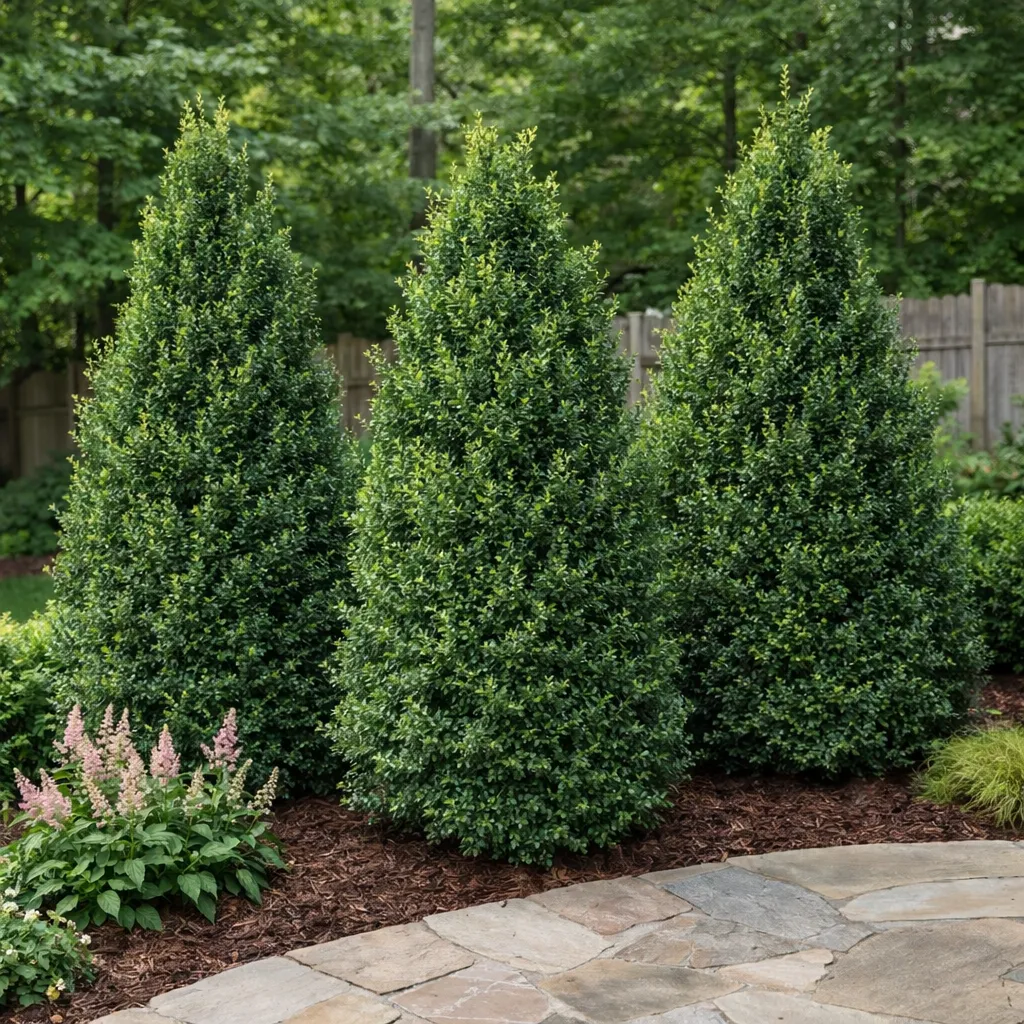
Botanical Name: Ilex crenata ‘Steeds’
Common Name: Steeds Japanese Holly
Mature Height and Width: 6–8′ tall × 4–5′ wide
Growth Habit: Upright, narrow pyramidal evergreen shrub with dense branching. Maintains a naturally refined vertical form without heavy shearing. Moderate growth rate.
Foliage Description: Small, oval, smooth-edged leaves with a deep glossy green color. Dense foliage creates a fine-textured appearance and strong evergreen structure. Evergreen in Zones 5–8.
Flower Description: Small white flowers in late spring; inconspicuous. Female plants may produce small black berries if pollinated, though fruiting is typically light in landscape use.
Bloom Time: Late spring
Fall Color: Evergreen; retains dark green coloration through winter.
Light Requirements: Full sun to partial shade; best density and color in full sun.
Hardiness Zone: USDA Zones 5–8
Notable Landscape Uses:
Narrow foundation plantings; low privacy screens; formal hedges; driveway edge accents; framing entryways; structured background planting in mixed shrub beds; commercial landscape structure.
Deer Resistance: Moderate
Japanese holly is generally not a preferred deer browse, though light tip browsing may occur in winter under heavy pressure. Established plants typically experience minimal long-term damage in Zones 5–7.
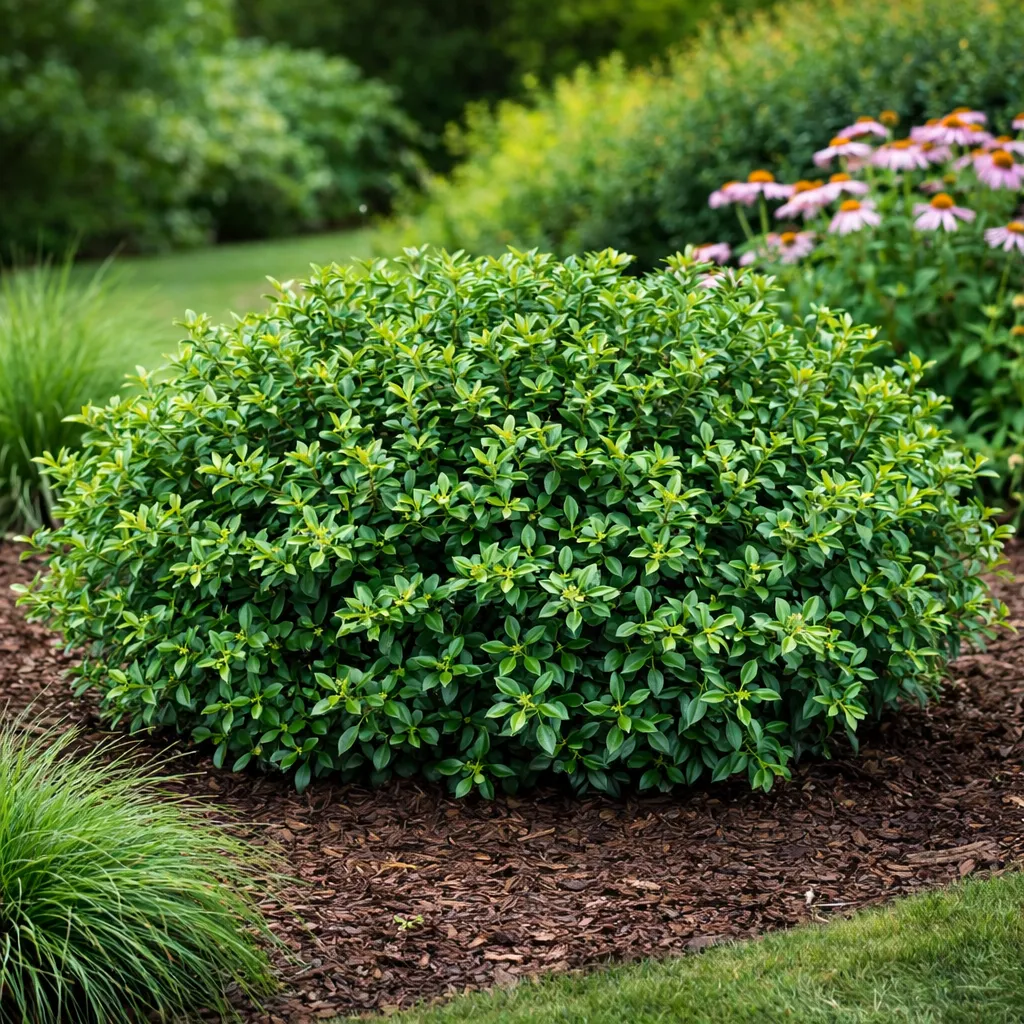
Botanical Name: Ilex crenata ‘Soft Touch’
Common Name: Soft Touch Japanese Holly
Mature Height and Width: 2–3′ tall × 3–4′ wide
Growth Habit: Low, mounded, spreading evergreen shrub with a soft, refined texture. Naturally dense without rigid structure; maintains a gentle, cushion-like form.
Foliage Description: Small, slightly elongated oval leaves with a smooth margin and soft matte finish. Foliage is medium to dark green and notably softer in appearance than many other Ilex crenata cultivars. Evergreen in Zones 5–7.
Flower Description: Small white flowers in late spring; not ornamentally significant. Female plants may produce small black berries if pollinated, though fruit is typically minimal in landscape use.
Bloom Time: Late spring
Fall Color: Evergreen; retains consistent green coloration through winter with minimal bronzing.
Light Requirements: Full sun to partial shade; performs well in filtered light and is adaptable to a range of exposures.
Hardiness Zone: USDA Zones 5–8
Notable Landscape Uses:
Foundation plantings; low hedges; border edging; mass plantings; understory evergreen filler; mixed shrub beds; woodland edge plantings; container use in shaded patios.
Deer Resistance: Moderate
Japanese holly is generally less preferred by deer compared to broadleaf evergreens with softer foliage. While not completely deer-proof, browsing is usually limited in Zones 5–7 except under heavy winter pressure.
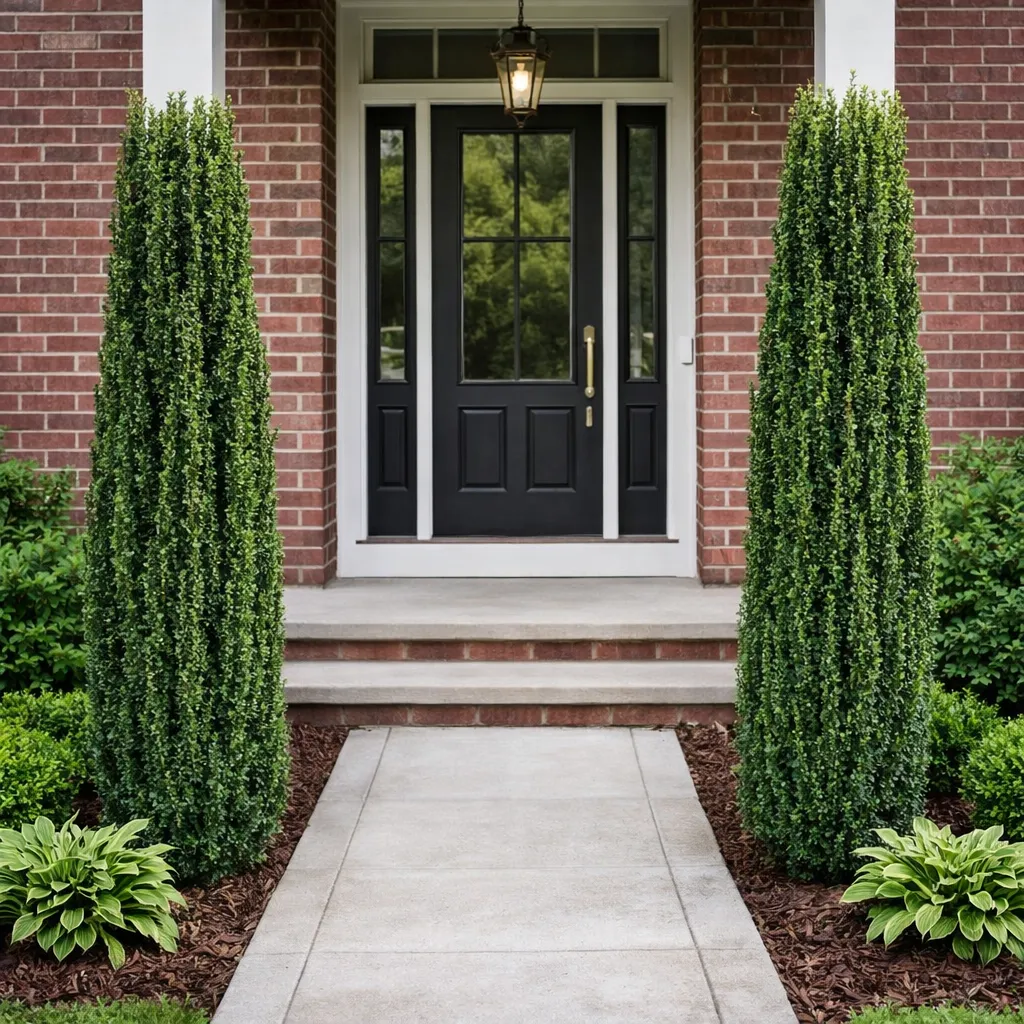
Botanical Name: Ilex crenata ‘Sky Pencil’
Common Name: Sky Pencil Japanese Holly
Mature Height and Width: 6–10′ tall × 2–3′ wide
Growth Habit: Very narrow, upright, columnar evergreen with tight vertical branching. Maintains a pencil-thin profile with minimal lateral spread. Slow to moderate growth rate.
Foliage Description: Small, oval, smooth-edged leaves in deep glossy green. Fine texture with dense foliage held closely along upright stems. Evergreen in Zones 6–8 (marginal in protected Zone 5 sites).
Flower Description: Small white flowers in late spring; inconspicuous. Female plants may produce small black berries if a pollinator is present.
Bloom Time: Late spring
Fall Color: Evergreen; retains dark green color through winter.
Light Requirements: Full sun to partial shade; best density and structure in full sun.
Hardiness Zone: USDA Zones 6–8 (protected Zone 5 locations)
Notable Landscape Uses:
Vertical accent in narrow foundation beds; flanking entryways or garage doors; formal garden structure; container plantings; small-space privacy screens; modern landscape designs; driveway edge plantings.
Deer Resistance: Moderate
Japanese holly is generally less preferred by deer, but the narrow upright form can be susceptible to winter tip browsing in high-pressure areas. Established plants typically recover well from light damage.
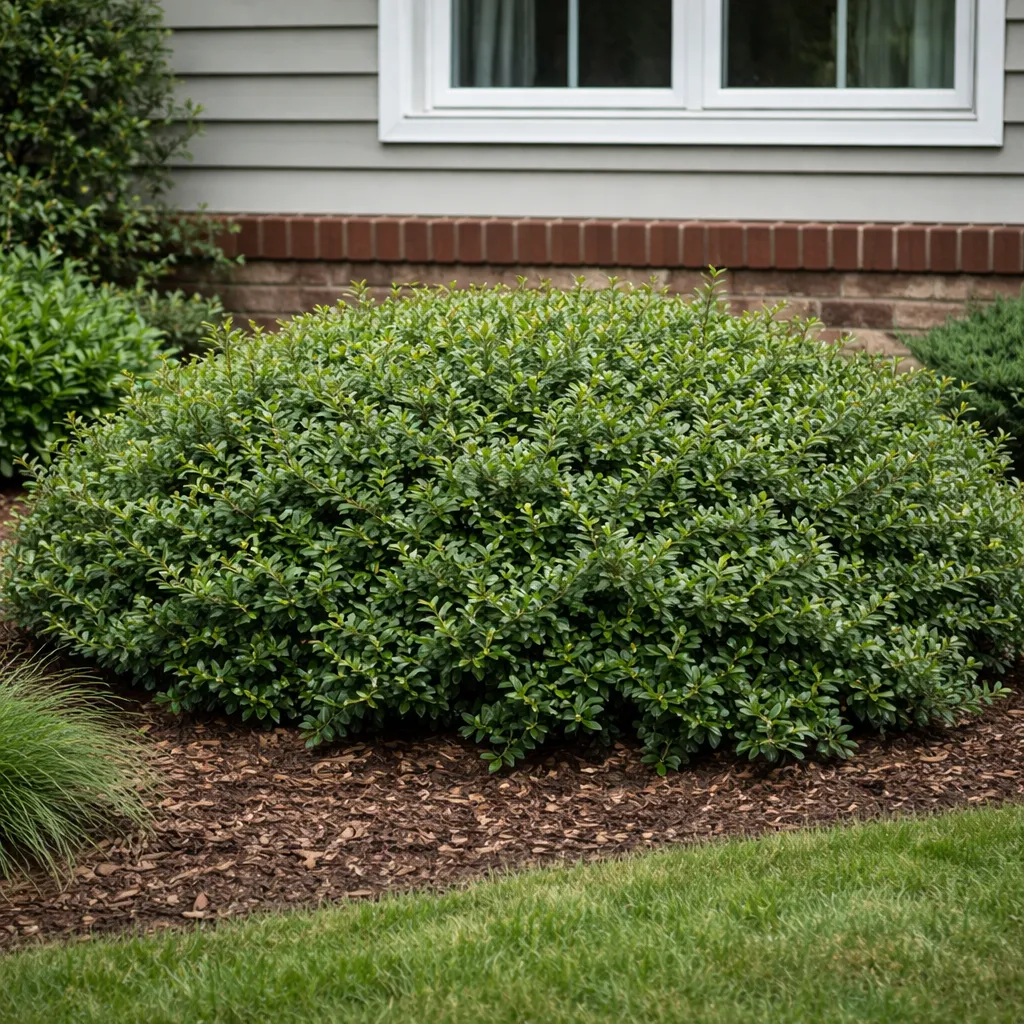
Botanical Name: Ilex crenata ‘Green Luster’
Common Name: Green Luster Japanese Holly
Mature Height and Width: 3–5′ tall × 6–8′ wide
Growth Habit: Low, spreading, broad-mounded evergreen shrub. Wider than tall, forming a dense, ground-hugging mass with arching lateral branching.
Foliage Description: Small, oval, smooth-edged leaves with a glossy dark green surface. Fine texture with dense branching that creates a uniform, spreading appearance. Evergreen in Zones 5–7.
Flower Description: Small white flowers in late spring; not ornamentally significant. Female plants may produce small black berries if pollinated, though fruiting is generally minimal in landscape settings.
Bloom Time: Late spring
Fall Color: Evergreen; retains rich dark green color through winter with minimal bronzing.
Light Requirements: Full sun to partial shade; adaptable to a range of exposures, though best density occurs in full sun.
Hardiness Zone: USDA Zones 5–8
Notable Landscape Uses:
Low evergreen hedge; mass plantings; foundation plantings; bank stabilization; slope plantings; edging for larger shrub beds; background evergreen filler; commercial landscapes requiring low-maintenance structure.
Deer Resistance: Moderate
Japanese holly is generally less preferred by deer compared to broadleaf evergreens with softer foliage. While not immune to browsing, Green Luster typically sustains only light damage in Zones 5–7 unless deer pressure is severe.
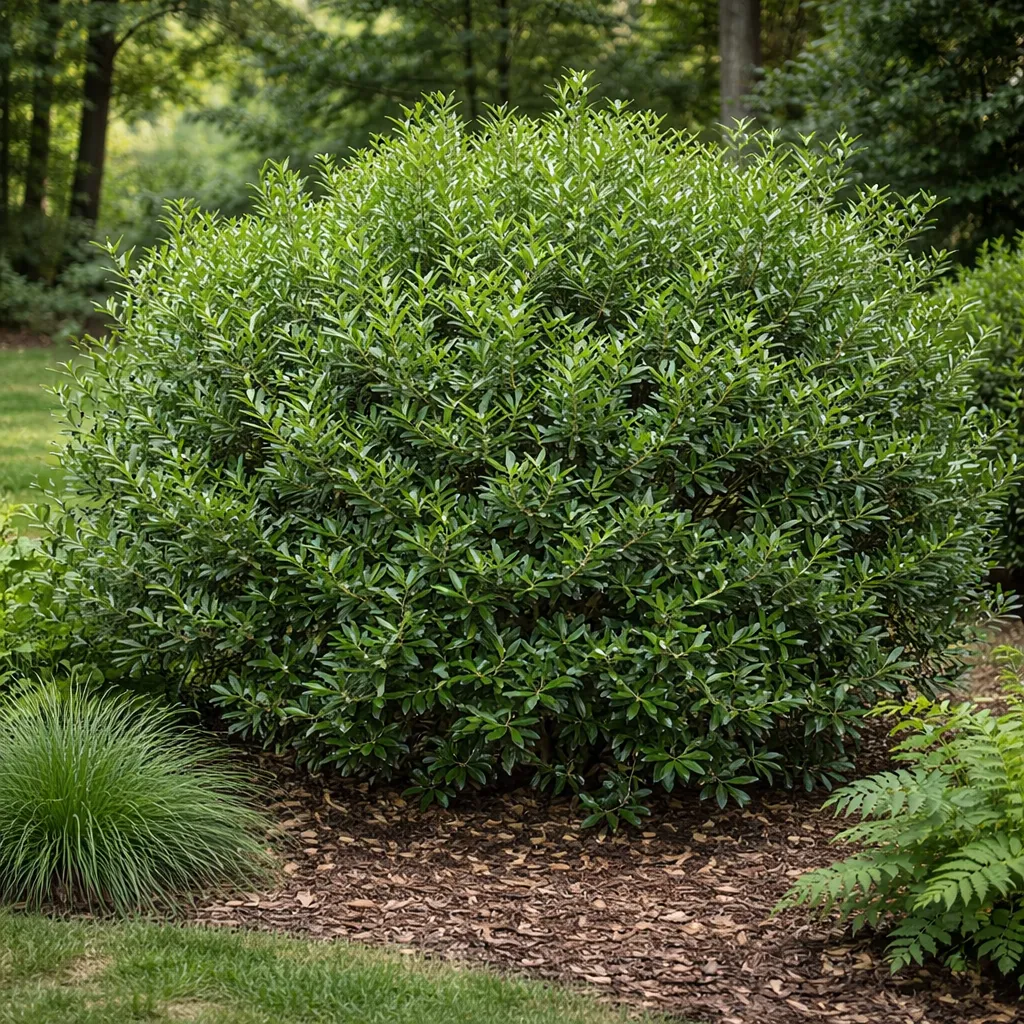
Botanical Name: Ilex glabra
Common Name: Inkberry Holly
Mature Height and Width: 5–8′ tall × 5–8′ wide (species); compact cultivars vary from 3–4′ tall
Growth Habit: Rounded, upright native evergreen shrub with fine branching. Naturally somewhat open at maturity unless maintained or selected cultivar is used. Tends to sucker slowly over time, forming colonies in natural settings.
Foliage Description: Narrow, oblong, spineless dark green leaves with a smooth margin. Leaves are concentrated toward stem tips, giving older plants a slightly looser interior unless pruned. Evergreen in Zones 5–7.
Flower Description: Small white spring flowers; not ornamentally significant. Female plants produce small black berries that persist into winter and provide wildlife value.
Bloom Time: Late spring
Fall Color: Evergreen; maintains deep green foliage through winter.
Light Requirements: Full sun to partial shade; adaptable to wet soils and tolerates periodic flooding once established.
Hardiness Zone: USDA Zones 4–9
Notable Landscape Uses:
Native foundation plantings; rain gardens; wetland edge plantings; mass plantings; naturalized borders; low evergreen hedges (when pruned); coastal landscapes; wildlife-friendly gardens.
Deer Resistance: Moderate
Inkberry is not typically a preferred browse species, though deer may sample new growth under pressure. Mature plants generally sustain minimal long-term damage in Zones 5–7.
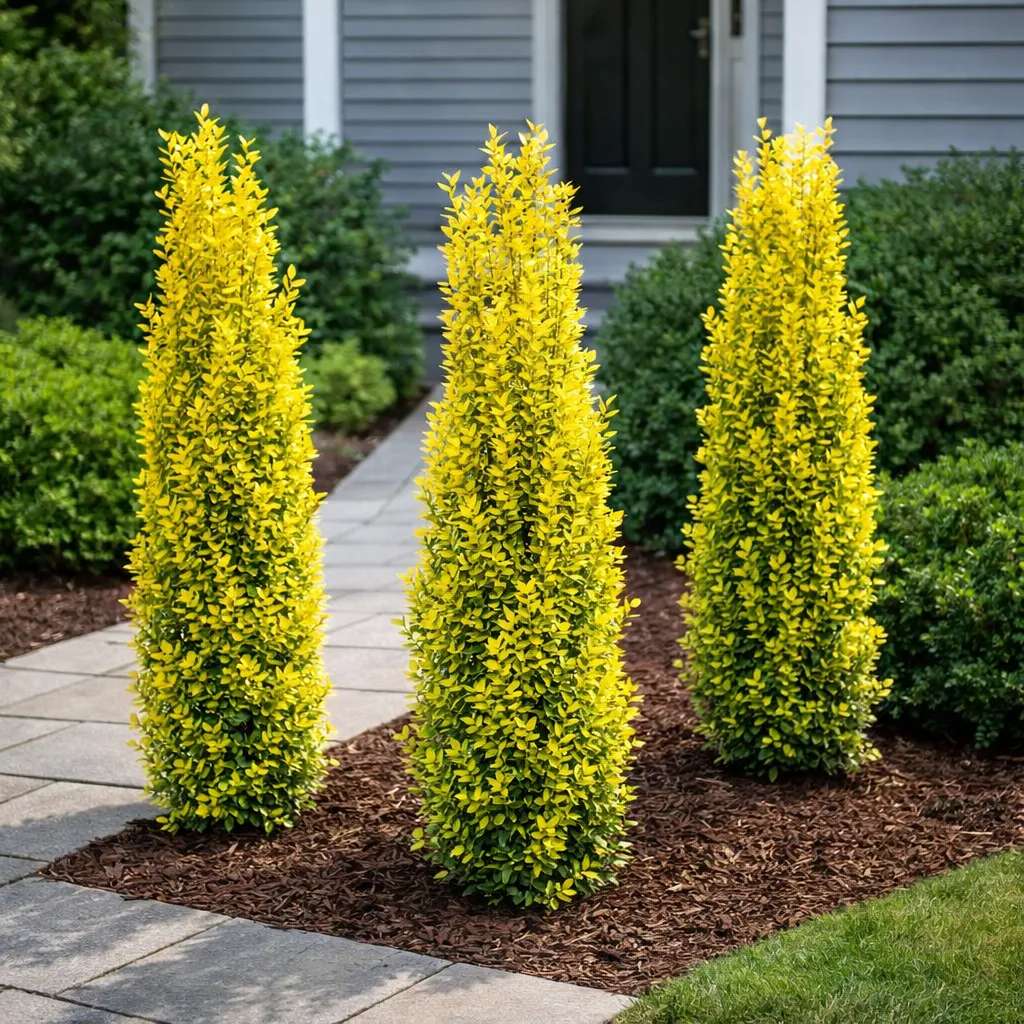
Botanical Name: Ilex crenata ‘Glow Stick’
Common Name: Glow Stick® Japanese Holly (Gold Sky Pencil Type)
Mature Height and Width: 6–8′ tall × 1–2′ wide
Growth Habit: Very narrow, upright, columnar evergreen with tight vertical branching. Maintains a pencil-thin silhouette similar to ‘Sky Pencil’ but with brighter foliage coloration.
Foliage Description: Small, oval, smooth-edged leaves in bright golden-yellow to chartreuse tones. Color is strongest in full sun and softens slightly in partial shade. Dense foliage held tightly along upright stems creates a refined, architectural appearance. Evergreen in Zones 5–7.
Flower Description: Small white spring flowers; inconspicuous. Female plants may produce small black berries if pollinated, though fruit is not typically ornamental.
Bloom Time: Late spring
Fall Color: Evergreen; maintains golden-yellow to chartreuse coloration through winter with minimal color shift.
Light Requirements: Full sun to partial shade; best gold coloration develops in full sun with adequate moisture.
Hardiness Zone: USDA Zones 5–8
Notable Landscape Uses:
Vertical accent in narrow foundation beds; flanking entryways; framing garage doors; formal garden structure; modern landscape designs; container accents; small-space privacy screening.
Deer Resistance: Moderate
Japanese holly is generally not highly preferred by deer, though upright forms may experience occasional tip browsing in winter under heavy pressure. Established plants typically suffer minimal damage in Zones 5–7.
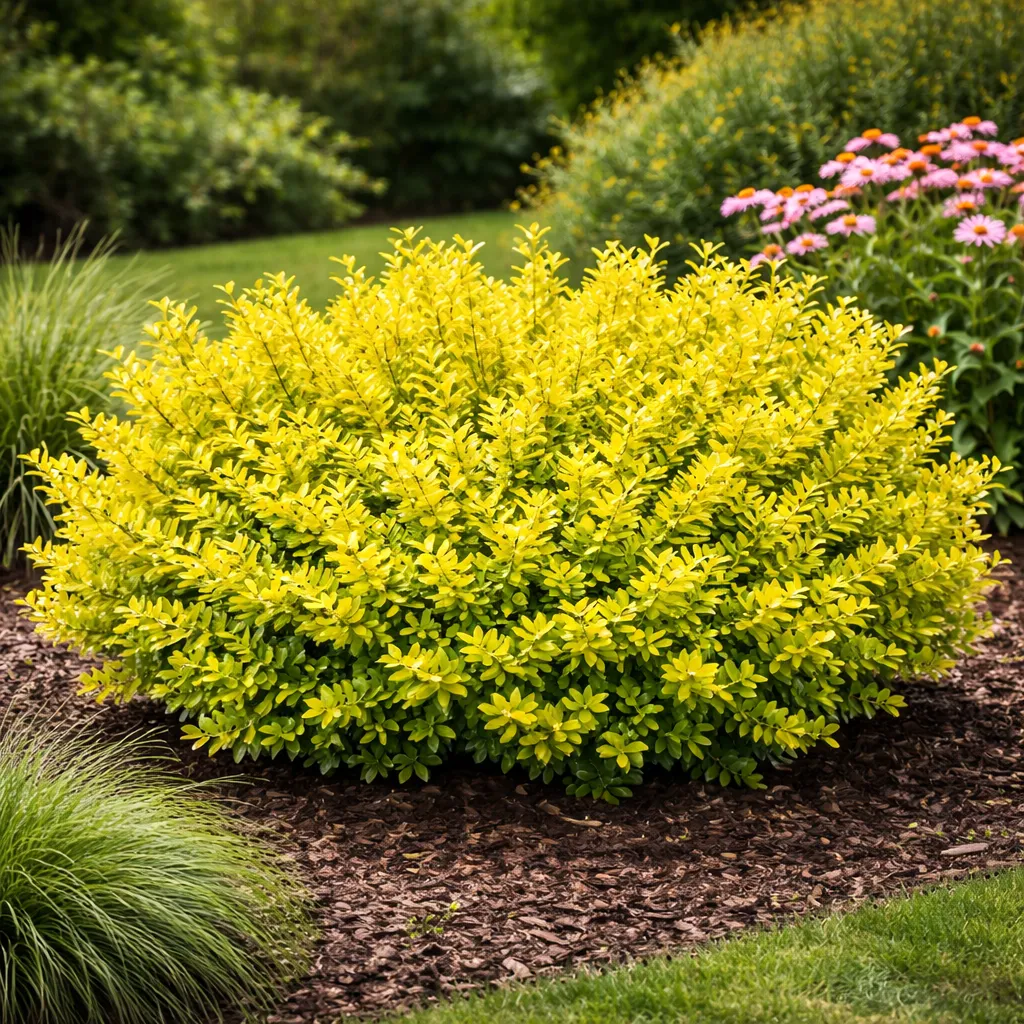
Botanical Name: Ilex crenata ‘NCVX1’
Common Name: Glow Pop® Japanese Holly
Mature Height and Width: 2–3′ tall × 2–3′ wide
Growth Habit: Naturally rounded, dense, globe-shaped evergreen shrub with tight branching and uniform structure. Maintains compact form without shearing.
Foliage Description: Small, oval to slightly rounded leaves with a smooth edge. Foliage is bright lime-green to chartreuse, holding vibrant color through the growing season. Fine-textured and dense. Evergreen in Zones 5–7.
Flower Description: Small white spring flowers; not ornamentally significant. May produce small black berries on female plants if pollinated, though fruiting is not a primary ornamental feature.
Bloom Time: Late spring
Fall Color: Evergreen; maintains bright chartreuse-green color through winter.
Light Requirements: Full sun to partial shade; best color development in full sun with adequate moisture.
Hardiness Zone: USDA Zones 5–8
Notable Landscape Uses:
Low foundation plantings; border edging; mass plantings; modern landscape designs; color contrast in mixed evergreen beds; walkway accents; structured formal gardens; container use.
Deer Resistance: Moderate to High
Japanese holly is generally less preferred by deer due to small, firm foliage. While not completely deer-proof, browsing pressure is typically light in Zones 5–7 compared to broadleaf evergreens with softer foliage.
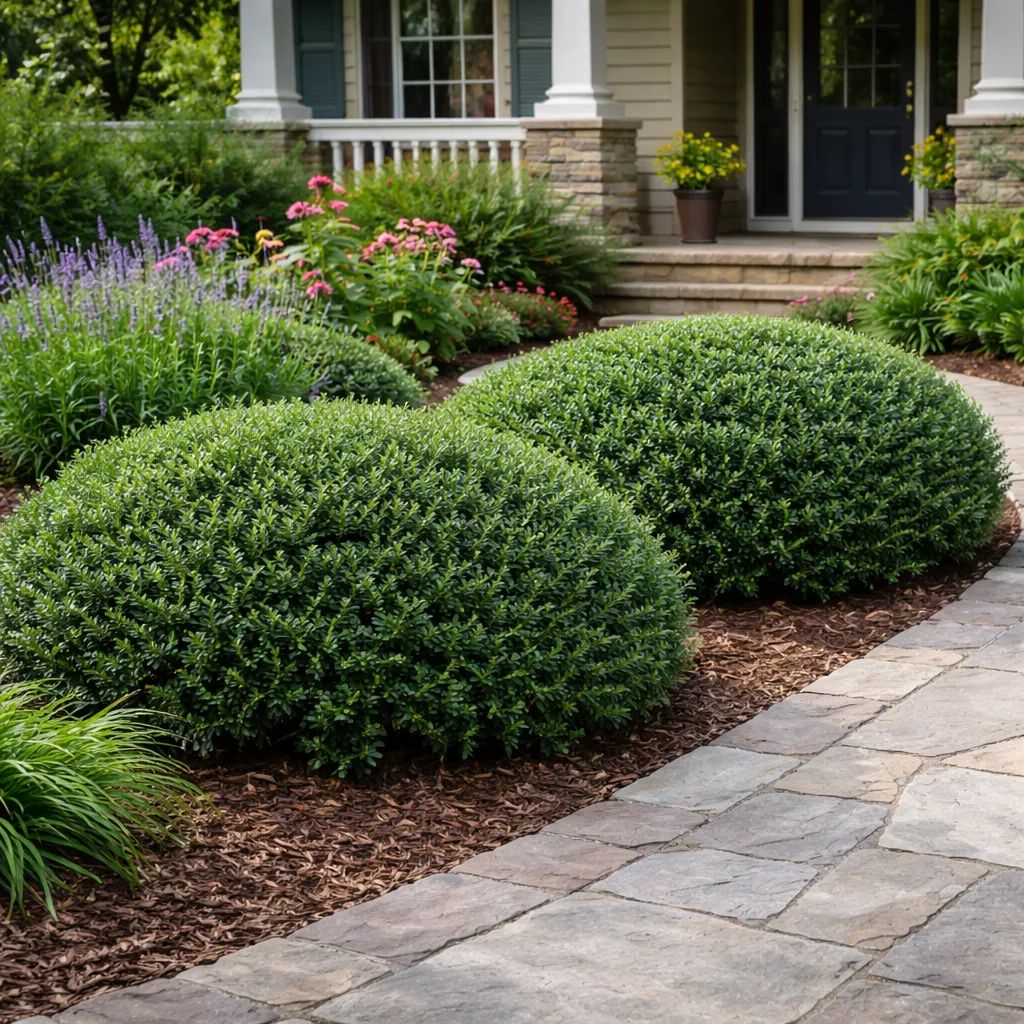
Botanical Name: Ilex crenata ‘Helleri’
Common Name: Helleri Japanese Holly
Mature Height and Width: 3–4′ tall × 4–6′ wide
Growth Habit: Low, broad-mounded evergreen shrub with a dense, compact branching structure. Naturally wider than tall, forming a tight cushion-like mass without aggressive vertical growth. Slow to moderate growth rate.
Foliage Description: Small, oval, smooth-edged leaves with a deep green, slightly glossy finish. Fine texture and dense interior branching provide a solid evergreen presence year-round.
Flower Description: Small white flowers in late spring; not ornamentally significant. Female plants may produce small black berries if pollinated, though fruit is typically minimal in landscape settings.
Bloom Time: Late spring
Fall Color: Evergreen; retains consistent dark green color through winter with minimal bronzing.
Light Requirements: Full sun to partial shade; maintains best density in full sun.
Hardiness Zone: USDA Zones 5–8
Notable Landscape Uses:
Low foundation plantings; mass plantings; low evergreen borders; commercial landscapes; bank stabilization; foreground shrub in layered plantings; substitute for boxwood in deer-prone areas.
Deer Resistance: Moderate
Helleri Japanese Holly is generally less preferred by deer compared to softer broadleaf evergreens. While occasional browsing may occur in high-pressure areas, established plants typically sustain limited damage in Zones 5–7.