
Welcome to our Plant Library! This is a new feature on our website to showcase the vast selection of plants that we carry across different seasons. We are continuously adding products, so if you are looking for a specific plant not listed below, we encourage you to call or visit to see if we have it in stock! 

Filter
Clear All
Categories
Sub-Categories
Tags
Trees & Shrubs

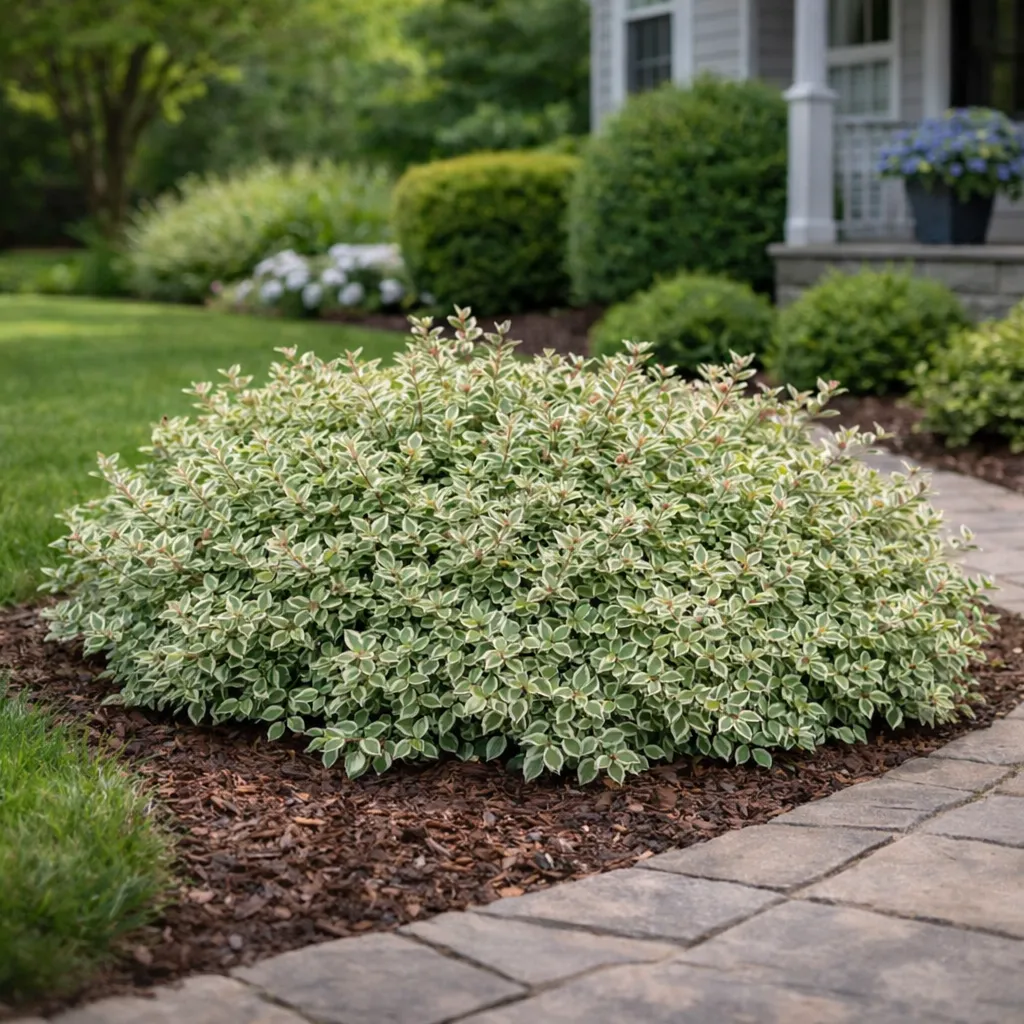
Botanical Name: Abelia × grandiflora ‘Radiance’

Common Name: Radiance Abelia

Mature Height and Width: 2–3′ tall × 3–4′ wide

Growth Habit: Low, compact, spreading shrub with a refined but slightly arching form. Naturally wider than tall, forming a soft, layered mound with fine branching. Moderate growth rate.

Foliage Description: Variegated foliage with medium green centers and creamy white margins. New growth often emerges with a soft pink blush, especially in spring and fall. Leaves are small, glossy, and finely textured. Semi-evergreen in Zones 6–7.

Flower Description: Small, tubular white flowers with rosy-pink sepals that persist after bloom, adding extended seasonal interest. Lightly fragrant and attractive to pollinators.

Bloom Time: Late spring through summer

Fall Color: Foliage may develop soft pink to reddish tones in cooler weather.

Light Requirements: Full sun to partial shade; best variegation and flowering occur in full sun.

Hardiness Zone: USDA Zones 6–9

Notable Landscape Uses:
Low foundation plantings; mass plantings; border edging; slope plantings; patio-edge accents; mixed perennial beds; color contrast in evergreen groupings; container plantings.

Deer Resistance: Moderate
Abelia is generally not heavily browsed. Occasional sampling of tender new growth may occur under heavy deer pressure, but established plants typically sustain minimal long-term damage in Zones 6–7.
SECTION 1 — Professional Plant Specifications

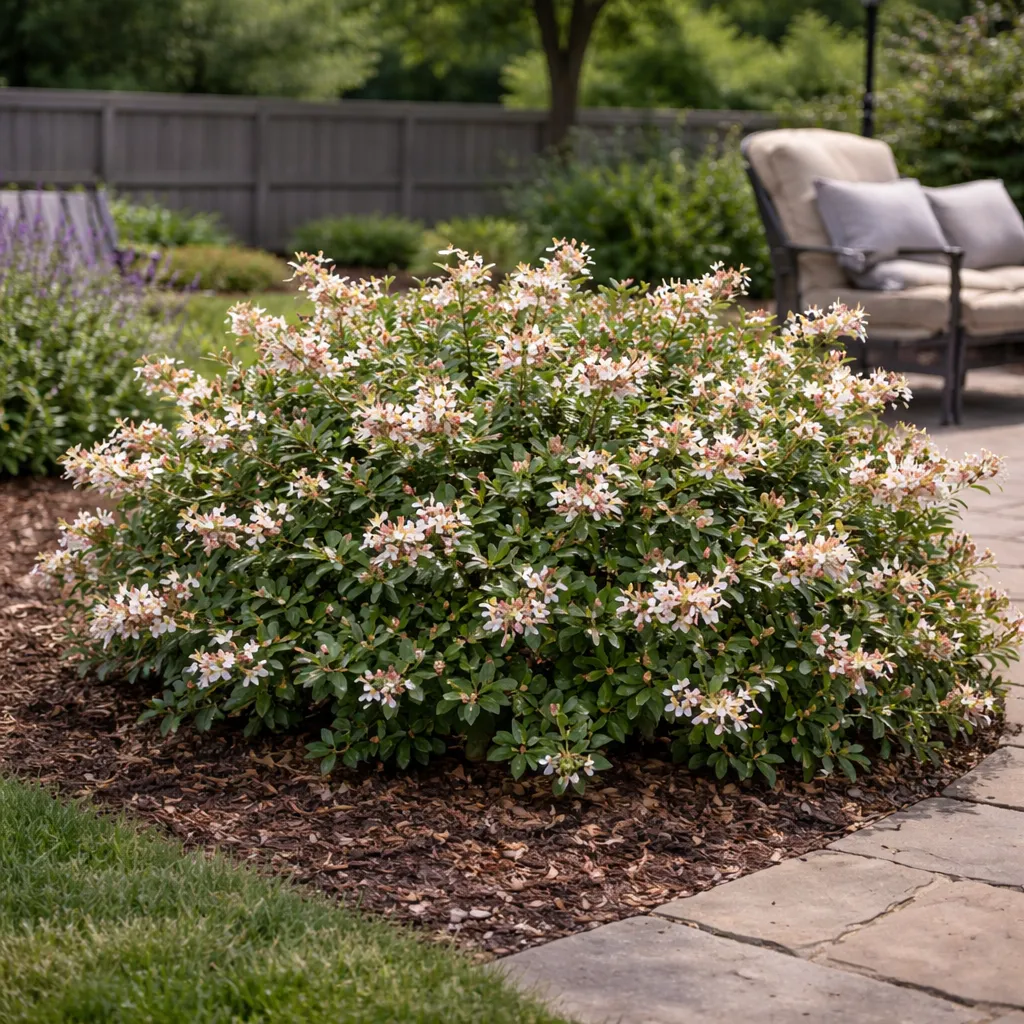
Botanical Name: Abelia × grandiflora ‘Little Richard’

Common Name: Little Richard Abelia

Mature Height and Width: 3–4′ tall × 3–4′ wide

Growth Habit: Compact, rounded shrub with dense branching and a slightly arching outer habit. More upright and tighter than ‘Edward Goucher,’ forming a refined but natural mound. Moderate growth rate.

Foliage Description: Small, glossy, deep green oval leaves with a fine texture. New growth may show a soft bronze tint in spring. Semi-evergreen in Zones 6–7, with some foliage retained in milder winters.

Flower Description: Small white to pale pink trumpet-shaped flowers borne in clusters at branch tips. Rosy sepals persist after petals drop, extending ornamental interest. Lightly fragrant and attractive to pollinators.

Bloom Time: Late spring through summer

Fall Color: Foliage may develop light bronze to purplish tones in cooler weather.

Light Requirements: Full sun to partial shade; best flowering and densest growth occur in full sun.

Hardiness Zone: USDA Zones 6–9

Notable Landscape Uses:
Foundation plantings; low informal hedges; mass plantings; patio-adjacent borders; mixed shrub beds; pollinator gardens; compact accent in smaller residential landscapes.

Deer Resistance: Moderate
Abelia is generally not a preferred browse species. Light sampling of new growth may occur in high-pressure deer areas, but established plants typically sustain minimal long-term damage in Zones 6–7.
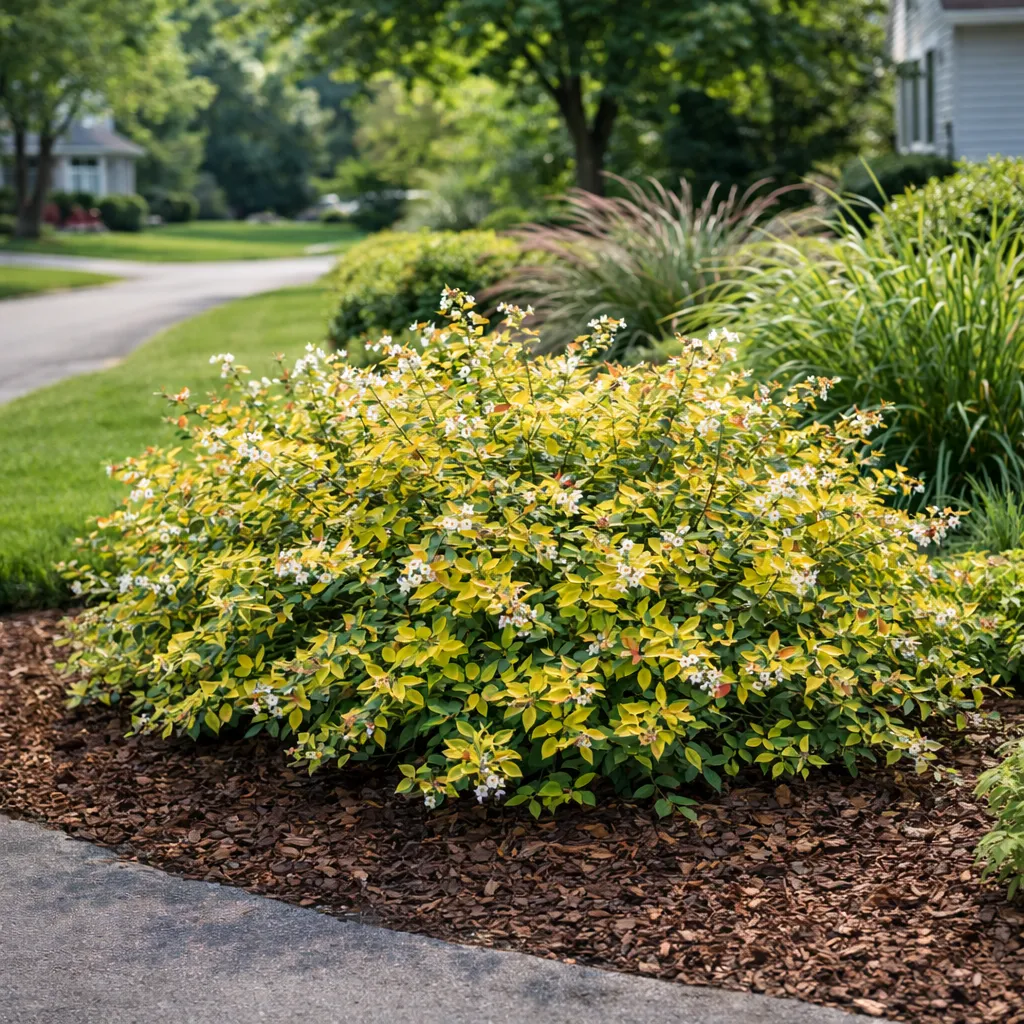
Botanical Name: Abelia × grandiflora ‘Kaleidoscope’

Common Name: Kaleidoscope Abelia

Mature Height and Width: 2–3′ tall × 3–4′ wide

Growth Habit: Low, compact, spreading shrub with a dense but slightly arching habit. Naturally wider than tall, forming a refined but informal mound. Moderate growth rate.

Foliage Description: Variegated foliage with bright golden-yellow centers and medium green margins. In summer, foliage maintains strong gold coloration; in fall and winter, leaves often develop orange to reddish tones. Fine texture with dense branching. Semi-evergreen in Zones 6–7.

Flower Description: Small white trumpet-shaped flowers with soft pink sepals that persist after bloom. Flowers are lightly fragrant and appear above the foliage.

Bloom Time: Late spring through summer

Fall Color: Orange to reddish tones develop as temperatures cool.

Light Requirements: Full sun to partial shade; best gold coloration occurs in full sun.

Hardiness Zone: USDA Zones 6–9

Notable Landscape Uses:
Low foundation plantings; mass plantings; border edging; slope plantings; patio-edge accents; mixed perennial beds; color contrast in modern landscapes; container plantings.

Deer Resistance: Moderate
Abelia is generally not heavily browsed, though tender new growth may be sampled in high-pressure deer areas. Established plants typically sustain only minor damage in Zones 6–7.
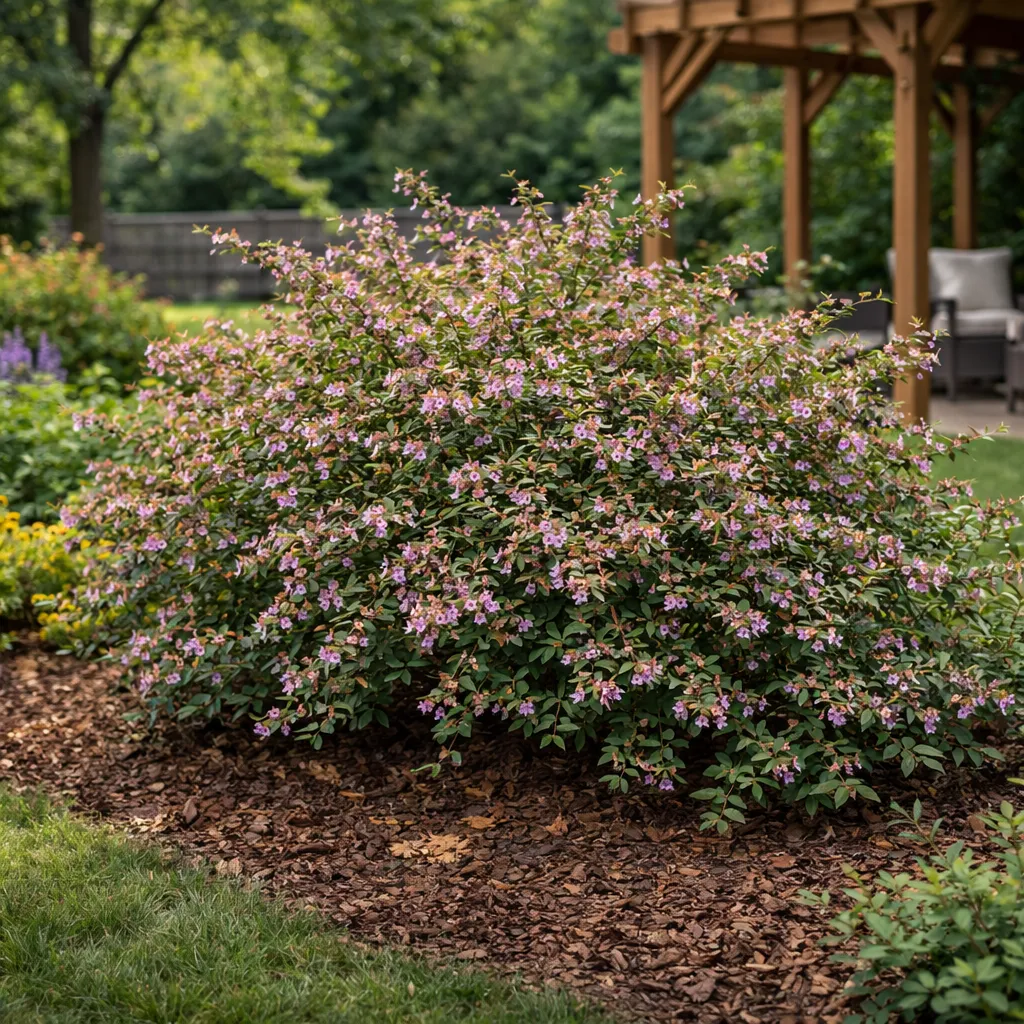
Botanical Name: Abelia × grandiflora ‘Edward Goucher’

Common Name: Edward Goucher Abelia

Mature Height and Width: 4–6′ tall × 4–6′ wide

Growth Habit: Gracefully arching, rounded deciduous to semi-evergreen shrub with a fine-textured, open branching structure. Forms a soft, fountain-like mound with gently cascading outer stems. Moderate growth rate.

Foliage Description: Small, glossy, oval leaves emerging bronze to reddish in spring, maturing to medium green in summer. Foliage may retain a reddish-bronze tint into fall and winter in Zones 6–7.

Flower Description: Small, trumpet-shaped lavender-pink flowers with rosy sepals that persist after petals drop, extending ornamental interest. Blooms are lightly fragrant and attractive to pollinators.

Bloom Time: Late spring through early fall

Fall Color: Bronze to reddish tones in cooler weather; semi-evergreen in protected Zone 6 sites.

Light Requirements: Full sun to partial shade; best flowering and densest habit occur in full sun.

Hardiness Zone: USDA Zones 6–9

Notable Landscape Uses:
Foundation plantings; informal hedges; mixed shrub borders; pollinator gardens; patio-adjacent plantings; mass plantings; transitional shrub in layered landscapes.

Deer Resistance: Moderate
Abelia is generally not a preferred browse, though tender new growth may be sampled in high-pressure deer areas. Established plants typically recover well from minor browsing in Zones 6–7.

Trees & Shrubs
Botanical Name: Abelia × grandiflora ‘Radiance’ Common Name: Radiance Abelia Mature Height and Width: 2–3' tall × 3–4' wide Growth Habit: Low, compact, spreading shrub with a refined but slightly arching form. Naturally wider than tall, forming a soft, layered mound with fine branching. Moderate growth rate. Foliage Description: Variegated foliage with medium green centers and creamy white margins. New growth often emerges with a soft pink blush, especially in spring and fall. Leaves are small, glossy, and finely textured. Semi-evergreen in Zones 6–7. Flower Description: Small, tubular white flowers with rosy-pink sepals that persist after bloom, adding extended seasonal interest. Lightly fragrant and attractive to pollinators. Bloom Time: Late spring through summer Fall Color: Foliage may develop soft pink to reddish tones in cooler weather. Light Requirements: Full sun to partial shade; best variegation and flowering occur in full sun. Hardiness Zone: USDA Zones 6–9 Notable Landscape Uses:Low foundation plantings; mass plantings; border edging; slope plantings; patio-edge accents; mixed perennial beds; color contrast in evergreen groupings; container plantings. Deer Resistance: ModerateAbelia is generally not heavily browsed. Occasional sampling of tender new growth may occur under heavy deer pressure, but established plants typically sustain minimal long-term damage in Zones 6–7.
SECTION 1 — Professional Plant Specifications Botanical Name: Abelia × grandiflora ‘Little Richard’ Common Name: Little Richard Abelia Mature Height and Width: 3–4' tall × 3–4' wide Growth Habit: Compact, rounded shrub with dense branching and a slightly arching outer habit. More upright and tighter than ‘Edward Goucher,’ forming a refined but natural mound. Moderate growth rate. Foliage Description: Small, glossy, deep green oval leaves with a fine texture. New growth may show a soft bronze tint in spring. Semi-evergreen in Zones 6–7, with some foliage retained in milder winters. Flower Description: Small white to pale pink trumpet-shaped flowers borne in clusters at branch tips. Rosy sepals persist after petals drop, extending ornamental interest. Lightly fragrant and attractive to pollinators. Bloom Time: Late spring through summer Fall Color: Foliage may develop light bronze to purplish tones in cooler weather. Light Requirements: Full sun to partial shade; best flowering and densest growth occur in full sun. Hardiness Zone: USDA Zones 6–9 Notable Landscape Uses:Foundation plantings; low informal hedges; mass plantings; patio-adjacent borders; mixed shrub beds; pollinator gardens; compact accent in smaller residential landscapes. Deer Resistance: ModerateAbelia is generally not a preferred browse species. Light sampling of new growth may occur in high-pressure deer areas, but established plants typically sustain minimal long-term damage in Zones 6–7.
Botanical Name: Abelia × grandiflora ‘Kaleidoscope’ Common Name: Kaleidoscope Abelia Mature Height and Width: 2–3' tall × 3–4' wide Growth Habit: Low, compact, spreading shrub with a dense but slightly arching habit. Naturally wider than tall, forming a refined but informal mound. Moderate growth rate. Foliage Description: Variegated foliage with bright golden-yellow centers and medium green margins. In summer, foliage maintains strong gold coloration; in fall and winter, leaves often develop orange to reddish tones. Fine texture with dense branching. Semi-evergreen in Zones 6–7. Flower Description: Small white trumpet-shaped flowers with soft pink sepals that persist after bloom. Flowers are lightly fragrant and appear above the foliage. Bloom Time: Late spring through summer Fall Color: Orange to reddish tones develop as temperatures cool. Light Requirements: Full sun to partial shade; best gold coloration occurs in full sun. Hardiness Zone: USDA Zones 6–9 Notable Landscape Uses:Low foundation plantings; mass plantings; border edging; slope plantings; patio-edge accents; mixed perennial beds; color contrast in modern landscapes; container plantings. Deer Resistance: ModerateAbelia is generally not heavily browsed, though tender new growth may be sampled in high-pressure deer areas. Established plants typically sustain only minor damage in Zones 6–7.
Botanical Name: Abelia × grandiflora ‘Edward Goucher’ Common Name: Edward Goucher Abelia Mature Height and Width: 4–6' tall × 4–6' wide Growth Habit: Gracefully arching, rounded deciduous to semi-evergreen shrub with a fine-textured, open branching structure. Forms a soft, fountain-like mound with gently cascading outer stems. Moderate growth rate. Foliage Description: Small, glossy, oval leaves emerging bronze to reddish in spring, maturing to medium green in summer. Foliage may retain a reddish-bronze tint into fall and winter in Zones 6–7. Flower Description: Small, trumpet-shaped lavender-pink flowers with rosy sepals that persist after petals drop, extending ornamental interest. Blooms are lightly fragrant and attractive to pollinators. Bloom Time: Late spring through early fall Fall Color: Bronze to reddish tones in cooler weather; semi-evergreen in protected Zone 6 sites. Light Requirements: Full sun to partial shade; best flowering and densest habit occur in full sun. Hardiness Zone: USDA Zones 6–9 Notable Landscape Uses:Foundation plantings; informal hedges; mixed shrub borders; pollinator gardens; patio-adjacent plantings; mass plantings; transitional shrub in layered landscapes. Deer Resistance: ModerateAbelia is generally not a preferred browse, though tender new growth may be sampled in high-pressure deer areas. Established plants typically recover well from minor browsing in Zones 6–7.
Scroll to Top