
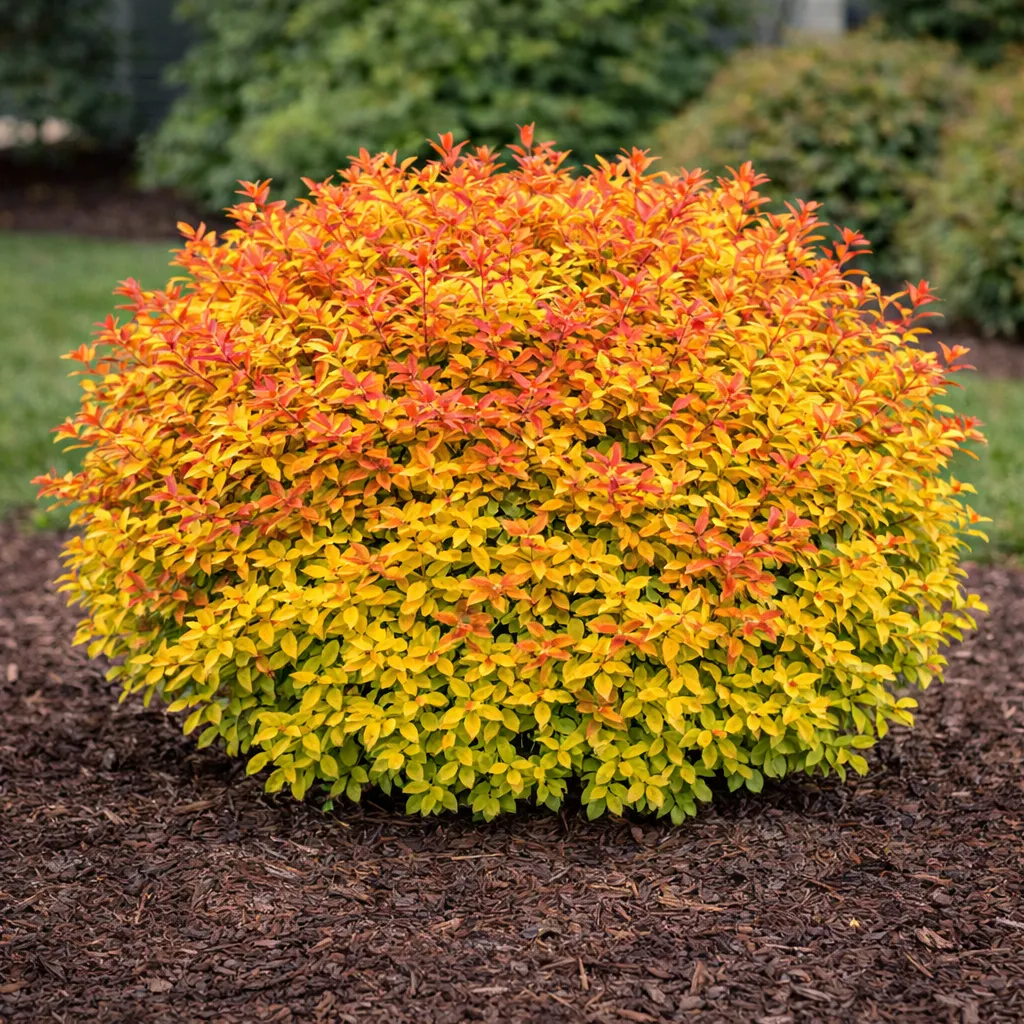
Botanical Name: Spiraea japonica ‘NCSX1’
Common Name: Double Play® Candy Corn® Spirea
Mature Height and Width:
18–24″ tall × 24–30″ wide
Growth Habit: Compact, dense, low-mounded deciduous shrub with tight branching structure. Broader than tall with uniform, refined canopy.
Foliage Description: Emerging foliage bright red to orange, transitioning to yellow and chartreuse tones as season progresses. New growth continuously shows warm red-orange highlights over golden base foliage. Fine-textured leaves typical of Spiraea japonica.
Flower Description: Deep purple-magenta flat-topped flower clusters held above foliage canopy.
Bloom Time: Late spring through summer.
Fall Color: Yellow to orange tones, depending on exposure.
Light Requirements: Full sun for strongest foliage coloration and bloom production.
Hardiness Zone: USDA Zones 4–8
Notable Landscape Uses:
Foundation foreground; border edging; mass planting; color contrast planting; container use; low seasonal accent.
Deer Resistance: Moderate
May experience browsing in high-pressure deer areas; not typically a preferred shrub but not highly resistant.
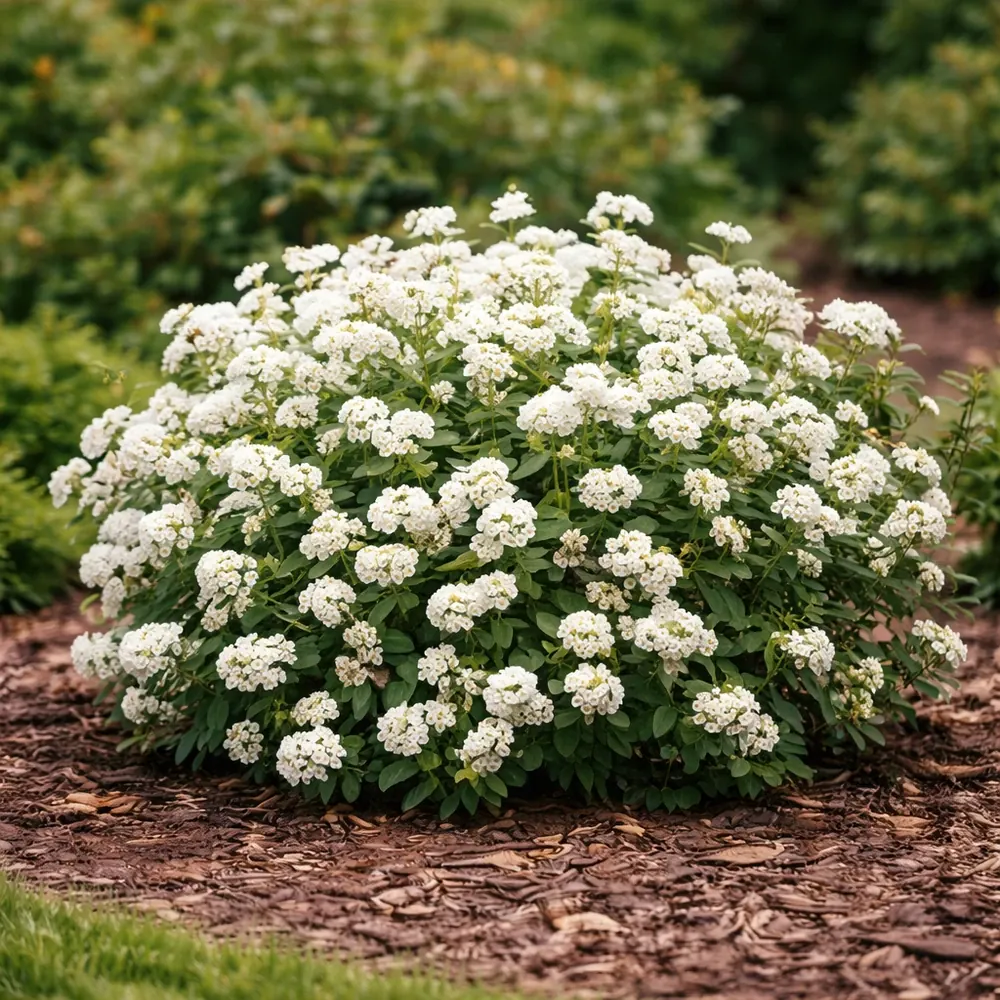
Botanical Name: Spiraea media ‘Yeti’
Common Name: Yeti® Spirea
Mature Height and Width:
3–4′ tall × 4–5′ wide
Growth Habit: Broad, dense, mounded deciduous shrub with slightly arching outer stems. More compact and refined than Snowmound, but fuller and heavier in canopy density. Moderate growth rate.
Foliage Description: Small, narrow, medium green leaves with fine texture. Dense foliage coverage creating a solid canopy during growing season.
Flower Description: Bright white flower clusters borne in rounded corymbs across upper canopy. Bloom coverage heavy and evenly distributed, creating a strong white dome effect in spring.
Bloom Time: Mid to late spring.
Fall Color: Yellow to bronze tones, variable.
Light Requirements: Full sun for strongest bloom density and compact structure.
Hardiness Zone: USDA Zones 4–8
Notable Landscape Uses:
Foundation planting; low informal hedge; mass planting; border foreground; spring focal shrub; slope planting.
Deer Resistance: Moderate
May experience browsing in high-pressure deer areas. Generally not a preferred forage plant.
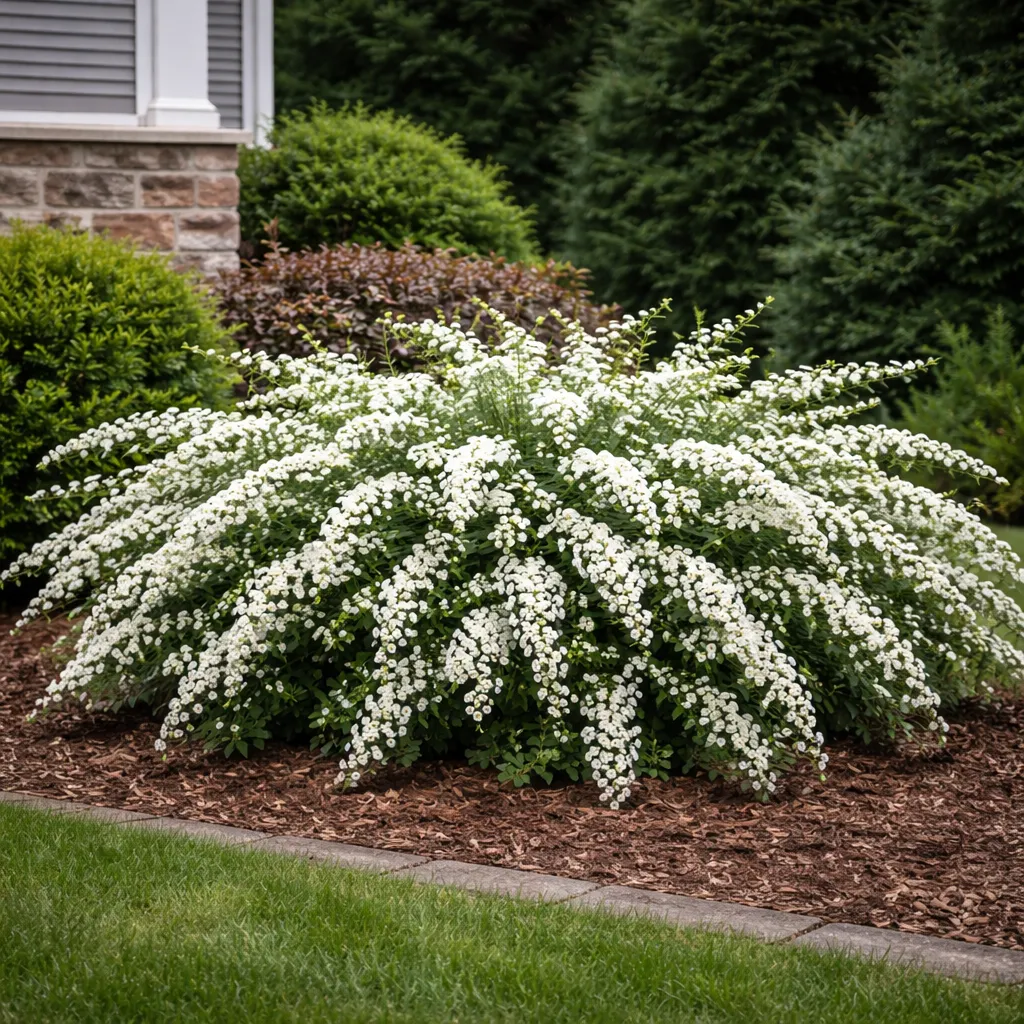
Botanical Name: Spiraea nipponica ‘Snowmound’
Common Name: Snowmound Spirea
Mature Height and Width:
3–5′ tall × 4–6′ wide
Growth Habit: Broad, arching deciduous shrub with cascading branch structure. Wider than tall with graceful outward-curving stems. Moderate growth rate.
Foliage Description: Small, narrow, dark green leaves with fine texture. Foliage arranged densely along arching stems.
Flower Description: Small white flowers borne in dense clusters along entire length of arching branches. Blooms create a cascading white effect rather than flat-topped clusters.
Bloom Time: Mid to late spring.
Fall Color: Yellow to orange tones, variable.
Light Requirements: Full sun for best flowering and compact growth.
Hardiness Zone: USDA Zones 3–8
Notable Landscape Uses:
Foundation massing; slope planting; informal hedge; border planting; cascading foreground shrub; spring seasonal focal plant.
Deer Resistance: Moderate
May experience browsing in high-pressure deer areas, though generally not a preferred shrub.
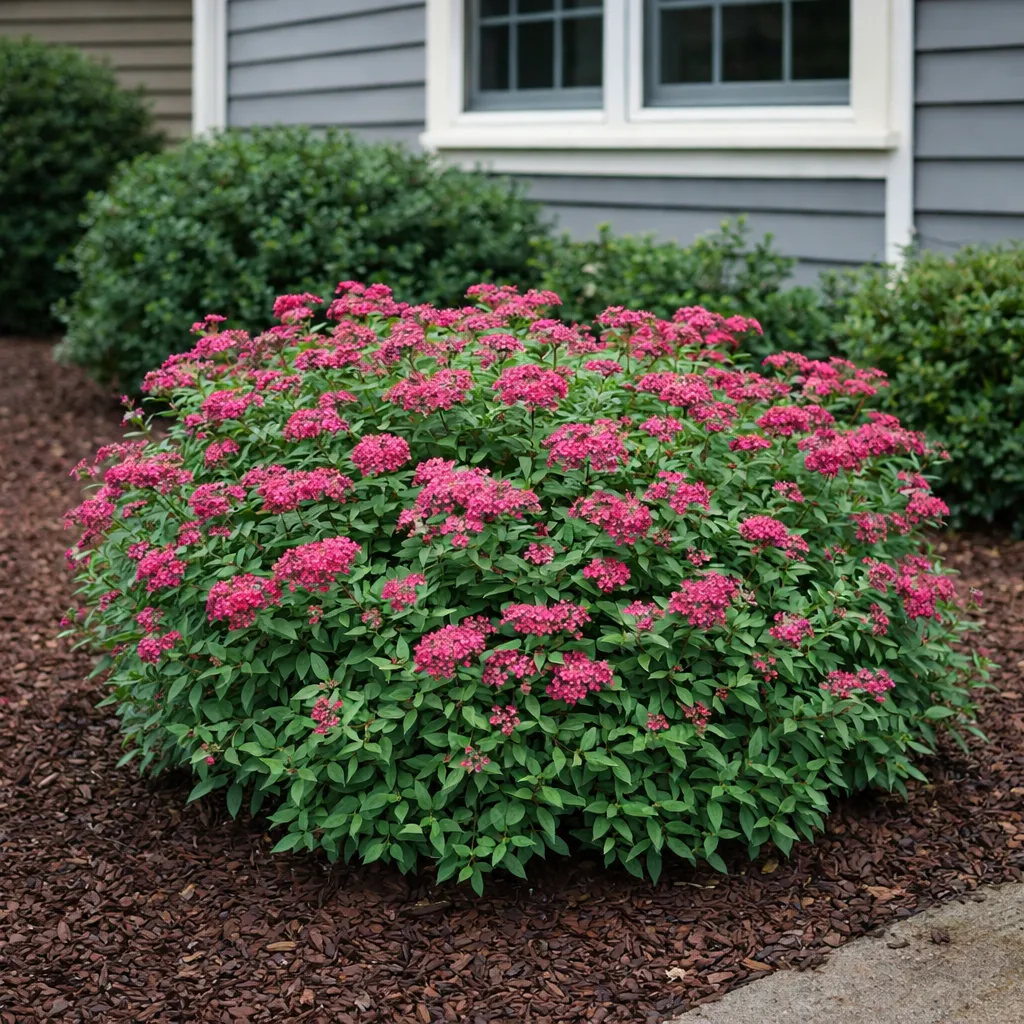
Botanical Name: Spiraea japonica ‘Neon Flash’
Common Name: Neon Flash Spirea
Mature Height and Width:
2–3′ tall × 3–4′ wide
Growth Habit: Compact, rounded deciduous shrub with dense branching and moderately upright stems. Broader than tall with a structured mounded form. Moderate growth rate.
Foliage Description: Narrow oval to lance-shaped leaves; medium green during growing season. Fine-textured foliage with dense canopy coverage.
Flower Description: Flat-topped corymb clusters of vivid deep pink to reddish-pink flowers borne at stem tips. Clusters moderately sized and more intensely colored than ‘Anthony Waterer’.
Bloom Time: Late spring to mid-summer; may lightly rebloom if pruned.
Fall Color: Burgundy to reddish tones, variable.
Light Requirements: Full sun for strongest bloom intensity and compact form.
Hardiness Zone: USDA Zones 4–8
Notable Landscape Uses:
Foundation planting; low hedge; mass planting; perennial border companion; color accent in mixed beds; walkway edging.
Deer Resistance: Moderate
Tender new growth may be browsed under heavy pressure, though plants generally recover due to dense branching.
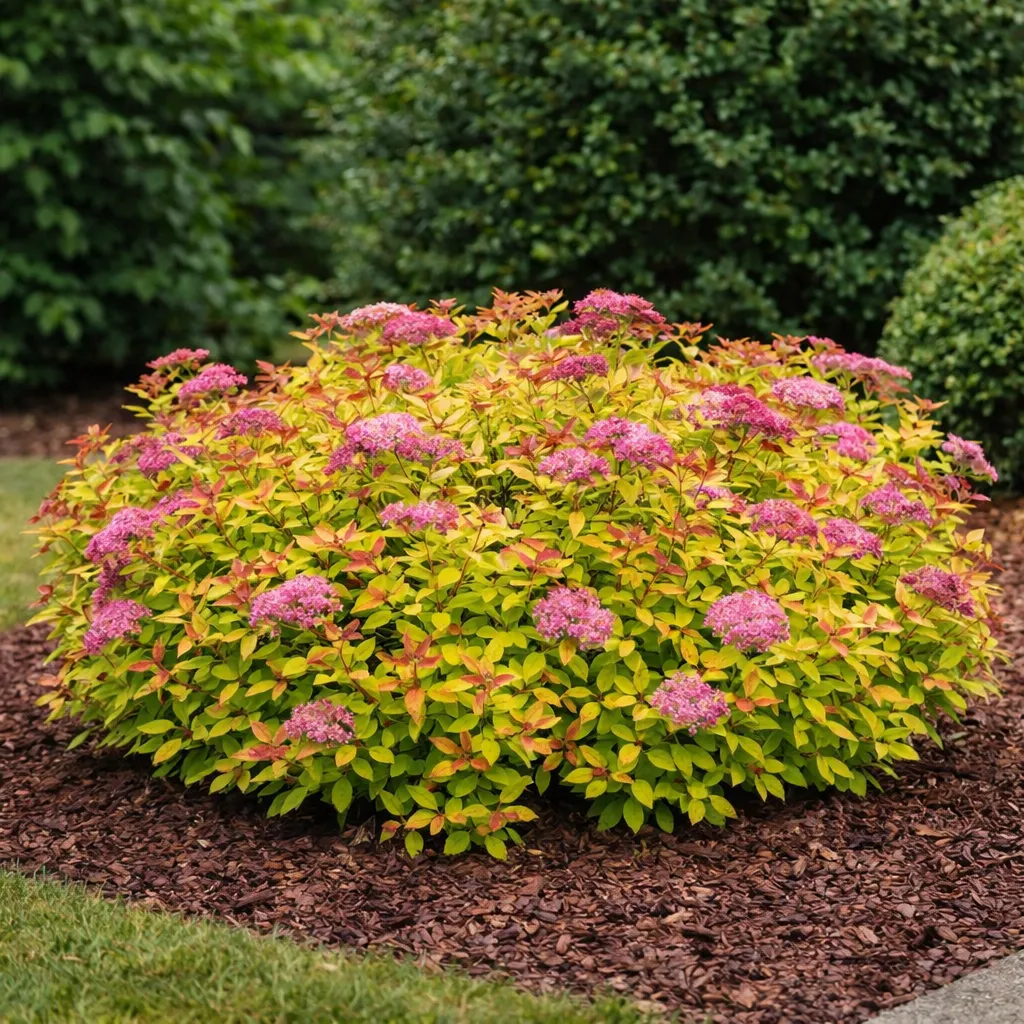
Botanical Name: Spiraea japonica ‘Magic Carpet’
Common Name: Magic Carpet Spirea
Mature Height and Width:
18–24″ tall × 2–3′ wide
Growth Habit: Low, compact mounded deciduous shrub with dense fine branching. Broader than tall with a tight, uniform habit. Slower growing and more compact than ‘Anthony Waterer’.
Foliage Description: Bright chartreuse to golden foliage with reddish-bronze new growth. Leaves small and fine-textured. Color strongest in full sun; may green slightly in partial shade.
Flower Description: Flat-topped clusters (corymbs) of rosy-pink flowers borne above foliage; moderate cluster size.
Bloom Time: Late spring to mid-summer; may lightly rebloom if pruned.
Fall Color: Bronze to reddish tones.
Light Requirements: Full sun for strongest foliage color and compact form.
Hardiness Zone: USDA Zones 4–8
Notable Landscape Uses:
Low border edging; mass planting; foundation foreground; color contrast in mixed beds; slope planting; walkway lining.
Deer Resistance: Moderate
Tender new growth may be browsed under heavy deer pressure, though plants generally recover due to dense branching.
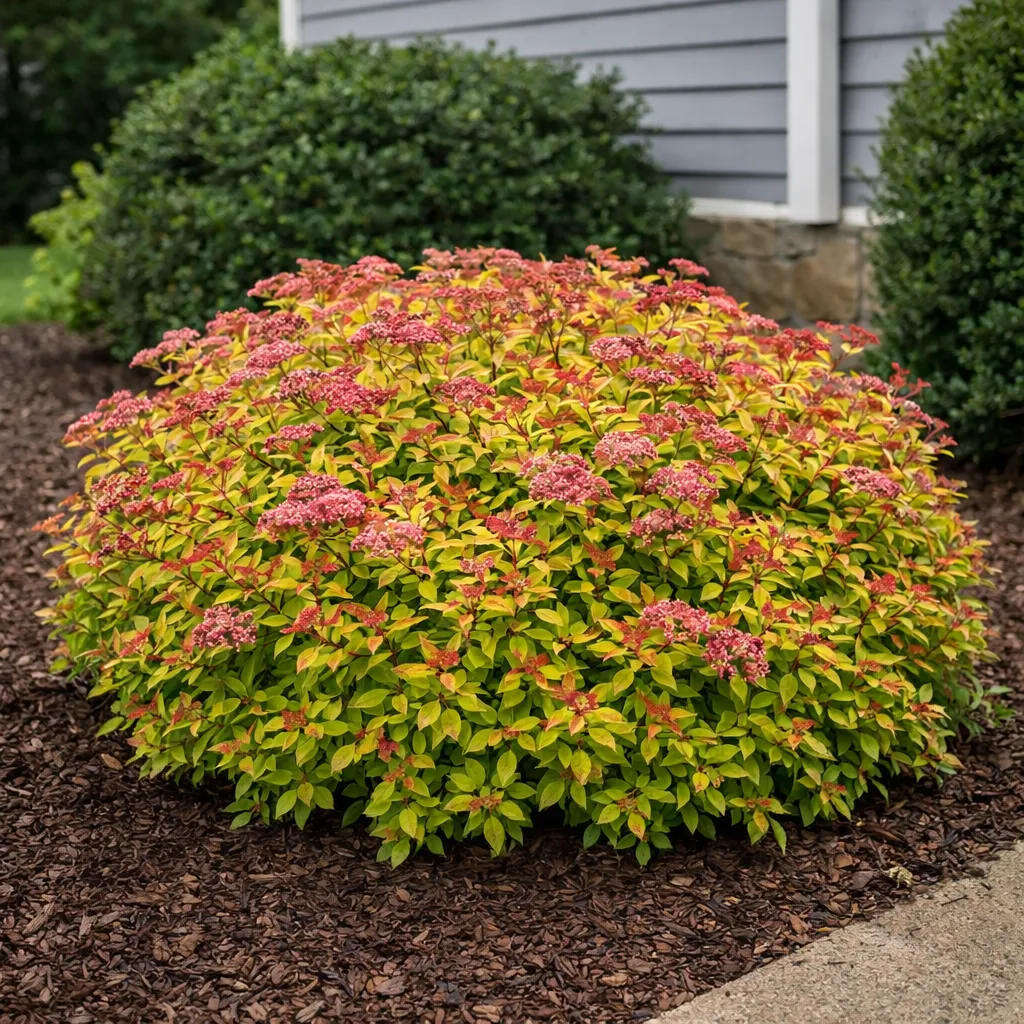
Botanical Name: Spiraea japonica ‘Goldflame’
Common Name: Goldflame Spirea
Mature Height and Width:
2–3′ tall × 3–4′ wide
Growth Habit: Compact, rounded deciduous shrub with dense fine branching. Broader than tall with a moderately mounded form. Moderate growth rate.
Foliage Description: New growth emerges bronze-red to copper, maturing to yellow-gold, then softening to yellow-green in summer. Leaves small, narrow oval to lance-shaped with fine texture. Strong seasonal color progression is a defining characteristic.
Flower Description: Flat-topped corymb clusters of rosy-pink flowers borne above foliage; moderate cluster size.
Bloom Time: Late spring to mid-summer; may lightly rebloom if pruned.
Fall Color: Bronze to reddish tones.
Light Requirements: Full sun for strongest foliage color transitions and compact form.
Hardiness Zone: USDA Zones 4–8
Notable Landscape Uses:
Foundation border planting; color contrast in mixed beds; low hedge; mass planting; perennial border foreground; walkway edging.
Deer Resistance: Moderate
Tender new growth may be browsed in high-pressure areas, though established plants typically recover due to dense branching.
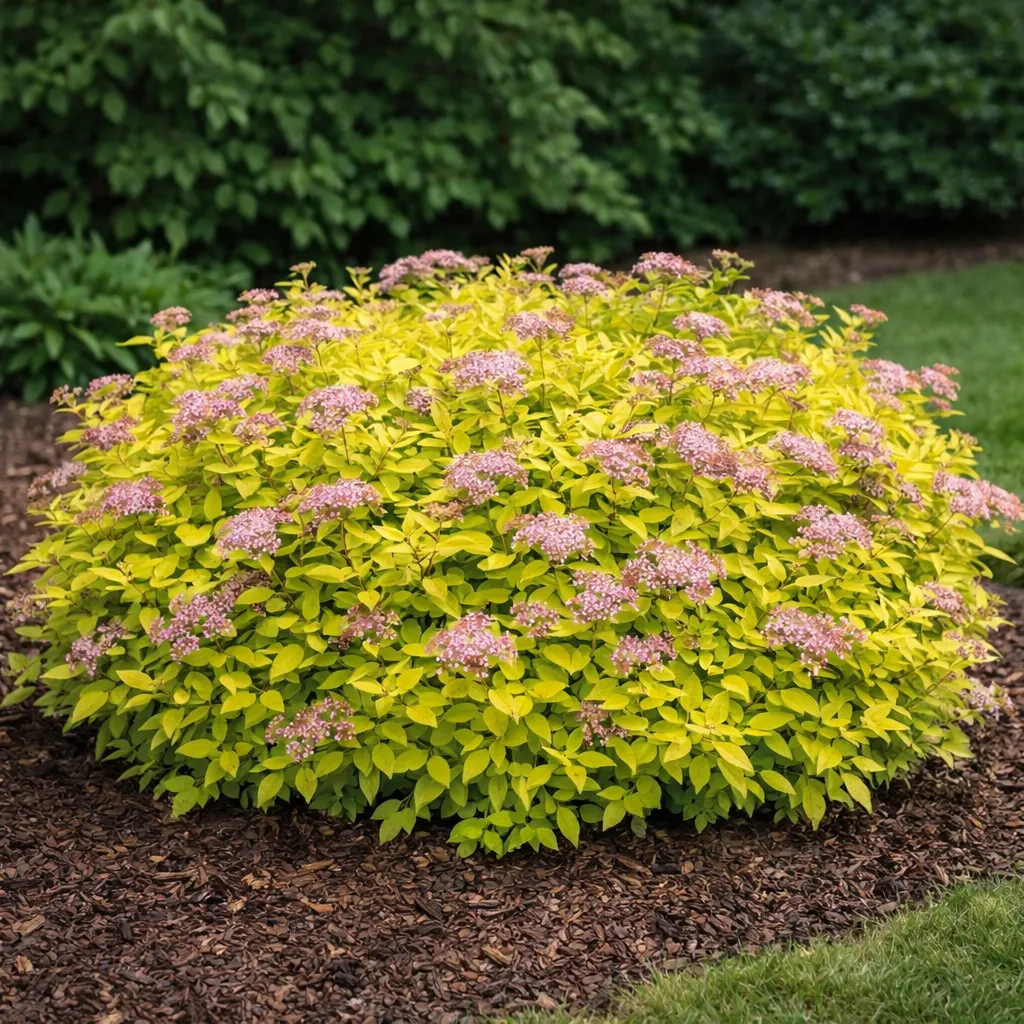
Botanical Name: Spiraea japonica ‘Goldmound’
Common Name: Gold Mound Spirea
Mature Height and Width:
18–24″ tall × 2–3′ wide
Growth Habit: Low, compact mounded deciduous shrub with dense fine branching. Broader than tall with a rounded but not tight hemispherical form. Moderate growth rate.
Foliage Description: Bright golden-yellow foliage throughout the growing season; new growth especially vivid. Leaves small, narrow oval to lance-shaped with fine texture. Color strongest in full sun.
Flower Description: Flat-topped corymb clusters of soft pink flowers borne above foliage; moderate cluster size, not large.
Bloom Time: Late spring to mid-summer; may rebloom lightly with pruning.
Fall Color: Yellow to orange tones, often muted compared to summer color.
Light Requirements: Full sun for best gold coloration and compact habit. Partial shade may reduce foliage intensity.
Hardiness Zone: USDA Zones 4–8
Notable Landscape Uses:
Color contrast in foundation beds; low border edging; mass planting; perennial border foreground; slope stabilization; walkway lining.
Deer Resistance: Moderate
Tender new growth may be browsed in high-pressure areas, though plants typically recover due to dense branching.
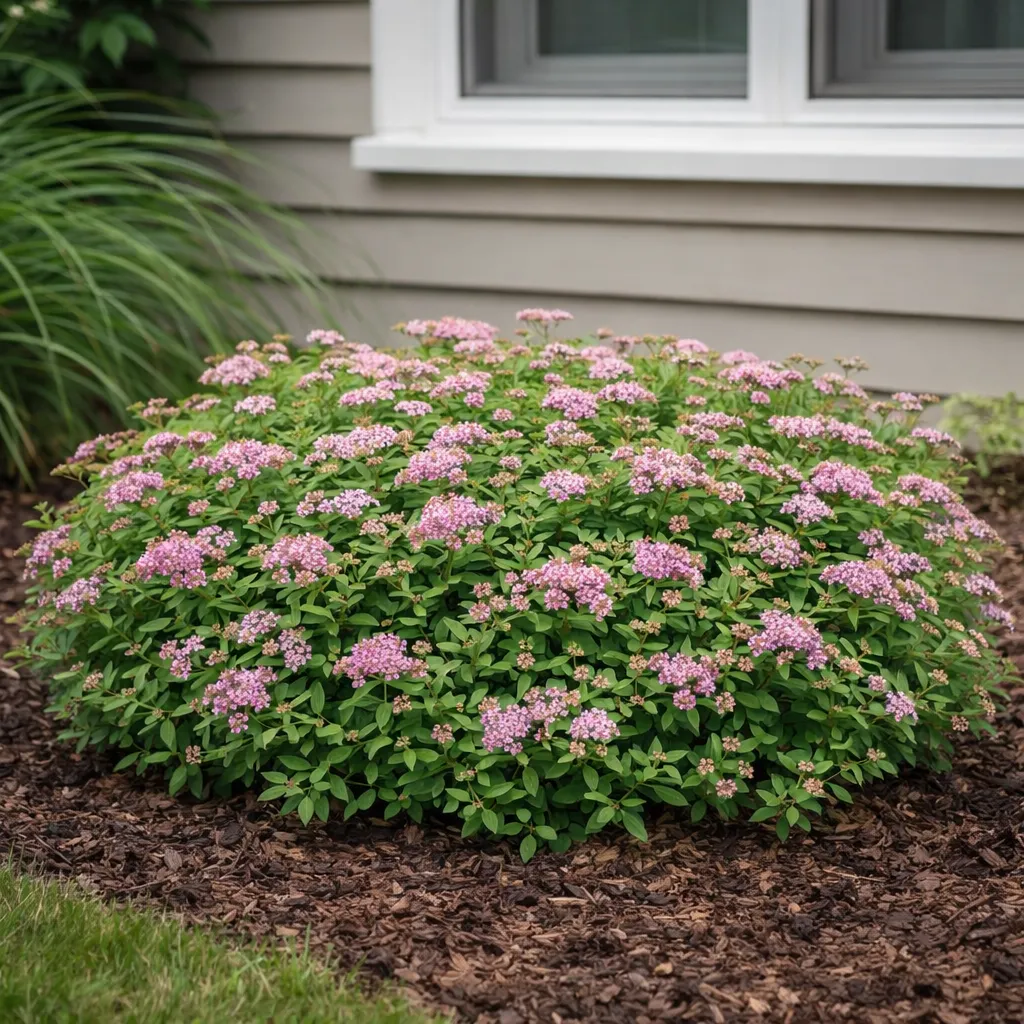
Botanical Name: Spiraea japonica ‘Little Princess’
Common Name: Little Princess Spirea
Mature Height and Width:
18–24″ tall × 2–3′ wide
Growth Habit: Compact, low mounded deciduous shrub with fine branching and a tight, rounded outline. Broader than tall. Slower and more compact than ‘Anthony Waterer’.
Foliage Description: Small, narrow oval to lance-shaped leaves; medium green; fine-textured. New growth may emerge slightly lighter green.
Flower Description: Flat-topped clusters (corymbs) of soft pink flowers borne above foliage; clusters smaller and more numerous than ‘Anthony Waterer’.
Bloom Time: Late spring to mid-summer; may lightly rebloom if deadheaded.
Fall Color: Yellow to bronze tones, variable.
Light Requirements: Full sun for strongest flowering and densest form.
Hardiness Zone: USDA Zones 4–8
Notable Landscape Uses:
Low border edging; foundation planting; mass groundcover shrub; walkway lining; perennial border foreground; low informal hedge.
Deer Resistance: Moderate
New growth may be browsed in high-pressure areas, though plants typically recover due to dense branching.
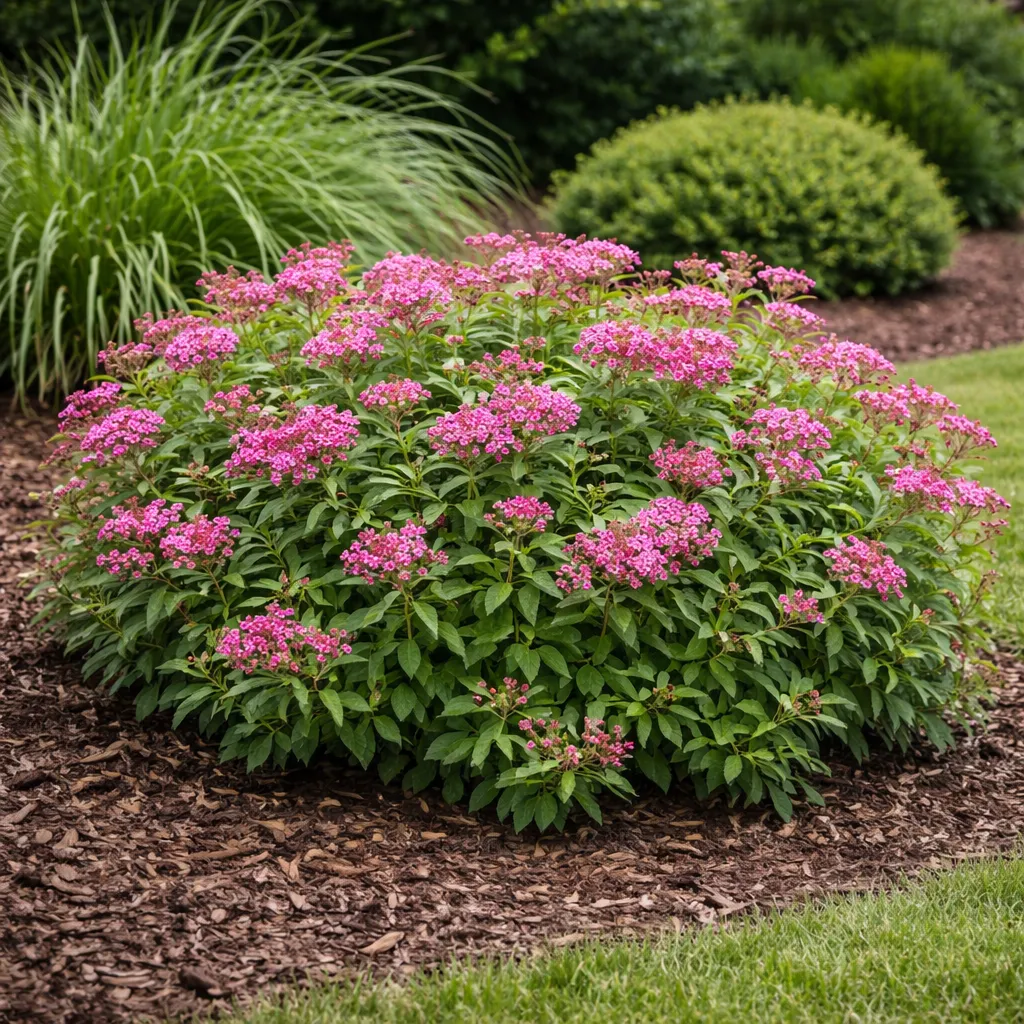
Botanical Name: Spiraea japonica ‘Anthony Waterer’
Common Name: Anthony Waterer Spirea
Mature Height and Width:
2–3′ tall × 3–4′ wide
Growth Habit: Low, mounded deciduous shrub with broad, spreading form. Dense branching with slightly outward-arching stems. Compact but not tight or sheared. Moderate growth rate.
Foliage Description: Narrow, lance-shaped leaves; medium green in summer with occasional reddish new growth. Fine-textured appearance.
Flower Description: Flat-topped corymb clusters of rosy-pink to deep pink flowers borne at stem tips. Individual flowers small; clusters broad and slightly domed but not spherical.
Bloom Time: Late spring to mid-summer; may rebloom lightly if deadheaded.
Fall Color: Yellow to reddish tones, variable.
Light Requirements: Full sun for strongest flowering and compact habit.
Hardiness Zone: USDA Zones 4–8
Notable Landscape Uses:
Low border planting; foundation massing; walkway edge; perennial border companion; low informal hedge; erosion control on gentle slopes.
Deer Resistance: Moderate
Young growth may be browsed in high-pressure areas, but established plants typically recover quickly.