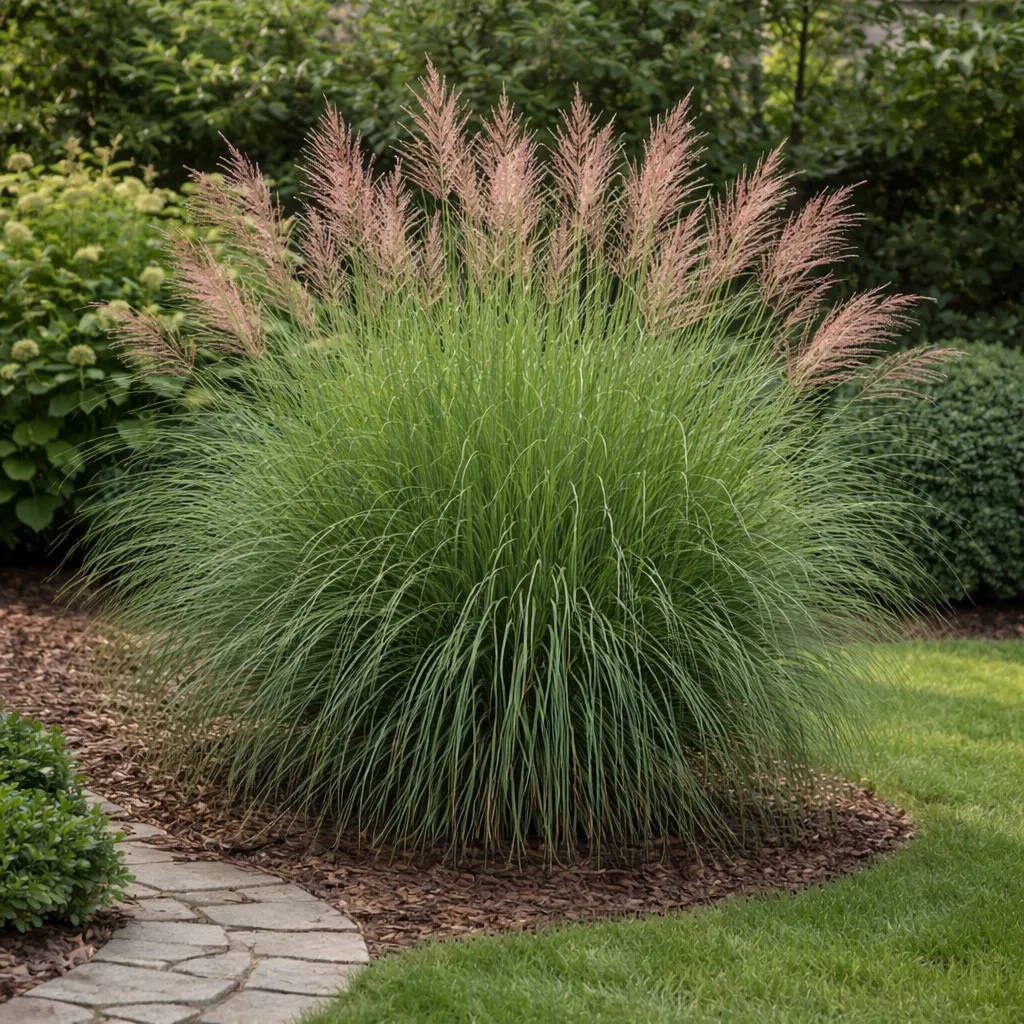
Welcome to our Plant Library! This is a new feature on our website to showcase the vast selection of plants that we carry across different seasons. We are continuously adding products, so if you are looking for a specific plant not listed below, we encourage you to call or visit to see if we have it in stock! 

298 products « Page 1 of 3 »
Filter
Clear All
Categories
Sub-Categories
Tags
Trees & Shrubs
Perennials

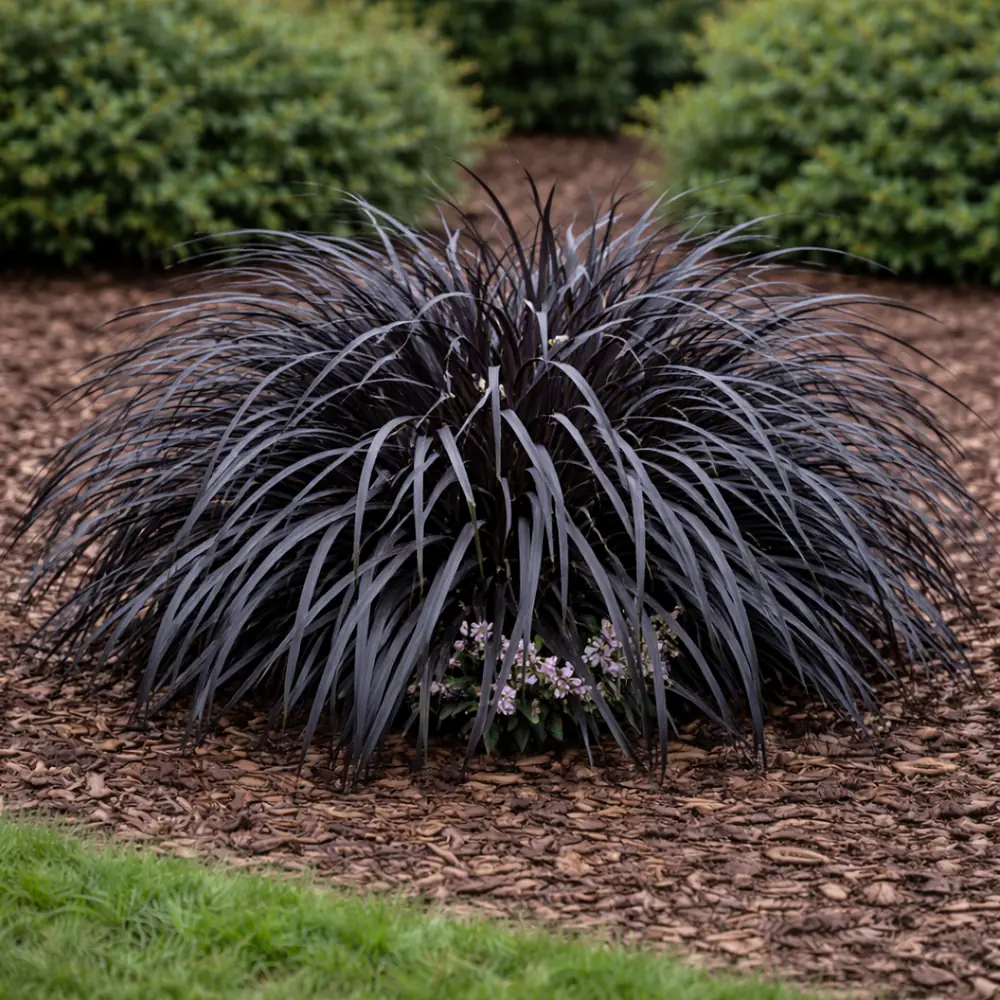
Black Mondo Grass
Ophiopogon planiscapus ‘Nigrescens’

  1. Mature Size: 6–8″ H × 10–12″ W
  2. Light Requirements: Part shade to full shade; tolerates morning sun
  3. Ideal Soil Conditions: Moist, well‑drained, organically rich soil
  4. Notable Characteristics: Dramatic deep black foliage in low mounding clumps. Produces small lilac flowers and blue berries. Excellent contrast plant in shade borders, rock gardens, or containers.
  5. Deer Resistance: Moderate to High
Trees & Shrubs

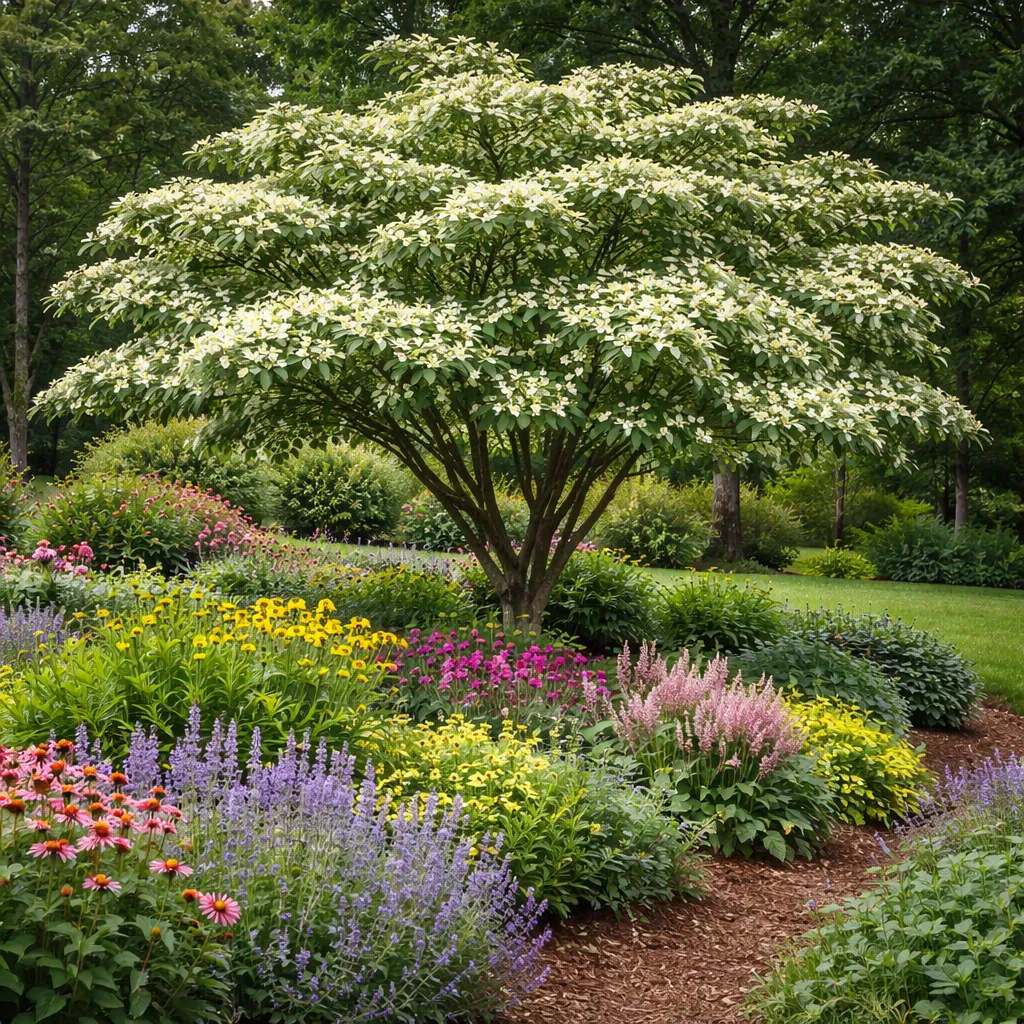
Botanical Name: Cornus kousa
Common Name: Kousa Dogwood

Mature Height and Width:
15–25′ tall × 15–25′ wide

Growth Habit:
Small deciduous ornamental tree with upright form in youth maturing to a broad, layered, horizontal branching structure; develops sculptural multi-tiered canopy with moderate interior openness.

Foliage Description:
Medium to dark green ovate foliage with subtle surface texture and opposite arrangement; dense summer canopy transitioning to attractive fall coloration.

Flower Description (if applicable):
Showy creamy white to soft blush four-bracted blooms appearing after leaf emergence; bracts pointed and slightly overlapping with greenish true flowers at center.

Bloom Time:
Late spring to early summer

Fall Color (if applicable):
Attractive red to burgundy fall coloration with occasional purple tones.

Light Requirements:
Full sun to partial shade

Hardiness Zone:
5–8

Notable Landscape Uses:
Specimen tree, patio tree, lawn accent, woodland edge planting, courtyard focal point, layered understory tree, residential foundation accent.

Deer Resistance:
Low to moderate; young growth may be browsed in Northeast landscapes.
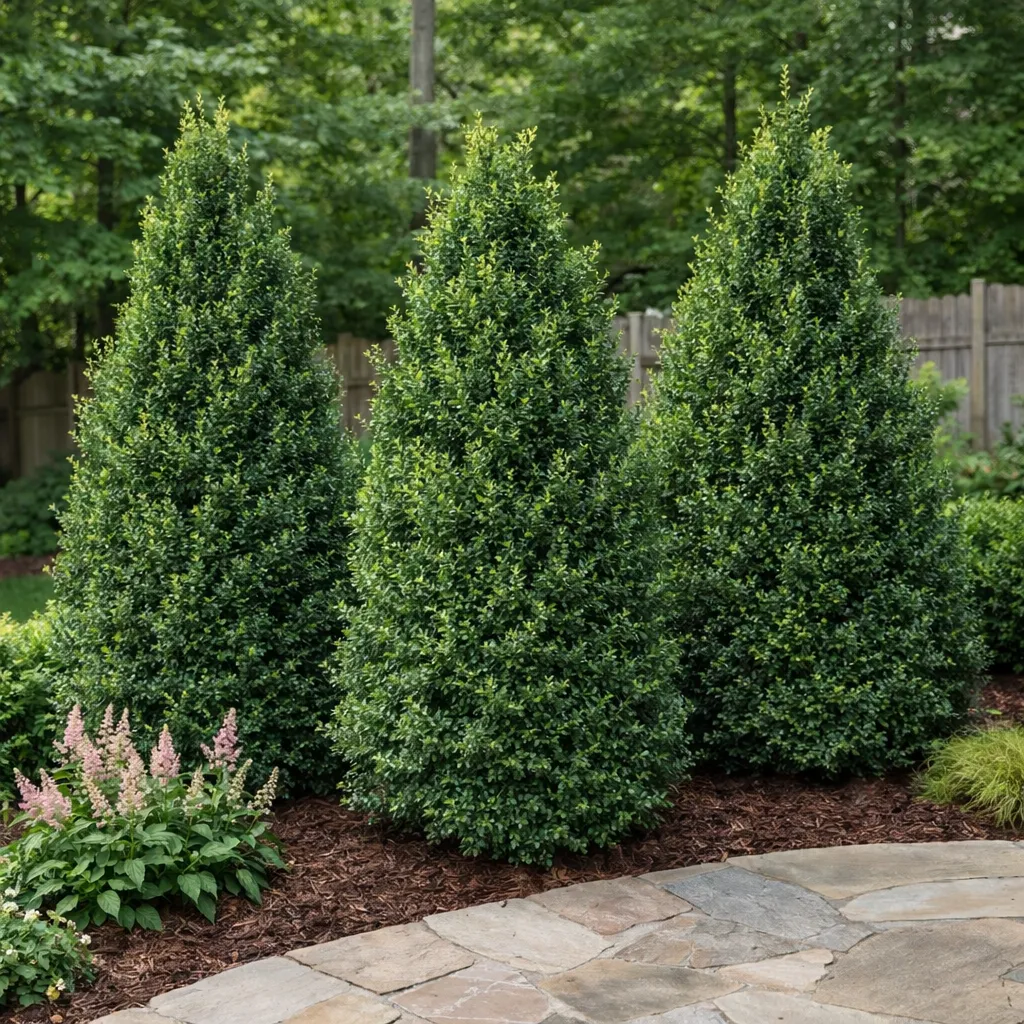
Botanical Name: Ilex crenata ‘Steeds’

Common Name: Steeds Japanese Holly

Mature Height and Width: 6–8′ tall × 4–5′ wide

Growth Habit: Upright, narrow pyramidal evergreen shrub with dense branching. Maintains a naturally refined vertical form without heavy shearing. Moderate growth rate.

Foliage Description: Small, oval, smooth-edged leaves with a deep glossy green color. Dense foliage creates a fine-textured appearance and strong evergreen structure. Evergreen in Zones 5–8.

Flower Description: Small white flowers in late spring; inconspicuous. Female plants may produce small black berries if pollinated, though fruiting is typically light in landscape use.

Bloom Time: Late spring

Fall Color: Evergreen; retains dark green coloration through winter.

Light Requirements: Full sun to partial shade; best density and color in full sun.

Hardiness Zone: USDA Zones 5–8

Notable Landscape Uses:
Narrow foundation plantings; low privacy screens; formal hedges; driveway edge accents; framing entryways; structured background planting in mixed shrub beds; commercial landscape structure.

Deer Resistance: Moderate
Japanese holly is generally not a preferred deer browse, though light tip browsing may occur in winter under heavy pressure. Established plants typically experience minimal long-term damage in Zones 5–7.
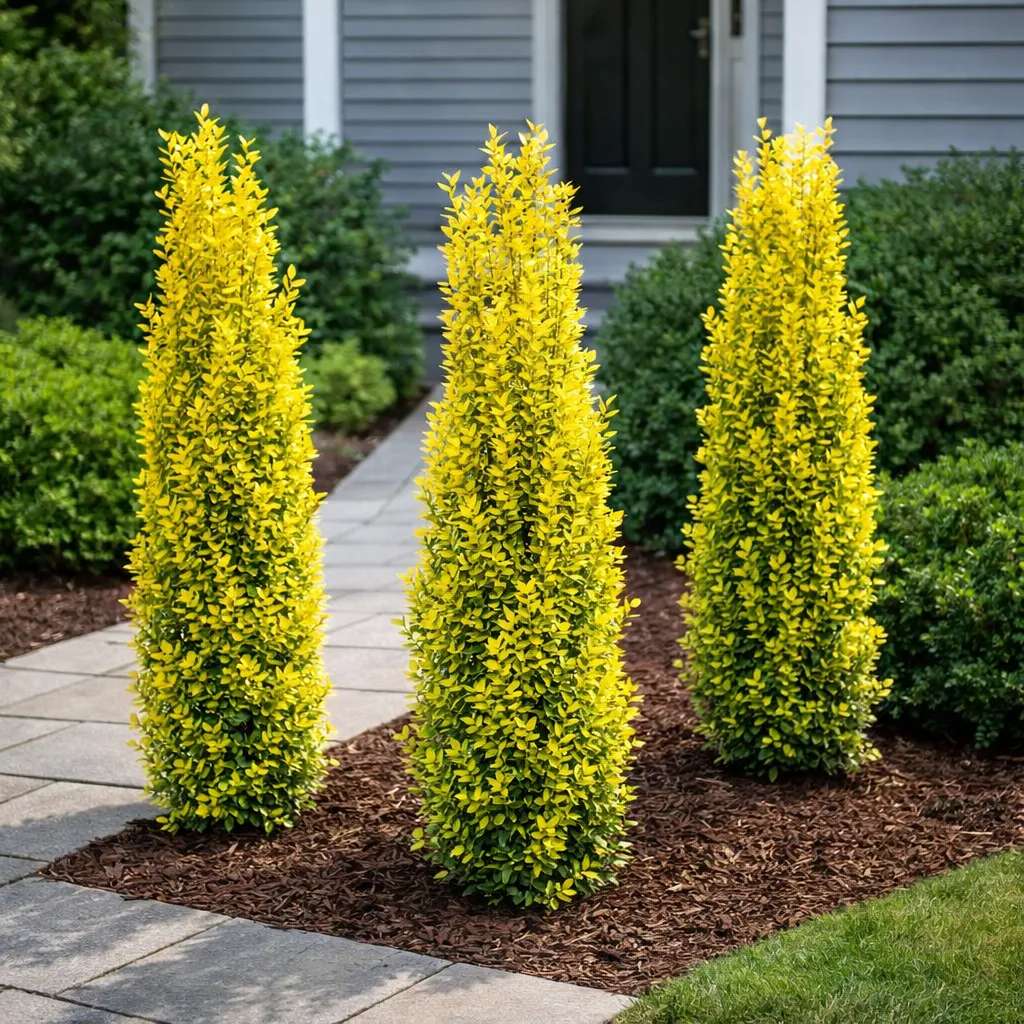
Botanical Name: Ilex crenata ‘Glow Stick’

Common Name: Glow Stick® Japanese Holly (Gold Sky Pencil Type)

Mature Height and Width: 6–8′ tall × 1–2′ wide

Growth Habit: Very narrow, upright, columnar evergreen with tight vertical branching. Maintains a pencil-thin silhouette similar to ‘Sky Pencil’ but with brighter foliage coloration.

Foliage Description: Small, oval, smooth-edged leaves in bright golden-yellow to chartreuse tones. Color is strongest in full sun and softens slightly in partial shade. Dense foliage held tightly along upright stems creates a refined, architectural appearance. Evergreen in Zones 5–7.

Flower Description: Small white spring flowers; inconspicuous. Female plants may produce small black berries if pollinated, though fruit is not typically ornamental.

Bloom Time: Late spring

Fall Color: Evergreen; maintains golden-yellow to chartreuse coloration through winter with minimal color shift.

Light Requirements: Full sun to partial shade; best gold coloration develops in full sun with adequate moisture.

Hardiness Zone: USDA Zones 5–8

Notable Landscape Uses:
Vertical accent in narrow foundation beds; flanking entryways; framing garage doors; formal garden structure; modern landscape designs; container accents; small-space privacy screening.

Deer Resistance: Moderate
Japanese holly is generally not highly preferred by deer, though upright forms may experience occasional tip browsing in winter under heavy pressure. Established plants typically suffer minimal damage in Zones 5–7.
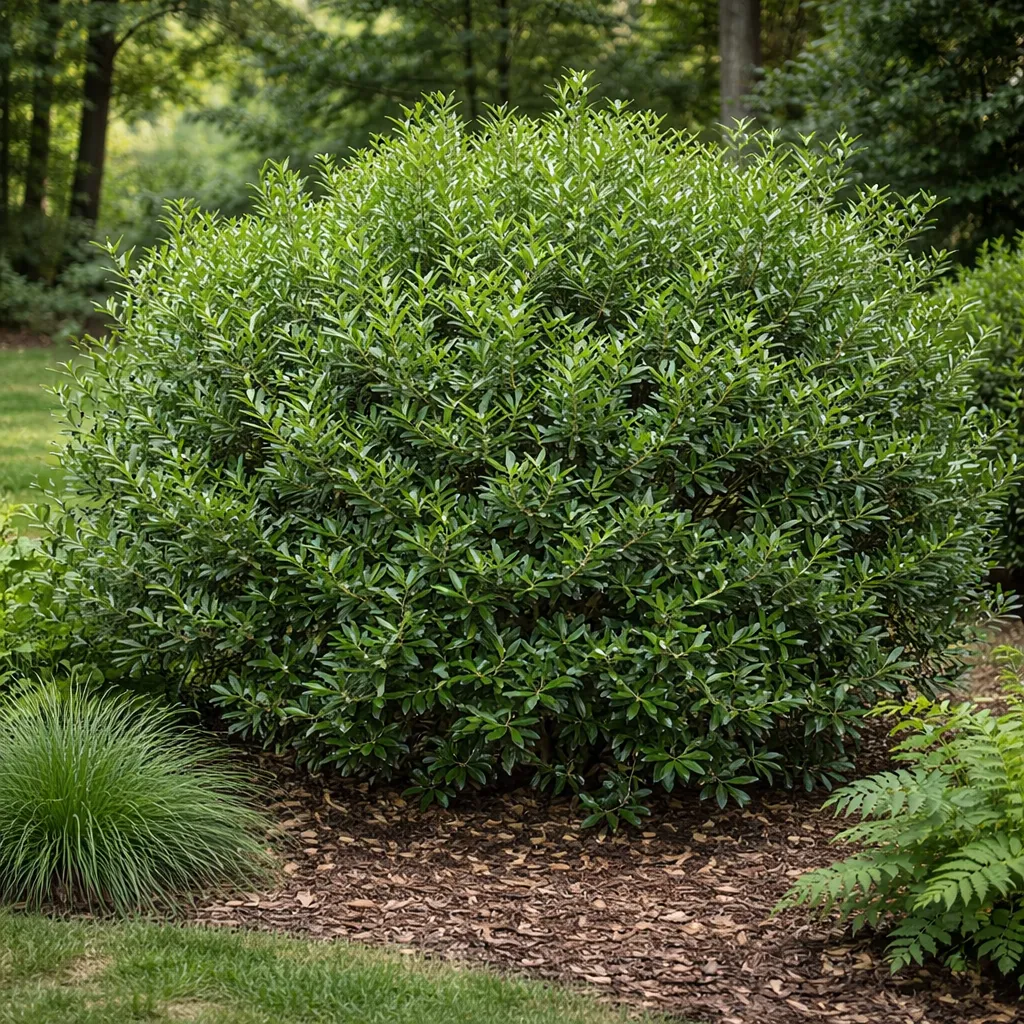
Botanical Name: Ilex glabra

Common Name: Inkberry Holly

Mature Height and Width: 5–8′ tall × 5–8′ wide (species); compact cultivars vary from 3–4′ tall

Growth Habit: Rounded, upright native evergreen shrub with fine branching. Naturally somewhat open at maturity unless maintained or selected cultivar is used. Tends to sucker slowly over time, forming colonies in natural settings.

Foliage Description: Narrow, oblong, spineless dark green leaves with a smooth margin. Leaves are concentrated toward stem tips, giving older plants a slightly looser interior unless pruned. Evergreen in Zones 5–7.

Flower Description: Small white spring flowers; not ornamentally significant. Female plants produce small black berries that persist into winter and provide wildlife value.

Bloom Time: Late spring

Fall Color: Evergreen; maintains deep green foliage through winter.

Light Requirements: Full sun to partial shade; adaptable to wet soils and tolerates periodic flooding once established.

Hardiness Zone: USDA Zones 4–9

Notable Landscape Uses:
Native foundation plantings; rain gardens; wetland edge plantings; mass plantings; naturalized borders; low evergreen hedges (when pruned); coastal landscapes; wildlife-friendly gardens.

Deer Resistance: Moderate
Inkberry is not typically a preferred browse species, though deer may sample new growth under pressure. Mature plants generally sustain minimal long-term damage in Zones 5–7.
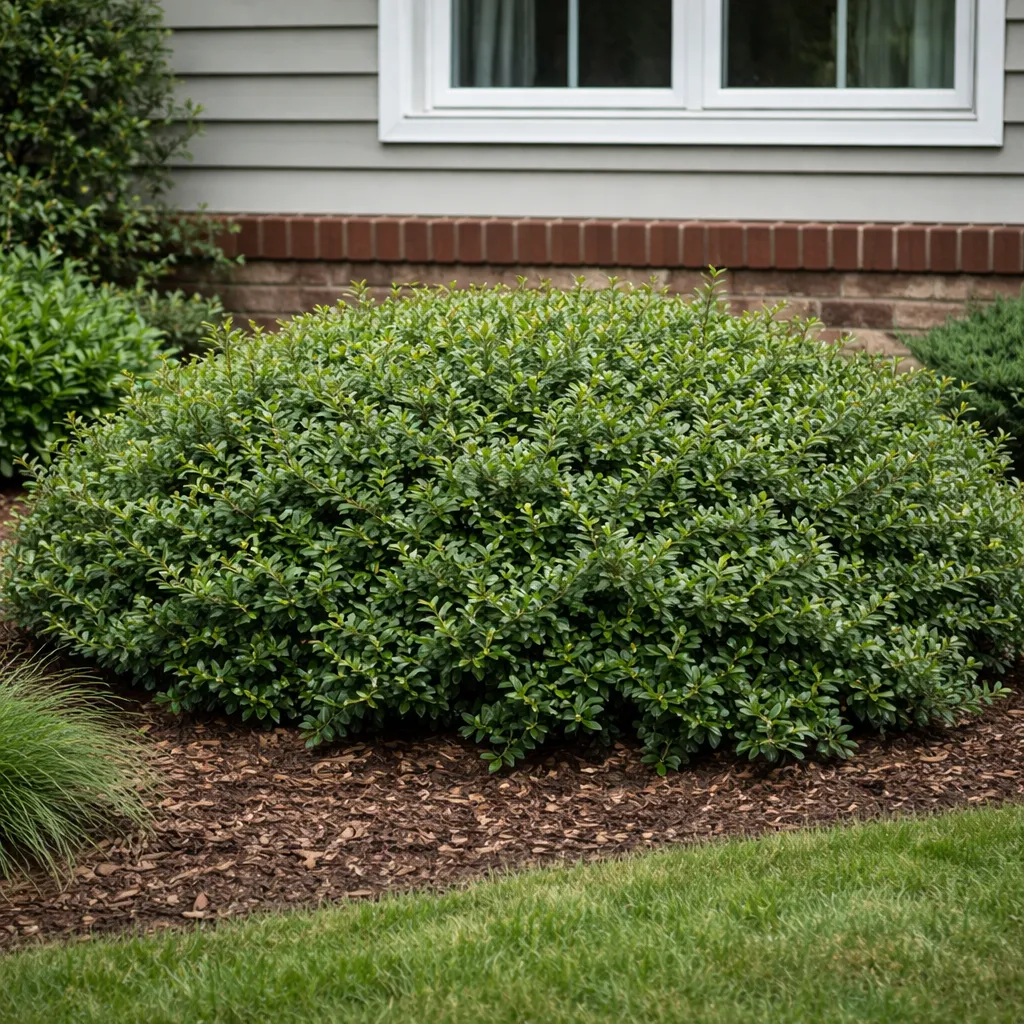
Botanical Name: Ilex crenata ‘Green Luster’

Common Name: Green Luster Japanese Holly

Mature Height and Width: 3–5′ tall × 6–8′ wide

Growth Habit: Low, spreading, broad-mounded evergreen shrub. Wider than tall, forming a dense, ground-hugging mass with arching lateral branching.

Foliage Description: Small, oval, smooth-edged leaves with a glossy dark green surface. Fine texture with dense branching that creates a uniform, spreading appearance. Evergreen in Zones 5–7.

Flower Description: Small white flowers in late spring; not ornamentally significant. Female plants may produce small black berries if pollinated, though fruiting is generally minimal in landscape settings.

Bloom Time: Late spring

Fall Color: Evergreen; retains rich dark green color through winter with minimal bronzing.

Light Requirements: Full sun to partial shade; adaptable to a range of exposures, though best density occurs in full sun.

Hardiness Zone: USDA Zones 5–8

Notable Landscape Uses:
Low evergreen hedge; mass plantings; foundation plantings; bank stabilization; slope plantings; edging for larger shrub beds; background evergreen filler; commercial landscapes requiring low-maintenance structure.

Deer Resistance: Moderate
Japanese holly is generally less preferred by deer compared to broadleaf evergreens with softer foliage. While not immune to browsing, Green Luster typically sustains only light damage in Zones 5–7 unless deer pressure is severe.
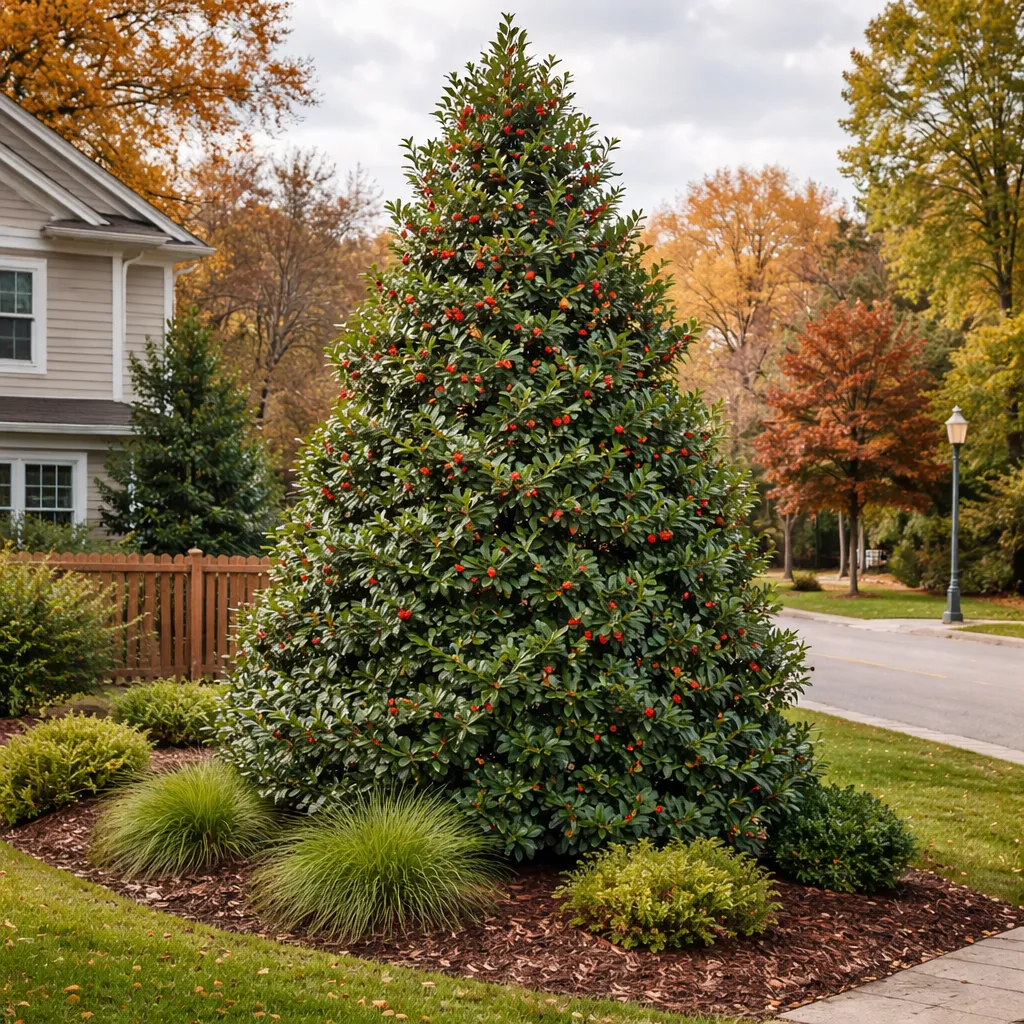
Botanical Name: Ilex × ‘Nellie R. Stevens’

Common Name: Nellie R. Stevens Holly

Mature Height and Width: 15–25′ tall × 8–12′ wide

Growth Habit: Upright, pyramidal evergreen with a strong central leader and dense branching. Moderate to fast growth rate with a naturally symmetrical outline when unpruned.

Foliage Description: Glossy, dark green leaves with prominent spines along margins. Foliage is dense, leathery, and holds color well through winter. Evergreen in Zones 6–9 (marginal Zone 5 in protected sites).

Flower Description: Small white flowers in spring; not ornamentally significant. Produces abundant bright red berries on female plants without need for a separate pollinator, making it highly ornamental in fall and winter.

Bloom Time: Late spring

Fall Color: Evergreen; bright red berries provide strong seasonal interest from fall into winter.

Light Requirements: Full sun to partial shade; best berry production occurs in full sun.

Hardiness Zone: USDA Zones 6–9 (protected Zone 5 sites)

Notable Landscape Uses:
Large privacy screens; evergreen property borders; specimen tree in front lawns; holiday interest plantings; windbreaks; tall foundation corners; commercial buffer plantings; background structure in large landscapes.

Deer Resistance: High
Nellie R. Stevens Holly demonstrates strong deer resistance due to its thick, spiny foliage. While no plant is completely deer-proof, browsing is uncommon and typically limited to light sampling in high-pressure areas. Established plants sustain minimal long-term damage in Zones 6–7.
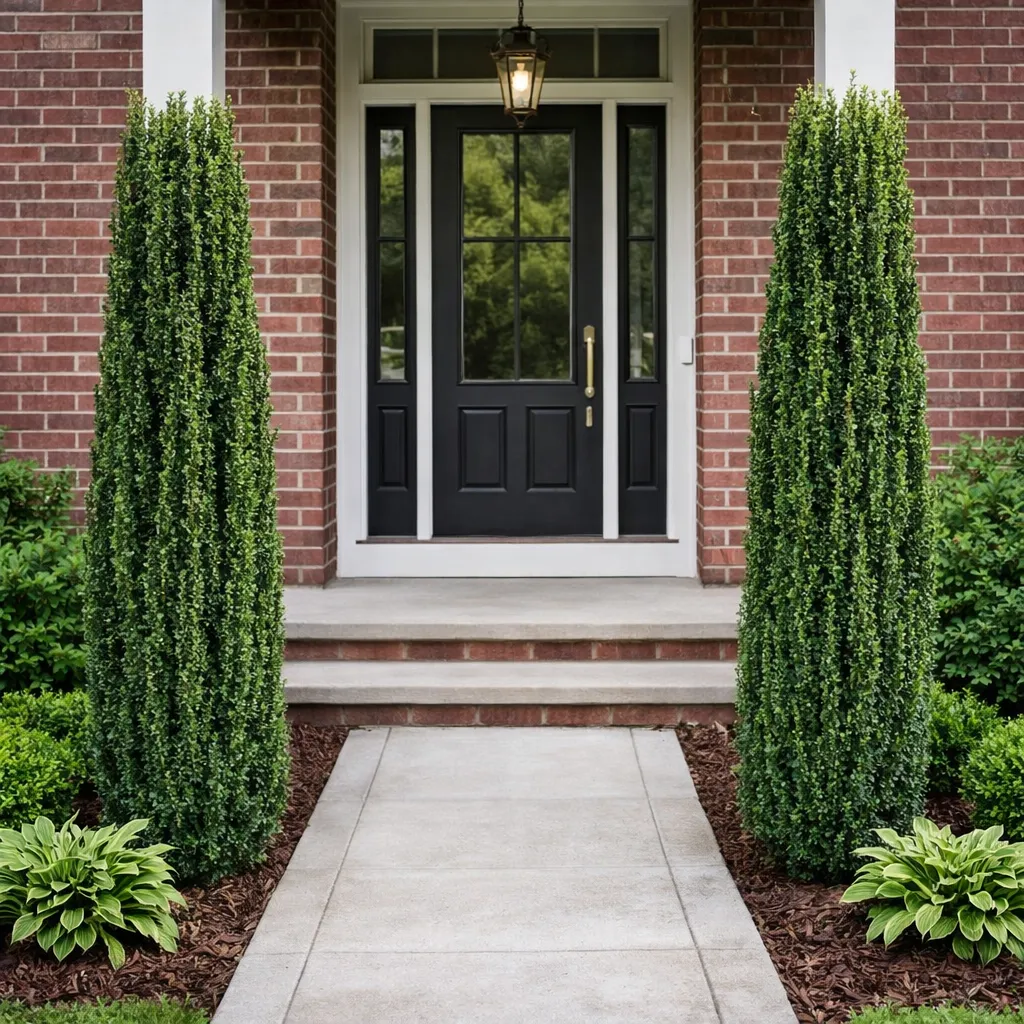
Botanical Name: Ilex crenata ‘Sky Pencil’

Common Name: Sky Pencil Japanese Holly

Mature Height and Width: 6–10′ tall × 2–3′ wide

Growth Habit: Very narrow, upright, columnar evergreen with tight vertical branching. Maintains a pencil-thin profile with minimal lateral spread. Slow to moderate growth rate.

Foliage Description: Small, oval, smooth-edged leaves in deep glossy green. Fine texture with dense foliage held closely along upright stems. Evergreen in Zones 6–8 (marginal in protected Zone 5 sites).

Flower Description: Small white flowers in late spring; inconspicuous. Female plants may produce small black berries if a pollinator is present.

Bloom Time: Late spring

Fall Color: Evergreen; retains dark green color through winter.

Light Requirements: Full sun to partial shade; best density and structure in full sun.

Hardiness Zone: USDA Zones 6–8 (protected Zone 5 locations)

Notable Landscape Uses:
Vertical accent in narrow foundation beds; flanking entryways or garage doors; formal garden structure; container plantings; small-space privacy screens; modern landscape designs; driveway edge plantings.

Deer Resistance: Moderate
Japanese holly is generally less preferred by deer, but the narrow upright form can be susceptible to winter tip browsing in high-pressure areas. Established plants typically recover well from light damage.
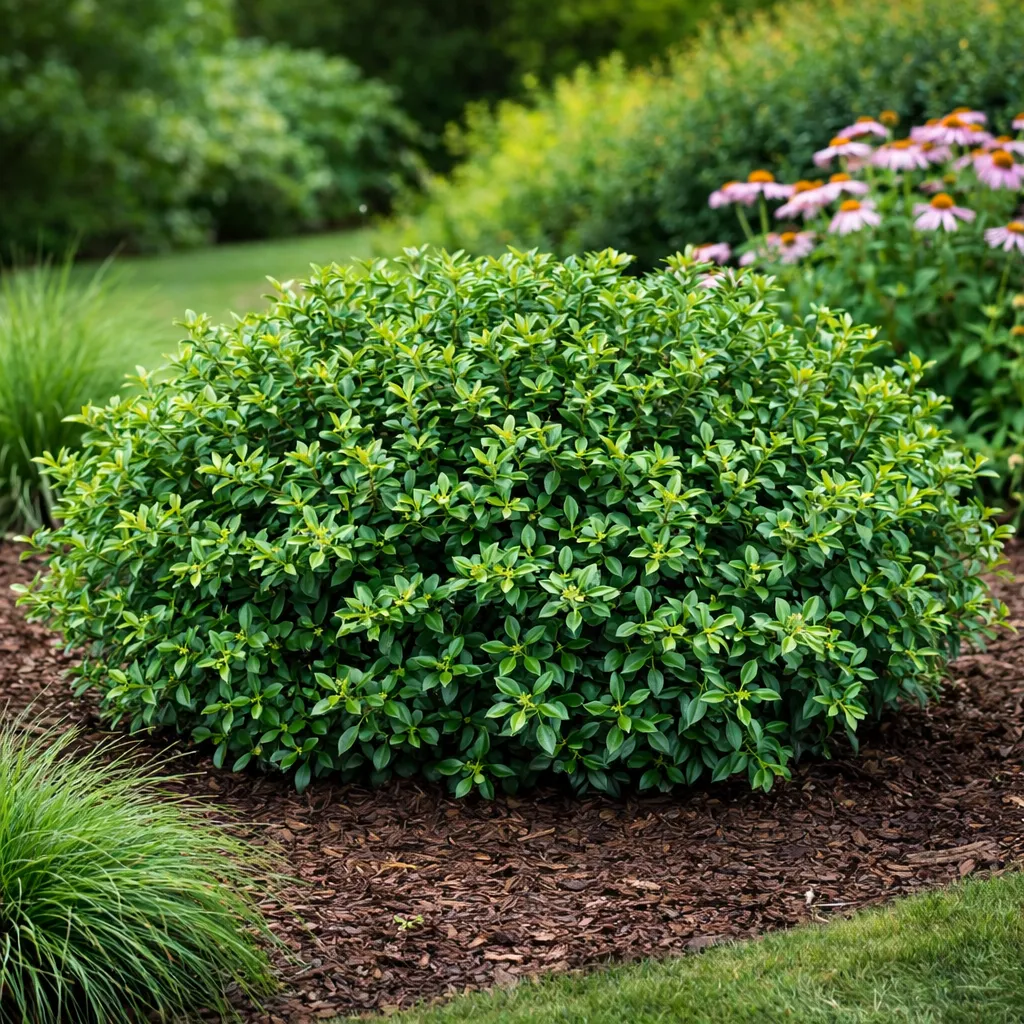
Botanical Name: Ilex crenata ‘Soft Touch’

Common Name: Soft Touch Japanese Holly

Mature Height and Width: 2–3′ tall × 3–4′ wide

Growth Habit: Low, mounded, spreading evergreen shrub with a soft, refined texture. Naturally dense without rigid structure; maintains a gentle, cushion-like form.

Foliage Description: Small, slightly elongated oval leaves with a smooth margin and soft matte finish. Foliage is medium to dark green and notably softer in appearance than many other Ilex crenata cultivars. Evergreen in Zones 5–7.

Flower Description: Small white flowers in late spring; not ornamentally significant. Female plants may produce small black berries if pollinated, though fruit is typically minimal in landscape use.

Bloom Time: Late spring

Fall Color: Evergreen; retains consistent green coloration through winter with minimal bronzing.

Light Requirements: Full sun to partial shade; performs well in filtered light and is adaptable to a range of exposures.

Hardiness Zone: USDA Zones 5–8

Notable Landscape Uses:
Foundation plantings; low hedges; border edging; mass plantings; understory evergreen filler; mixed shrub beds; woodland edge plantings; container use in shaded patios.

Deer Resistance: Moderate
Japanese holly is generally less preferred by deer compared to broadleaf evergreens with softer foliage. While not completely deer-proof, browsing is usually limited in Zones 5–7 except under heavy winter pressure.
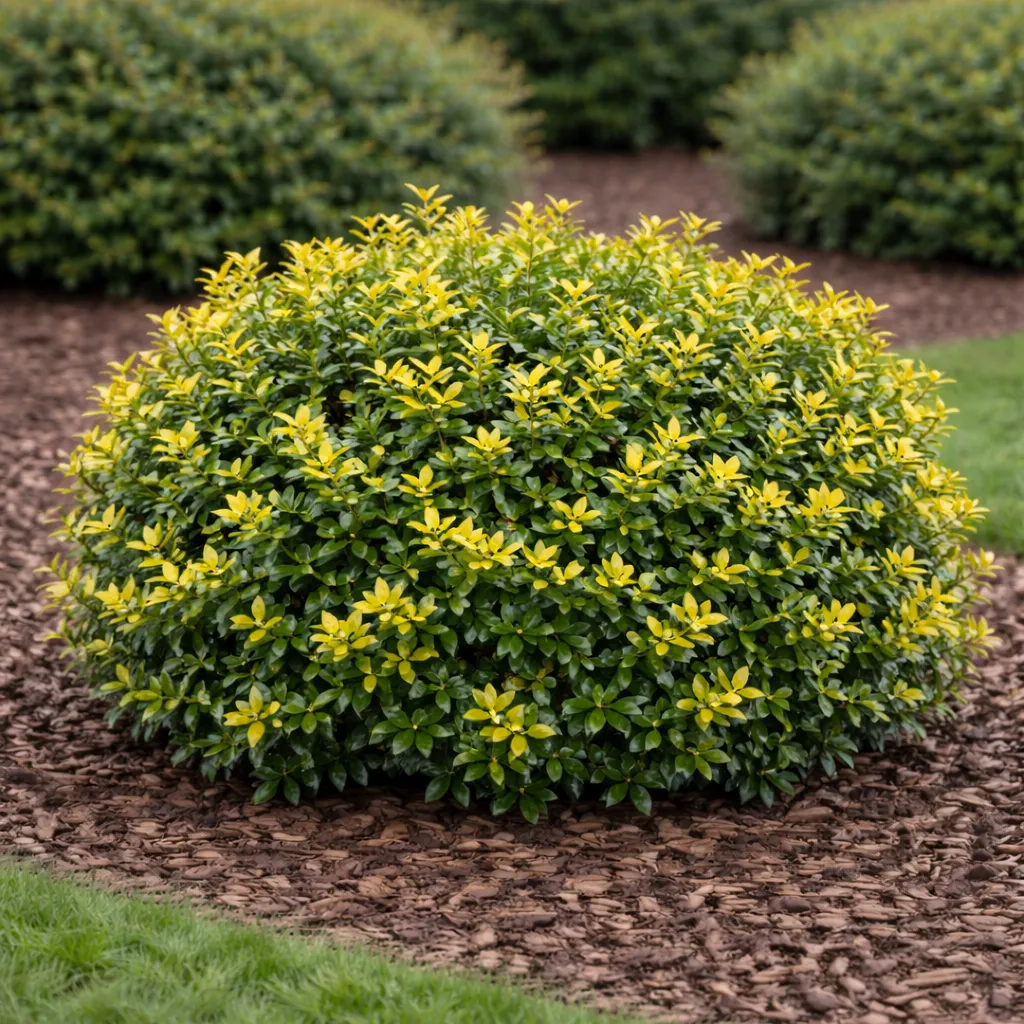
Touch of Gold™ Holly
Ilex crenata ‘ANNYS1’ (Touch of Gold™)

  1. Mature Size: 2–3′ H × 3–4′ W
  2. Light Requirements: Full sun to part shade; brightest golden color in full sun
  3. Ideal Soil Conditions: Moist, well-drained, slightly acidic soil; adaptable to clay or sandy soils, but avoid soggy conditions
  4. Notable Characteristics: Compact, mounding evergreen with dense golden-yellow foliage that holds its color year-round. Finer texture than most hollies and excellent color contrast in borders, low hedges, or foundation plantings. Naturally tidy with little maintenance.
  5. Deer Resistance: Moderate to High — rarely browsed once established.
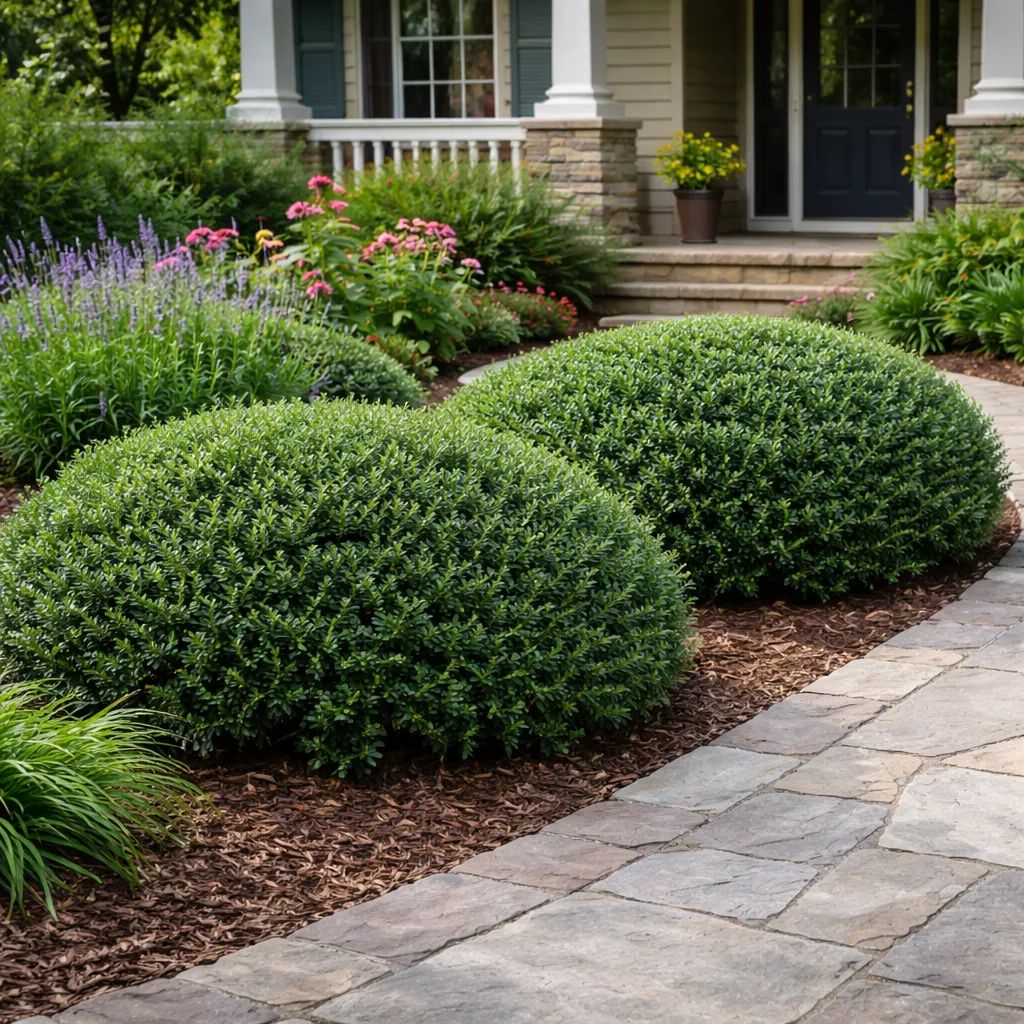
Botanical Name: Ilex crenata ‘Helleri’

Common Name: Helleri Japanese Holly

Mature Height and Width: 3–4′ tall × 4–6′ wide

Growth Habit: Low, broad-mounded evergreen shrub with a dense, compact branching structure. Naturally wider than tall, forming a tight cushion-like mass without aggressive vertical growth. Slow to moderate growth rate.

Foliage Description: Small, oval, smooth-edged leaves with a deep green, slightly glossy finish. Fine texture and dense interior branching provide a solid evergreen presence year-round.

Flower Description: Small white flowers in late spring; not ornamentally significant. Female plants may produce small black berries if pollinated, though fruit is typically minimal in landscape settings.

Bloom Time: Late spring

Fall Color: Evergreen; retains consistent dark green color through winter with minimal bronzing.

Light Requirements: Full sun to partial shade; maintains best density in full sun.

Hardiness Zone: USDA Zones 5–8

Notable Landscape Uses:
Low foundation plantings; mass plantings; low evergreen borders; commercial landscapes; bank stabilization; foreground shrub in layered plantings; substitute for boxwood in deer-prone areas.

Deer Resistance: Moderate
Helleri Japanese Holly is generally less preferred by deer compared to softer broadleaf evergreens. While occasional browsing may occur in high-pressure areas, established plants typically sustain limited damage in Zones 5–7.
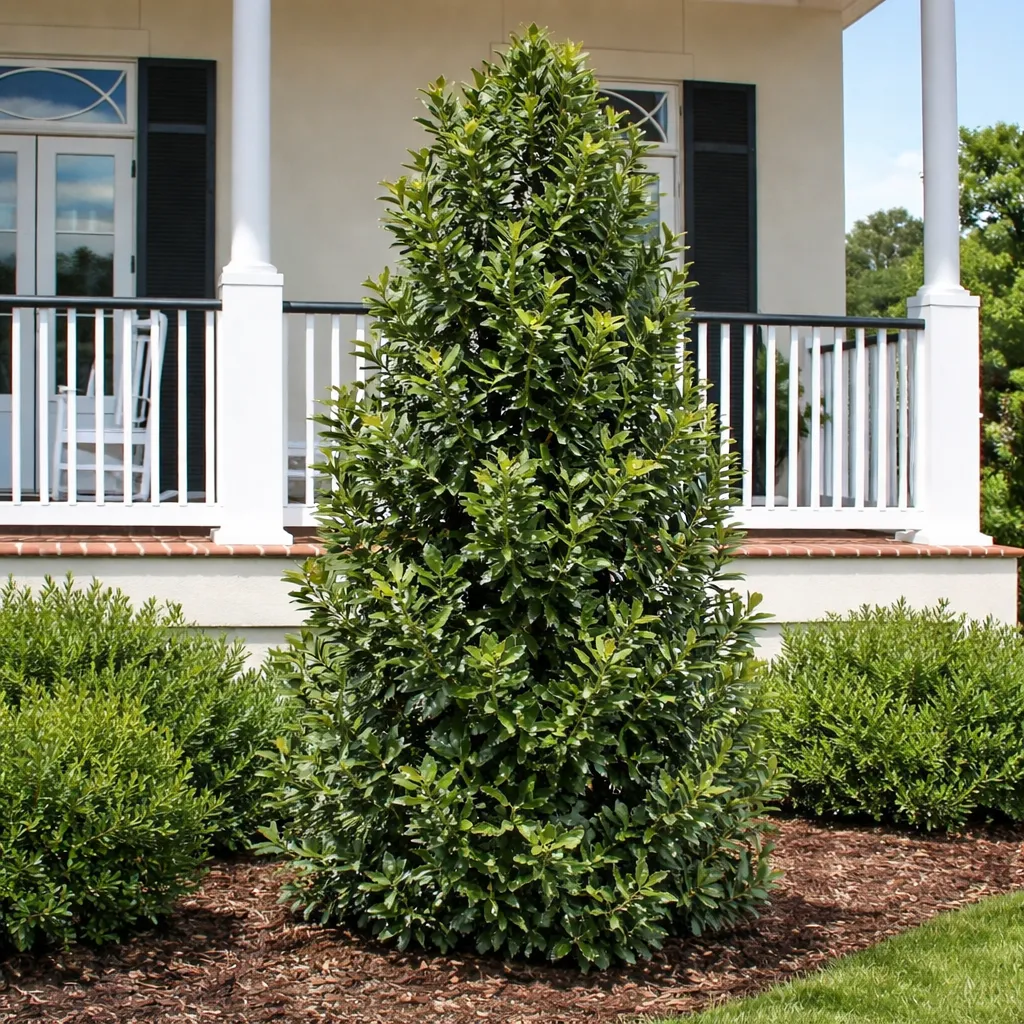
Botanical Name: Ilex × ‘Conaf’

Common Name: Oakleaf Holly

Mature Height and Width: 14–20′ tall × 8-10′ wide

Growth Habit: Upright, pyramidal evergreen with a strong central leader and dense, layered branching. Moderate to fast growth rate. Maintains a tree-like form when left unpruned.

Foliage Description: Distinctive oak-shaped leaves with multiple lobes and spined margins. Foliage emerges bronze-red in spring before maturing to glossy dark green. Thick, leathery texture provides year-round structure.

Flower Description: Small white flowers in late spring; not ornamentally significant. Female plants produce abundant bright red berries that persist into winter.

Bloom Time: Late spring

Fall Color: Evergreen; seasonal interest comes from red berries and occasional bronze winter tones in new growth.

Light Requirements: Full sun to partial shade; best berry production and dense growth in full sun.

Hardiness Zone: USDA Zones 6–9 (protected Zone 5 sites)

Notable Landscape Uses:
Large privacy screens; evergreen specimen tree; corner lot anchor planting; tall foundation planting; property border screening; windbreak; year-round structure in mixed evergreen plantings.

Deer Resistance: High
Oakleaf Holly has strong deer resistance due to its thick, spiny foliage. Browsing is uncommon even in moderate to high-pressure deer areas. Established plants typically sustain minimal damage in Zones 6–7.
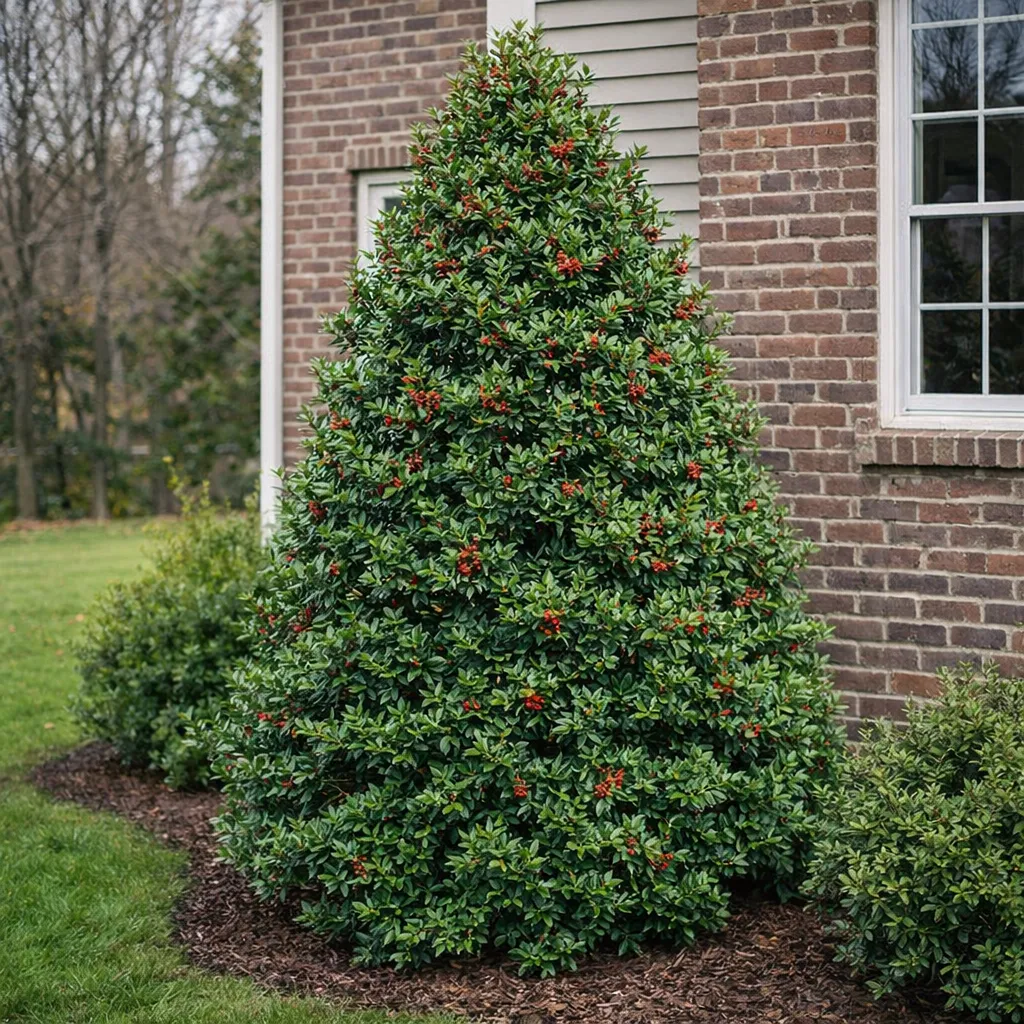
Botanical Name: Ilex × ‘Magland’

Common Name: Oakland™ Holly

Mature Height and Width: 12–20′ tall × 8–12′ wide

Growth Habit: Upright, pyramidal evergreen with a strong central leader and dense, uniform branching. Slightly more refined and compact than Oakleaf Holly. Moderate to fast growth rate.

Foliage Description: Glossy, dark green leaves with a distinctive oak-shaped, multi-lobed form and subtle spines along the margins. New growth emerges burgundy to bronze-red before maturing to deep green. Thick, leathery texture provides year-round structure.

Flower Description: Small white flowers in late spring; not ornamentally significant. Female plants produce bright red berries that persist into winter, adding seasonal interest.

Bloom Time: Late spring

Fall Color: Evergreen; seasonal interest provided by red berries and occasional bronze tones in new growth.

Light Requirements: Full sun to partial shade; best berry production and densest growth occur in full sun.

Hardiness Zone: USDA Zones 6–9 (protected Zone 5 sites)

Notable Landscape Uses:
Evergreen privacy screens; tall foundation corner planting; specimen tree in suburban lawns; property line buffer; windbreak; structured backdrop in mixed evergreen landscapes; commercial screening.

Deer Resistance: High
Oakland Holly demonstrates strong deer resistance due to its thick, spined foliage and leathery texture. While no plant is completely immune, significant browsing is uncommon in Zones 6–7 once plants are established.
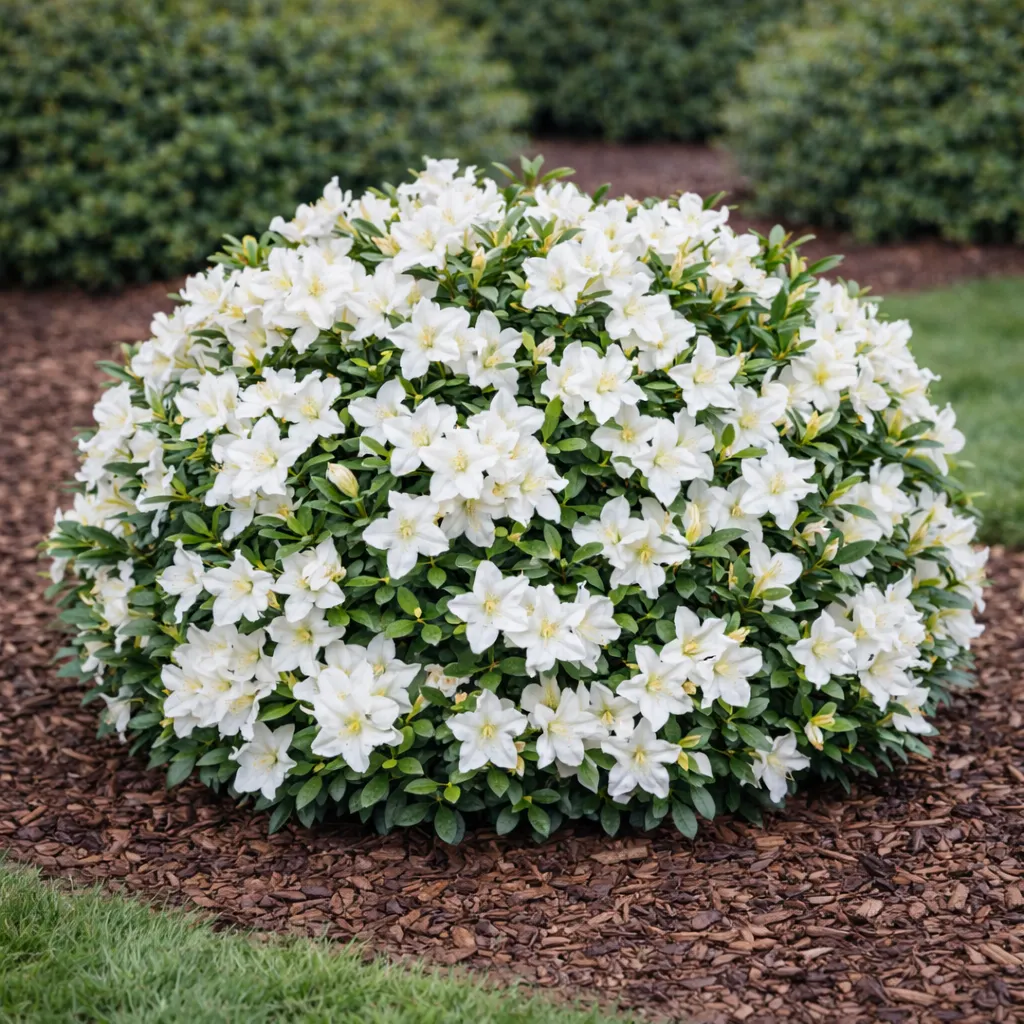
Botanical Name: Rhododendron ‘Robleg’

Common Name: Encore® Azalea Autumn Angel®

Mature Height and Width: 3–4′ tall × 3–4′ wide

Growth Habit: Compact, rounded, mounded evergreen shrub with dense branching. Maintains a tidy form with minimal pruning. Moderate growth rate.

Foliage Description: Small, elliptic dark green evergreen leaves with a fine texture. Foliage remains attractive year-round in Zones 6–7, often taking on slight bronze tones in colder weather.

Flower Description: Large, pure white single blooms with a soft ruffled edge and light yellow throat. Flowers are showy and abundant, often covering the plant during peak bloom cycles.

Bloom Time: Spring (primary heavy bloom), with repeat blooming in summer and fall.

Fall Color: Evergreen; no significant fall color change.

Light Requirements: Full sun to partial shade; best rebloom performance occurs with at least 5–6 hours of direct sunlight.

Hardiness Zone: USDA Zones 6–9

Notable Landscape Uses:
Foundation plantings; low evergreen borders; mass plantings; front entry accents; patio edge plantings; woodland garden edges; seasonal color focal points; suitable for containers in protected settings.

Deer Resistance: Low to Moderate
Azaleas are commonly browsed by deer, especially tender new growth and flower buds. Protection is recommended in high-pressure deer areas in Zones 6–7.
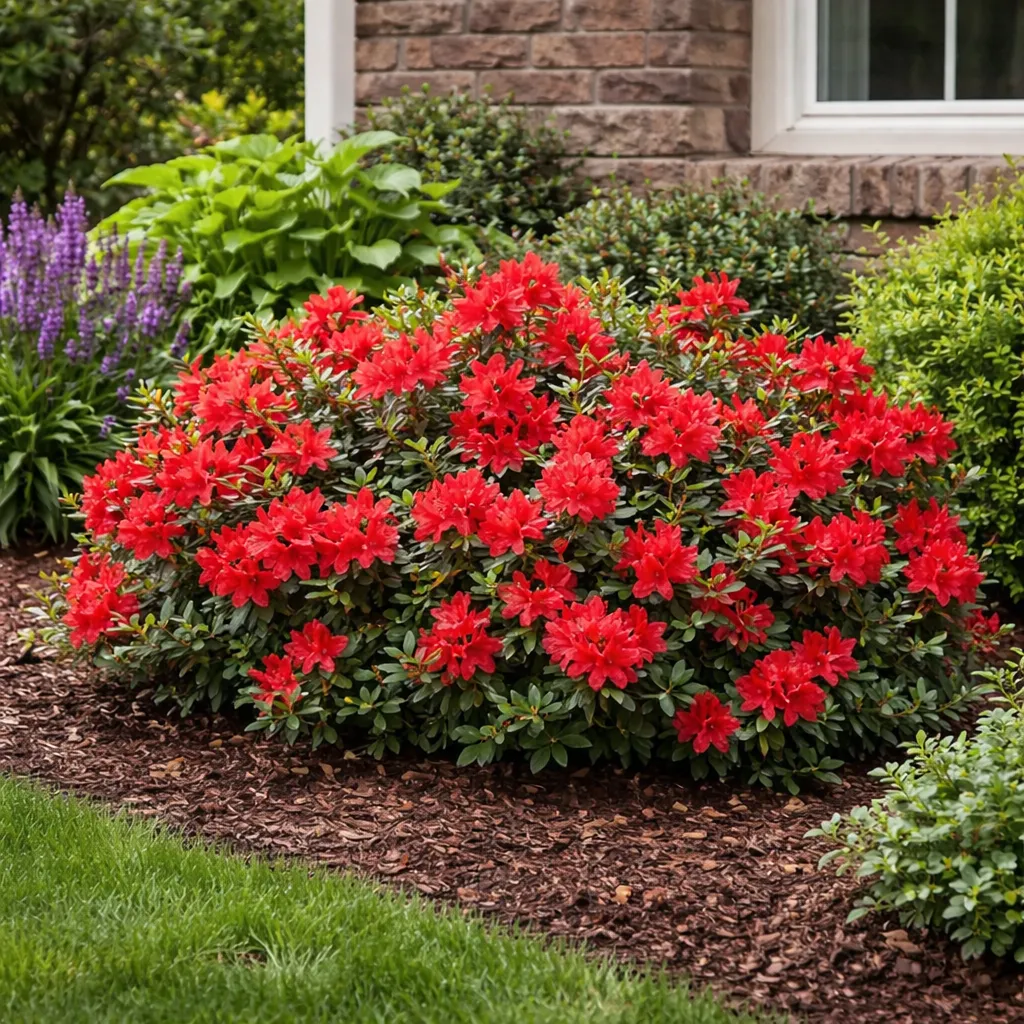
Botanical Name: Rhododendron ‘Roblez’

Common Name: Encore® Azalea Autumn Bonfire®

Mature Height and Width: 3–4′ tall × 3–4′ wide

Growth Habit: Compact, rounded, mounded evergreen shrub with dense branching. Naturally forms a low, slightly irregular dome with visible branch structure beneath bloom coverage. Moderate growth rate.

Foliage Description: Small, elliptic dark green evergreen leaves with fine texture. Foliage may develop slight bronze tones in colder weather but generally retains rich green color year-round in Zones 6–7.

Flower Description: Semi-double to double, vibrant true red flowers with a full, layered petal structure. Blooms are saturated red without strong pink or orange undertones.

Bloom Time: Heavy spring bloom, followed by repeat flowering in summer and fall.

Fall Color: Evergreen; no significant fall color change.

Light Requirements: Full sun to partial shade; best rebloom performance with at least 5–6 hours of direct sun.

Hardiness Zone: USDA Zones 6–9

Notable Landscape Uses:
Foundation plantings; mass plantings for bold color impact; patio edge accents; low evergreen borders; entryway focal points; mixed shrub beds; container plantings in protected areas.

Deer Resistance: Low to Moderate
Azaleas are frequently browsed by deer, particularly tender new growth and flower buds. Protection is recommended in areas with moderate to heavy deer pressure in Zones 6–7.
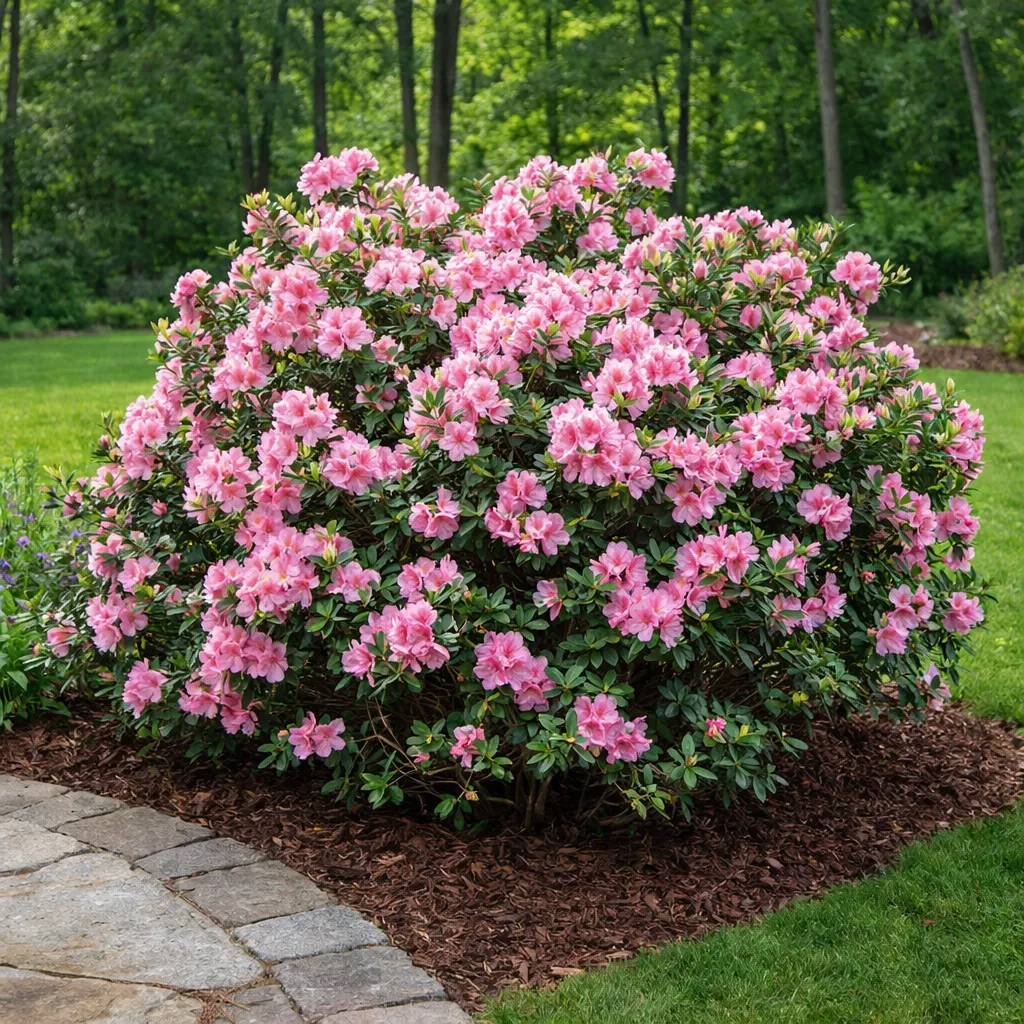
Botanical Name: Rhododendron ‘Roblec’

Common Name: Encore® Azalea Autumn Carnation®

Mature Height and Width: 4–5′ tall × 4–5′ wide

Growth Habit: Upright to broadly rounded evergreen shrub with moderate density. Slightly taller and more open than compact Encore selections, forming a refined but natural dome over time.

Foliage Description: Small to medium elliptic dark green evergreen leaves with a fine texture. Foliage remains attractive year-round in Zones 6–7, occasionally developing light bronze winter tones.

Flower Description: Semi-double, soft pink blooms with ruffled petals and a slightly deeper pink center. Flowers are abundant during peak cycles but allow interior foliage visibility.

Bloom Time: Heavy spring bloom with repeat flowering in summer and fall.

Fall Color: Evergreen; no significant fall color change.

Light Requirements: Full sun to partial shade; best rebloom performance with 5–6 hours of direct sun.

Hardiness Zone: USDA Zones 6–9

Notable Landscape Uses:
Foundation plantings; mass plantings for seasonal color; courtyard gardens; patio edge plantings; mixed shrub borders; soft transitional plant in layered evergreen beds.

Deer Resistance: Low to Moderate
Azaleas are commonly browsed by deer, particularly new growth and flower buds. Protection is recommended in areas with moderate to heavy deer pressure in Zones 6–7.
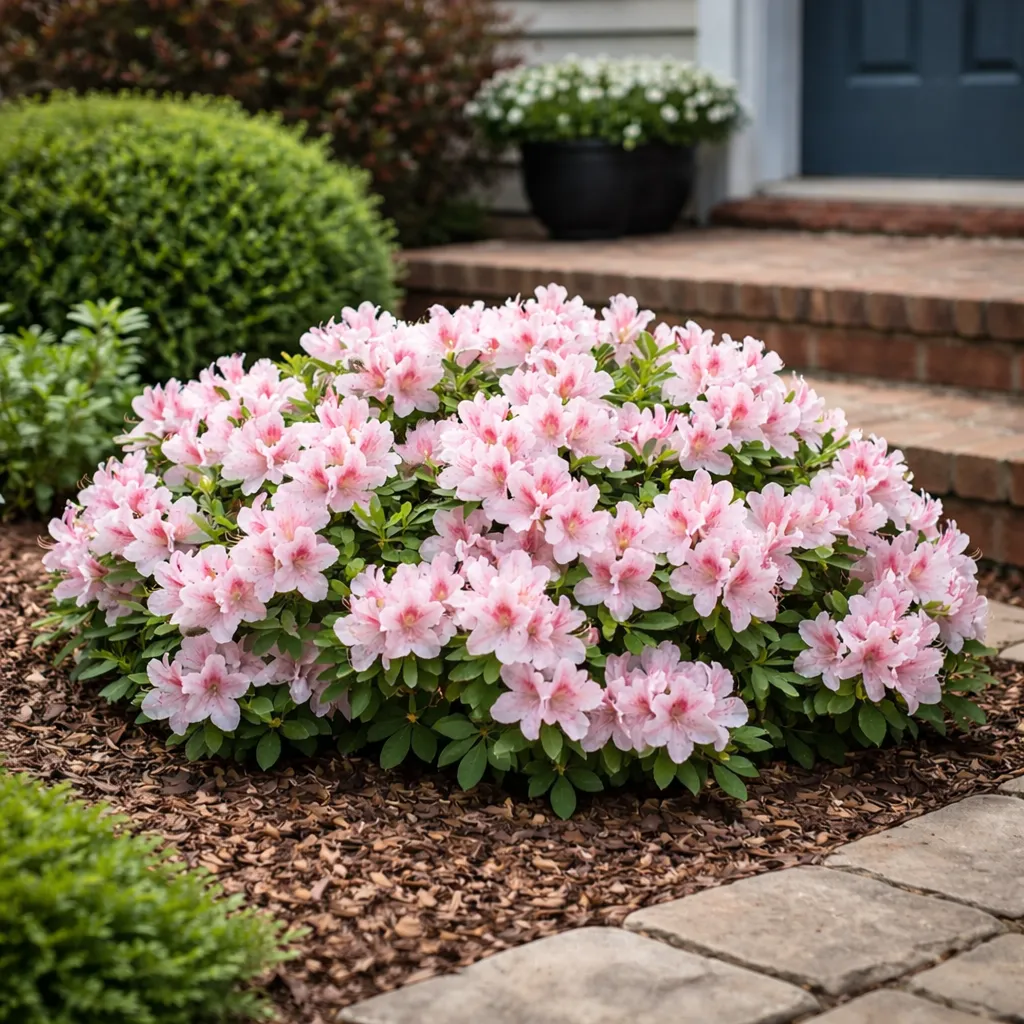
Create a highly realistic, photorealistic landscape photograph of a mature Encore® Azalea Autumn Chiffon® (Rhododendron ‘Robeld’) in a Northeast U.S. residential landscape (Zones 6–7).

The shrub should be approximately 2.5–3 feet tall and 3–4 feet wide with a low, compact, naturally mounded form. Reflect its true growth habit — refined but not sheared. Include mild asymmetry and subtle extension growth visible at branch tips.

Show the plant in peak spring bloom with abundant soft light pink single flowers featuring slightly deeper pink throats. Bloom coverage should be generous but not completely solid — allow visible evergreen foliage and natural interior depth.

Foliage must be dark green and visible beneath blooms.

Placement: small front courtyard planting near a brick entry step.

Use a unique residential context. Do not reuse previous landscape compositions. Vary hardscape material, mulch bed contour, companion shrubs, and background home style.

Brown hardwood mulch bed with organic edging.
Soft natural spring daylight with gentle shadows.
Slight background blur for depth.
Shrub fills 80–90% of square 1:1 frame.

Avoid perfectly symmetrical or geometric plant shapes.
Avoid cloned, identical plant forms.
Maintain professional nursery-catalog realism.

No text, watermark, labels, or layout graphics. Standalone photograph only.
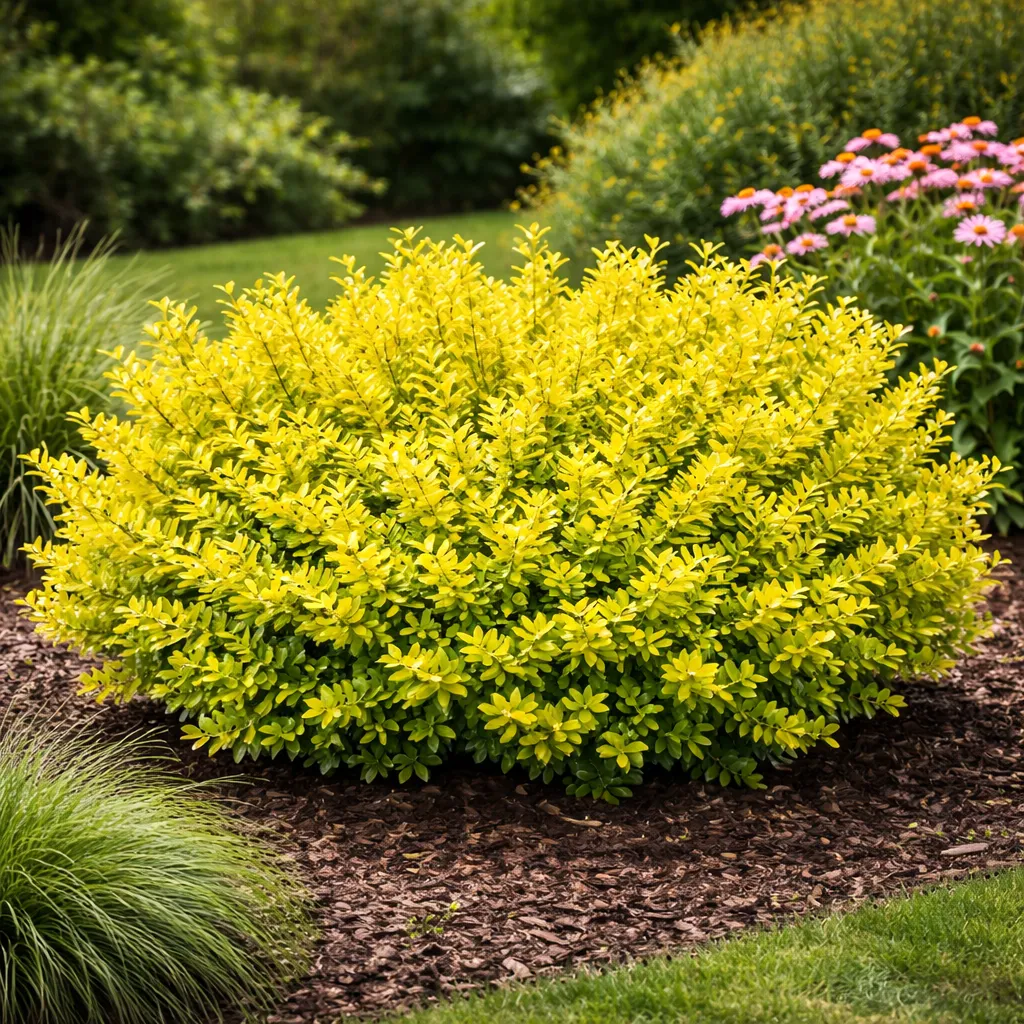
Botanical Name: Ilex crenata ‘NCVX1’

Common Name: Glow Pop® Japanese Holly

Mature Height and Width: 2–3′ tall × 2–3′ wide

Growth Habit: Naturally rounded, dense, globe-shaped evergreen shrub with tight branching and uniform structure. Maintains compact form without shearing.

Foliage Description: Small, oval to slightly rounded leaves with a smooth edge. Foliage is bright lime-green to chartreuse, holding vibrant color through the growing season. Fine-textured and dense. Evergreen in Zones 5–7.

Flower Description: Small white spring flowers; not ornamentally significant. May produce small black berries on female plants if pollinated, though fruiting is not a primary ornamental feature.

Bloom Time: Late spring

Fall Color: Evergreen; maintains bright chartreuse-green color through winter.

Light Requirements: Full sun to partial shade; best color development in full sun with adequate moisture.

Hardiness Zone: USDA Zones 5–8

Notable Landscape Uses:
Low foundation plantings; border edging; mass plantings; modern landscape designs; color contrast in mixed evergreen beds; walkway accents; structured formal gardens; container use.

Deer Resistance: Moderate to High
Japanese holly is generally less preferred by deer due to small, firm foliage. While not completely deer-proof, browsing pressure is typically light in Zones 5–7 compared to broadleaf evergreens with softer foliage.
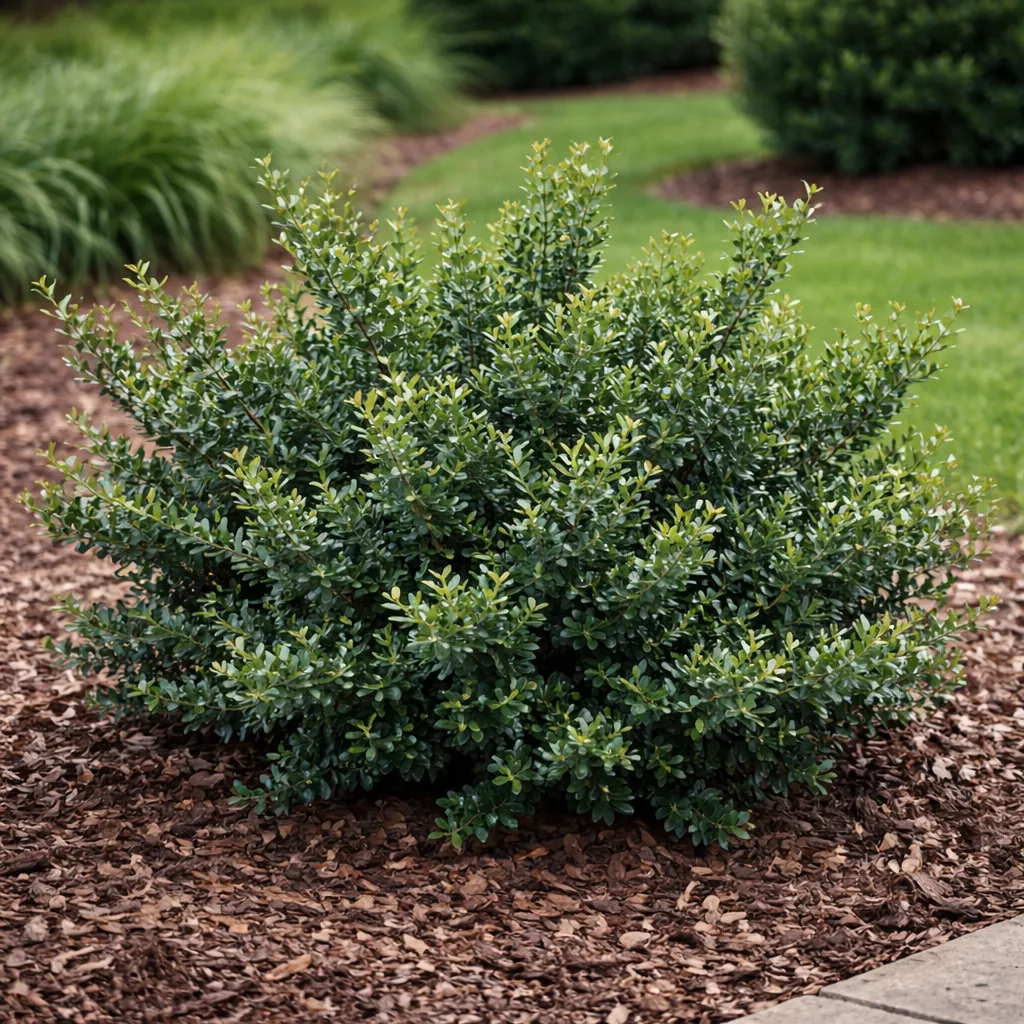
Botanical Name: Ilex crenata ‘Compacta’

Common Name: Compacta Japanese Holly

Mature Height and Width: 6–8′ tall × 6–8′ wide

Growth Habit: Dense, upright to broadly rounded evergreen shrub. Naturally compact with fine branching, forming a full, refined canopy. Moderate growth rate.

Foliage Description: Small, oval, smooth-edged leaves with a rich dark green, glossy finish. Dense foliage provides a fine-textured appearance and strong evergreen structure.

Flower Description: Small white flowers in late spring; not ornamentally significant. Female plants may produce small black berries if pollinated, though fruit is typically sparse in landscape use.

Bloom Time: Late spring

Fall Color: Evergreen; maintains deep green coloration through winter.

Light Requirements: Full sun to partial shade; best density and fullness in full sun.

Hardiness Zone: USDA Zones 5–8

Notable Landscape Uses:
Foundation plantings; medium evergreen hedges; privacy screens; background shrub in mixed borders; formal garden structure; mass plantings; commercial landscapes; adaptable substitute for boxwood in deer-prone areas.

Deer Resistance: Moderate
Japanese holly is generally less preferred by deer than boxwood or softer broadleaf evergreens. While not immune to browsing, established Compacta plants typically experience limited damage in Zones 5–7 except under severe winter pressure.
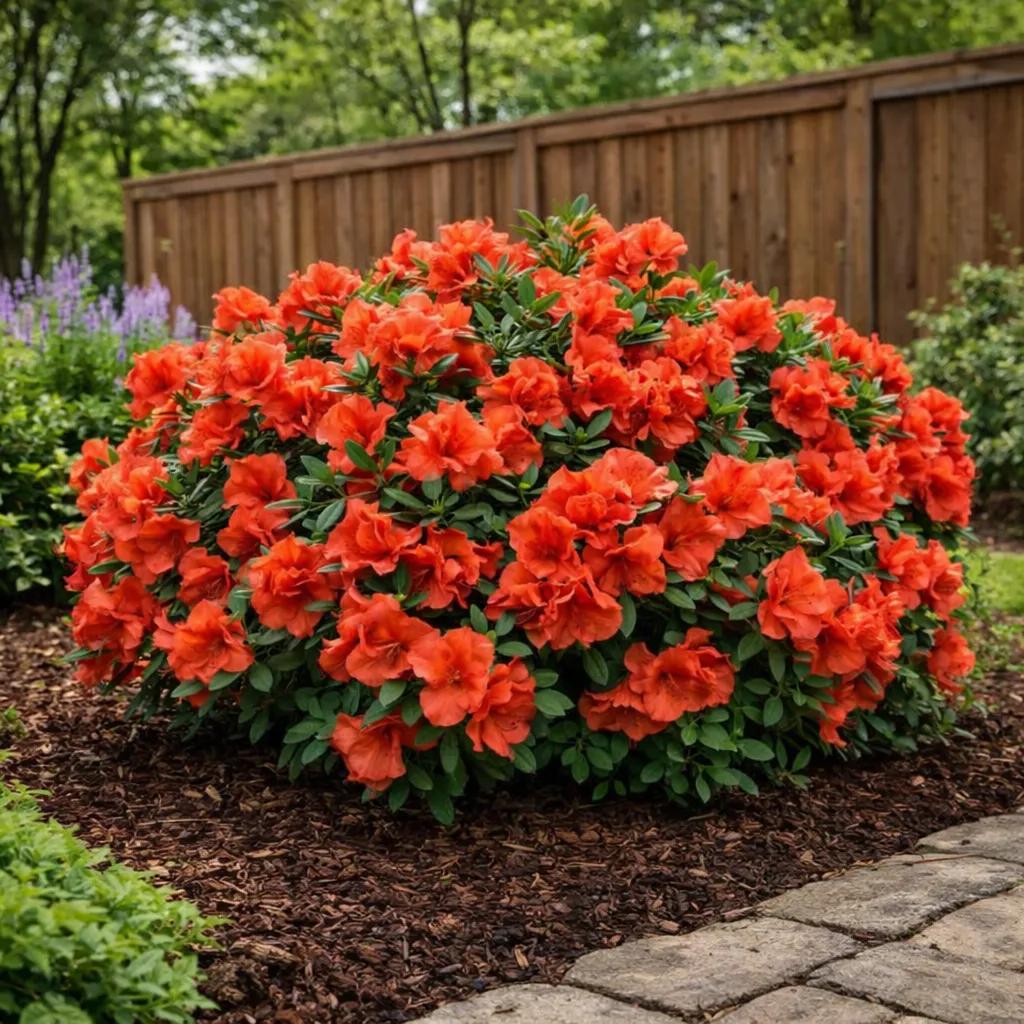
Botanical Name: Rhododendron ‘Conleb’

Common Name: Encore® Azalea Autumn Embers®

Mature Height and Width: 3–4′ tall × 3–4′ wide

Growth Habit: Compact, rounded evergreen shrub with dense branching. Naturally forms a tidy but slightly layered mound. Moderate growth rate.

Foliage Description: Small, elliptic dark green evergreen leaves with a fine texture. Foliage may develop subtle bronze undertones in cooler months in Zones 6–7.

Flower Description: Semi-double to double blooms in rich, deep red with velvety tones. Flowers are full and layered, creating a bold, saturated spring display.

Bloom Time: Heavy spring bloom with repeat flowering in summer and fall.

Fall Color: Evergreen; foliage may bronze slightly in winter but does not produce traditional fall color.

Light Requirements: Full sun to partial shade; best rebloom performance with at least 5–6 hours of direct sunlight.

Hardiness Zone: USDA Zones 6–9

Notable Landscape Uses:
Foundation plantings; mass plantings for bold color impact; patio-edge plantings; mixed shrub borders; courtyard gardens; low evergreen hedges; container use in protected settings.

Deer Resistance: Low to Moderate
Azaleas are commonly browsed by deer, particularly new growth and flower buds. Protection is recommended in moderate to heavy deer pressure areas in Zones 6–7.
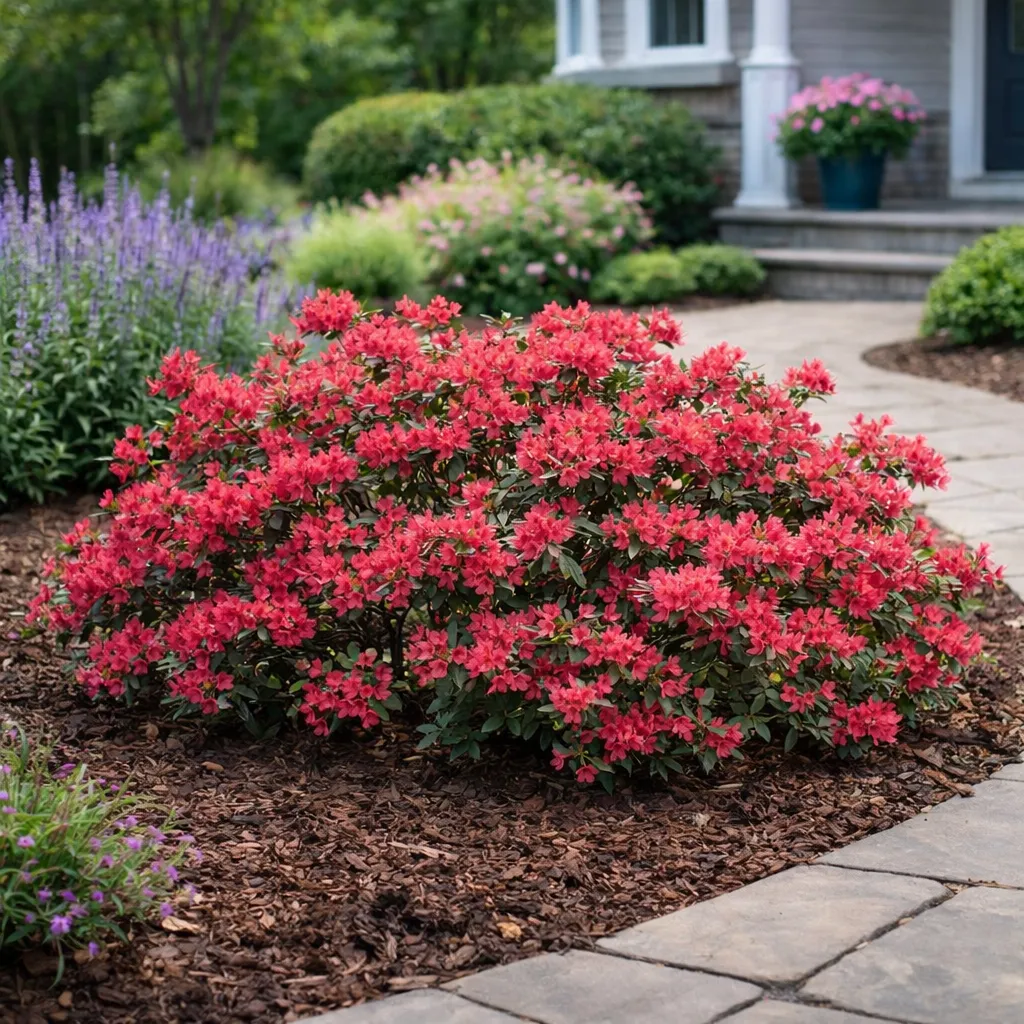
Botanical Name: Rhododendron ‘Girard’s Crimson’

Common Name: Girard’s Crimson Azalea

Mature Height and Width: 2–3′ tall × 3–4′ wide

Growth Habit: Low, compact, mounded evergreen shrub with dense branching. Naturally forms a tight cushion shape that is slightly wider than tall. Slow to moderate growth rate.

Foliage Description: Small, elliptic dark green evergreen leaves with a smooth texture. Foliage often develops rich burgundy-bronze winter coloration in Zones 5–7, adding seasonal interest.

Flower Description: Abundant single, deep crimson-red blooms with slightly ruffled petal edges. Flowers are bold and saturated, creating a strong spring display.

Bloom Time: Mid-spring

Fall Color: Evergreen; foliage develops burgundy-bronze winter tones.

Light Requirements: Full sun to partial shade; best flowering with 4–6 hours of direct sunlight.

Hardiness Zone: USDA Zones 5–8

Notable Landscape Uses:
Low foundation plantings; mass plantings for dramatic spring color; border edging; slope plantings; woodland garden edges; small-space evergreen shrub; container use in protected areas.

Deer Resistance: Low to Moderate
Azaleas are frequently browsed by deer, particularly new growth and flower buds. Protection is recommended in moderate to heavy deer pressure areas in Zones 5–7.
SECTION 1 — Professional Plant Specifications

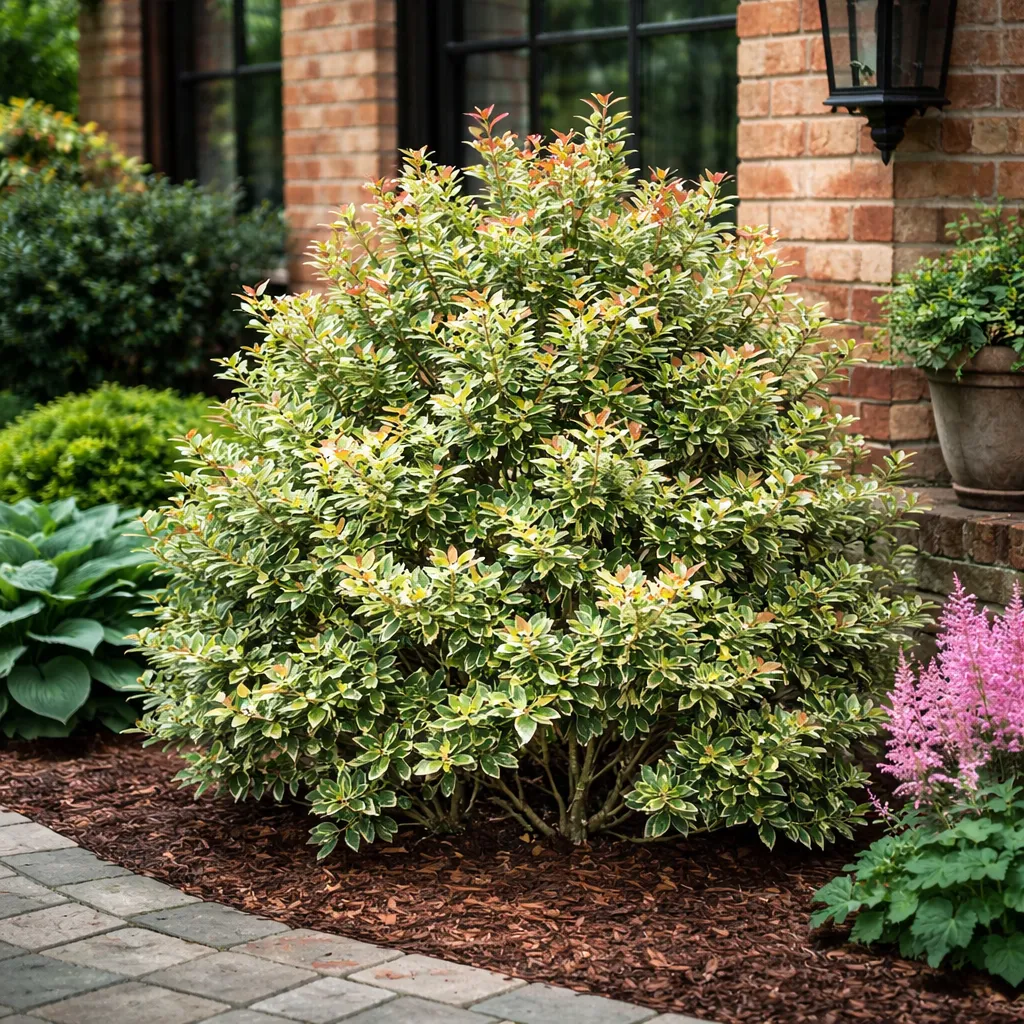
Botanical Name: Ilex aquifolium ‘Goshiki’

Common Name: Goshiki Holly

Mature Height and Width: 4-5′ tall × 3-4′ wide

Growth Habit: Upright, dense evergreen shrub with a broadly pyramidal to oval form. Moderate growth rate with strong branching and a naturally refined structure.

Foliage Description: Distinctive variegated foliage with green centers and irregular creamy-yellow margins. New growth emerges flushed with pink to rose tones, creating a multi-colored effect (“Goshiki” translates to “five colors”). Leaves are thick, glossy, and lightly spined. Evergreen in Zones 6–8.

Flower Description: Small white flowers in late spring; not ornamentally significant. Female plants may produce red berries if pollinated, though fruiting is often light.

Bloom Time: Late spring

Fall Color: Evergreen; seasonal interest comes from variegated foliage and occasional berry display rather than fall color.

Light Requirements: Full sun to partial shade; best variegation and pink new growth color develop in full sun.

Hardiness Zone: USDA Zones 6–8

Notable Landscape Uses:
Foundation anchor shrub; mixed evergreen borders; winter interest plantings; accent shrub in courtyard gardens; property line screens; focal point in smaller residential landscapes; container specimen in protected settings.

Deer Resistance: High
Goshiki Holly demonstrates strong deer resistance due to its thick, spined foliage. Browsing is uncommon in Zones 6–7, even in moderate deer pressure areas.
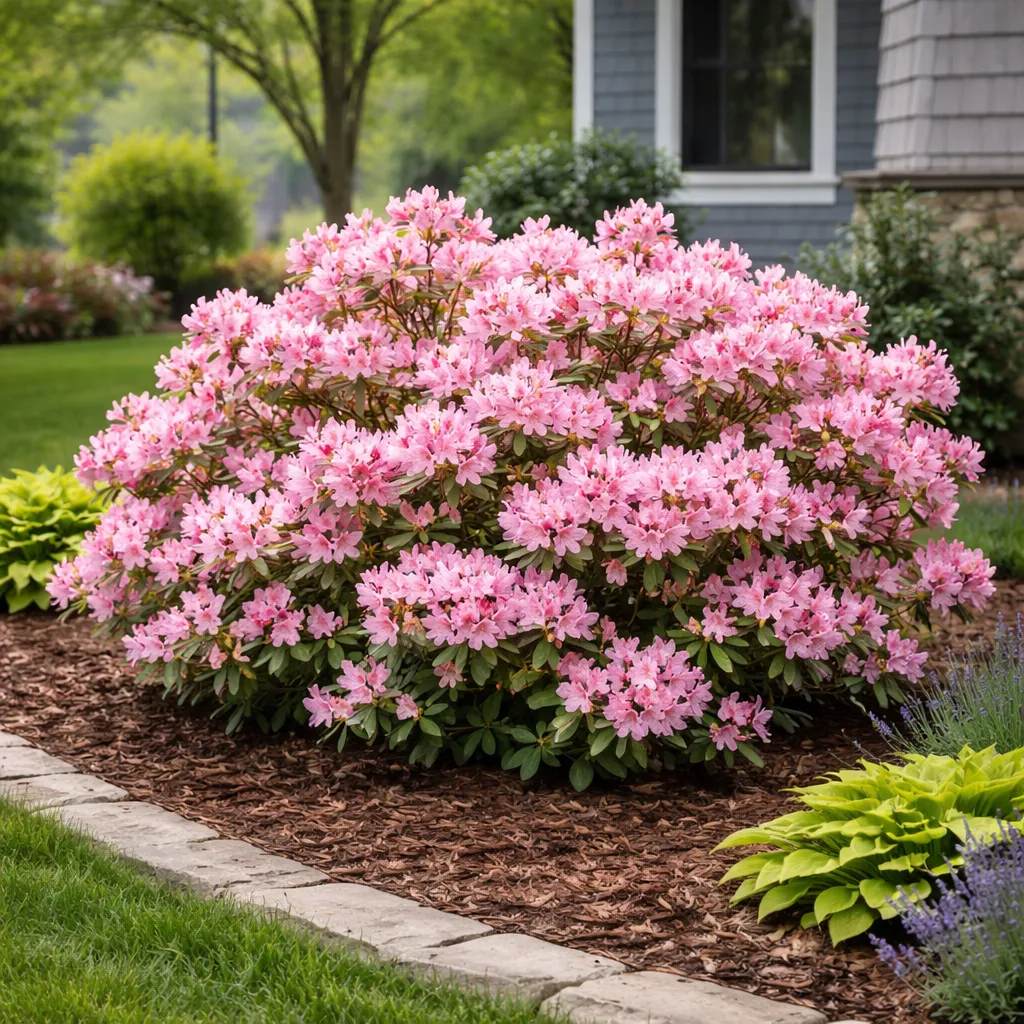
Botanical Name: Rhododendron ‘Tradition’

Common Name: Tradition Azalea (Pink)

Mature Height and Width: 4–6′ tall × 4–6′ wide

Growth Habit: Upright to broadly rounded evergreen shrub with moderate density. Slightly taller and more open than dwarf Encore types, forming a natural, softly structured mound over time. Moderate growth rate.

Foliage Description: Medium-sized elliptic dark green evergreen leaves with a slightly glossy surface. Foliage may develop bronze to burgundy tones in winter in Zones 6–7.

Flower Description: Large, single to semi-double bright pink flowers with a deeper pink to red blotch on upper petals. Blooms are showy and abundant in spring, with broad petals creating a bold display.

Bloom Time: Mid to late spring

Fall Color: Evergreen; foliage may bronze in winter but does not exhibit traditional fall color.

Light Requirements: Full sun to partial shade; best flowering with 4–6 hours of direct sun.

Hardiness Zone: USDA Zones 6–9

Notable Landscape Uses:
Foundation plantings; mass plantings; woodland garden edges; slope plantings; focal shrub in mixed borders; larger courtyard plantings; seasonal spring color anchor in residential landscapes.

Deer Resistance: Low to Moderate
Azaleas are frequently browsed by deer, especially tender new growth and flower buds. Protection is recommended in areas with moderate to heavy deer pressure in Zones 6–7.
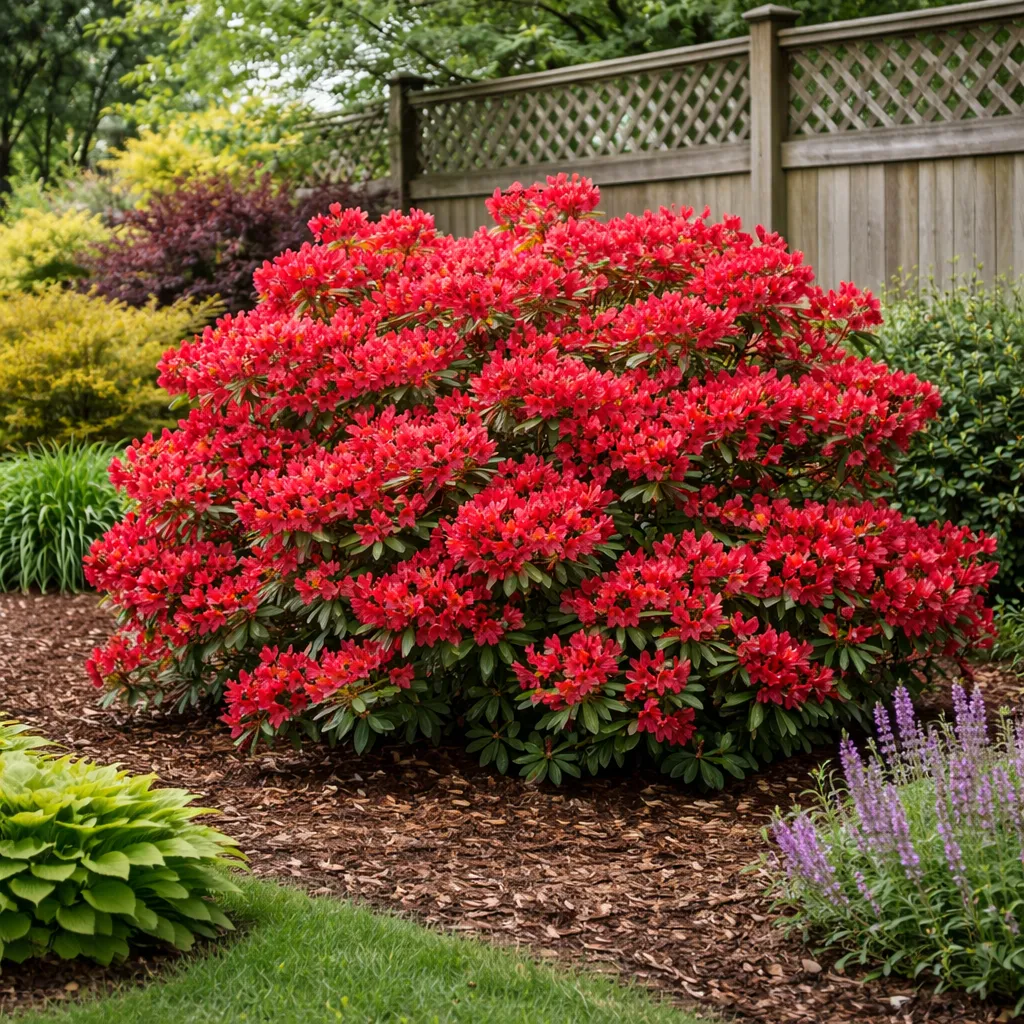
Botanical Name: Rhododendron ‘Hershey Red’

Common Name: Hershey Red Azalea

Mature Height and Width: 4–6′ tall × 4–6′ wide

Growth Habit: Upright to broadly rounded evergreen shrub with moderate density. Forms a natural, slightly open mound with visible interior branching as it matures. Moderate growth rate.

Foliage Description: Medium-sized elliptic dark green evergreen leaves with a slightly glossy surface. Foliage may take on bronze tones in winter in Zones 6–7.

Flower Description: Large, single, vibrant red flowers with a subtle darker red blotch on upper petals. Blooms are bold and showy, creating a strong spring color display.

Bloom Time: Mid to late spring

Fall Color: Evergreen; foliage may bronze slightly in winter but does not produce fall color.

Light Requirements: Full sun to partial shade; best flowering occurs with 4–6 hours of direct sunlight.

Hardiness Zone: USDA Zones 6–9

Notable Landscape Uses:
Foundation plantings; mass plantings for strong spring color; woodland edge gardens; mixed shrub borders; focal shrub in medium-sized residential beds; courtyard plantings.

Deer Resistance: Low to Moderate
Azaleas are frequently browsed by deer, particularly tender new growth and flower buds. Protection is recommended in moderate to heavy deer pressure areas in Zones 6–7.
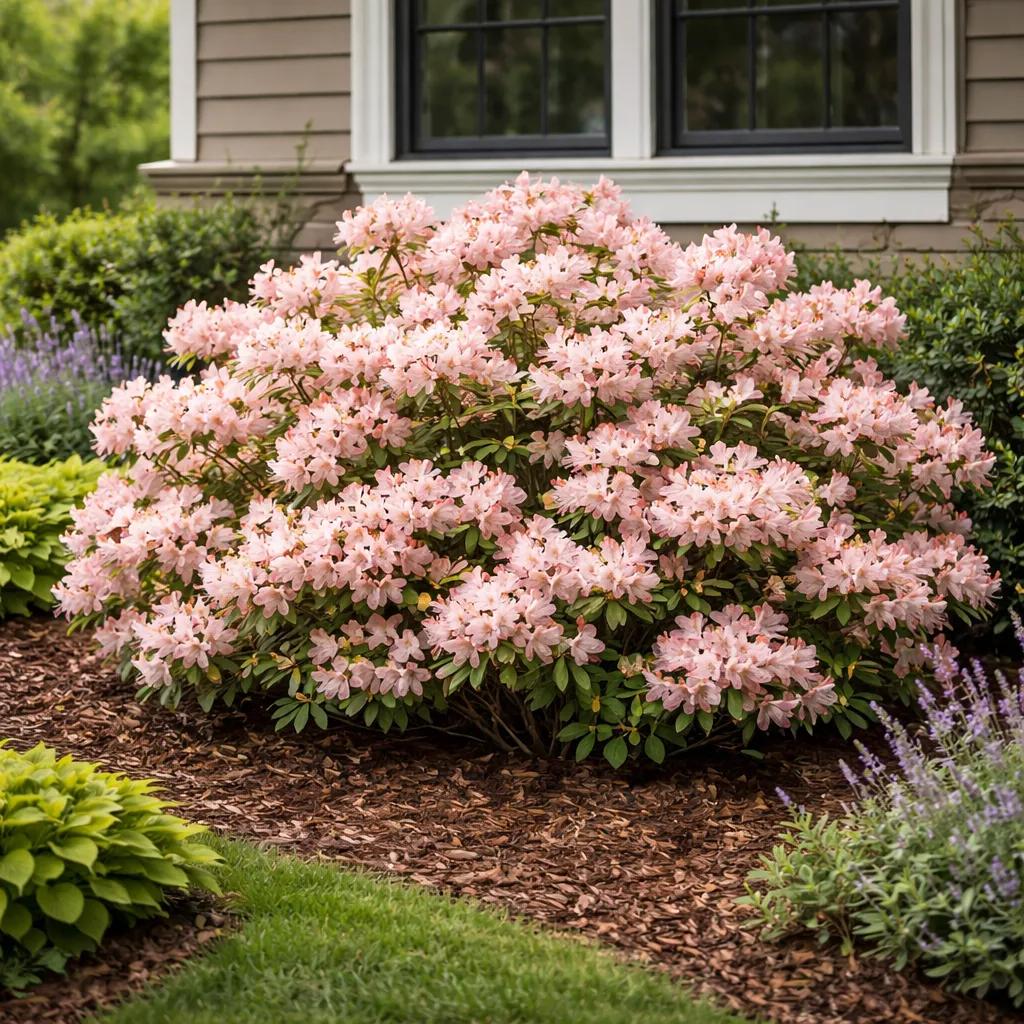
Botanical Name: Rhododendron ‘Apple Blossom’

Common Name: Apple Blossom Azalea

Mature Height and Width: 4–6′ tall × 4–6′ wide

Growth Habit: Upright to broadly rounded evergreen shrub with moderate density. Develops a natural, slightly open mound over time with visible interior branching. Moderate growth rate.

Foliage Description: Medium-sized elliptic dark green evergreen leaves with a light gloss. Foliage may develop bronze to burgundy winter tones in Zones 6–7.

Flower Description: Large single blooms opening soft blush pink with deeper rose-pink edging, often fading lighter toward the center. Petals are broad and slightly overlapping, creating a full but natural spring display.

Bloom Time: Mid-spring

Fall Color: Evergreen; foliage may bronze in winter but does not produce traditional fall color.

Light Requirements: Full sun to partial shade; best flowering with 4–6 hours of direct sunlight.

Hardiness Zone: USDA Zones 6–9

Notable Landscape Uses:
Foundation plantings; mass plantings for soft seasonal color; woodland-edge gardens; mixed shrub borders; courtyard accents; transitional shrub in layered evergreen beds.

Deer Resistance: Low to Moderate
Azaleas are commonly browsed by deer, particularly tender new growth and flower buds. Protection is recommended in moderate to heavy deer pressure areas in Zones 6–7.
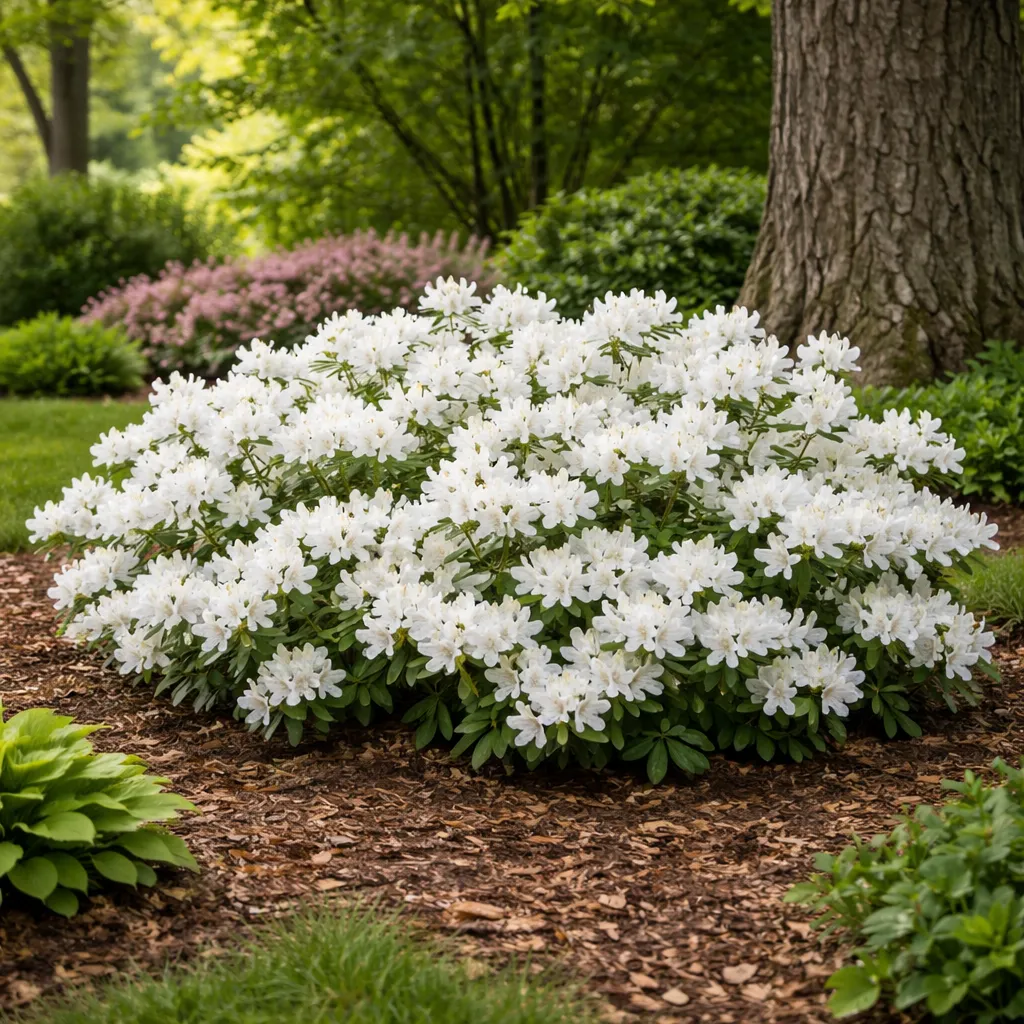

Botanical Name: Rhododendron ‘Delaware Valley White’

Common Name: Delaware Valley White Azalea

Mature Height and Width: 3–4′ tall × 4–5′ wide

Growth Habit: Low, spreading evergreen shrub with a broad, rounded form. Naturally wider than tall, forming a dense but soft mound over time. Moderate growth rate.

Foliage Description: Small, elliptic dark green evergreen leaves with a slightly glossy finish. Foliage may develop subtle bronze winter tones in Zones 6–7.

Flower Description: Large, single, pure white blooms with lightly ruffled petals. Flowers are showy and abundant, creating a bright spring display.

Bloom Time: Mid-spring

Fall Color: Evergreen; foliage may bronze slightly in winter but does not produce traditional fall color.

Light Requirements: Full sun to partial shade; best flowering with 4–6 hours of direct sunlight.

Hardiness Zone: USDA Zones 6–8

Notable Landscape Uses:
Foundation plantings; mass plantings for clean spring contrast; woodland-edge gardens; mixed shrub borders; low evergreen borders; courtyard gardens; transitional shrub in layered evergreen beds.

Deer Resistance: Low to Moderate
Azaleas are frequently browsed by deer, especially tender new growth and flower buds. Protection is recommended in moderate to heavy deer pressure areas in Zones 6–7.
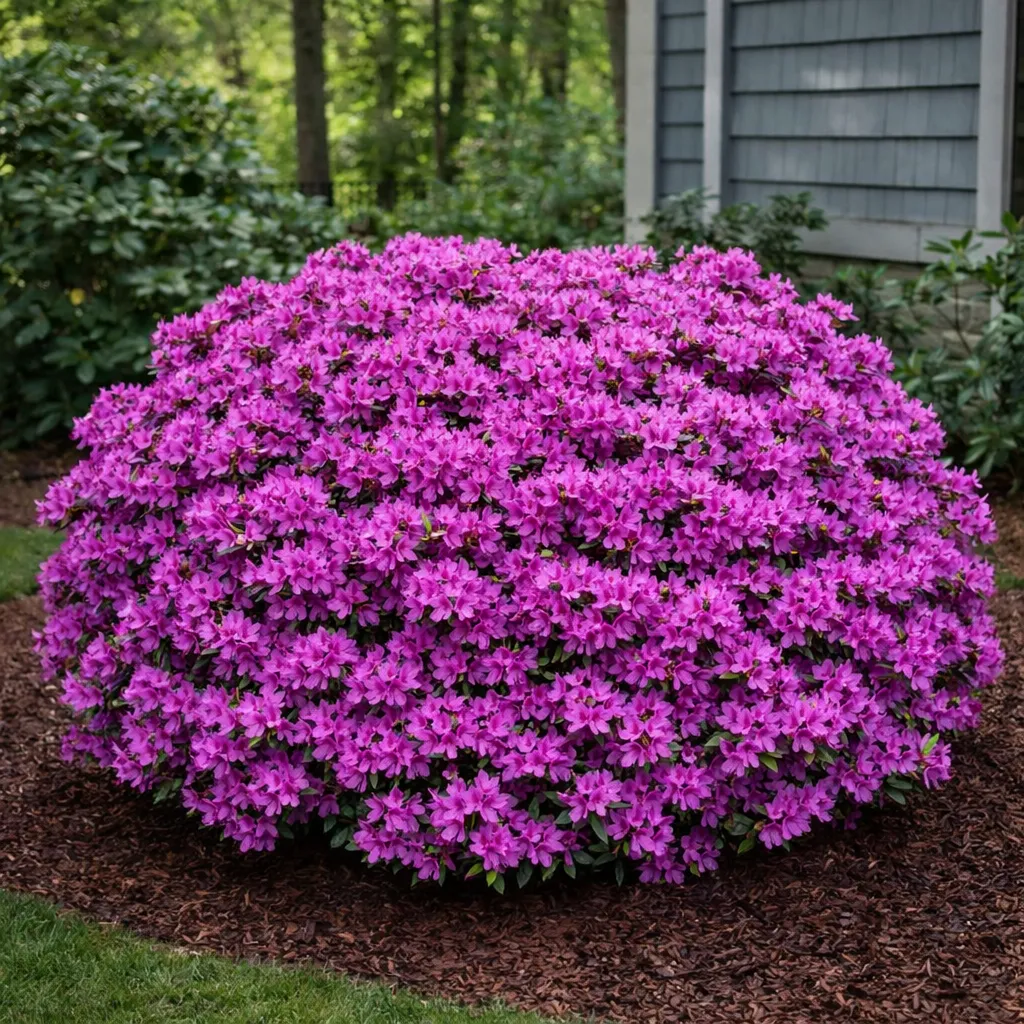
Botanical Name: Rhododendron ‘Karen’

Common Name: Karen Azalea

Mature Height and Width: 3–4′ tall × 4–5′ wide

Growth Habit: Compact, rounded, slightly spreading evergreen shrub with moderate density. Naturally broader than tall with a soft, informal mounded shape. Moderate growth rate.

Foliage Description: Small, elliptic dark green evergreen leaves with a slightly matte texture. Foliage often develops a burgundy-bronze tint in fall and winter in Zones 5–7, adding seasonal interest.

Flower Description: Abundant single lavender-pink flowers with deeper magenta spotting on upper petals. Flowers are medium-sized and slightly ruffled, creating a soft spring display.

Bloom Time: Mid to late spring

Fall Color: Evergreen; foliage may take on burgundy-bronze winter tones.

Light Requirements: Full sun to partial shade; best flowering with 4–6 hours of direct sunlight.

Hardiness Zone: USDA Zones 5–8

Notable Landscape Uses:
Foundation plantings; woodland garden edges; mass plantings; low evergreen borders; slope plantings; spring focal points in mixed shrub beds; adaptable to smaller residential landscapes.

Deer Resistance: Low to Moderate
Azaleas are commonly browsed by deer, especially new growth and flower buds. Karen Azalea should be protected in moderate to heavy deer pressure areas in Zones 5–7.
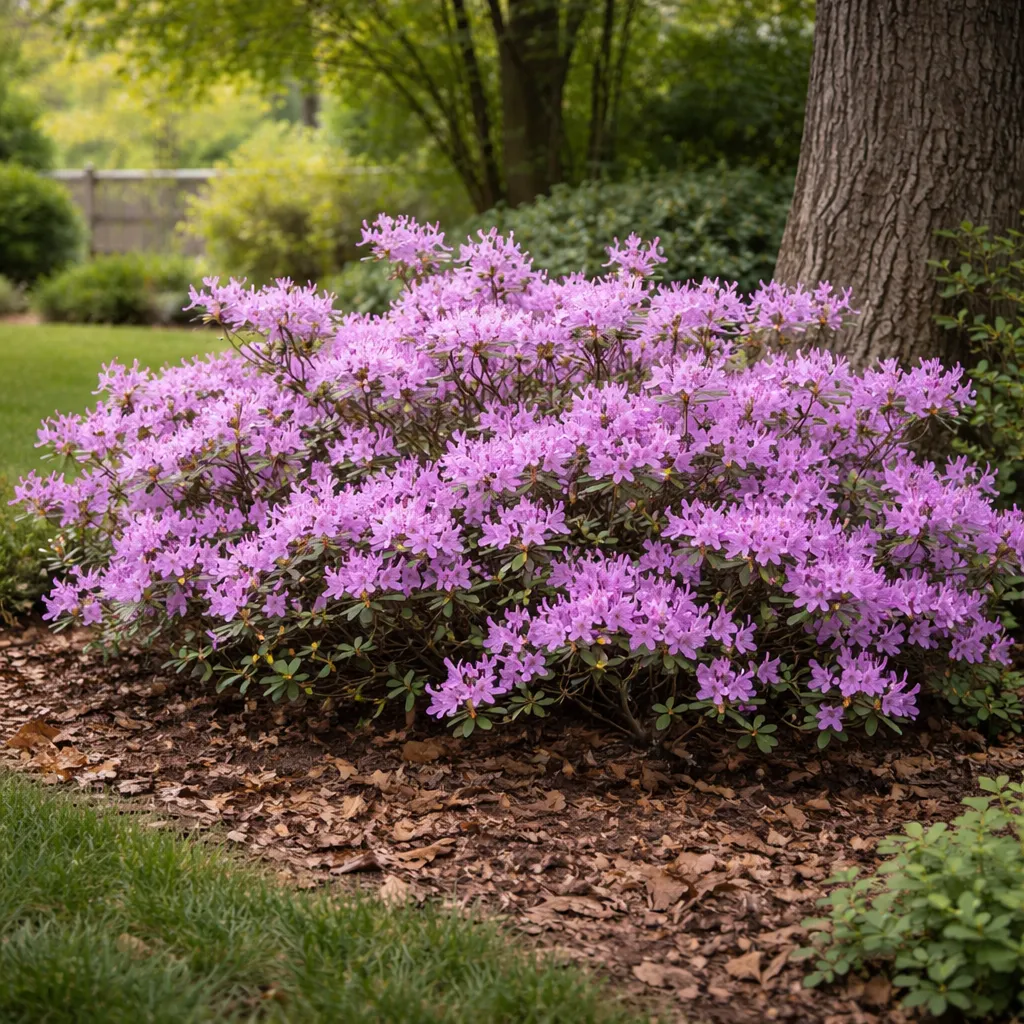
Botanical Name: Rhododendron yedoense var. poukhanense

Common Name: Korean Azalea (Poukhanense Azalea)

Mature Height and Width: 3–6′ tall × 4–6′ wide

Growth Habit: Broad, spreading deciduous azalea with an open, natural branching structure. Forms a soft, informal mound with layered growth and visible interior framework. Moderate growth rate.

Foliage Description: Small, narrow elliptic green leaves during the growing season. Deciduous in Zones 5–7, with foliage often developing attractive reddish-bronze fall coloration before dropping.

Flower Description: Funnel-shaped lavender to rosy-purple single flowers with deeper spotting on upper petals. Blooms are slightly smaller than many hybrid azaleas and appear before or just as foliage emerges.

Bloom Time: Early to mid-spring

Fall Color: Reddish-bronze to burgundy before leaf drop.

Light Requirements: Full sun to partial shade; best flowering in full sun with adequate moisture.

Hardiness Zone: USDA Zones 4–8

Notable Landscape Uses:
Naturalized woodland plantings; slope stabilization; mass plantings; mixed shrub borders; early spring color in informal gardens; transitional shrub in native-inspired landscapes; foundation plantings in colder regions.

Deer Resistance: Low to Moderate
Like most azaleas, Poukhanense may be browsed by deer, particularly tender new growth and flower buds. Protection is recommended in areas with moderate to heavy deer pressure in Zones 5–7.
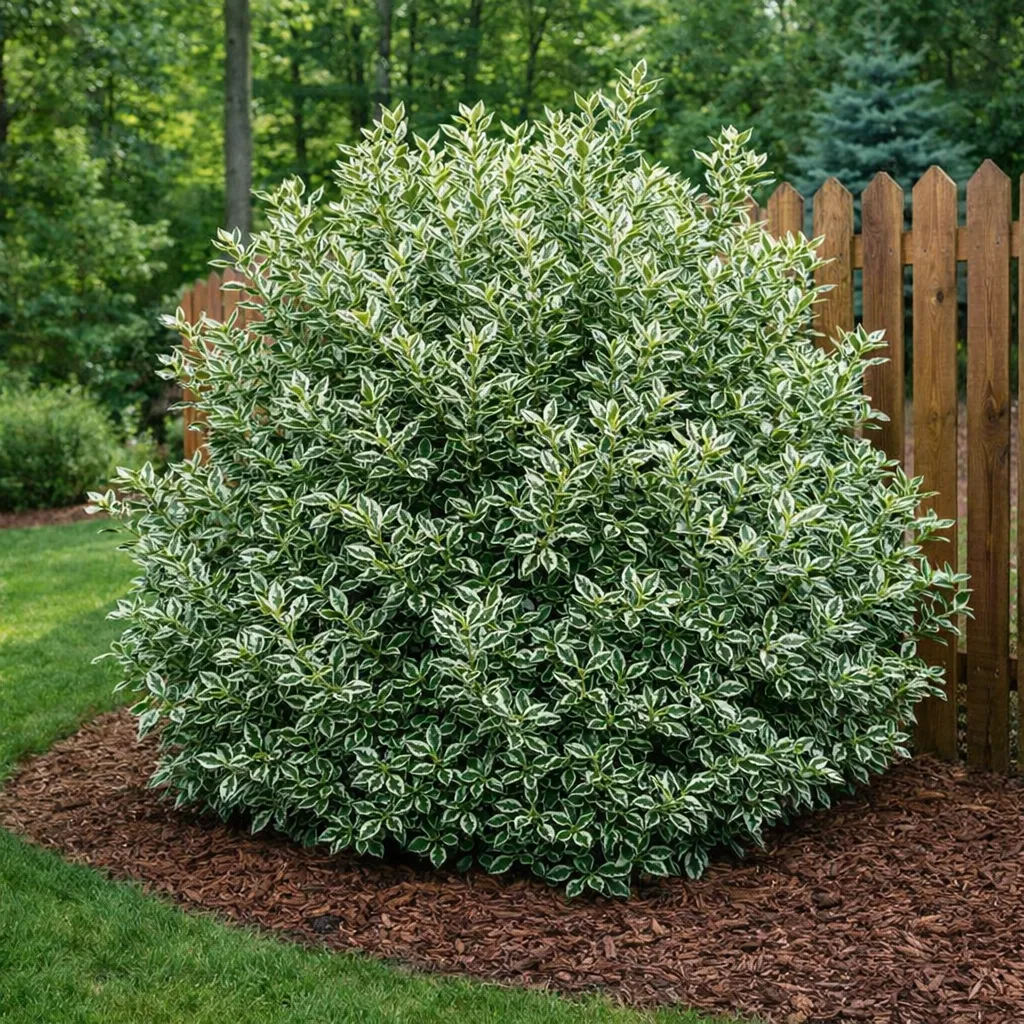
Botanical Name: Euonymus japonicus ‘Silver Queen’

Common Name: Silver Queen Euonymus

Mature Height and Width: 8–12′ tall × 6–8′ wide

Growth Habit: Upright, broadly oval evergreen shrub with moderately dense branching. Can be maintained as a hedge or allowed to develop into a large, informal shrub. Moderate growth rate.

Foliage Description: Large, glossy, oval leaves with dark green centers and creamy-white margins. Variegation is bold and clearly defined, providing strong year-round contrast. Evergreen in Zones 6–9 (marginal in protected Zone 6 sites).

Flower Description: Small greenish-white flowers in late spring; not ornamentally significant.

Bloom Time: Late spring

Fall Color: Evergreen; maintains variegated foliage through winter.

Light Requirements: Full sun to partial shade; best variegation and density occur in full sun.

Hardiness Zone: USDA Zones 6–9

Notable Landscape Uses:
Foundation screening; informal hedges; mixed evergreen borders; corner anchor planting; privacy plantings; coastal landscapes; contrast shrub in modern designs.

Deer Resistance: Low to Moderate
Euonymus is occasionally browsed by deer, particularly tender new growth. Damage levels vary by region; protection may be necessary in high-pressure areas in Zones 6–7.
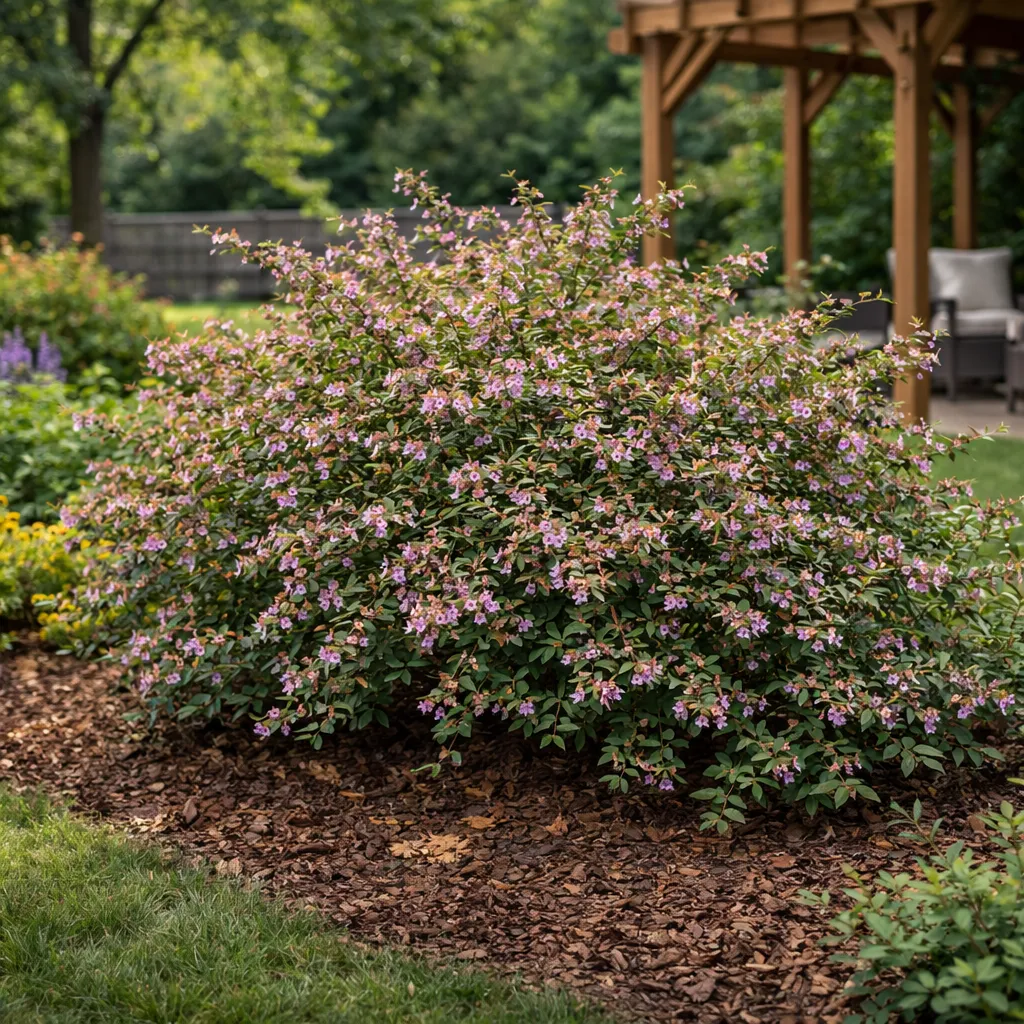
Botanical Name: Abelia × grandiflora ‘Edward Goucher’

Common Name: Edward Goucher Abelia

Mature Height and Width: 4–6′ tall × 4–6′ wide

Growth Habit: Gracefully arching, rounded deciduous to semi-evergreen shrub with a fine-textured, open branching structure. Forms a soft, fountain-like mound with gently cascading outer stems. Moderate growth rate.

Foliage Description: Small, glossy, oval leaves emerging bronze to reddish in spring, maturing to medium green in summer. Foliage may retain a reddish-bronze tint into fall and winter in Zones 6–7.

Flower Description: Small, trumpet-shaped lavender-pink flowers with rosy sepals that persist after petals drop, extending ornamental interest. Blooms are lightly fragrant and attractive to pollinators.

Bloom Time: Late spring through early fall

Fall Color: Bronze to reddish tones in cooler weather; semi-evergreen in protected Zone 6 sites.

Light Requirements: Full sun to partial shade; best flowering and densest habit occur in full sun.

Hardiness Zone: USDA Zones 6–9

Notable Landscape Uses:
Foundation plantings; informal hedges; mixed shrub borders; pollinator gardens; patio-adjacent plantings; mass plantings; transitional shrub in layered landscapes.

Deer Resistance: Moderate
Abelia is generally not a preferred browse, though tender new growth may be sampled in high-pressure deer areas. Established plants typically recover well from minor browsing in Zones 6–7.
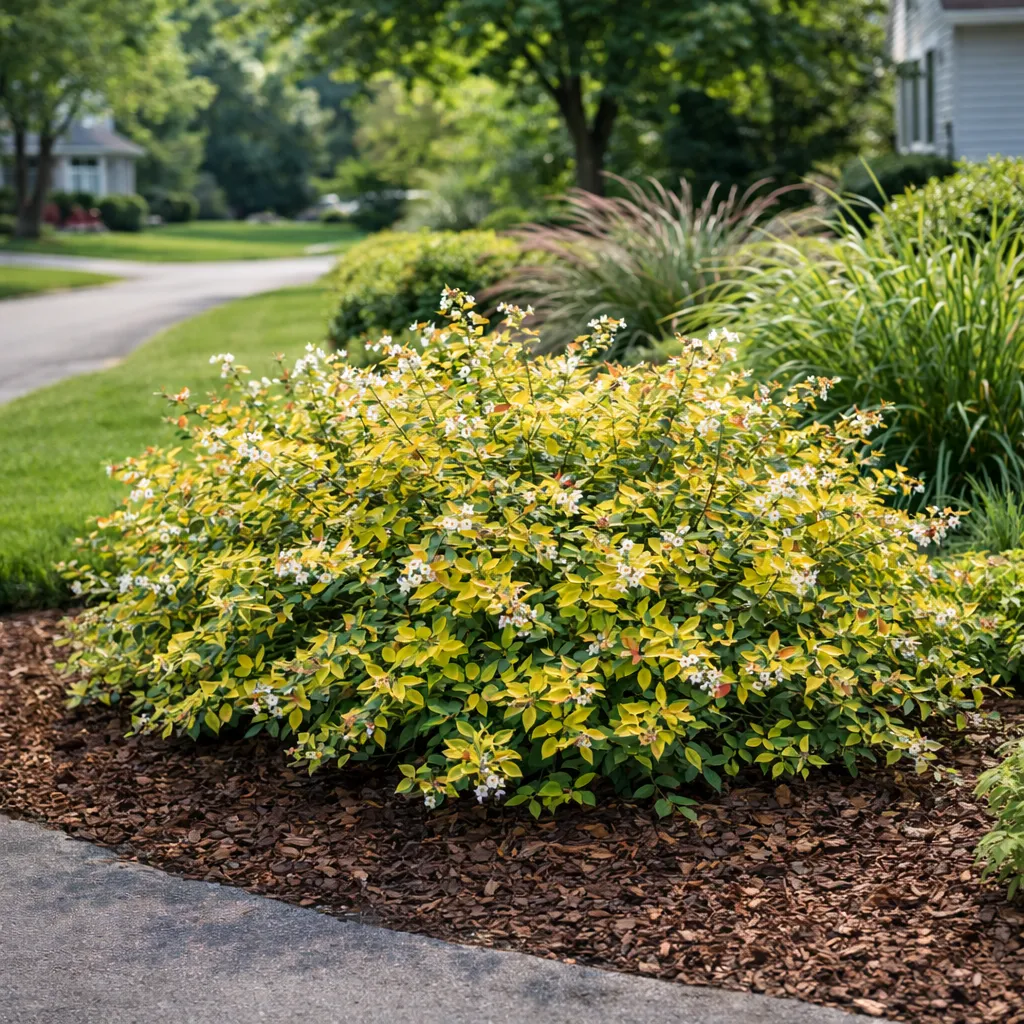
Botanical Name: Abelia × grandiflora ‘Kaleidoscope’

Common Name: Kaleidoscope Abelia

Mature Height and Width: 2–3′ tall × 3–4′ wide

Growth Habit: Low, compact, spreading shrub with a dense but slightly arching habit. Naturally wider than tall, forming a refined but informal mound. Moderate growth rate.

Foliage Description: Variegated foliage with bright golden-yellow centers and medium green margins. In summer, foliage maintains strong gold coloration; in fall and winter, leaves often develop orange to reddish tones. Fine texture with dense branching. Semi-evergreen in Zones 6–7.

Flower Description: Small white trumpet-shaped flowers with soft pink sepals that persist after bloom. Flowers are lightly fragrant and appear above the foliage.

Bloom Time: Late spring through summer

Fall Color: Orange to reddish tones develop as temperatures cool.

Light Requirements: Full sun to partial shade; best gold coloration occurs in full sun.

Hardiness Zone: USDA Zones 6–9

Notable Landscape Uses:
Low foundation plantings; mass plantings; border edging; slope plantings; patio-edge accents; mixed perennial beds; color contrast in modern landscapes; container plantings.

Deer Resistance: Moderate
Abelia is generally not heavily browsed, though tender new growth may be sampled in high-pressure deer areas. Established plants typically sustain only minor damage in Zones 6–7.
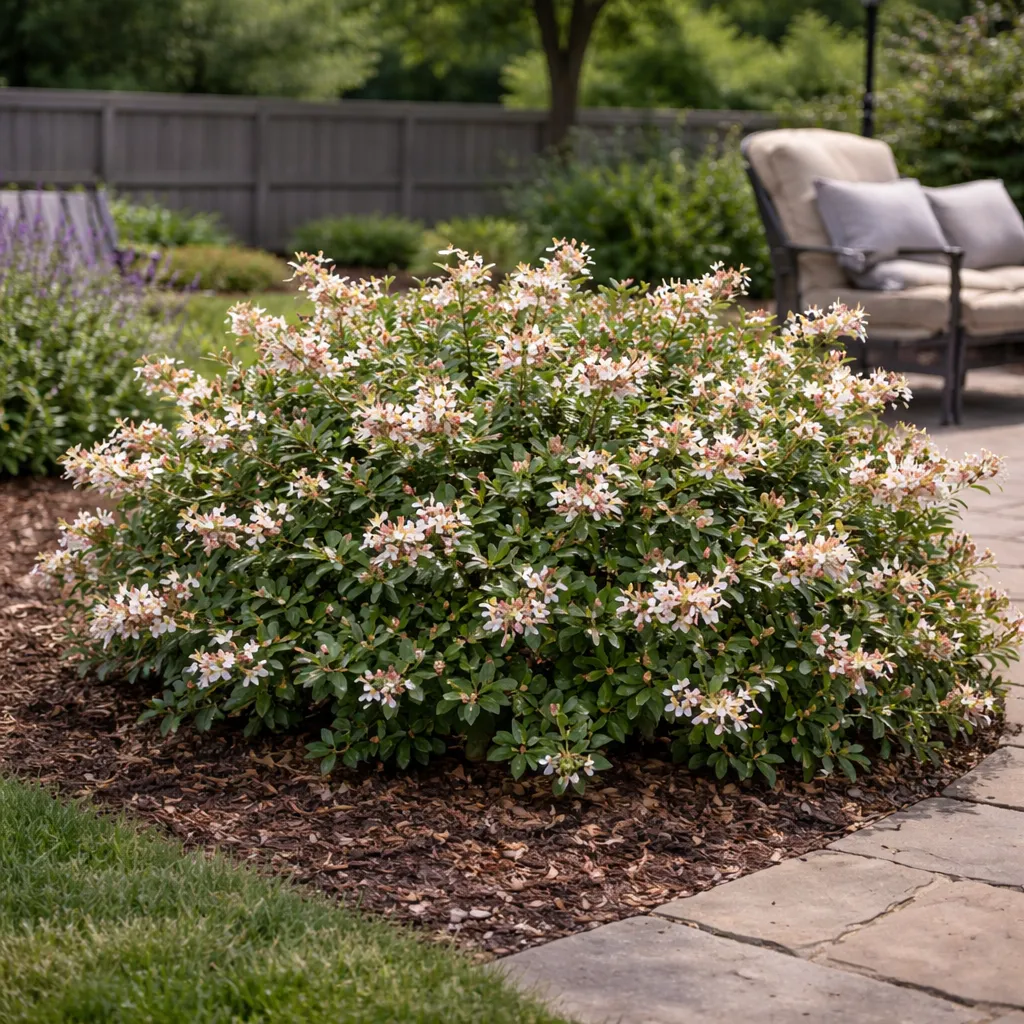
SECTION 1 — Professional Plant Specifications

Botanical Name: Abelia × grandiflora ‘Little Richard’

Common Name: Little Richard Abelia

Mature Height and Width: 3–4′ tall × 3–4′ wide

Growth Habit: Compact, rounded shrub with dense branching and a slightly arching outer habit. More upright and tighter than ‘Edward Goucher,’ forming a refined but natural mound. Moderate growth rate.

Foliage Description: Small, glossy, deep green oval leaves with a fine texture. New growth may show a soft bronze tint in spring. Semi-evergreen in Zones 6–7, with some foliage retained in milder winters.

Flower Description: Small white to pale pink trumpet-shaped flowers borne in clusters at branch tips. Rosy sepals persist after petals drop, extending ornamental interest. Lightly fragrant and attractive to pollinators.

Bloom Time: Late spring through summer

Fall Color: Foliage may develop light bronze to purplish tones in cooler weather.

Light Requirements: Full sun to partial shade; best flowering and densest growth occur in full sun.

Hardiness Zone: USDA Zones 6–9

Notable Landscape Uses:
Foundation plantings; low informal hedges; mass plantings; patio-adjacent borders; mixed shrub beds; pollinator gardens; compact accent in smaller residential landscapes.

Deer Resistance: Moderate
Abelia is generally not a preferred browse species. Light sampling of new growth may occur in high-pressure deer areas, but established plants typically sustain minimal long-term damage in Zones 6–7.
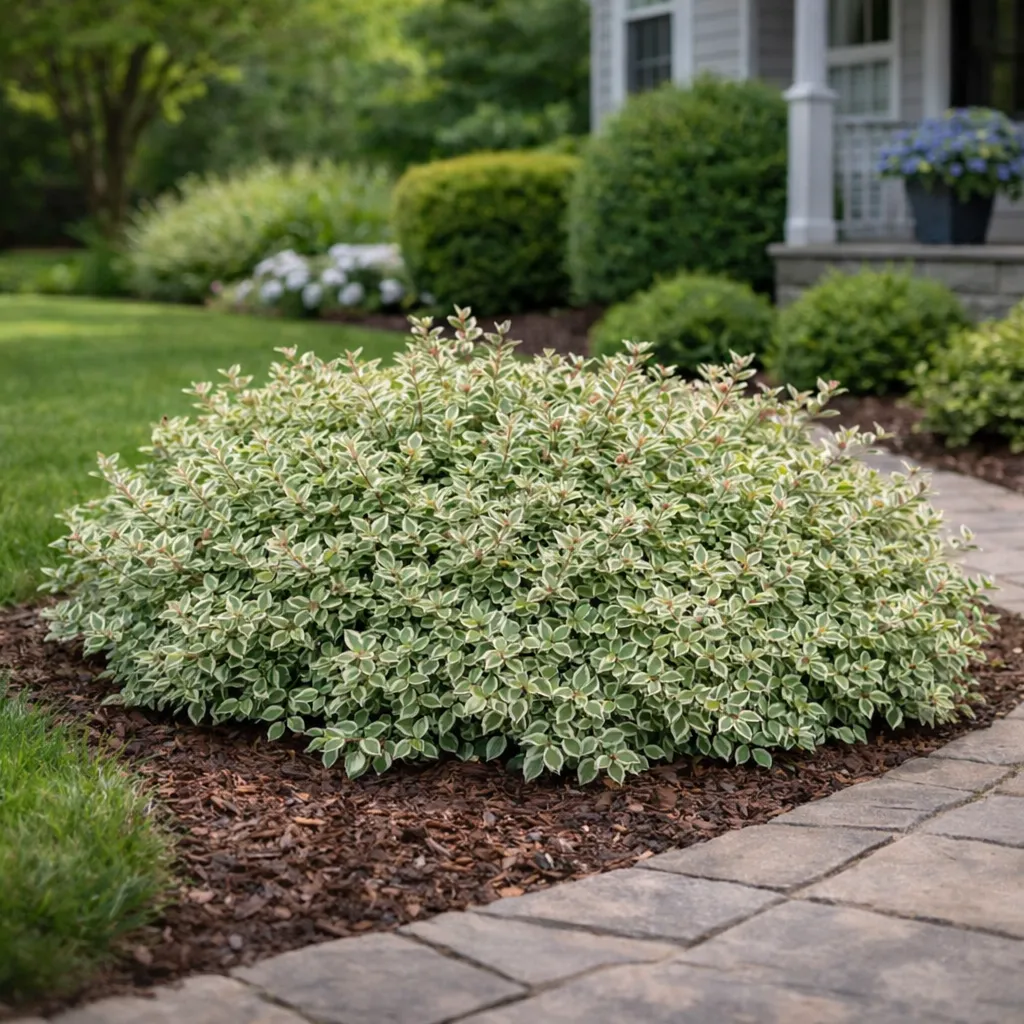
Botanical Name: Abelia × grandiflora ‘Radiance’

Common Name: Radiance Abelia

Mature Height and Width: 2–3′ tall × 3–4′ wide

Growth Habit: Low, compact, spreading shrub with a refined but slightly arching form. Naturally wider than tall, forming a soft, layered mound with fine branching. Moderate growth rate.

Foliage Description: Variegated foliage with medium green centers and creamy white margins. New growth often emerges with a soft pink blush, especially in spring and fall. Leaves are small, glossy, and finely textured. Semi-evergreen in Zones 6–7.

Flower Description: Small, tubular white flowers with rosy-pink sepals that persist after bloom, adding extended seasonal interest. Lightly fragrant and attractive to pollinators.

Bloom Time: Late spring through summer

Fall Color: Foliage may develop soft pink to reddish tones in cooler weather.

Light Requirements: Full sun to partial shade; best variegation and flowering occur in full sun.

Hardiness Zone: USDA Zones 6–9

Notable Landscape Uses:
Low foundation plantings; mass plantings; border edging; slope plantings; patio-edge accents; mixed perennial beds; color contrast in evergreen groupings; container plantings.

Deer Resistance: Moderate
Abelia is generally not heavily browsed. Occasional sampling of tender new growth may occur under heavy deer pressure, but established plants typically sustain minimal long-term damage in Zones 6–7.
SECTION 1 — Professional Plant Specifications

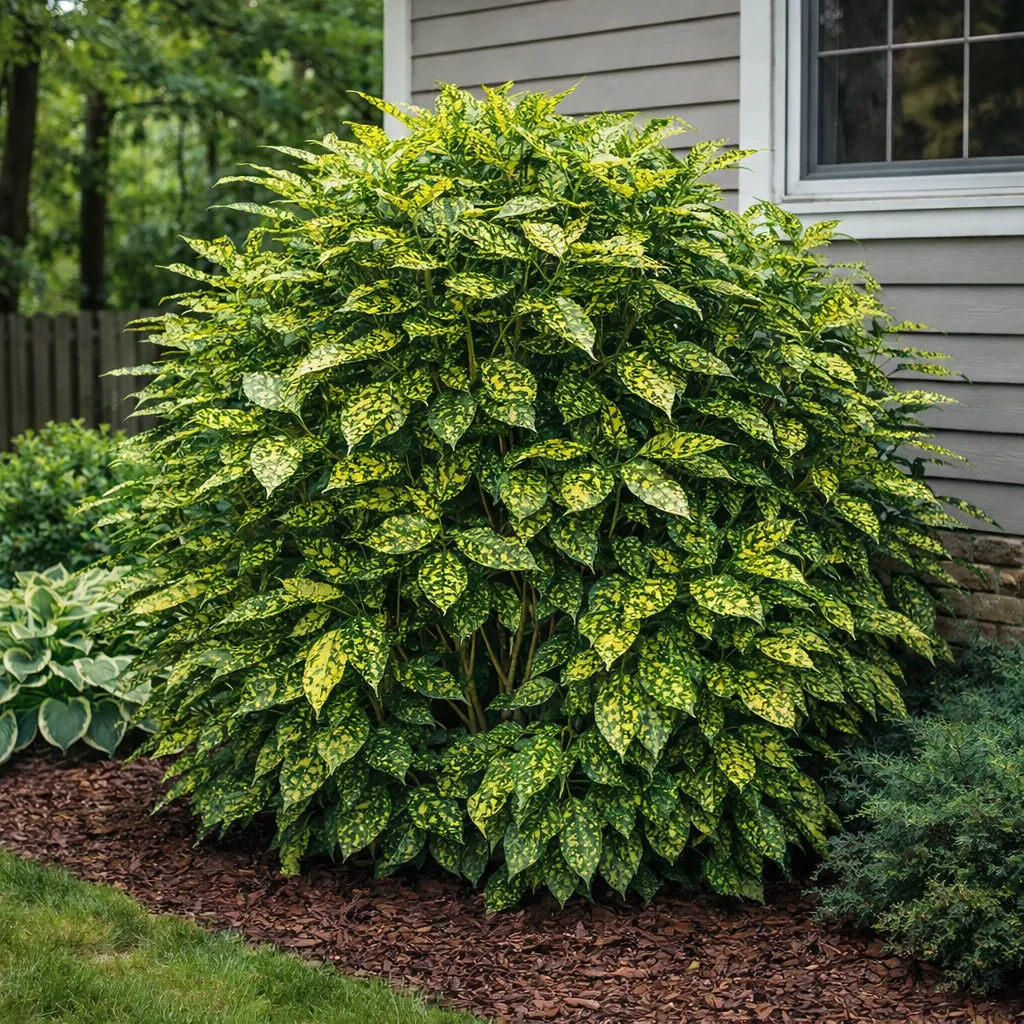
Botanical Name: Aucuba japonica ‘Variegata’

Common Name: Gold Dust Aucuba

Mature Height and Width: 6–10′ tall × 4–6′ wide

Growth Habit: Upright to broadly oval evergreen shrub with moderate density. Forms a naturally layered structure with strong vertical stems and slightly arching outer branches. Moderate growth rate.

Foliage Description: Large, glossy, leathery dark green leaves heavily speckled with bright yellow variegation (“gold dust”). Leaves are broad, oval, and thick-textured. Evergreen in Zones 6–9 (protected Zone 6 sites recommended).

Flower Description: Small purplish-maroon flowers in early spring; not highly ornamental. Female plants may produce bright red berries in fall if pollinated.

Bloom Time: Early spring

Fall Color: Evergreen; seasonal interest comes from variegated foliage and potential red berries.

Light Requirements: Partial shade to full shade; best foliage quality and variegation retention occur in filtered light. Can tolerate morning sun but avoid harsh afternoon exposure.

Hardiness Zone: USDA Zones 6–9

Notable Landscape Uses:
Shade foundation plantings; woodland garden accents; north-side plantings; courtyard gardens; mixed evergreen borders; contrast foliage in shaded beds; container use in protected settings.

Deer Resistance: Moderate
Aucuba is generally not a preferred deer browse due to its thick, leathery foliage. While not completely immune, established plants typically experience minimal damage in Zones 6–7.
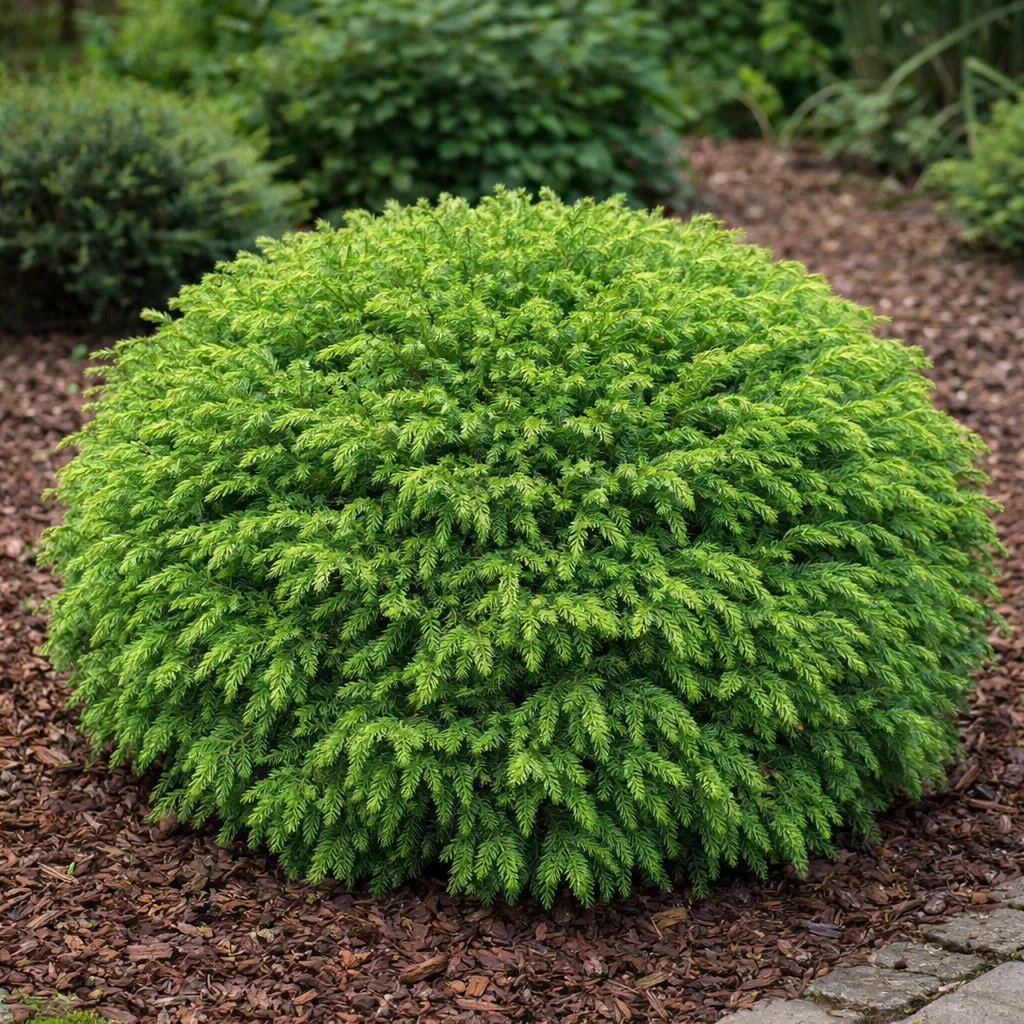
Botanical Name: Cryptomeria japonica ‘Globosa Nana’

Common Name: Dwarf Japanese Cedar

Mature Height and Width: 3–4′ tall × 4–5′ wide

Growth Habit: Dense, globose to broadly rounded evergreen shrub. Naturally compact and refined with soft-textured foliage and layered interior branching. Slow growth rate.

Foliage Description: Fine, awl-shaped evergreen foliage with a soft, feathery texture. Summer color is rich medium green; foliage often develops attractive bronze to purplish tones in winter in Zones 5–7.

Flower Description: Not ornamentally significant; produces inconspicuous cones typical of the species.

Bloom Time: Not applicable

Fall Color: Evergreen; develops bronze to reddish-purple winter coloration.

Light Requirements: Full sun to partial shade; best density and winter color in full sun.

Hardiness Zone: USDA Zones 5–9

Notable Landscape Uses:
Foundation plantings; low evergreen borders; rock gardens; mass plantings; front-of-border accent; Japanese-inspired gardens; courtyard plantings; container use in protected settings.

Deer Resistance: Moderate to High
Cryptomeria is generally not heavily browsed by deer. While occasional sampling may occur, established plants typically sustain minimal damage in Zones 5–7.
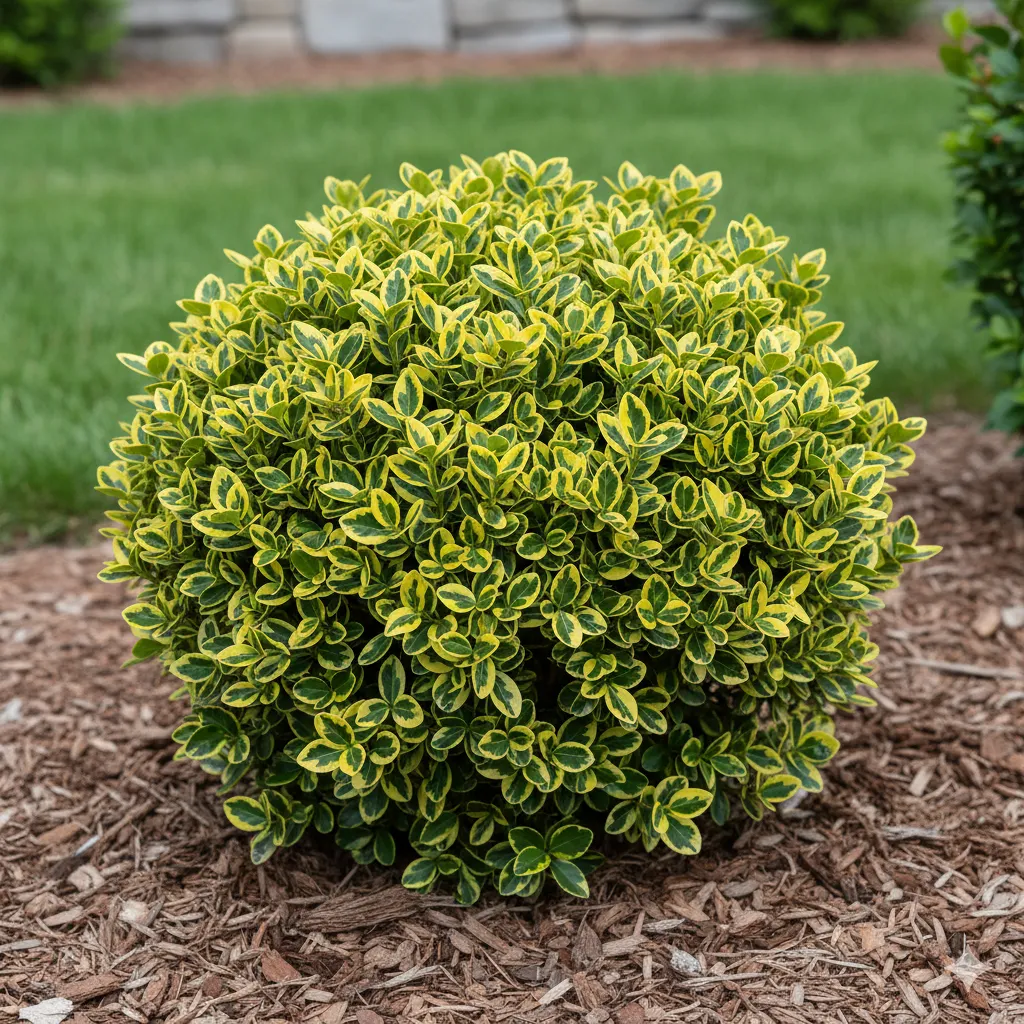
Botanical Name: Euonymus japonicus ‘Aureomarginatus’

Common Name: Golden Euonymus

Mature Height and Width: 6–10′ tall × 4–6′ wide

Growth Habit: Upright to broadly oval evergreen shrub with moderate density. Naturally forms a structured but informal shape; can be maintained as a hedge or allowed to develop into a specimen shrub. Moderate growth rate.

Foliage Description: Glossy, oval leaves with dark green centers and bright golden-yellow margins. Variegation is bold and high-contrast. New growth may emerge lighter yellow before maturing. Evergreen in Zones 6–9 (marginal in protected Zone 6 sites).

Flower Description: Small greenish-white flowers in late spring; not ornamentally significant. May produce small pinkish capsules with orange seeds in fall, though fruiting is inconsistent in residential settings.

Bloom Time: Late spring

Fall Color: Evergreen; maintains bold variegated foliage through winter.

Light Requirements: Full sun to partial shade; best color intensity and densest growth in full sun.

Hardiness Zone: USDA Zones 6–9

Notable Landscape Uses:
Foundation plantings; informal hedges; privacy borders; mixed evergreen shrub beds; bold color contrast in modern landscapes; coastal plantings; commercial landscapes.

Deer Resistance: Low to Moderate
Euonymus may experience browsing on tender new growth, particularly in areas with high deer pressure. Established plants typically recover well from light damage in Zones 6–7.
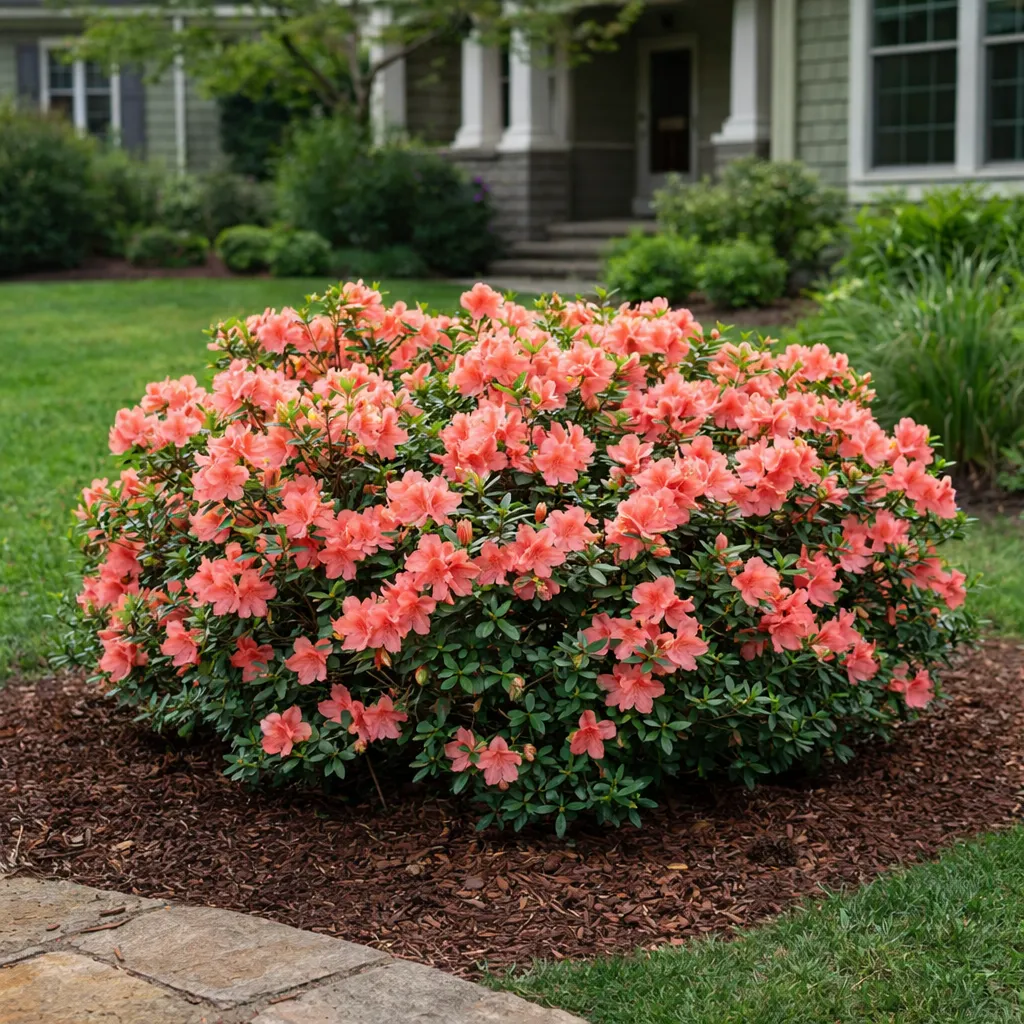
Botanical Name: Rhododendron ‘Conled’

Common Name: Encore® Azalea Autumn Coral®

Mature Height and Width: 2.5–3′ tall × 3–4′ wide

Growth Habit: Low, compact, mounded evergreen shrub with dense branching. Naturally forms a broad cushion shape, slightly wider than tall. Moderate growth rate.

Foliage Description: Small, elliptic dark green evergreen leaves with a fine texture. Foliage remains attractive year-round in Zones 6–7 and may take on slight bronze tones in colder weather.

Flower Description: Single, soft coral-pink blooms with warm peach undertones and a subtle deeper throat. Flowers are medium-sized and produced abundantly during peak bloom cycles.

Bloom Time: Heavy spring bloom with repeat flowering in summer and fall.

Fall Color: Evergreen; no significant fall color change.

Light Requirements: Full sun to partial shade; best rebloom performance with at least 5–6 hours of direct sun.

Hardiness Zone: USDA Zones 6–9

Notable Landscape Uses:
Front-of-border plantings; foundation accents; mass plantings; low evergreen borders; patio-edge plantings; seasonal color in small residential beds; container use in protected settings.

Deer Resistance: Low to Moderate
Azaleas are commonly browsed by deer, especially tender new growth and flower buds. Protection is recommended in areas with moderate to heavy deer pressure in Zones 6–7.
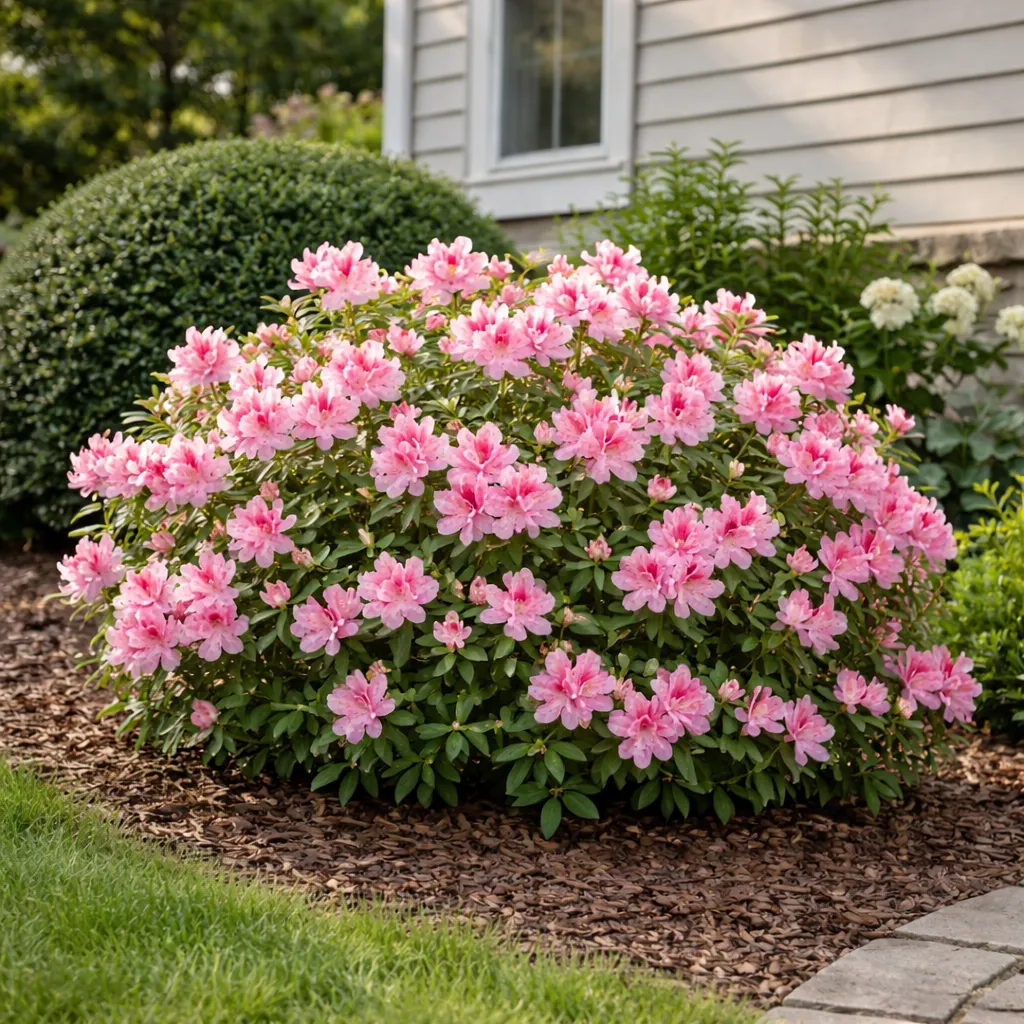
Botanical Name: Rhododendron ‘Conleb’

Common Name: Encore® Azalea Autumn Empress®

Mature Height and Width:
3–4′ tall × 3–4′ wide

Growth Habit: Compact, rounded evergreen shrub with dense branching and a naturally refined mound. Moderate growth rate. Forms a full but slightly layered structure rather than a tight, clipped ball.

Foliage Description: Small, elliptic dark green evergreen leaves with fine texture. Foliage may develop light bronze tones in cooler weather in Zones 6–7.

Flower Description: Large, semi-double to double blooms in clear soft pink with a slightly deeper pink center. Flowers are full and layered, producing a lush spring display.

Bloom Time: Heavy spring bloom with repeat flowering in summer and fall.

Fall Color: Evergreen; foliage may bronze slightly in winter but does not produce traditional fall color.

Light Requirements: Full sun to partial shade; best rebloom performance with 5–6+ hours of direct sunlight.

Hardiness Zone: USDA Zones 6–9

Notable Landscape Uses:
Foundation plantings; mass plantings; front-of-border color; patio-edge plantings; courtyard gardens; mixed evergreen borders; container plantings in protected settings.

Deer Resistance: Low to Moderate
Azaleas are commonly browsed by deer, especially flower buds and tender new growth. Protection is recommended in moderate to heavy deer pressure areas in Zones 6–7.
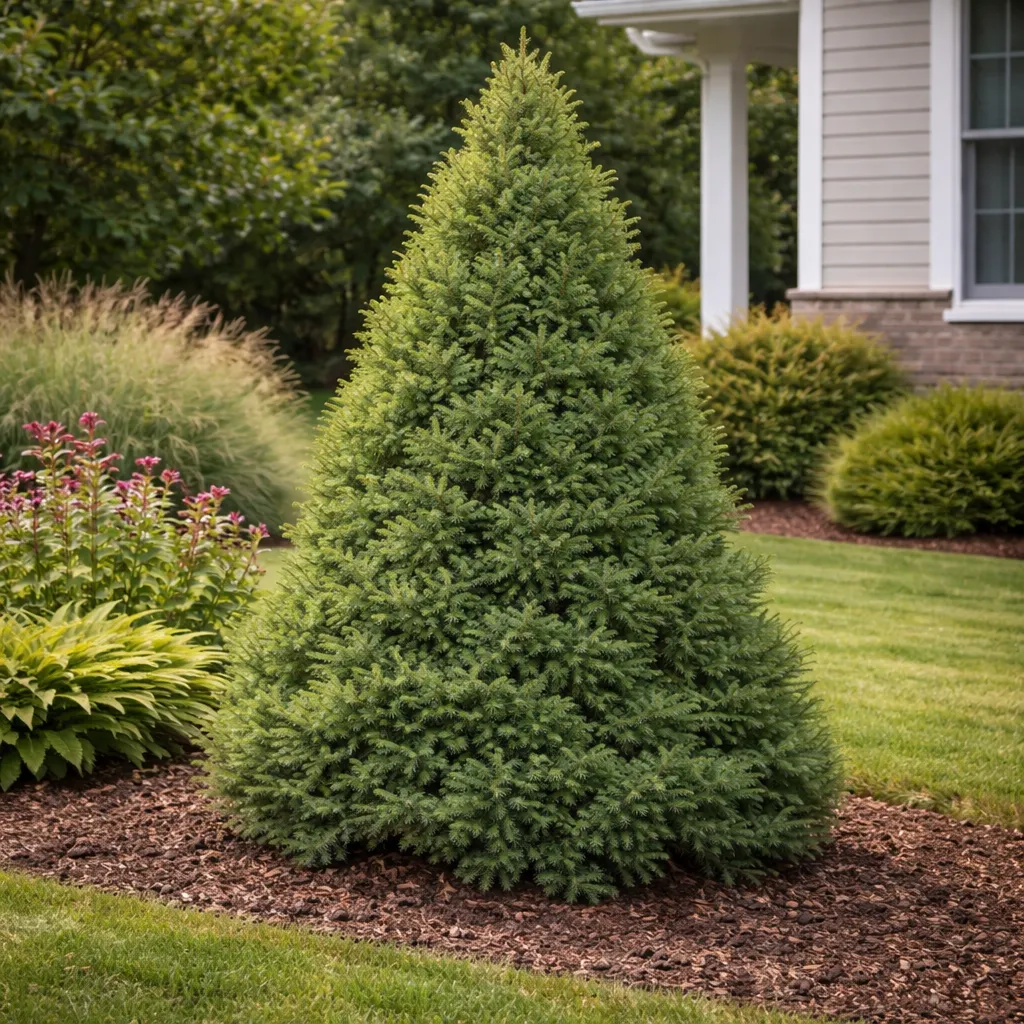
Botanical Name: Picea glauca ‘Conica’

Common Name: Dwarf Alberta Spruce

Mature Height and Width:
8–12′ tall × 4–6′ wide (very slow growing)

Growth Habit: Naturally narrow, dense, pyramidal evergreen with tight branching and fine texture. Maintains a conical form without pruning, though slight irregularity develops with age. Very slow growth rate.

Foliage Description: Short, soft-textured, bright green needles held densely along stems. Fine texture creates a smooth visual surface from a distance.

Flower Description: Inconspicuous cones; not grown for ornamental flowering.

Bloom Time: Not applicable

Fall Color: Evergreen

Light Requirements: Full sun to light partial shade; best density in full sun.

Hardiness Zone: USDA Zones 3–8

Notable Landscape Uses:
Formal foundation plantings; entryway accents; container plantings; symmetrical pairings; small-scale evergreen anchor; rock gardens; courtyard plantings.

Deer Resistance: Moderate
Not typically a preferred browse, though young plants may be sampled under heavy pressure. Dense growth generally limits severe damage in Zones 5–7.
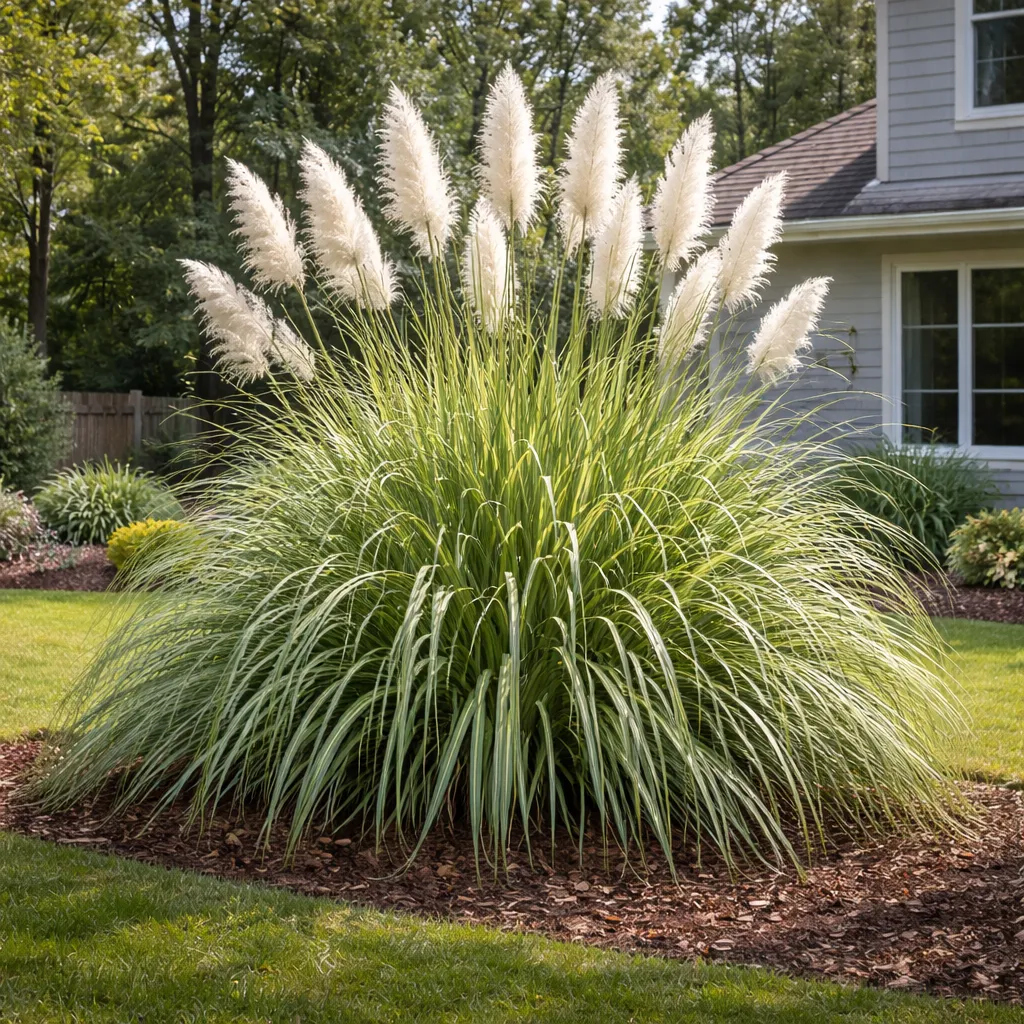
Botanical Name: Cortaderia selloana

Common Name: White Pampas Grass

Mature Height and Width:
6–8′ tall × 6–8′ wide (foliage)
8–12′ tall in bloom

Growth Habit: Large, bold, clump-forming ornamental grass with a dense basal crown and strongly arching blades. Forms a substantial, fountain-like mass with dramatic vertical plume display. Fast-growing in warm climates.

Foliage Description: Long, coarse-textured, gray-green blades with sharp margins. Leaves arch outward aggressively from a dense central clump, creating a wide footprint. Semi-evergreen in mild winters (Zone 7); foliage may brown back in colder winters.

Flower Description: Large, feathery white plumes held well above the foliage on tall, sturdy stems. Plumes are full, soft, and upright at emergence, gradually loosening slightly with age.

Bloom Time: Late summer to early fall

Fall Color: Foliage may transition to tan; plumes persist into winter if left standing.

Light Requirements: Full sun for best plume production and strongest structure.

Hardiness Zone: USDA Zones 7–10 (marginal Zone 6 with protection)

Notable Landscape Uses:
Large specimen grass; property line screening; driveway island focal point; coastal plantings; bold architectural accent; large-scale massing; modern landscape designs.

Deer Resistance: High
Large ornamental grasses such as Pampas are rarely browsed by deer. Established plants typically experience minimal damage even in moderate pressure areas.
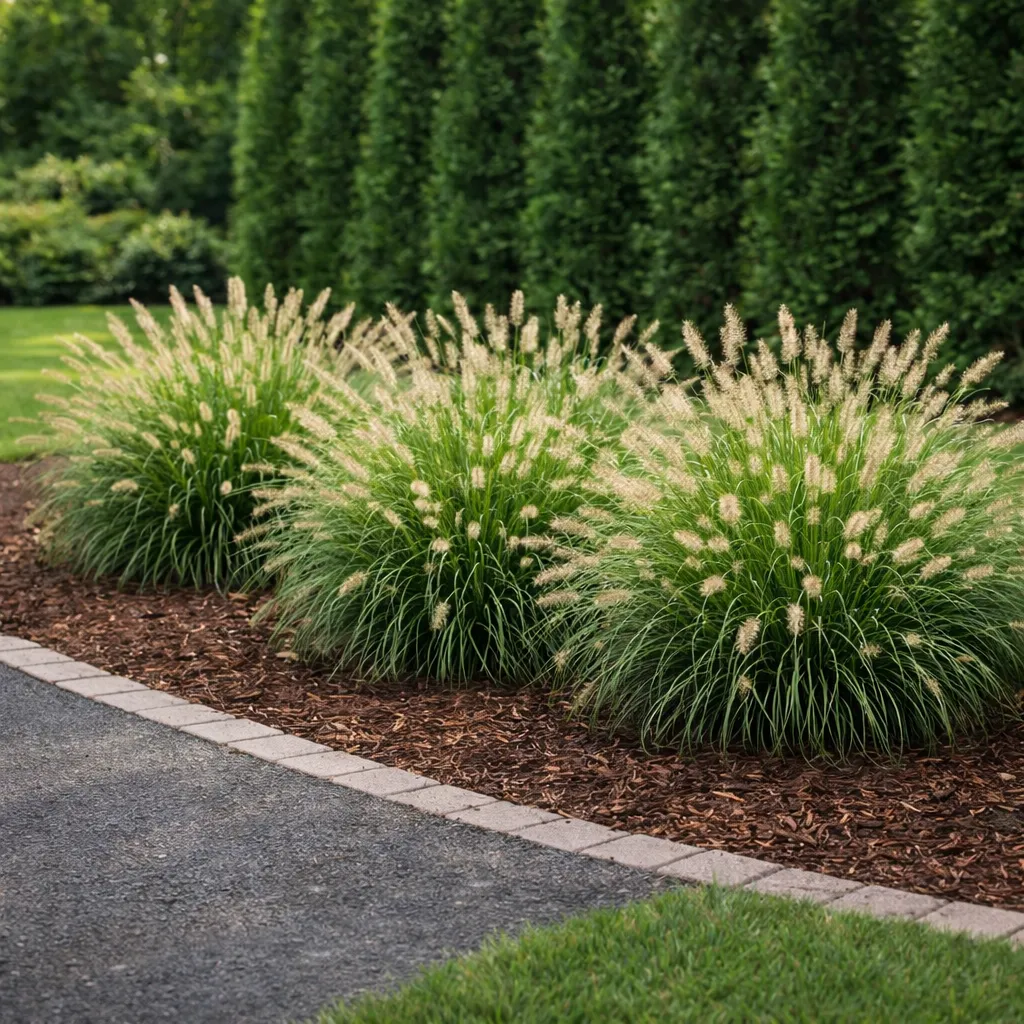
Botanical Name: Pennisetum alopecuroides ‘Hameln’

Common Name: Hameln Fountain Grass

Mature Height and Width:
2–3′ tall × 2–3′ wide
3–4′ tall in bloom

Growth Habit: Compact, rounded fountain-shaped ornamental grass with a dense base and gracefully arching foliage. Forms tidy clumps with strong basal density and soft outward flare. Moderate growth rate.

Foliage Description: Fine-textured, narrow medium-green blades forming a soft, flowing mound. Foliage emerges upright from the base and arches outward evenly, maintaining a refined but natural structure.

Flower Description: Abundant soft tan to buff-colored bottlebrush plumes held just above the foliage. Plumes are compact and cylindrical, appearing fluffy and upright before arching slightly with age.

Bloom Time: Mid to late summer

Fall Color: Foliage transitions to warm golden-tan in fall; plumes persist into early winter.

Light Requirements: Full sun for best form and bloom production.

Hardiness Zone: USDA Zones 5–9

Notable Landscape Uses:
Mass plantings; driveway edge beds; border edging; patio plantings; mixed perennial borders; low privacy screens; modern and naturalistic landscapes; erosion control on slopes.

Deer Resistance: High
Fountain grasses are generally avoided by deer. Established clumps of ‘Hameln’ typically experience minimal browsing in Zones 5–7.
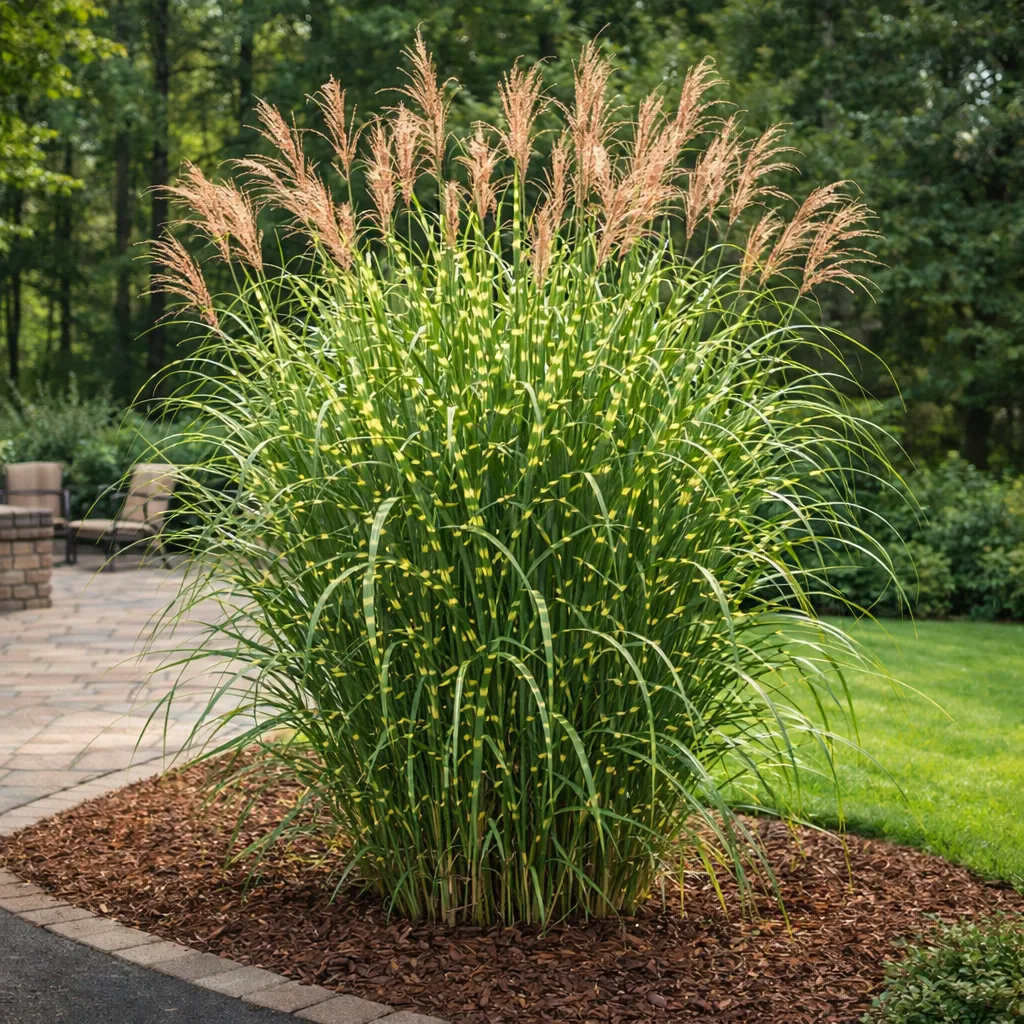
Botanical Name: Miscanthus sinensis ‘Zebrinus’

Common Name: Zebra Grass

Mature Height and Width:
4–6′ tall × 4–5′ wide (foliage)
6–8′ tall in bloom

Growth Habit: Bold, upright clump-forming ornamental grass with arching upper blades and a strong vertical presence. Forms a dense base with a slightly flaring, vase-shaped silhouette. Moderate growth rate.

Foliage Description: Broad green blades distinctly banded with irregular horizontal yellow striping across the leaf surface. Variegation appears uneven and naturally spaced along each blade. Foliage is coarse-textured and architectural.

Flower Description: Soft coppery-pink plumes in late summer that mature to tan. Plumes rise above the foliage and gradually lighten as they age.

Bloom Time: Late summer to early fall

Fall Color: Foliage transitions to golden-tan; plumes persist into winter.

Light Requirements: Full sun for best striping intensity and strongest vertical habit.

Hardiness Zone: USDA Zones 5–9

Notable Landscape Uses:
Specimen grass in open lawn; driveway island beds; privacy screens; mixed perennial borders; bold architectural accent in modern landscapes; fall structure and seasonal interest; mass plantings.

Deer Resistance: High
Miscanthus species are generally not preferred by deer. Established Zebra Grass clumps typically experience minimal browsing in Zones 5–7.
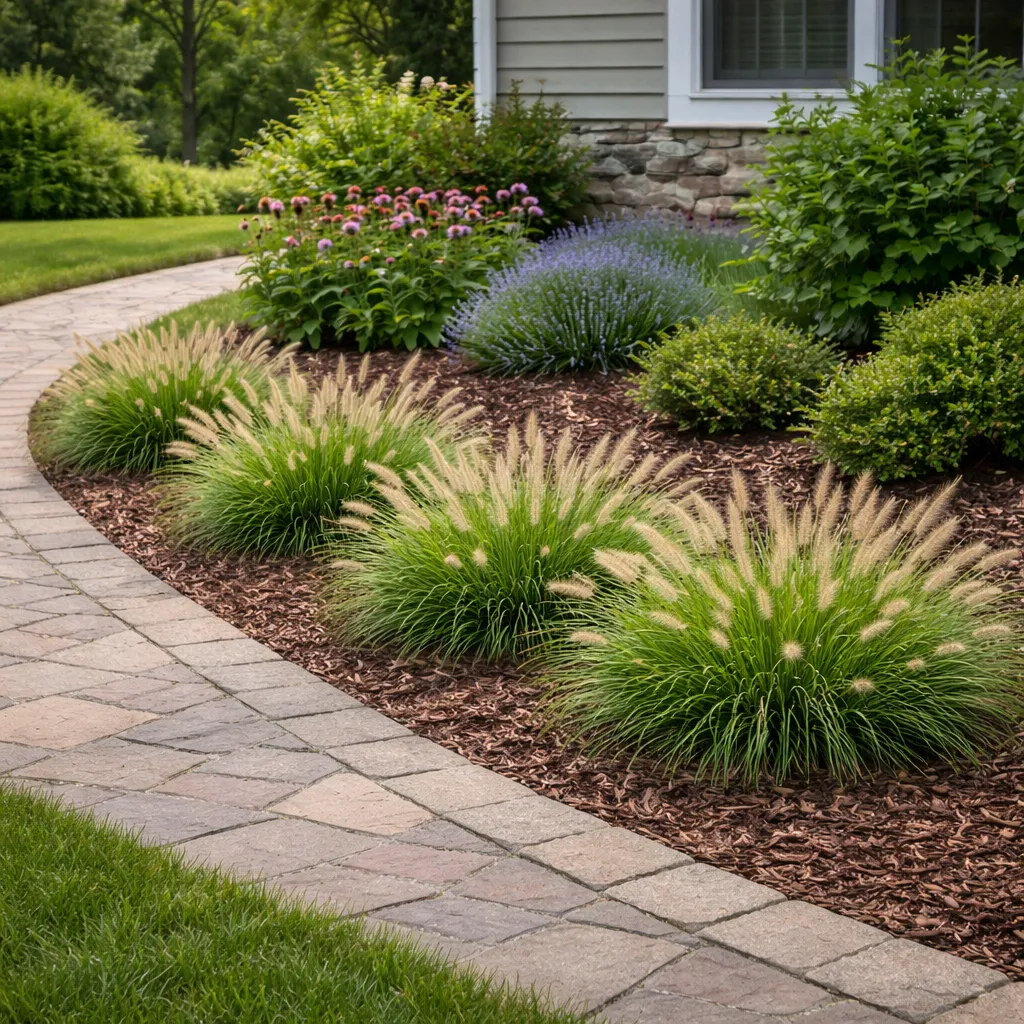
Botanical Name: Pennisetum alopecuroides ‘Piglet’

Common Name: Piglet Dwarf Fountain Grass

Mature Height and Width:
12–18″ tall × 18–24″ wide (foliage)
18–24″ tall in bloom

Growth Habit: Compact, low-growing, fountain-shaped ornamental grass forming tight clumps with a dense basal crown. Naturally rounded with gently arching blades. Moderate growth rate.

Foliage Description: Fine-textured, narrow green blades emerging upright and arching outward evenly. Foliage maintains a soft, flowing appearance through summer before transitioning to warm tan in fall.

Flower Description: Abundant soft buff to light tan bottlebrush plumes held just above the foliage. Plumes are compact and cylindrical, appearing earlier and lower than larger fountain grass cultivars.

Bloom Time: Mid to late summer

Fall Color: Foliage transitions to golden-tan; plumes persist into fall and early winter.

Light Requirements: Full sun for best density and bloom production.

Hardiness Zone: USDA Zones 5–9

Notable Landscape Uses:
Front-of-border plantings; mass plantings; edging along walkways; patio plantings; small-space gardens; container plantings; low-maintenance landscapes; slope plantings.

Deer Resistance: High
Fountain grasses are generally not preferred by deer. ‘Piglet’ typically experiences minimal browsing even in moderate deer pressure areas in Zones 5–7.
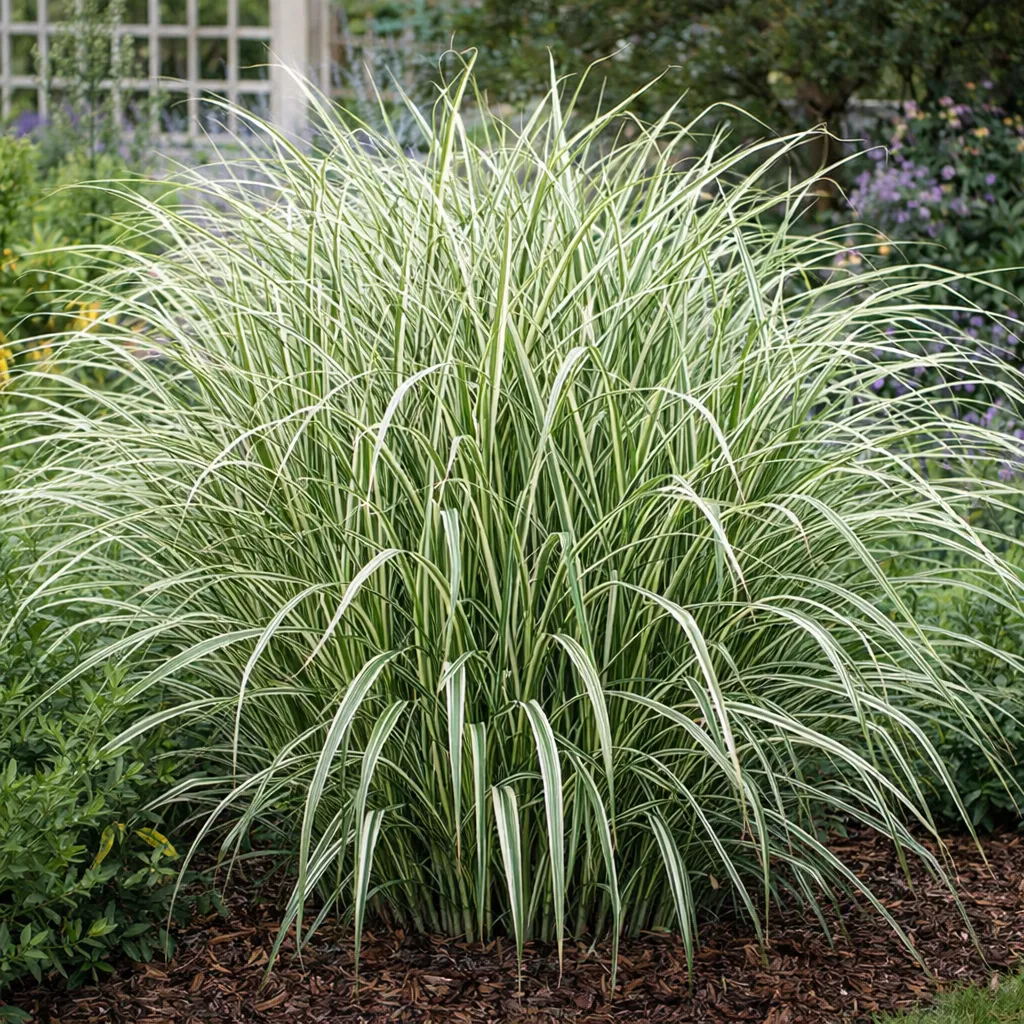
Botanical Name: Miscanthus sinensis ‘Variegatus’

Common Name: Variegated Japanese Silver Grass

Mature Height and Width:
4–6′ tall × 3–5′ wide (foliage)
6–8′ tall in bloom

Growth Habit: Upright, vase-shaped clump-forming ornamental grass with arching upper blades. Forms a dense base with a graceful outward flare. Moderate growth rate.

Foliage Description: Narrow green blades with bold creamy-white vertical striping along the margins. Variegation appears clean and consistent, creating a bright, luminous texture in the landscape. Fine to medium texture with strong vertical presence.

Flower Description: Soft reddish-copper plumes emerging in late summer, maturing to silvery-tan. Plumes are airy and held above the foliage canopy.

Bloom Time: Late summer to early fall

Fall Color: Foliage transitions to golden-tan; plumes persist into winter.

Light Requirements: Full sun for best variegation intensity and strongest upright structure.

Hardiness Zone: USDA Zones 5–9

Notable Landscape Uses:
Specimen grass in open lawn; mass plantings; privacy screening; mixed perennial borders; architectural accent in modern landscapes; seasonal structure in fall gardens; driveway island beds.

Deer Resistance: High
Miscanthus species are generally not preferred by deer. Established clumps of Variegated Japanese Silver Grass typically sustain minimal browsing in Zones 5–7.
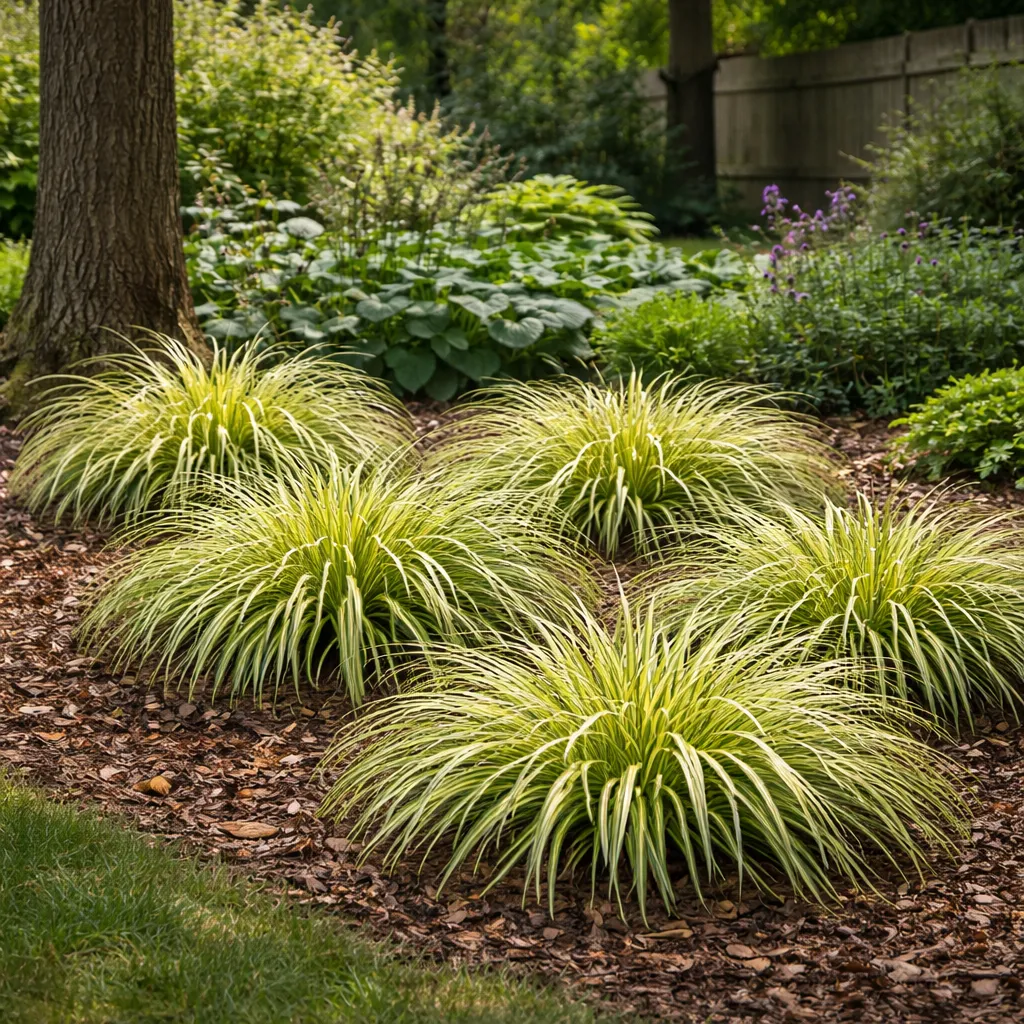
Botanical Name: Carex oshimensis ‘Evergold’

Common Name: Evergold Sedge

Mature Height and Width: 12–18″ tall × 18–24″ wide

Growth Habit: Low, arching, clump-forming evergreen sedge. Forms a graceful, cascading mound with blades that spill outward from a dense central crown. Slow to moderate growth rate.

Foliage Description: Narrow, arching blades with creamy yellow centers and dark green margins. Variegation is bold and high-contrast. Foliage remains evergreen in Zones 6–7 and maintains strong color through winter. Fine texture with soft movement.

Flower Description: Inconspicuous brownish flower spikes in spring; not ornamentally significant.

Bloom Time: Mid to late spring

Fall Color: Evergreen; maintains variegated coloration year-round.

Light Requirements: Partial shade to full shade; tolerates morning sun but prefers protection from harsh afternoon sun.

Hardiness Zone: USDA Zones 5–9

Notable Landscape Uses:
Shade foundation plantings; woodland garden edges; border edging; container plantings; groundcover in shaded beds; underplanting for trees and shrubs; Japanese-inspired gardens; courtyard plantings.

Deer Resistance: Moderate to High
Sedges are generally not a preferred deer browse. ‘Evergold’ typically sustains minimal damage in Zones 5–7, though tender new growth may occasionally be sampled.
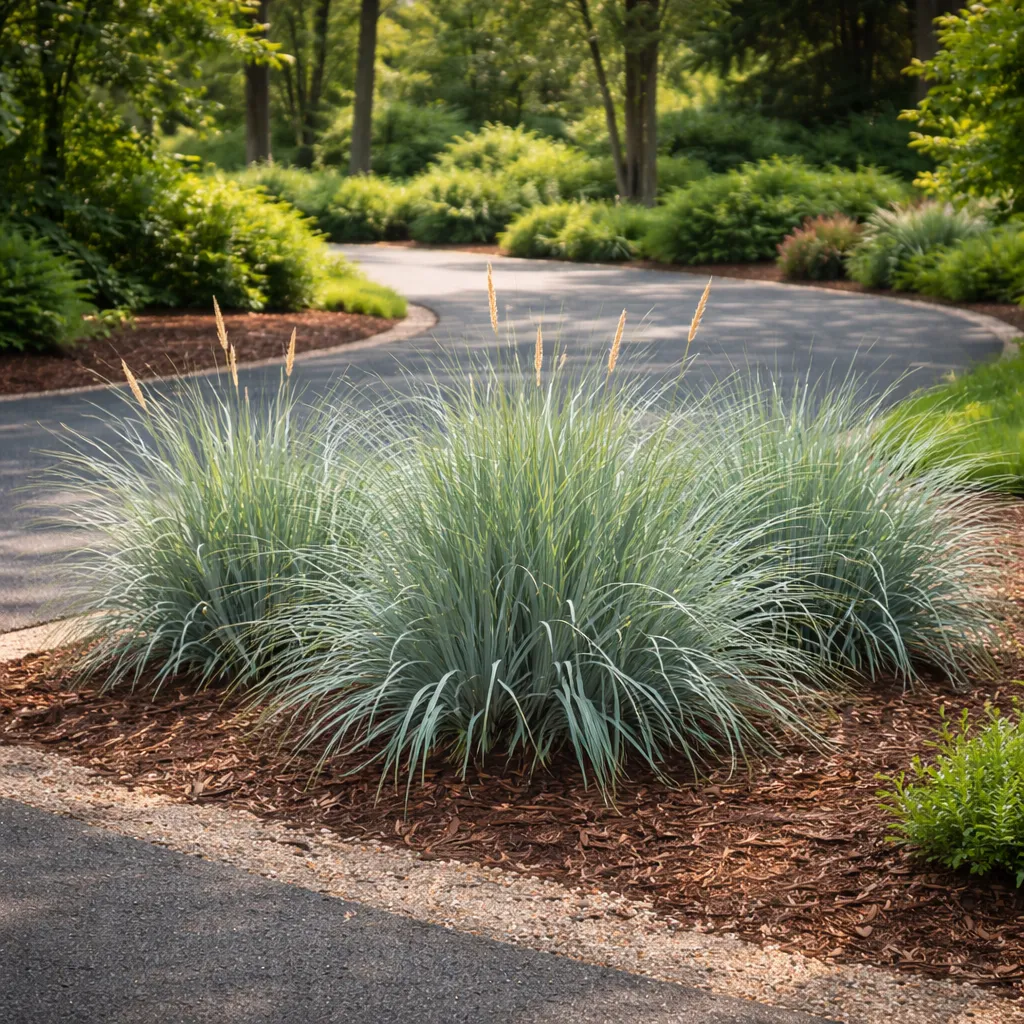
Botanical Name: Leymus arenarius ‘Blue Dune’

Common Name: Blue Dune Lyme Grass

Mature Height and Width: 2–3′ tall × 3–4′ wide (spreading)

Growth Habit: Clump-forming ornamental grass with strong horizontal rhizomes. Forms upright, arching blades in dense clumps but will gradually spread in open soils. Bold, structural presence.

Foliage Description: Broad, strap-like blades in powdery silver-blue to steely blue. Leaves are thick-textured and upright to slightly arching, maintaining color throughout the growing season.

Flower Description: Upright wheat-like tan flower spikes held above foliage in early to mid-summer. Flower heads age to light straw color.

Bloom Time: Early to mid-summer

Fall Color: Foliage remains blue into fall; may tan slightly in winter. Semi-evergreen in milder areas.

Light Requirements: Full sun for best blue coloration and strongest structure.

Hardiness Zone: USDA Zones 4–9

Notable Landscape Uses:
Coastal plantings; dune stabilization; driveway island beds; xeriscape designs; modern landscapes; mass plantings; erosion control; bold texture contrast in perennial borders.

Deer Resistance: High
Ornamental grasses are generally avoided by deer, and Blue Dune Lyme Grass is rarely browsed. Established plants sustain minimal damage even in higher-pressure areas in Zones 5–7.

Black Mondo Grass
Ophiopogon planiscapus ‘Nigrescens’

  1. Mature Size: 6–8″ H × 10–12″ W
  2. Light Requirements: Part shade to full shade; tolerates morning sun
  3. Ideal Soil Conditions: Moist, well‑drained, organically rich soil
  4. Notable Characteristics: Dramatic deep black foliage in low mounding clumps. Produces small lilac flowers and blue berries. Excellent contrast plant in shade borders, rock gardens, or containers.
  5. Deer Resistance: Moderate to High

Botanical Name: Miscanthus sinensis ‘Gracillimus’

Common Name: Gracillimus Maiden Grass

Mature Height and Width:
4–6′ tall × 3–4′ wide (foliage)
6–7′ tall in bloom

Growth Habit: Upright, narrow vase-shaped clump with fine-textured foliage and a refined, flowing silhouette. Forms a dense base with a soft outward flare at mid-height. Moderate growth rate.

Foliage Description: Very narrow, fine-textured green blades with a subtle silvery midrib. More delicate and airy in appearance than broader Miscanthus cultivars. Maintains strong vertical structure through summer.

Flower Description: Coppery-pink plumes emerging in late summer, maturing to silvery-tan. Plumes are narrower and more refined than many other cultivars, rising just above the foliage canopy.

Bloom Time: Late summer to early fall

Fall Color: Foliage transitions to warm golden-tan; plumes persist into winter.

Light Requirements: Full sun for best density and flowering.

Hardiness Zone: USDA Zones 5–9

Notable Landscape Uses:
Specimen grass in island beds; driveway edges; mass plantings; privacy screening; mixed perennial borders; modern landscapes; fall-structure focal point; large-scale plantings.

Deer Resistance: High
Miscanthus cultivars are generally not preferred by deer. Established clumps of ‘Gracillimus’ typically sustain minimal browsing in Zones 5–7.
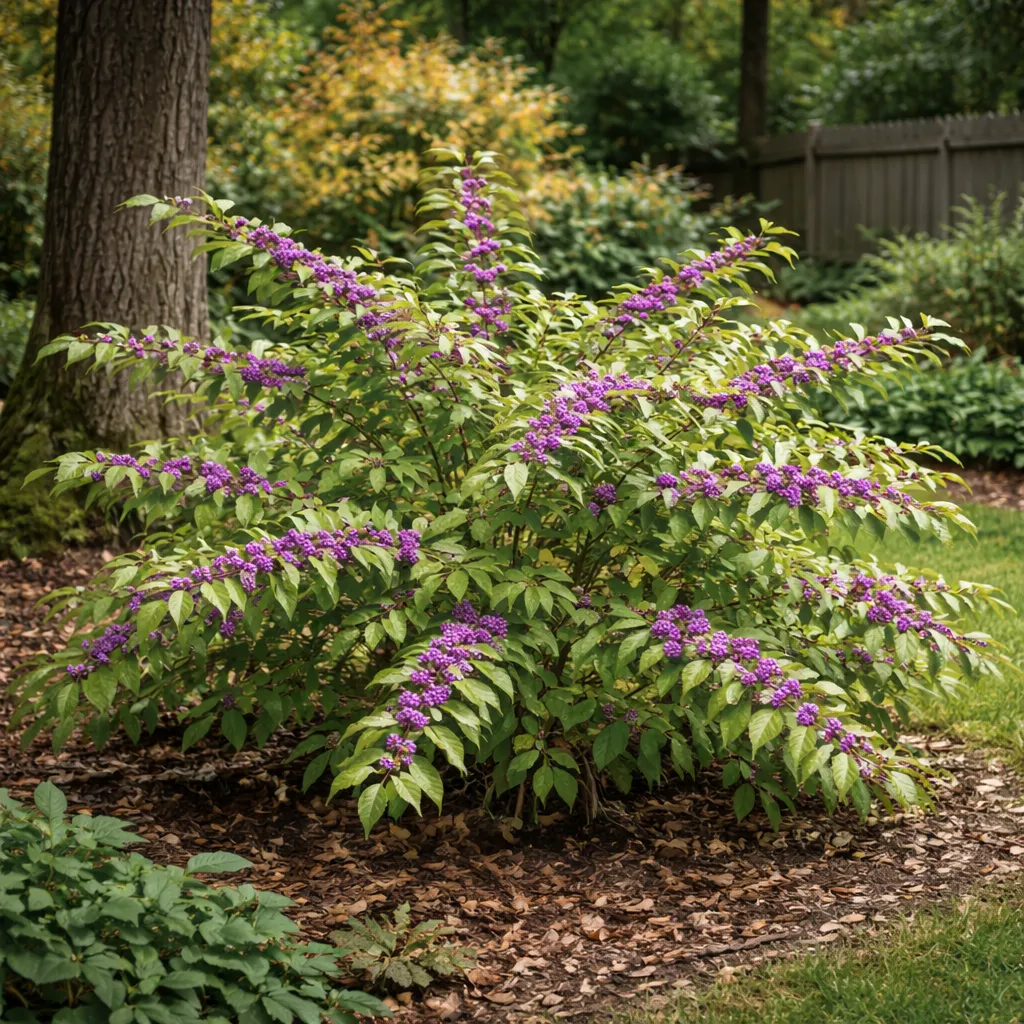

Botanical Name: Callicarpa americana

Common Name: American Beautyberry

Mature Height and Width:
4–6′ tall × 4–6′ wide

Growth Habit: Upright, arching deciduous shrub with a naturally loose, open structure. Forms a rounded but airy mound with graceful outward-curving stems. Moderate growth rate.

Foliage Description: Medium green, ovate leaves with lightly serrated margins. Foliage has a soft, matte texture and may yellow slightly before leaf drop. Deciduous in Zones 5–7.

Flower Description: Small, pale pink to lavender flowers borne in tight clusters along the stems at leaf nodes. Flowers are not highly showy individually but precede the ornamental fruit.

Bloom Time: Late spring to early summer

Fruit: Bright metallic purple berry clusters encircling the stems at leaf nodes. Berries appear in late summer and persist into fall, creating the primary ornamental display.

Fall Color: Yellow-green; foliage drops while berries remain visible.

Light Requirements: Full sun to partial shade; best berry production occurs in full sun.

Hardiness Zone: USDA Zones 6–10 (protected Zone 5 sites possible)

Notable Landscape Uses:
Pollinator gardens; woodland-edge plantings; naturalized borders; fall-interest shrub in mixed beds; backyard wildlife gardens; native landscape designs; mass plantings for berry display.

Deer Resistance: Moderate
Beautyberry is not typically a preferred browse, though young stems may be sampled under pressure. Established plants generally recover well and sustain limited long-term damage in Zones 6–7.
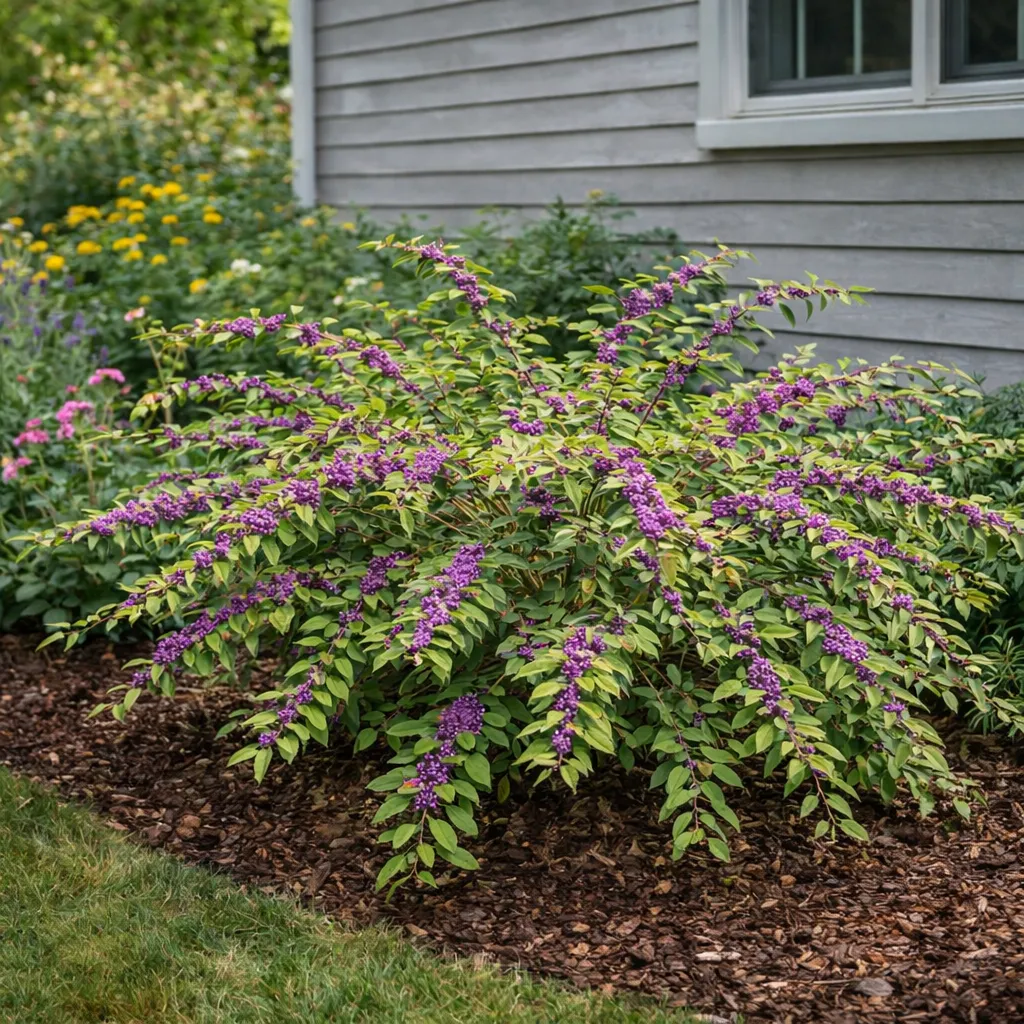
Botanical Name: Callicarpa dichotoma ‘Early Amethyst’

Common Name: Early Amethyst Beautyberry

Mature Height and Width:
3–4′ tall × 3–5′ wide

Growth Habit: Low, arching, deciduous shrub with a graceful, fountain-like form. More compact and refined than C. americana, with thinner stems and a softer outline. Moderate growth rate.

Foliage Description: Small, narrow ovate green leaves with a fine texture. Foliage is lighter and more delicate than American Beautyberry. Deciduous in Zones 5–7.

Flower Description: Small pale pink flowers borne along stems at leaf nodes. Not showy individually but precede ornamental fruit.

Bloom Time: Late spring to early summer

Fruit: Abundant clusters of vivid amethyst-purple berries forming tightly along arching stems. Fruit sets earlier than other beautyberry selections, often coloring in late summer.

Fall Color: Soft yellow before leaf drop, exposing berry-laden stems.

Light Requirements: Full sun to partial shade; best berry production and density occur in full sun.

Hardiness Zone: USDA Zones 5–8

Notable Landscape Uses:
Front-of-border plantings; mass plantings; slope plantings; mixed shrub borders; woodland-edge gardens; fall-interest accent; small-space landscapes.

Deer Resistance: Moderate
Beautyberry is generally not heavily browsed, though young growth may be sampled in high-pressure areas. Established plants typically sustain limited long-term damage in Zones 5–7.
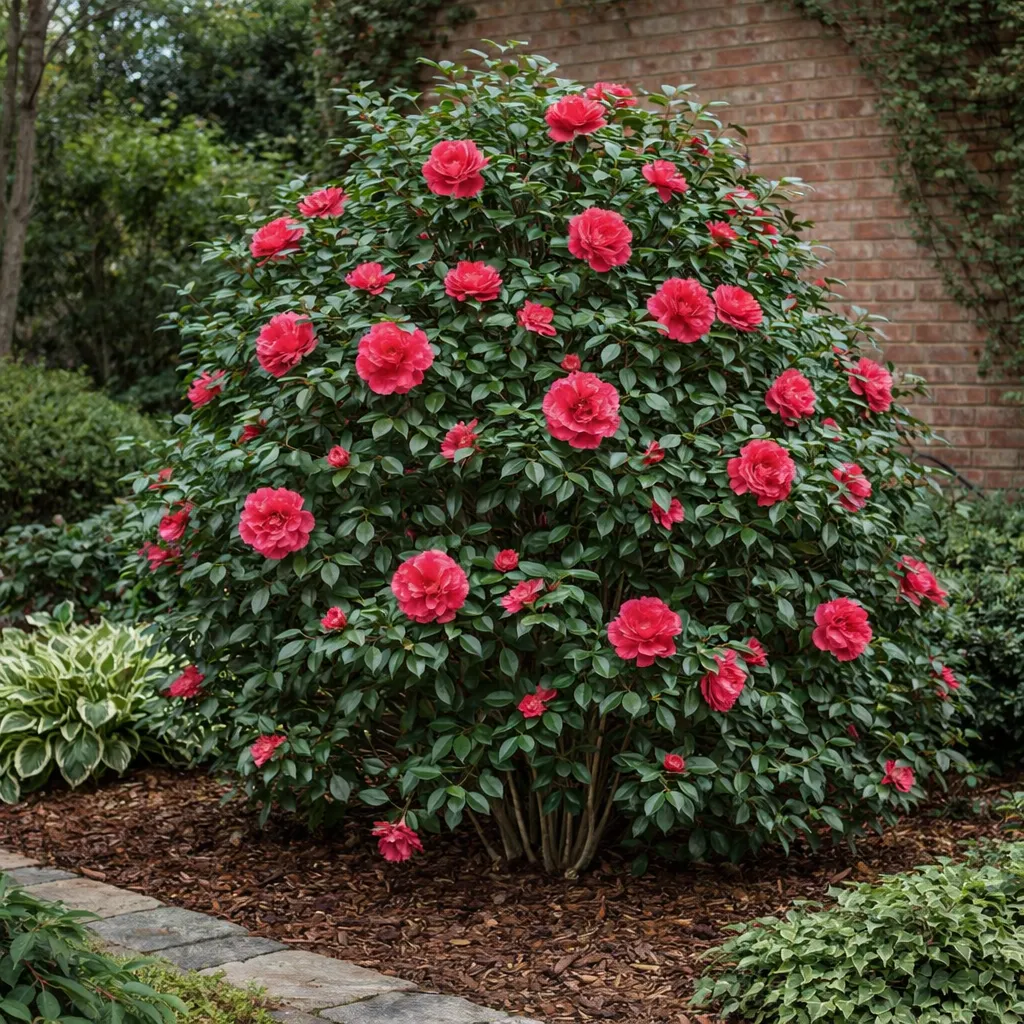
Botanical Name: Camellia japonica ‘Alabama Beauty’

Common Name: Alabama Beauty Camellia

Mature Height and Width:
8–12′ tall × 6–8′ wide

Growth Habit: Upright, dense, broad evergreen shrub with a naturally pyramidal to oval form. Slow to moderate growth rate. Structure is layered and refined, not loose or airy.

Foliage Description: Glossy, dark green evergreen leaves with a leathery texture and serrated margins. Foliage remains deep green year-round.

Flower Description: Formal double, deep red blooms with tightly layered petals arranged symmetrically in a peony-like form. Flowers are 3–5 inches across and held singly along branches.

Bloom Time: Late winter to early spring (depending on exposure)

Fall Color: Evergreen; no fall color change.

Light Requirements: Partial shade; best performance in morning sun and afternoon shade. Protect from harsh winter winds in Zones 6–7.

Hardiness Zone: USDA Zones 7–9 (marginal 6 with protection)

Notable Landscape Uses:
Foundation plantings; courtyard gardens; specimen shrub in protected locations; evergreen screening in mild climates; southern-style formal gardens; patio-edge plantings.

Deer Resistance: Moderate
Camellias are not a primary deer preference, though flower buds may be sampled in high-pressure areas. Established plants generally sustain limited structural damage but may lose buds if unprotected.

Note: Best planted in a protected location in Zone 7. Shelter from winter wind and strong afternoon sun helps preserve buds and foliage.
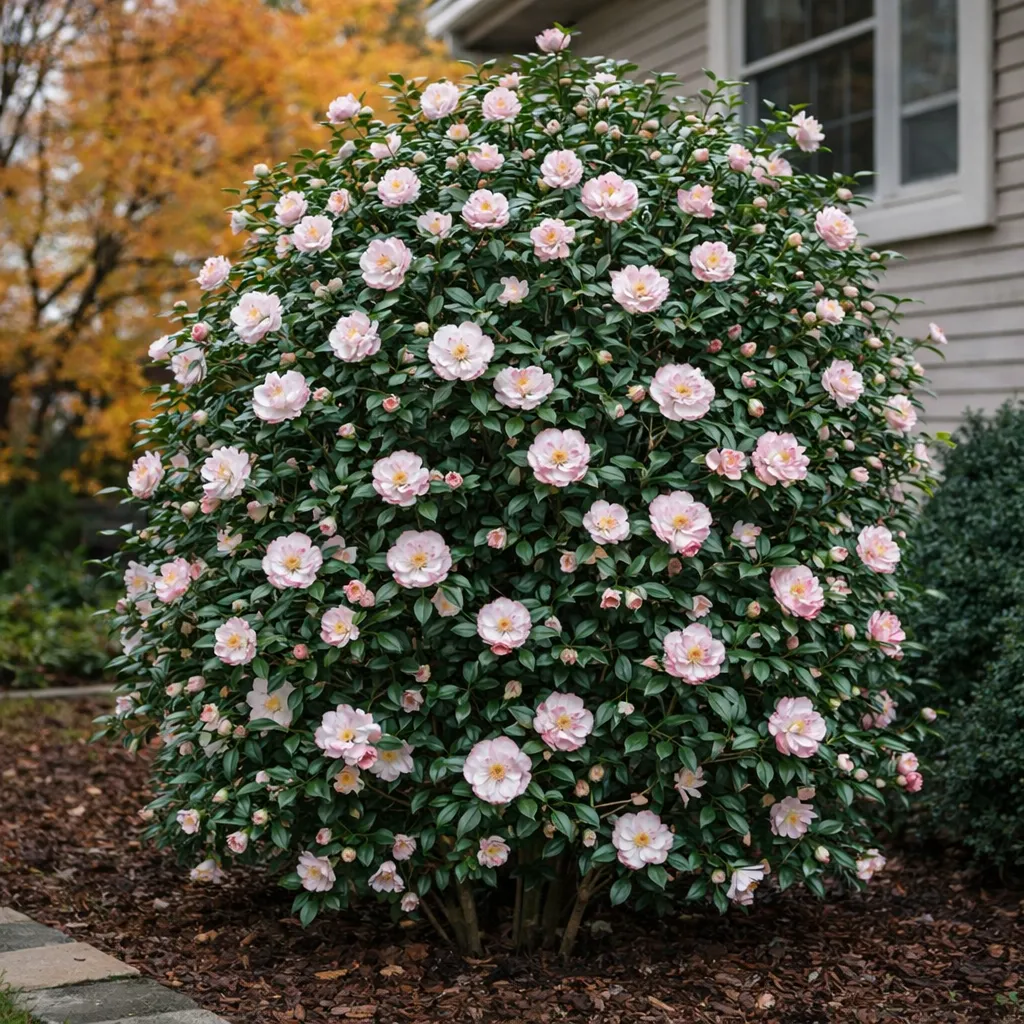
Botanical Name: Camellia japonica ‘Leslie Ann’

Common Name: Leslie Ann Camellia

Mature Height and Width:
8–12′ tall × 6–8′ wide

Growth Habit: Upright, dense, broadly pyramidal to oval evergreen shrub. Naturally layered branching with a refined but not rigid structure. Slow to moderate growth rate.

Foliage Description: Glossy, dark green, leathery evergreen leaves with fine serration along margins. Maintains strong year-round structure and color.

Flower Description: Large, formal double blooms in soft light pink. Petals are tightly layered in a symmetrical rosette pattern, 4–5 inches across. Flowers are borne singly along stems.

Bloom Time: Late winter to early spring

Fall Color: Evergreen; no fall color change.

Light Requirements: Partial shade; best with morning sun and afternoon shade. Protect from winter winds in Zones 6–7.

Hardiness Zone: USDA Zones 7–9 (protected Zone 6 microclimates possible)

Notable Landscape Uses:
Foundation plantings in protected sites; courtyard gardens; formal shrub borders; evergreen specimen; southern-style garden designs; patio-edge plantings; focal point in winter-interest landscapes.

Deer Resistance: Moderate
Camellias are generally not a preferred browse, though flower buds may be sampled in higher-pressure areas. Established plants typically maintain structure but may lose some blooms without protection.


Note: Best planted in a protected location in Zone 7. Shelter from winter wind and strong afternoon sun helps preserve buds and foliage.
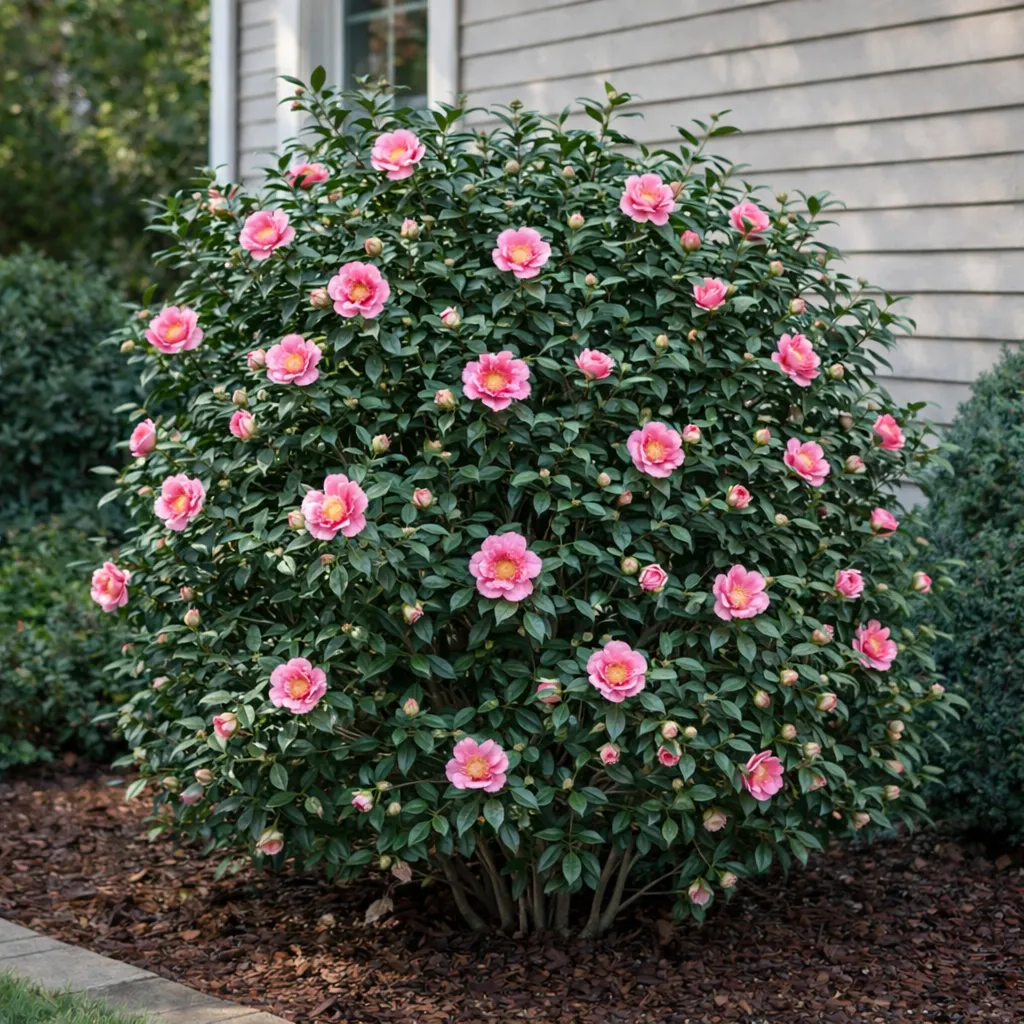
Botanical Name: Camellia japonica ‘Our Linda’

Common Name: Our Linda Camellia

Mature Height and Width:
6–8′ tall × 5–7′ wide

Growth Habit: Upright, dense, broadly oval evergreen shrub with a refined but naturally layered structure. More cold-tolerant and compact than many traditional japonicas. Moderate growth rate.

Foliage Description: Glossy, dark green, leathery evergreen leaves with a strong central vein and fine serration. Maintains year-round structure and deep coloration.

Flower Description: Large, semi-double to formal double blooms in bright rose-pink with prominent golden-yellow stamens visible in semi-double forms. Flowers typically 4–5 inches across.

Bloom Time: Early to mid-spring (often slightly later than traditional japonicas in colder climates)

Fall Color: Evergreen; no fall color change.

Light Requirements: Partial shade; best with morning sun and protection from harsh winter winds.

Hardiness Zone: USDA Zones 6–9

Notable Landscape Uses:
Protected foundation plantings; courtyard gardens; evergreen focal shrub; mixed evergreen borders; winter-to-spring interest gardens; sheltered patio plantings; Southern-style garden accents adaptable to colder climates.

Deer Resistance: Moderate
Camellias are not typically a preferred browse, though flower buds may be sampled in higher-pressure areas. Established plants generally retain structure but may require protection during bloom in deer-heavy sites.


Note: Best planted in a protected location in Zone 7. Shelter from winter wind and strong afternoon sun helps preserve buds and foliage.
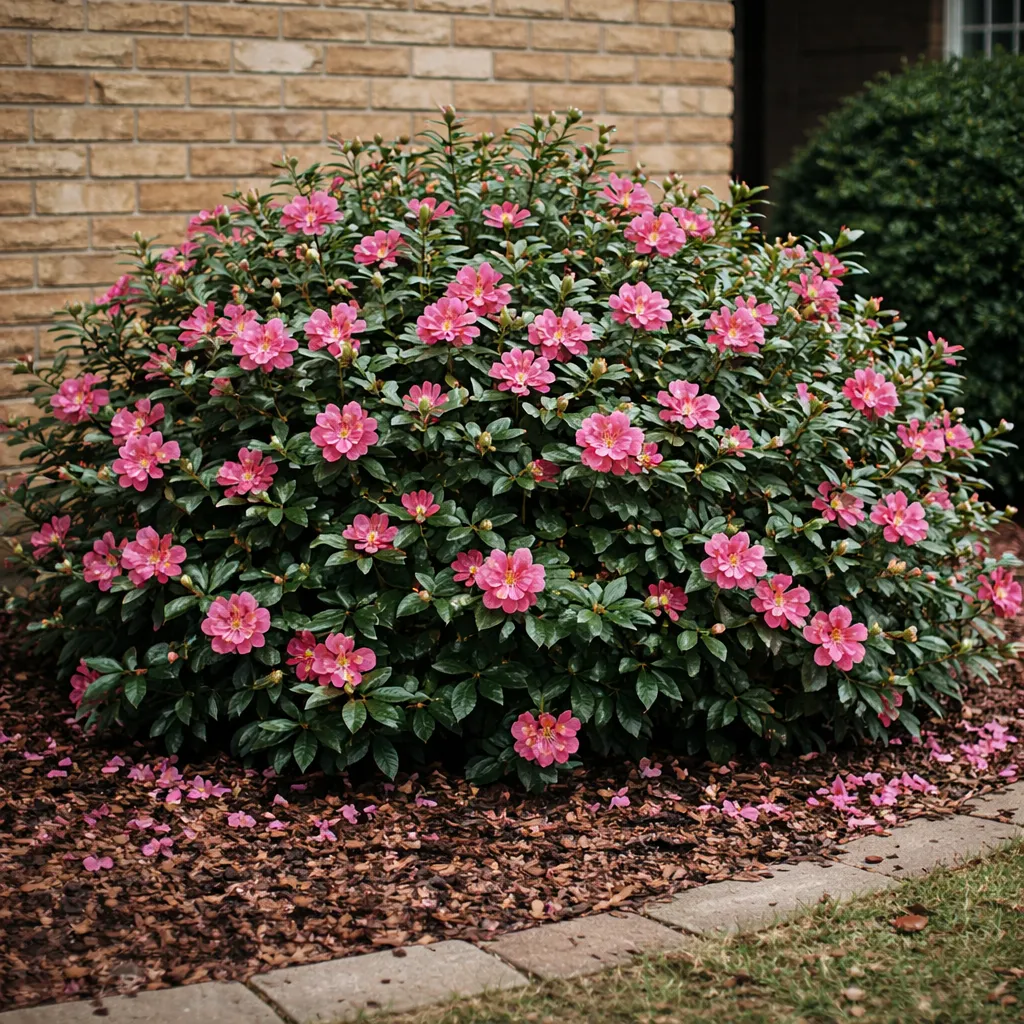
Botanical Name: Camellia sasanqua ‘Shishi Gashira’

Common Name: Shishi Gashira Camellia

Mature Height and Width:
4–5′ tall × 5–6′ wide

Growth Habit: Low, spreading evergreen shrub with dense branching and slightly arching outer stems. Broader than tall with compact, refined structure. Slow to moderate growth rate.

Foliage Description: Small to medium dark green leaves with glossy surface and fine serration. Dense evergreen canopy with tight leaf arrangement.

Flower Description: Semi-double to loose double pink flowers with visible golden stamens. Blooms moderately sized and borne abundantly across outer canopy. Petals slightly ruffled, not fully formal double.

Bloom Time: Fall into early winter.

Fall Color: Evergreen; foliage remains dark green year-round.

Light Requirements: Full sun to partial shade; best flowering with morning sun and protection from harsh afternoon exposure in colder regions.

Hardiness Zone: USDA Zones 7–9 (marginal in protected Zone 6).

Notable Landscape Uses:
Foundation planting; low evergreen hedge; espalier; container planting; fall seasonal accent; entry planting.

Deer Resistance: Moderate
Evergreen foliage may experience browsing under heavy pressure, though generally not highly preferred.
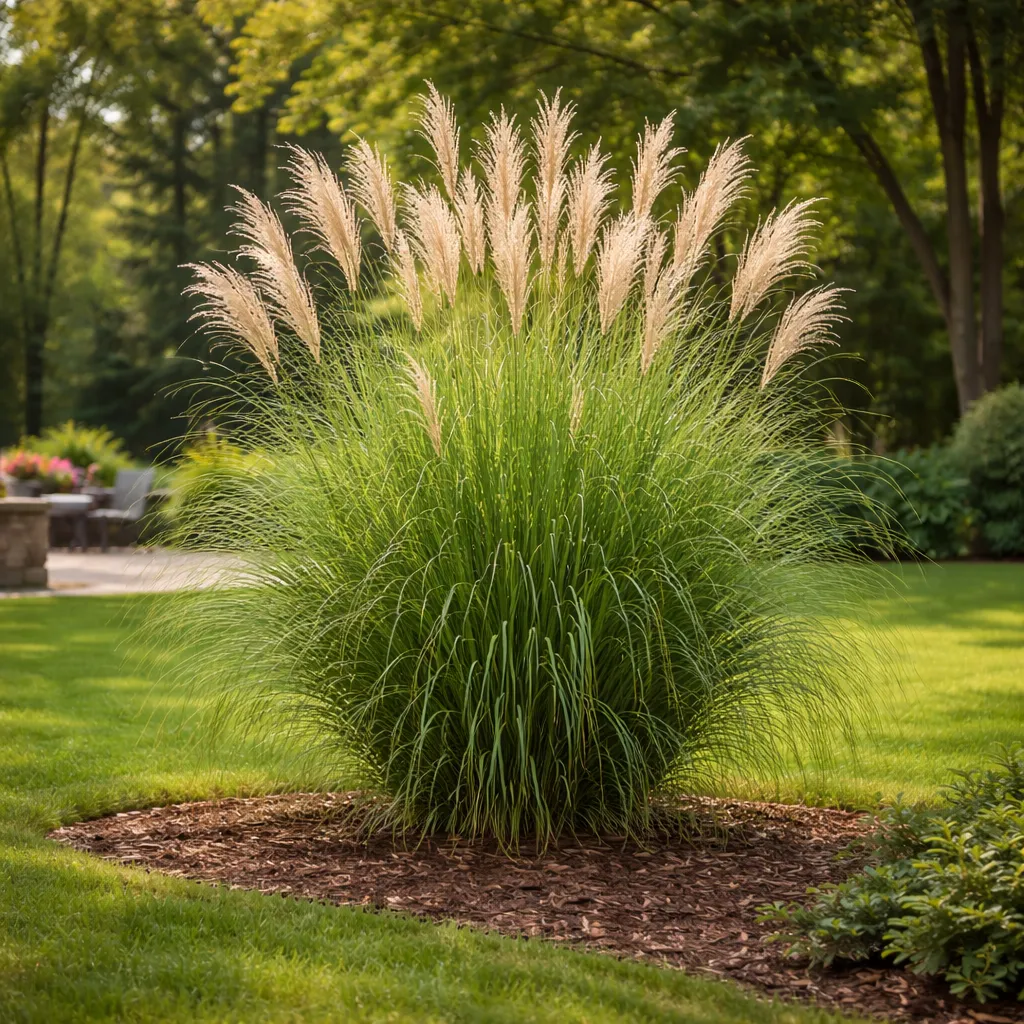
Botanical Name: Miscanthus sinensis ‘Graziella’

Common Name: Graziella Maiden Grass

Mature Height and Width:
4–5′ tall × 3–4′ wide (foliage)
6–7′ tall in bloom

Growth Habit: Upright, vase-shaped ornamental grass with strong vertical structure and arching upper blades. Forms a dense clump with a narrow base and slightly flaring crown. Moderate growth rate.

Foliage Description: Fine-textured, narrow green blades with a subtle silvery midrib. Foliage maintains clean vertical lines through summer before developing soft tan tones in fall.

Flower Description: Tall, soft tan to creamy plumes held above foliage. Plumes are feathery and full but not overly heavy, aging to a light buff color.

Bloom Time: Late summer to early fall

Fall Color: Foliage transitions to golden-tan tones, with plumes persisting into winter.

Light Requirements: Full sun for strongest vertical habit and best flowering.

Hardiness Zone: USDA Zones 5–9

Notable Landscape Uses:
Specimen grass in open lawn; driveway island plantings; large mixed borders; privacy screens; seasonal structure in modern landscapes; fall interest focal point; mass plantings.

Deer Resistance: High
Ornamental grasses, including Miscanthus, are rarely browsed by deer. Established clumps typically sustain minimal damage even in higher-pressure areas in Zones 5–7.
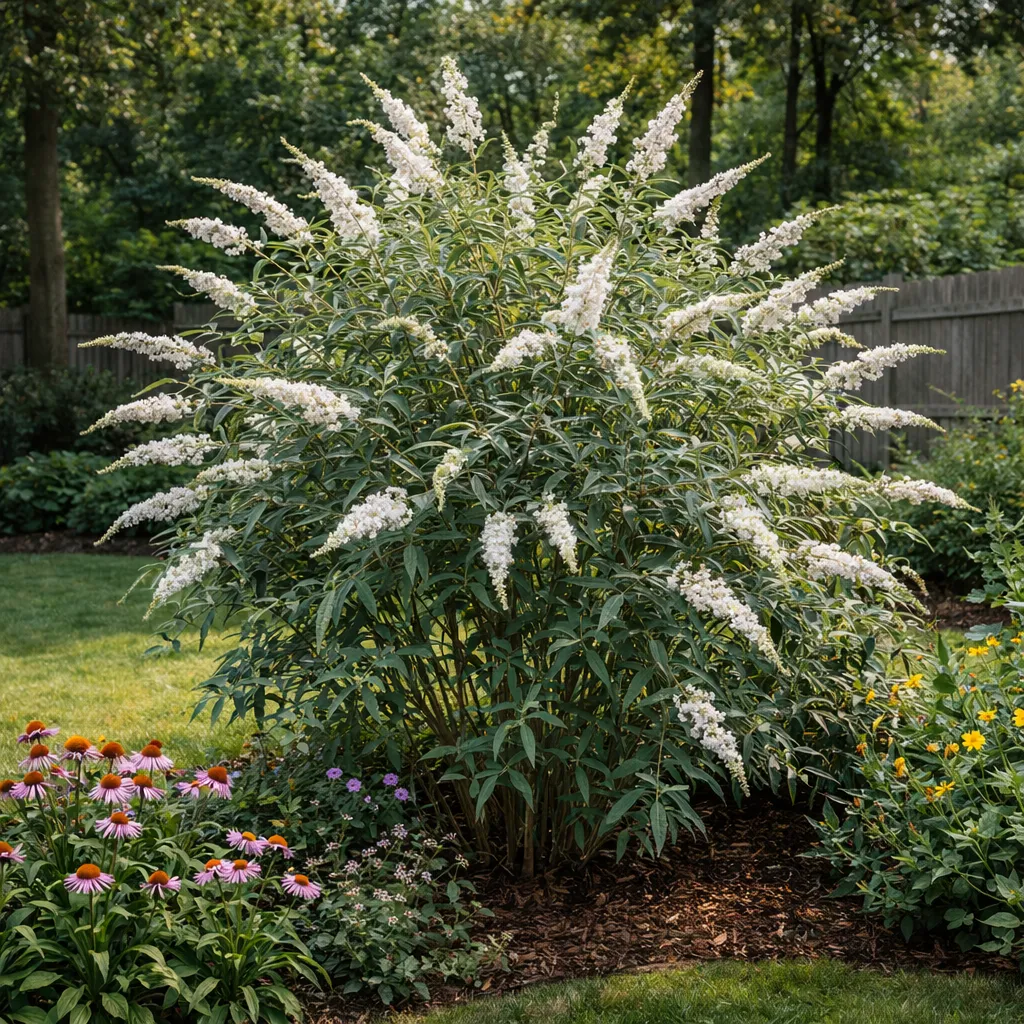
Botanical Name: Buddleja davidii ‘White Profusion’

Common Name: White Profusion Butterfly Bush

Mature Height and Width:
6–10′ tall × 5–8′ wide

Growth Habit: Upright, arching deciduous shrub with an open, vase-shaped structure. Long flowering panicles are borne on new growth. Naturally loose and slightly airy, not dense or compact. Fast-growing.

Foliage Description: Lance-shaped gray-green leaves with a slightly silvery underside. Medium texture with a soft, matte finish. Deciduous in Zones 5–7.

Flower Description: Long, tapering panicles of pure white flowers with small yellow-orange eyes. Flower spikes can reach 8–12 inches long and arch slightly outward. Highly attractive to pollinators.

Bloom Time: Mid-summer through early fall (on new wood)

Fall Color: Foliage typically drops without significant fall coloration.

Light Requirements: Full sun for best flowering and strongest structure.

Hardiness Zone: USDA Zones 5–9

Notable Landscape Uses:
Pollinator gardens; mixed shrub borders; backyard focal plant; mass plantings; informal hedges; cottage gardens; summer color anchor; naturalized plantings.

Deer Resistance: Moderate
Butterfly bush is not typically a preferred browse, though tender new growth may be sampled under pressure. Established plants usually recover quickly from minor damage in Zones 5–7.
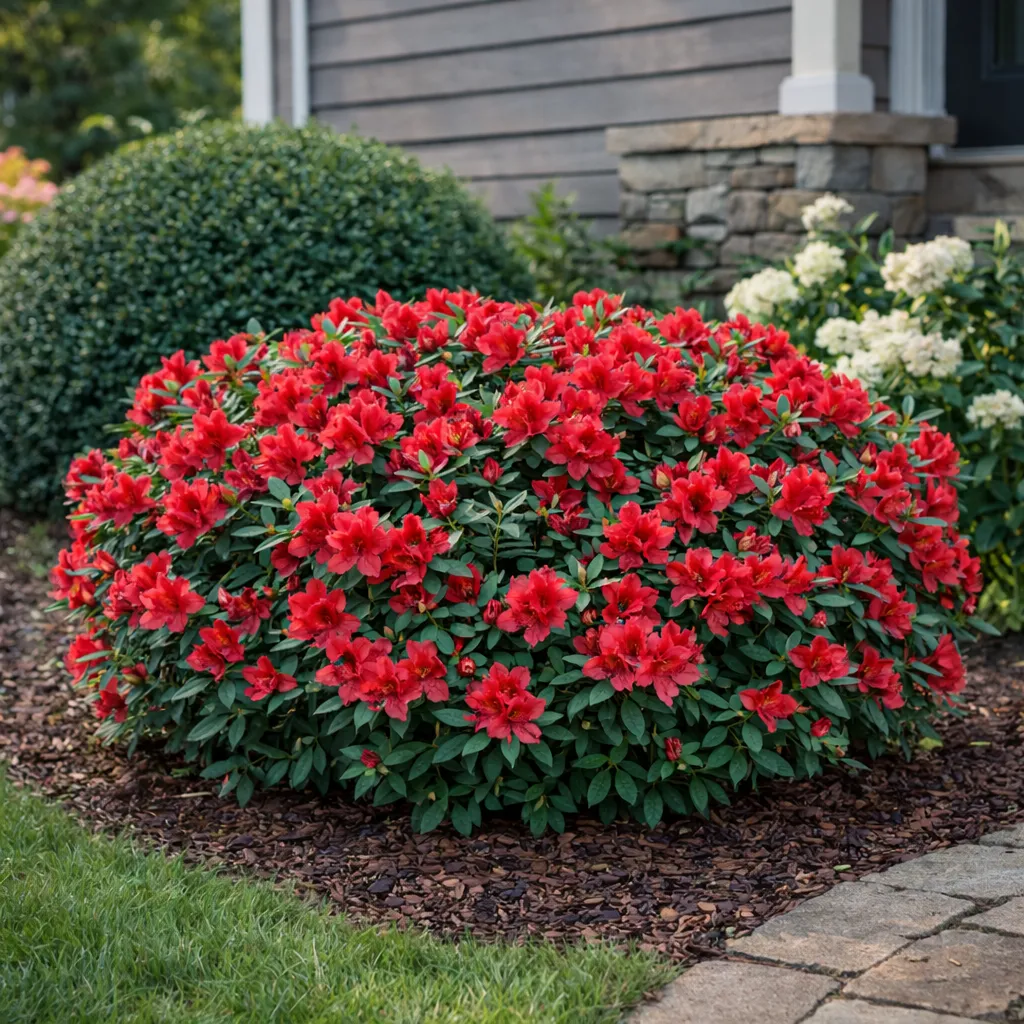
Botanical Name: Rhododendron ‘Roblezd’

Common Name: Encore® Azalea Autumn Fire®

Mature Height and Width:
2.5–3′ tall × 3–3.5′ wide

Growth Habit: Compact, low, dense evergreen shrub with a refined rounded form. Naturally tight branching with a slightly flattened crown when mature. Moderate growth rate.

Foliage Description: Small, elliptic dark green evergreen leaves with fine texture. Foliage remains dense and attractive year-round and may develop subtle bronze tones in winter in Zones 6–7.

Flower Description: Rich, deep red single to semi-double blooms with slightly darker undertones. Flowers are 2.5–3 inches wide and held evenly across the canopy. Color reads darker and more saturated than many red Encores.

Bloom Time: Heavy spring bloom with repeat flowering in summer and fall.

Fall Color: Evergreen; may bronze slightly in cooler weather.

Light Requirements: Full sun to partial shade; best rebloom performance with 5–6+ hours of direct sunlight.

Hardiness Zone: USDA Zones 6–9

Notable Landscape Uses:
Front-of-border plantings; mass plantings; low evergreen hedge; patio-edge plantings; foundation accents; container plantings; small-space gardens.

Deer Resistance: Low to Moderate
Azaleas are commonly browsed by deer, particularly flower buds and tender new growth. Protection is recommended in moderate to heavy deer pressure areas in Zones 6–7.
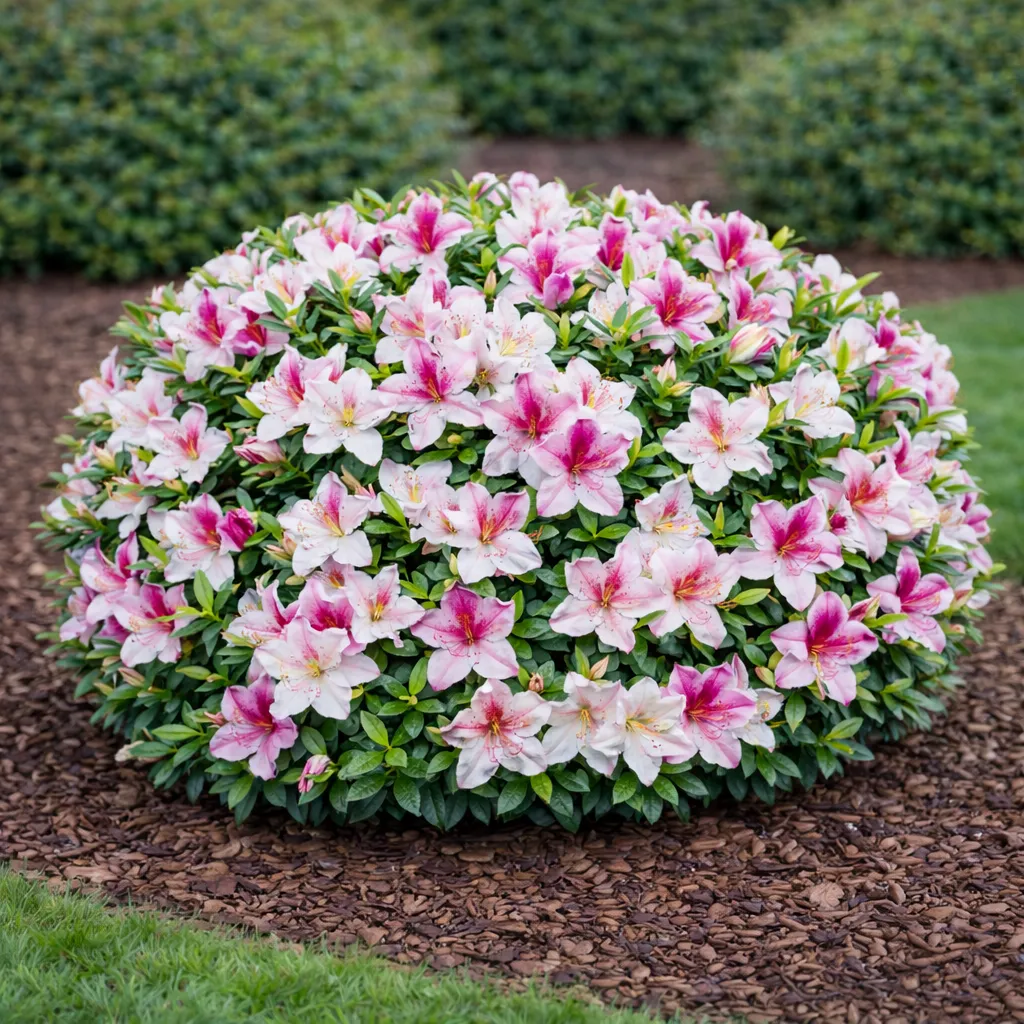
Botanical Name: Rhododendron ‘Conlep’ (Encore® Autumn Twist®)

Common Name: Encore® Azalea Autumn Twist®

Mature Height and Width:
3–4′ tall × 3–4′ wide

Growth Habit: Compact, rounded evergreen shrub with a moderately dense but slightly layered structure. Forms a refined mound but should not appear tightly clipped. Moderate growth rate.

Foliage Description: Small, elliptic dark green evergreen leaves with fine texture. Foliage remains dense year-round and may develop subtle bronze tones in cooler weather in Zones 6–7.

Flower Description: Semi-double blooms featuring white petals with irregular purple-pink streaking and blotching. Each bloom varies in striping pattern and intensity, creating a dynamic, painterly appearance. Flowers are approximately 2.5–3 inches wide.

Bloom Time: Heavy spring bloom with repeat flowering in summer and fall.

Fall Color: Evergreen; may bronze lightly in winter.

Light Requirements: Full sun to partial shade; best rebloom performance with 5–6+ hours of direct sunlight.

Hardiness Zone: USDA Zones 6–9

Notable Landscape Uses:
Foundation plantings; front-of-border seasonal color; patio-edge accents; mixed evergreen borders; cottage gardens; container plantings in protected settings.

Deer Resistance: Low to Moderate
Azaleas are commonly browsed by deer, especially flower buds and tender new growth. Protection is recommended in moderate to heavy deer pressure areas in Zones 6–7.
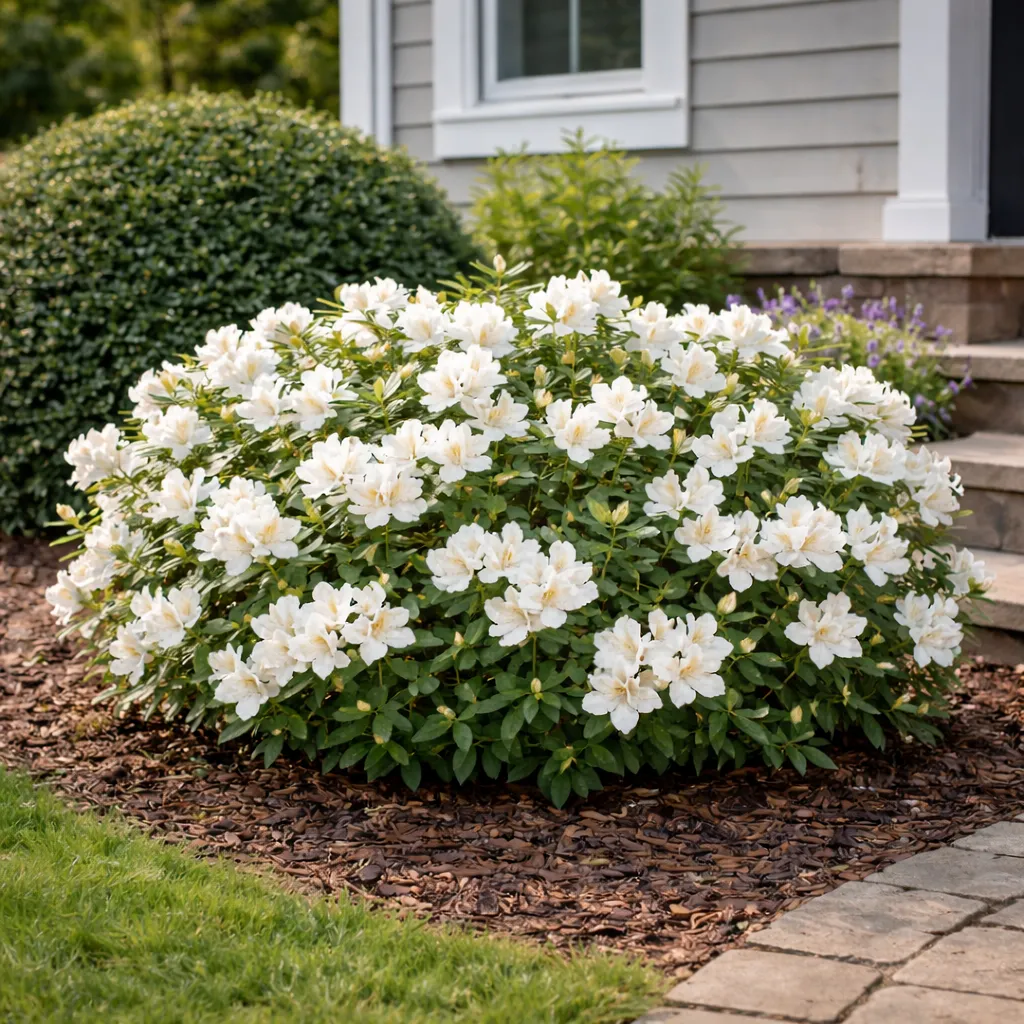
Botanical Name: Rhododendron ‘Robx1’

Common Name: Encore® Azalea Autumn Lily®

Mature Height and Width:
2.5–3′ tall × 3–3.5′ wide

Growth Habit: Compact, rounded evergreen shrub with dense branching and a slightly refined mound. Moderate growth rate. Naturally forms a low, uniform structure but should not appear tightly clipped.

Foliage Description: Small, elliptic dark green evergreen leaves with fine texture. Foliage may develop subtle bronze tones in cooler weather in Zones 6–7.

Flower Description: Pure white single blooms with a soft, clean appearance and faint yellow-green throats. Flowers are approximately 2.5–3 inches wide and appear bright against dark foliage.

Bloom Time: Heavy spring bloom with repeat flowering in summer and fall.

Fall Color: Evergreen; may bronze slightly in winter but retains structure year-round.

Light Requirements: Full sun to partial shade; best rebloom performance with 5–6+ hours of direct sunlight.

Hardiness Zone: USDA Zones 6–9

Notable Landscape Uses:
Foundation plantings; front-of-border massing; patio-edge plantings; courtyard gardens; mixed evergreen borders; formal white garden schemes; container plantings in protected sites.

Deer Resistance: Low to Moderate
Azaleas are frequently browsed by deer, especially flower buds and tender new growth. Protection is recommended in moderate to heavy deer pressure areas in Zones 6–7.
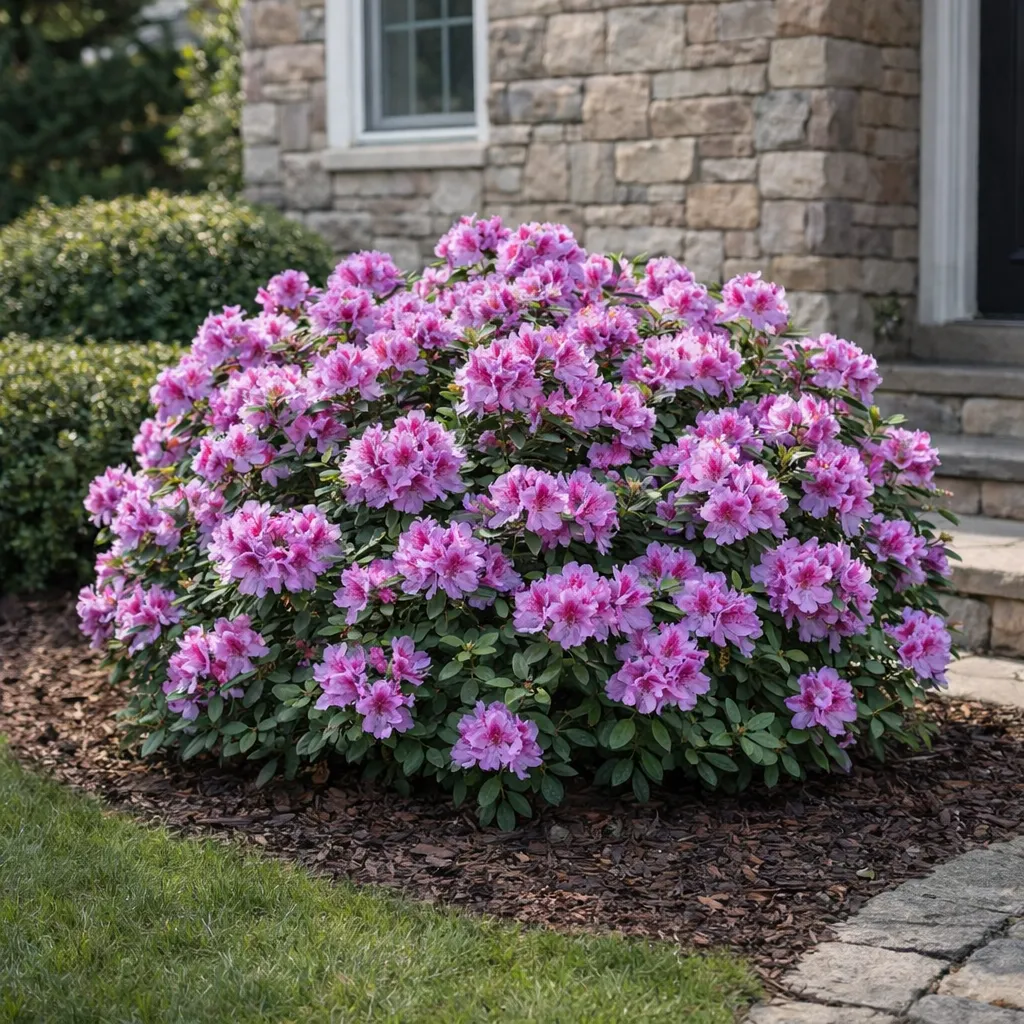
Good — this one needs to read as the bold, larger-scale Encore so it doesn’t blend with the 3′ compact types.


SECTION 1 — Professional Plant Specifications

Botanical Name: Rhododendron ‘Robzam’

Common Name: Encore® Azalea Autumn Majesty®

Mature Height and Width:
4–5′ tall × 4–5′ wide

Growth Habit: Larger, upright-rounded evergreen shrub with a broader, more substantial presence than compact Encore selections. Naturally full with layered branching and moderate growth rate.

Foliage Description: Small, elliptic dark green evergreen leaves with fine texture. Foliage remains dense and attractive year-round and may develop light bronze tones in winter in Zones 6–7.

Flower Description: Large, semi-double to double blooms in bright lavender-purple with deeper pink-purple centers. Flowers are fuller and slightly larger than many compact Encore types.

Bloom Time: Heavy spring bloom with repeat flowering in summer and fall.

Fall Color: Evergreen; may bronze slightly in cooler weather but maintains structure.

Light Requirements: Full sun to partial shade; best rebloom performance with 5–6+ hours of direct sunlight.

Hardiness Zone: USDA Zones 6–9

Notable Landscape Uses:
Foundation anchor shrub; mass plantings; larger front-yard plantings; mixed evergreen borders; patio-edge focal plant; informal low hedge; seasonal color structure in medium-scale landscapes.

Deer Resistance: Low to Moderate
Azaleas are commonly browsed by deer, especially flower buds and tender new growth. Protection is recommended in moderate to heavy deer pressure areas in Zones 6–7.
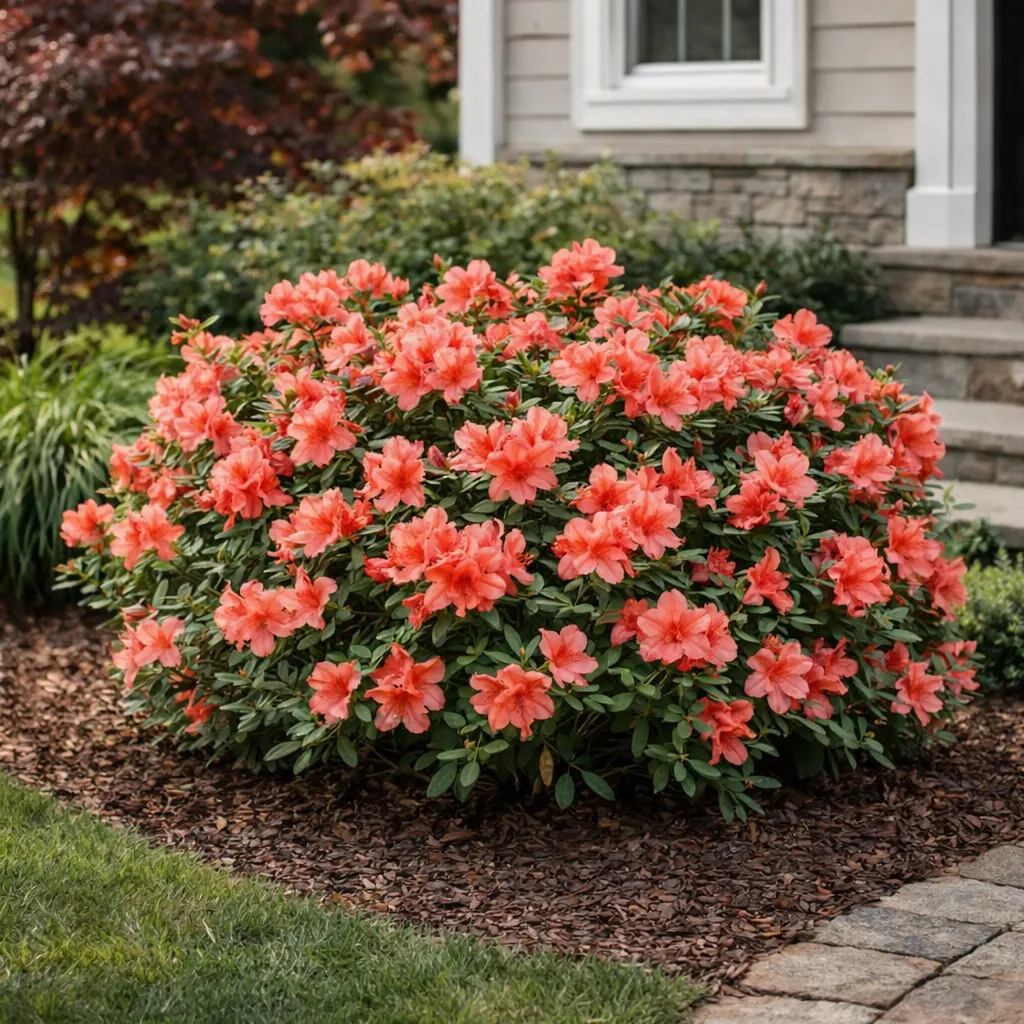
Botanical Name: Rhododendron ‘Conlep’

Common Name: Encore® Azalea Autumn Princess®

Mature Height and Width:
3–4′ tall × 3–4′ wide

Growth Habit: Compact, rounded evergreen shrub with a balanced, softly layered structure. Moderate growth rate. Naturally refined but not rigid; maintains a neat presence without appearing clipped.

Foliage Description: Small, elliptic dark green evergreen leaves with fine texture. Foliage remains dense and attractive year-round and may develop light bronze tones in winter in Zones 6–7.

Flower Description: Clear medium pink single blooms with a slightly darker pink throat. Flowers are moderately sized (approximately 2.5–3 inches wide) and lighter in tone than deeper pink Encore selections.

Bloom Time: Heavy spring bloom with repeat flowering in summer and fall.

Fall Color: Evergreen; may bronze lightly in cooler weather.

Light Requirements: Full sun to partial shade; best rebloom performance with 5–6+ hours of direct sunlight.

Hardiness Zone: USDA Zones 6–9

Notable Landscape Uses:
Foundation plantings; mass plantings; front-of-border seasonal color; patio-edge plantings; mixed evergreen borders; small-scale landscape accents; container plantings in protected settings.

Deer Resistance: Low to Moderate
Azaleas are commonly browsed by deer, especially flower buds and tender new growth. Protection is recommended in moderate to heavy deer pressure areas in Zones 6–7.
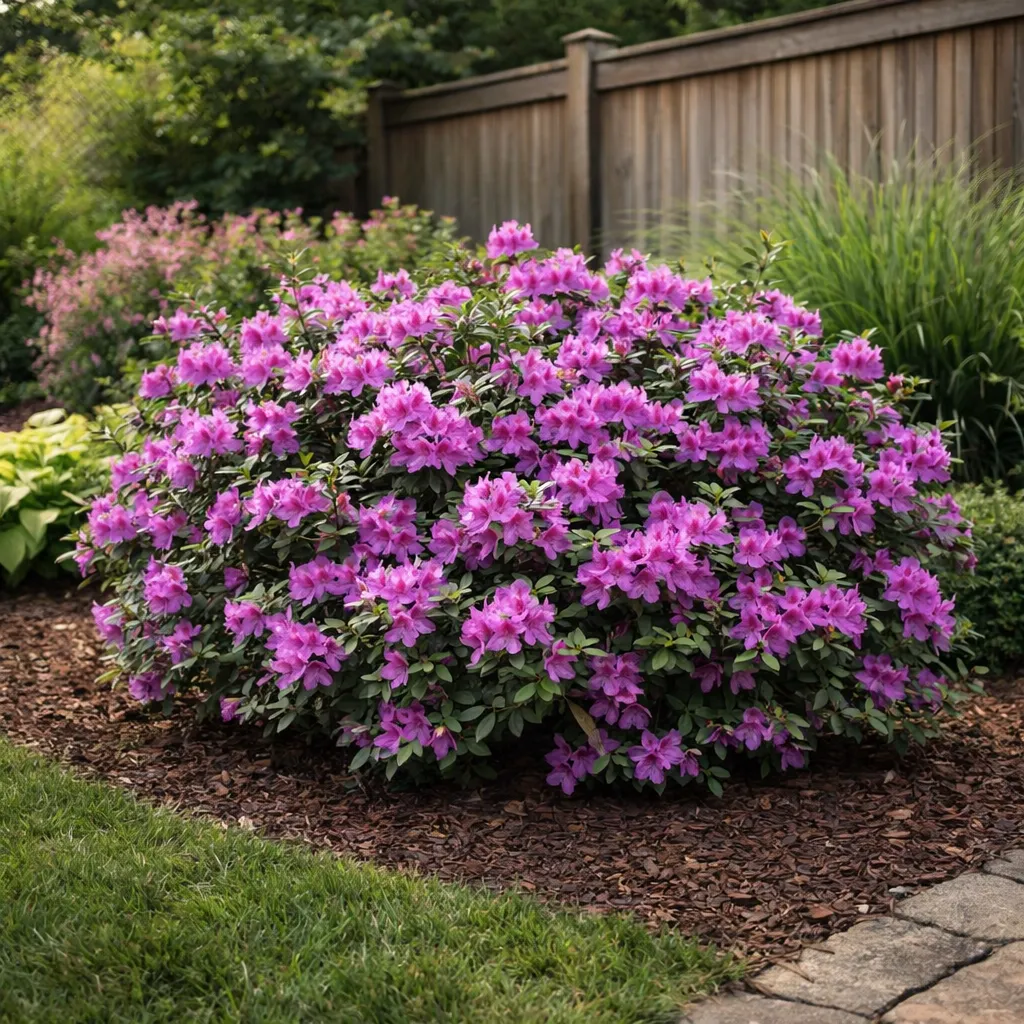
Botanical Name: Rhododendron ‘Conlec’

Common Name: Encore® Azalea Autumn Royalty®

Mature Height and Width:
3–4′ tall × 3–4′ wide

Growth Habit: Compact, rounded evergreen shrub with dense branching and a balanced, layered structure. Moderate growth rate. Naturally forms a refined mound but should not appear clipped or geometric.

Foliage Description: Small, elliptic dark green evergreen leaves with fine texture. Foliage remains dense year-round and may develop light bronze undertones in cooler weather in Zones 6–7.

Flower Description: Single rich royal purple blooms with subtle darker centers. Flowers are approximately 2.5–3 inches wide and held evenly across the canopy. Color is deeper and cooler-toned than pink Encore selections.

Bloom Time: Heavy spring bloom with repeat flowering in summer and fall.

Fall Color: Evergreen; may bronze slightly in winter.

Light Requirements: Full sun to partial shade; best rebloom performance with 5–6+ hours of direct sunlight.

Hardiness Zone: USDA Zones 6–9

Notable Landscape Uses:
Foundation plantings; mass plantings; patio-edge accents; mixed evergreen borders; courtyard gardens; low seasonal hedge; front-of-border color anchor.

Deer Resistance: Low to Moderate
Azaleas are frequently browsed by deer, particularly flower buds and tender new growth. Protection is recommended in moderate to heavy deer pressure areas in Zones 6–7.
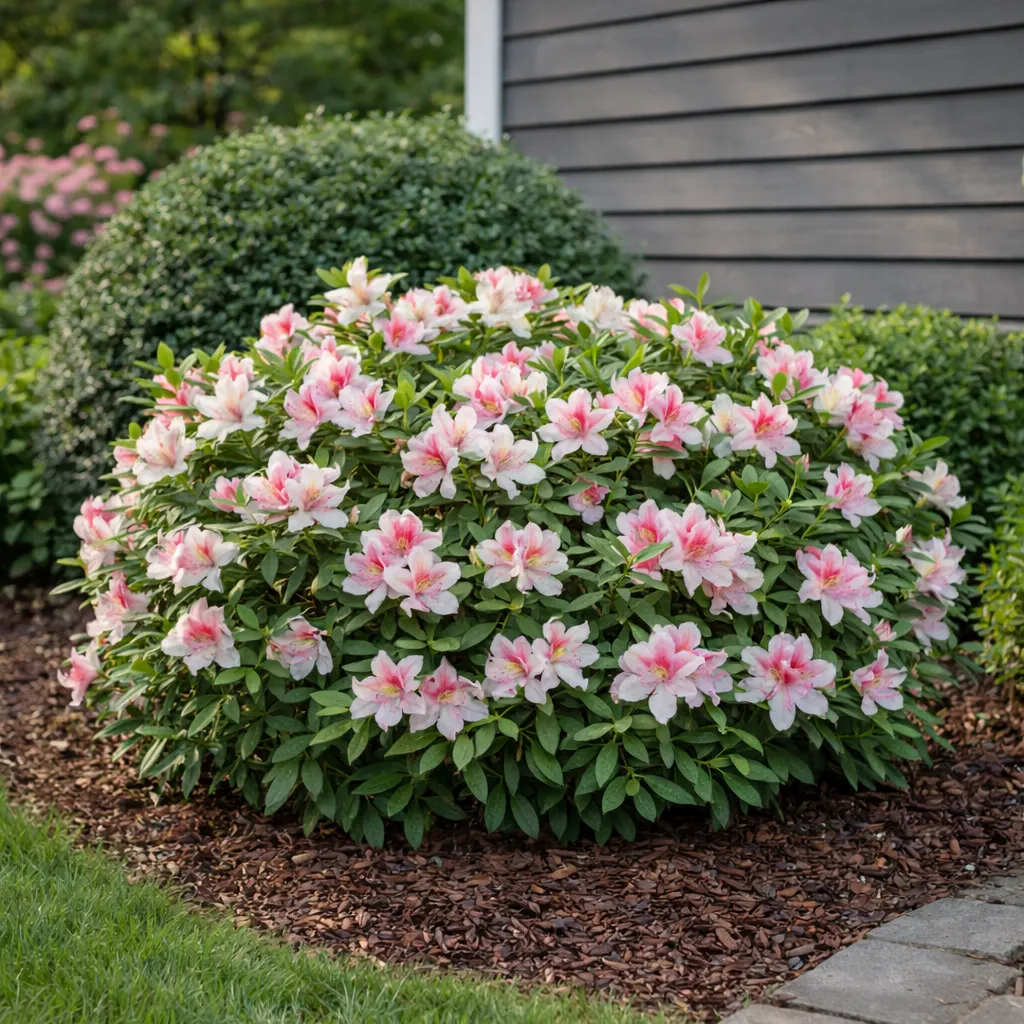
Botanical Name: Rhododendron ‘Roblez’

Common Name: Encore® Azalea Autumn Starburst®

Mature Height and Width:
3–4′ tall × 3–4′ wide

Growth Habit: Compact, rounded evergreen shrub with dense branching and a refined, slightly layered structure. Forms a full mound but should not appear tightly sheared. Moderate growth rate.

Foliage Description: Small, elliptic dark green evergreen leaves with fine texture. Foliage may take on subtle bronze tones in winter in Zones 6–7.

Flower Description: Semi-double white blooms with irregular pink striping and variegation radiating from the center. Each flower is slightly unique in striping pattern. Blooms are 2.5–3 inches wide and moderately full.

Bloom Time: Heavy spring bloom with repeat flowering in summer and fall.

Fall Color: Evergreen; foliage may bronze lightly in cooler weather.

Light Requirements: Full sun to partial shade; best rebloom performance with at least 5–6 hours of direct sunlight.

Hardiness Zone: USDA Zones 6–9

Notable Landscape Uses:
Foundation plantings; mass plantings for patterned bloom effect; patio-edge plantings; mixed shrub borders; courtyard gardens; front-of-border seasonal color; container use in protected settings.

Deer Resistance: Low to Moderate
Azaleas are commonly browsed by deer, particularly flower buds and tender new growth. Protection is recommended in moderate to heavy deer pressure areas in Zones 6–7.
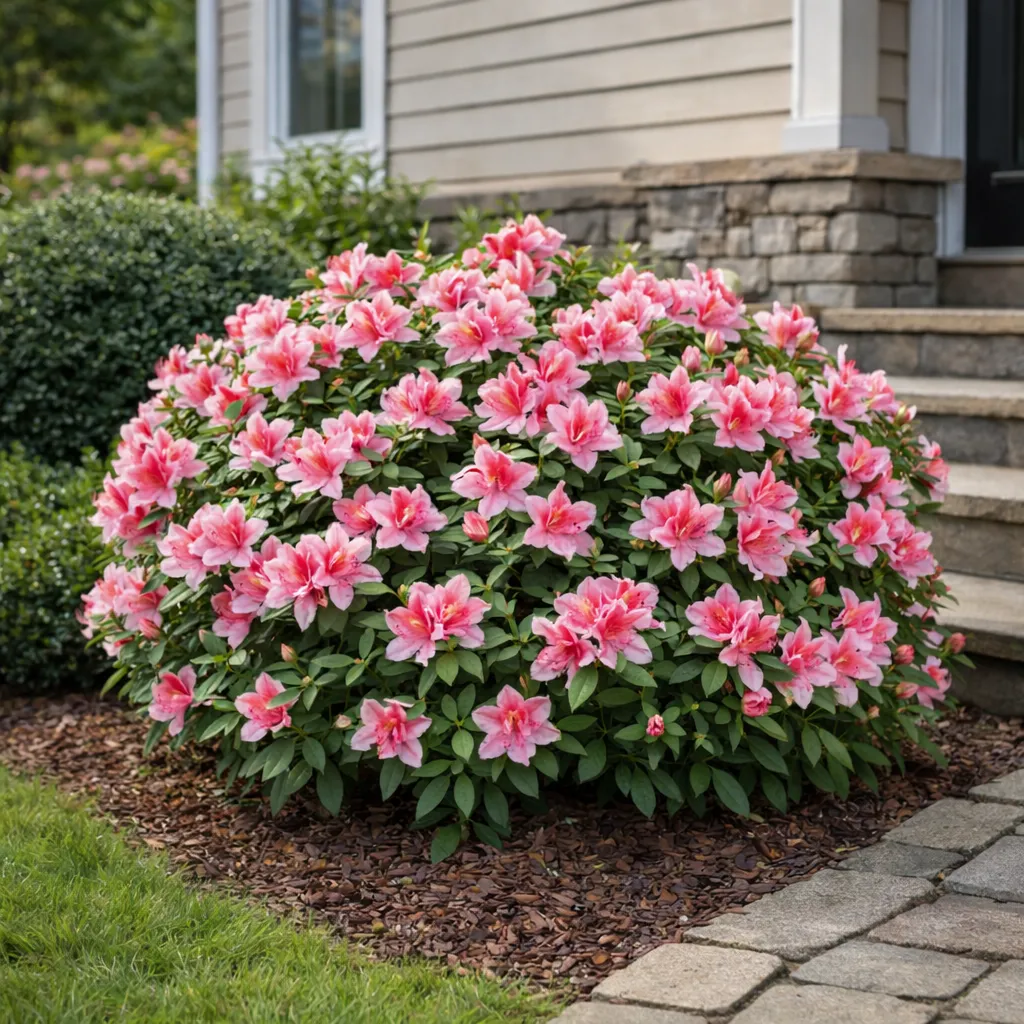
Botanical Name: Rhododendron ‘Roblet’

Common Name: Encore® Azalea Autumn Sunburst®

Mature Height and Width:
3–4′ tall × 3–4′ wide

Growth Habit: Compact, rounded evergreen shrub with a slightly upright center and softly layered branching. Moderate growth rate. Forms a structured but not rigid mound.

Foliage Description: Small, elliptic dark green evergreen leaves with fine texture. Foliage may develop subtle bronze undertones in cooler weather.

Flower Description: Semi-double blooms in bright pink with crisp white margins (bi-color pattern). Petal edging is irregular and varies slightly bloom-to-bloom. Flowers are 2.5–3 inches wide and moderately full.

Bloom Time: Heavy spring bloom with repeat flowering in summer and fall.

Fall Color: Evergreen; may bronze lightly in winter.

Light Requirements: Full sun to partial shade; best rebloom performance with 5–6+ hours of direct sun.

Hardiness Zone: USDA Zones 6–9

Notable Landscape Uses:
Foundation plantings; mass plantings; front-of-border seasonal color; patio-edge plantings; courtyard gardens; mixed evergreen borders; container use in protected settings.

Deer Resistance: Low to Moderate
Azaleas are frequently browsed by deer, particularly flower buds and tender new growth. Protection is recommended in moderate to heavy deer pressure areas in Zones 6–7.
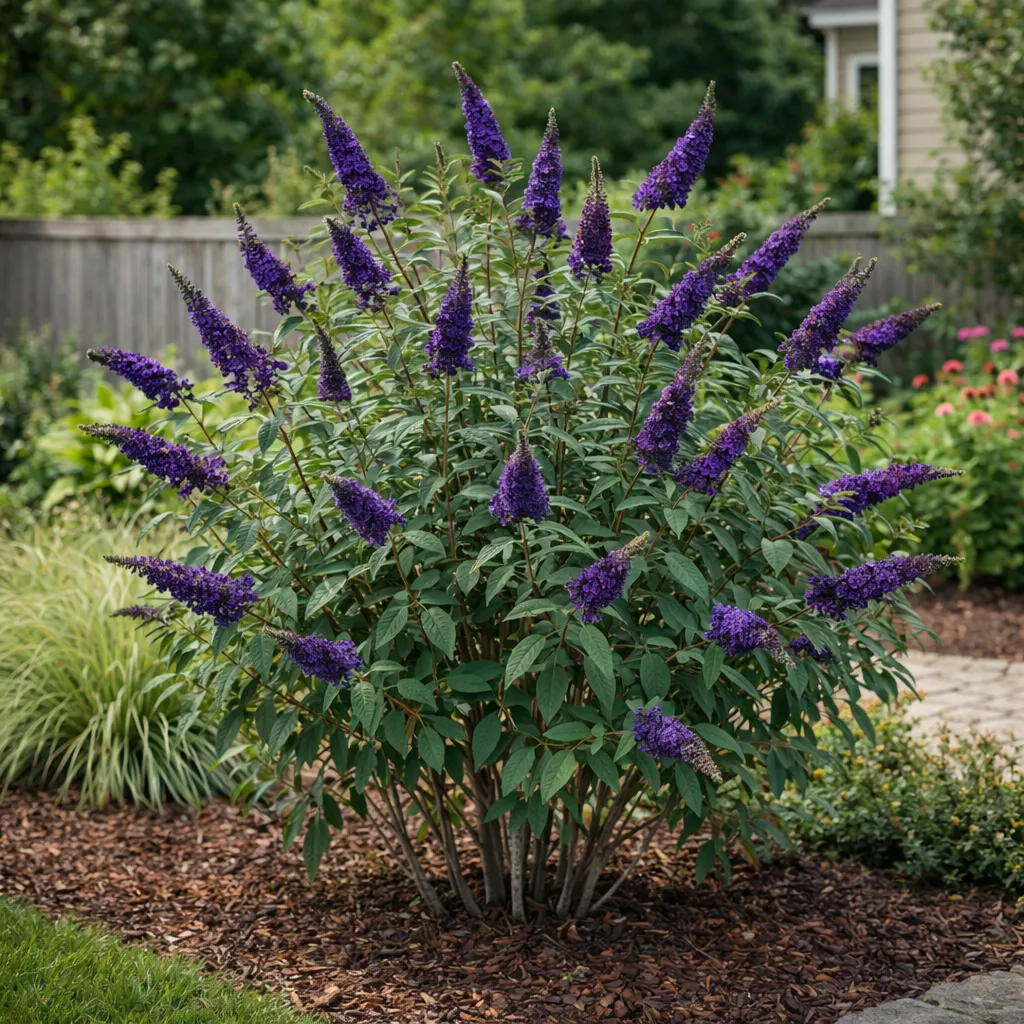
Botanical Name: Buddleja davidii ‘Black Knight’

Common Name: Black Knight Butterfly Bush

Mature Height and Width:
6–8′ tall × 5–7′ wide

Growth Habit: Upright, arching deciduous shrub with an open, vase-shaped structure. Produces long flowering panicles on new growth. Naturally airy and layered with visible interior branching. Fast-growing.

Foliage Description: Lance-shaped gray-green leaves with a slightly silvery underside. Medium texture with a soft matte appearance. Deciduous in Zones 5–7.

Flower Description: Long, tapering panicles in deep, dark violet-purple — among the darkest of butterfly bush cultivars. Flowers feature small orange centers. Panicles typically 8–12 inches long and arch slightly outward.

Bloom Time: Mid-summer through early fall (blooms on new wood)

Fall Color: Foliage drops without significant fall coloration.

Light Requirements: Full sun for best flowering and strongest structure.

Hardiness Zone: USDA Zones 5–9

Notable Landscape Uses:
Pollinator gardens; mixed shrub borders; backyard focal shrub; informal hedges; cottage gardens; summer anchor plant; naturalized plantings; large-scale perennial borders.

Deer Resistance: Moderate
Butterfly bush is generally not a preferred browse, though tender new growth may be sampled under pressure. Established plants typically recover well in Zones 5–7.
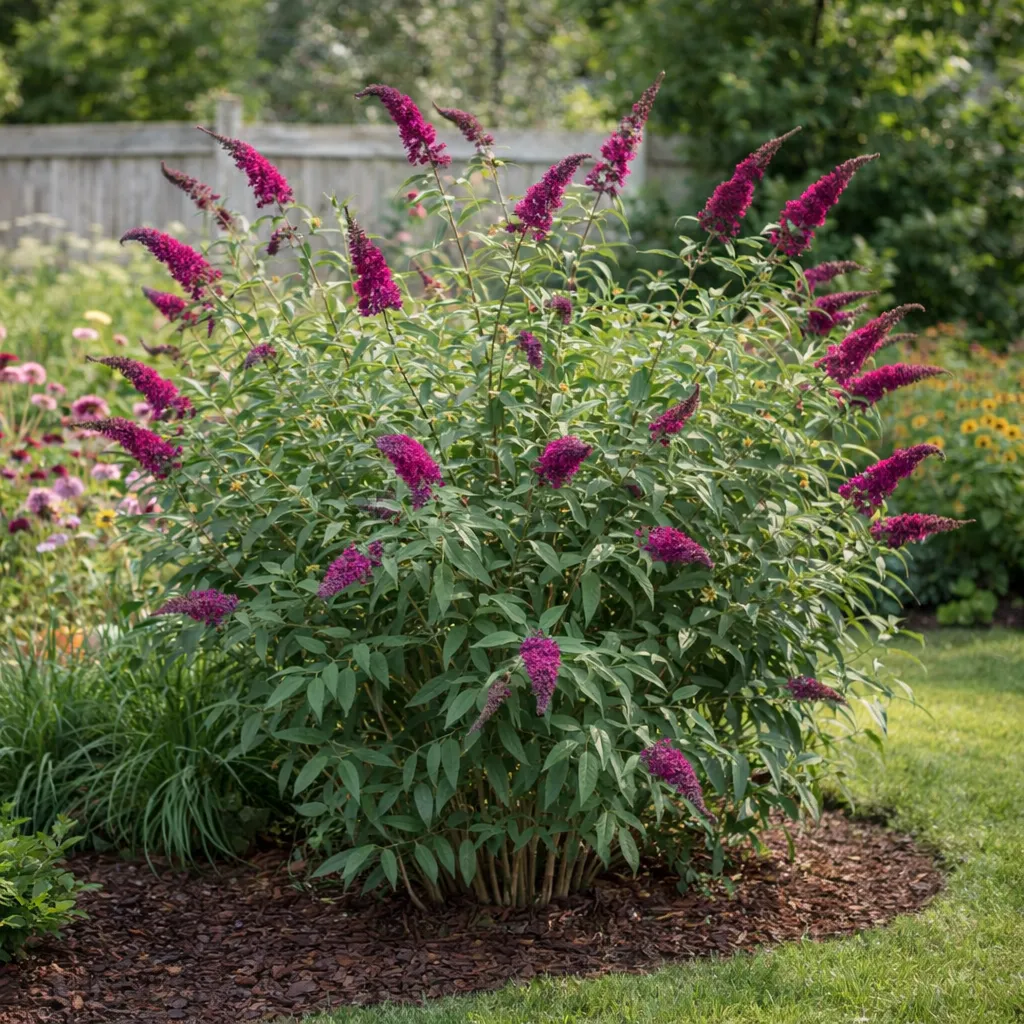
Botanical Name: Buddleja davidii ‘Royal Red’

Common Name: Royal Red Butterfly Bush

Mature Height and Width:
6–8′ tall × 5–6′ wide

Growth Habit: Upright, arching deciduous shrub with an open, vase-shaped structure. Produces long flowering panicles on new growth. Naturally airy and layered rather than dense or mounded. Fast-growing.

Foliage Description: Lance-shaped gray-green leaves with a soft, matte texture and slightly lighter undersides. Medium texture. Deciduous in Zones 5–7.

Flower Description: Long, tapering panicles of deep magenta-purple flowers with small orange throats. Flower spikes are typically 8–12 inches long and arch outward slightly. Color reads richer and darker than many standard purple selections.

Bloom Time: Mid-summer through early fall (blooms on new wood)

Fall Color: Foliage drops without significant fall coloration.

Light Requirements: Full sun for best bloom production and strongest structure.

Hardiness Zone: USDA Zones 5–9

Notable Landscape Uses:
Pollinator gardens; backyard focal shrub; mass plantings; informal hedges; cottage gardens; summer color anchor in mixed borders; wildlife gardens; naturalized plantings.

Deer Resistance: Moderate
Butterfly bush is generally not a preferred browse, though tender new growth may be sampled in high-pressure areas. Established plants typically recover quickly from minor browsing in Zones 5–7.
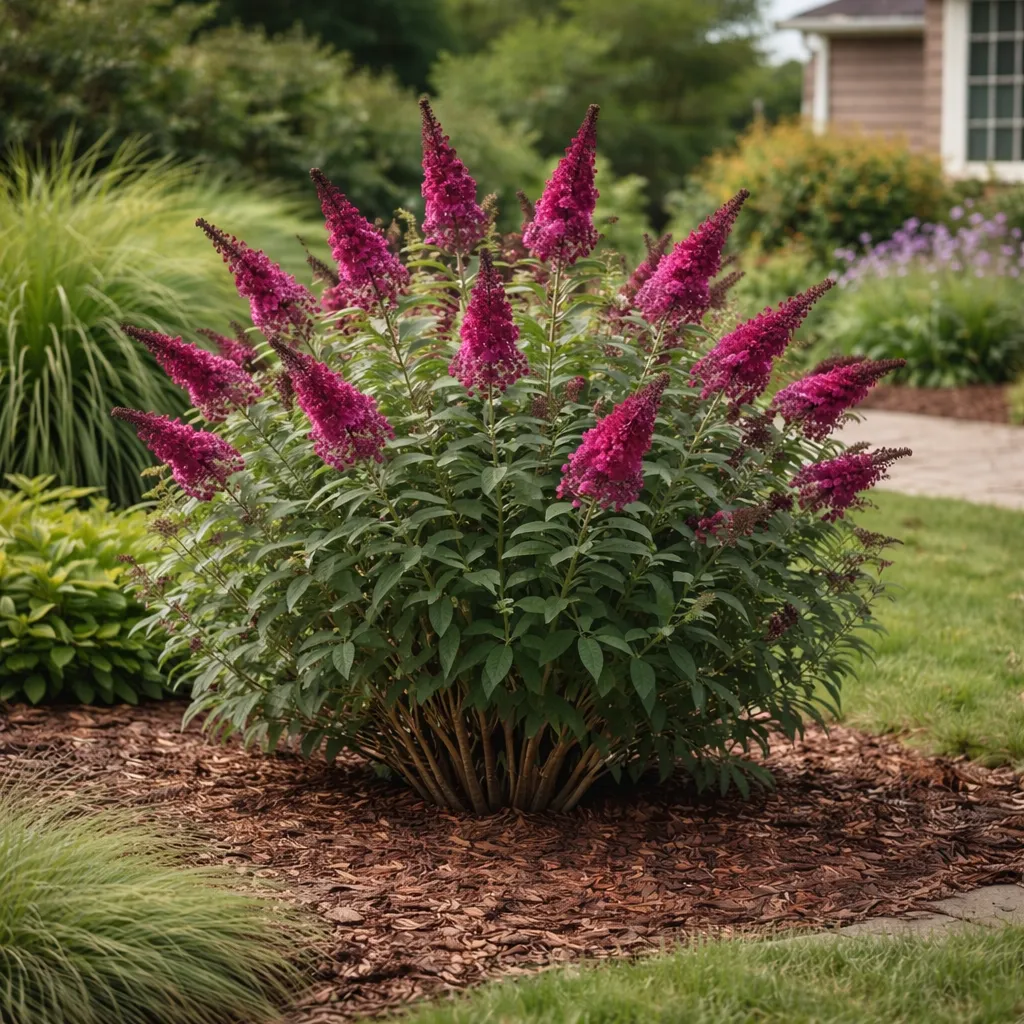
Botanical Name: Buddleja davidii ‘Miss Molly’

Common Name: Miss Molly Butterfly Bush

Mature Height and Width:
4–5′ tall × 4–5′ wide

Growth Habit: Compact, upright-rounded deciduous shrub with dense branching and a strong central framework. More substantial and upright than dwarf series selections. Moderate growth rate.

Foliage Description: Lance-shaped dark green leaves with a slightly lighter underside. Foliage is proportionally broader and denser than smaller dwarf cultivars. Deciduous in Zones 5–7.

Flower Description: Thick, cone-shaped panicles in vibrant raspberry-red to magenta-red. Flower spikes are dense, upright, and highly saturated in color. Typically 6–10 inches long.

Bloom Time: Early to mid-summer through early fall (blooms on new wood)

Fall Color: Foliage drops without significant fall coloration.

Light Requirements: Full sun for strongest color and bloom production.

Hardiness Zone: USDA Zones 5–9

Notable Landscape Uses:
Pollinator gardens; mixed shrub borders; patio-edge plantings; mass plantings; cottage gardens; backyard focal shrub; low informal hedge.

Deer Resistance: Moderate
Butterfly bush is generally not a preferred browse, though new growth may be sampled in high-pressure areas. Established plants typically recover well in Zones 5–7.
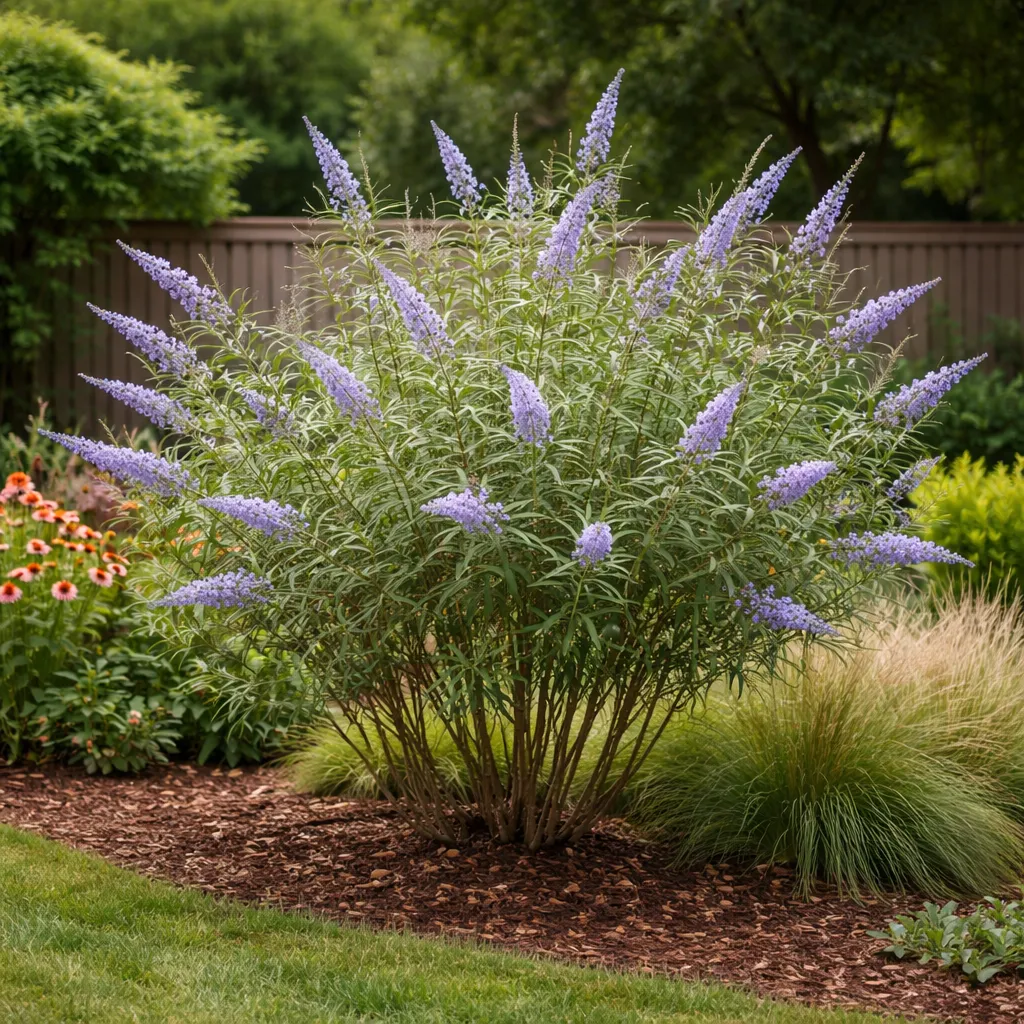
Botanical Name: Buddleja davidii ‘Nanho Blue’

Common Name: Nanho Blue Butterfly Bush

Mature Height and Width:
4–6′ tall × 3–5′ wide

Growth Habit: Upright, airy deciduous shrub with a somewhat narrower, vase-shaped structure. More refined and open than larger, heavier-blooming cultivars. Moderate growth rate.

Foliage Description: Narrow, lance-shaped gray-green leaves with a soft matte texture and lighter undersides. Finer texture than many standard Buddleja selections.

Flower Description: Slender, elongated panicles of soft violet-blue flowers with small orange throats. Flower spikes are narrower and lighter in appearance than thick, heavy cultivars like Miss Molly.

Bloom Time: Mid-summer through early fall (blooms on new wood)

Fall Color: Foliage drops without significant fall coloration.

Light Requirements: Full sun for best flowering and structure.

Hardiness Zone: USDA Zones 5–9

Notable Landscape Uses:
Pollinator gardens; mixed perennial borders; informal hedges; cottage gardens; mass plantings; wildlife gardens; summer color anchor in medium-scale landscapes.

Deer Resistance: Moderate
Butterfly bush is generally not a preferred browse, though tender new growth may be sampled in high-pressure areas. Established plants typically recover well in Zones 5–7.
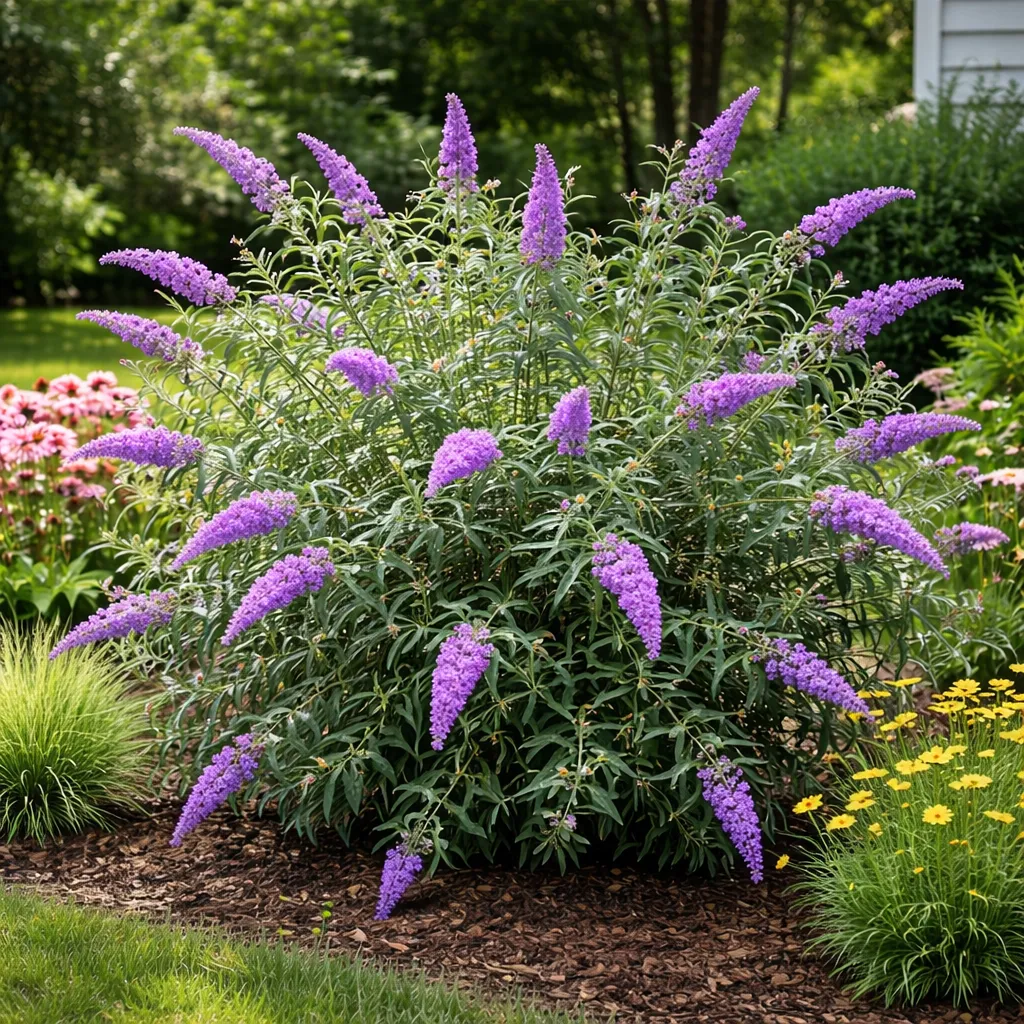
Botanical Name: Buddleja davidii ‘Nanho Purple’

Common Name: Nanho Purple Butterfly Bush

Mature Height and Width: 4–6′ tall × 4–6′ wide

Growth Habit: Upright to arching, airy shrub with slender, outward-spreading branches. Open framework with a soft, fountain-like appearance. Moderate to fast growth rate.

Foliage Description: Narrow, lance-shaped gray-green leaves with a slightly silvery underside. Foliage has a fine texture and contrasts well with flowering spikes. Deciduous in Zones 5–7.

Flower Description: Long, slender panicles of soft lavender-purple flowers with orange throats. Flower spikes are narrower and more refined than older butterfly bush cultivars. Highly attractive to pollinators.

Bloom Time: Mid-summer through early fall (blooms on new wood).

Fall Color: Insignificant; foliage drops after frost.

Light Requirements: Full sun; requires direct sunlight for best flowering and compact growth.

Hardiness Zone: USDA Zones 5–9 (may die back to ground in Zone 5 winters and regrow from base).

Notable Landscape Uses:
Perennial borders; pollinator gardens; mass plantings; informal hedges; cottage gardens; mixed shrub borders; summer color accent in foundation beds; patio-adjacent plantings where fragrance and pollinator activity are desired.

Deer Resistance: High
Butterfly bush is generally avoided by deer due to aromatic foliage and texture. Browsing is uncommon in Zones 5–7, even in moderate deer pressure areas.
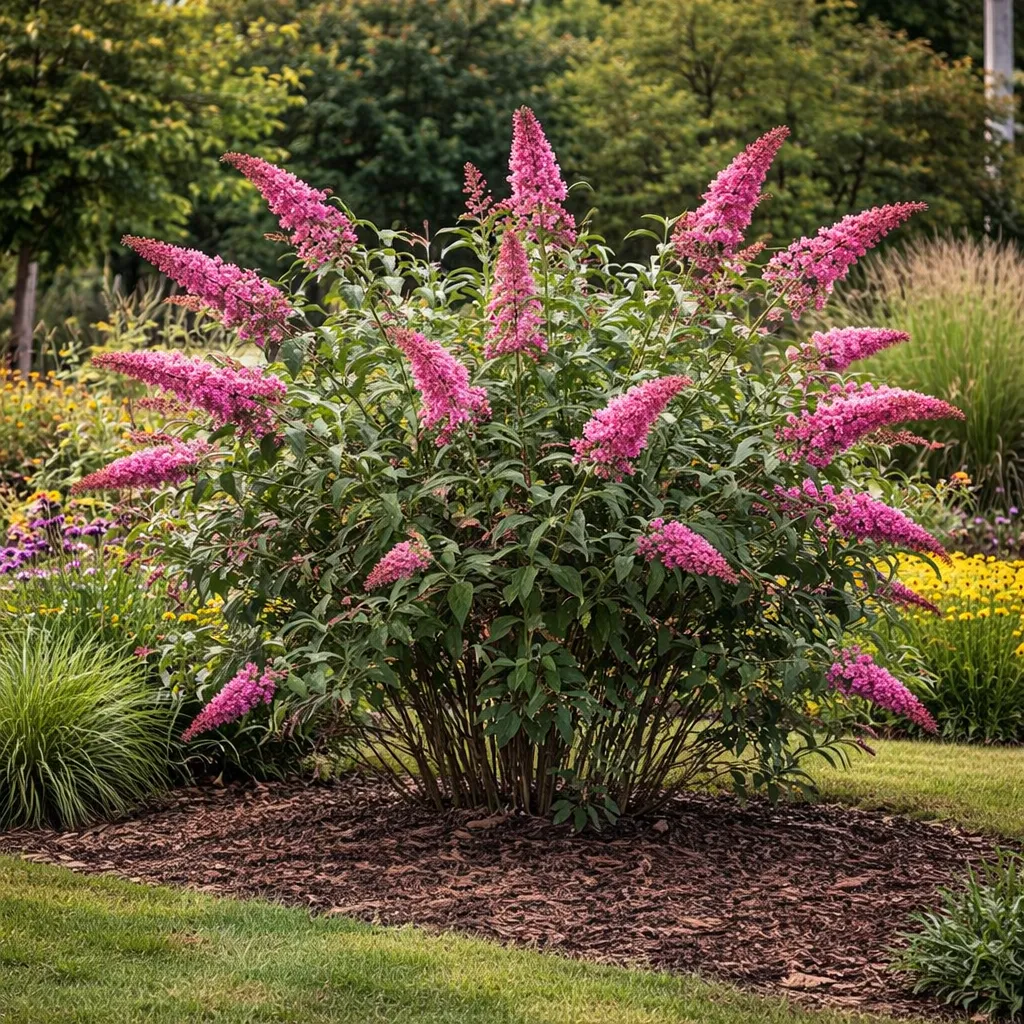
Botanical Name: Buddleja davidii ‘Pink Delight’

Common Name: Pink Delight Butterfly Bush

Mature Height and Width:
6–8′ tall × 5–7′ wide

Growth Habit: Upright, arching deciduous shrub with an open, vase-shaped structure. Strong vertical stems with outward-curving secondary branching. Fast-growing.

Foliage Description: Lance-shaped gray-green leaves with lighter undersides. Medium texture with slightly looser foliage spacing than compact cultivars.

Flower Description: Long, tapered panicles in bright rosy-pink. Flower spikes are slender to moderately thick and typically 8–12 inches long, often arching slightly outward.

Bloom Time: Mid-summer through early fall (blooms on new wood)

Fall Color: Foliage drops without significant fall coloration.

Light Requirements: Full sun for strongest flowering and upright structure.

Hardiness Zone: USDA Zones 5–9

Notable Landscape Uses:
Pollinator gardens; mixed shrub borders; informal hedges; summer anchor plant; cottage gardens; naturalized plantings; large-scale perennial borders.

Deer Resistance: Moderate
Butterfly bush is generally not a preferred browse, though tender new growth may be sampled in high-pressure areas. Established plants typically recover well in Zones 5–7.
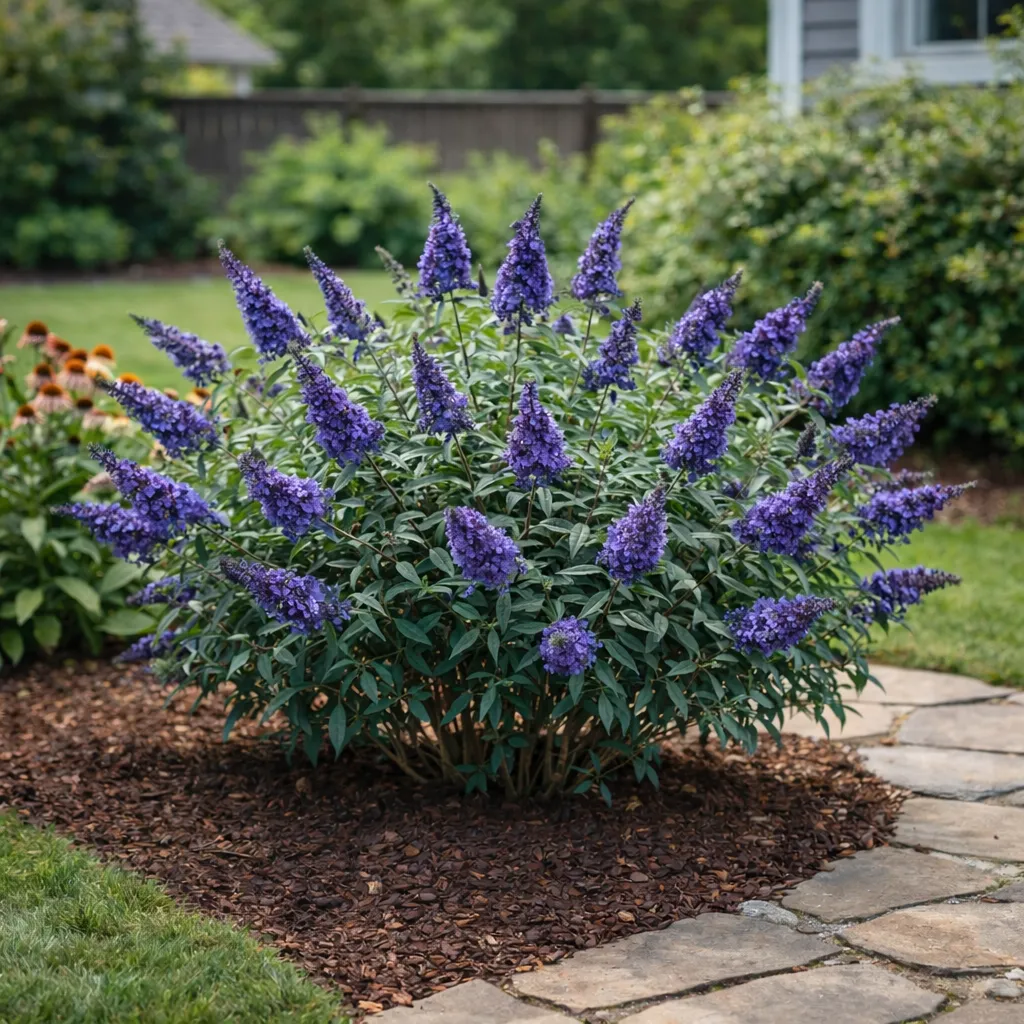
Botanical Name: Buddleja x ‘SMNBDBT’ (Pugster® Blue)

Common Name: Pugster Blue Butterfly Bush

Mature Height and Width: 2–3′ tall × 2–3′ wide

Growth Habit: Compact, mounded habit with thick, sturdy stems. Unlike older butterfly bush types, maintains a dense, dwarf form without becoming leggy.

Foliage Description: Lance-shaped gray-green leaves with a slightly silvery cast. Dense foliage held tightly along sturdy stems. Deciduous in Zones 5–7.

Flower Description: Large, full violet-blue flower panicles with bright orange eyes. Blooms are disproportionately large relative to plant size, held upright on thick stems. Highly attractive to pollinators.

Bloom Time: Early summer through fall (blooms on new wood).

Fall Color: Insignificant; foliage drops after frost.

Light Requirements: Full sun; requires at least 6+ hours of direct sunlight for best flowering and compact growth.

Hardiness Zone: USDA Zones 5–9

Notable Landscape Uses:
Front-of-border perennial beds; small foundation plantings; patio edge plantings; pollinator gardens; mass plantings for summer color; container use; compact accent in tight residential spaces.

Deer Resistance: High
Butterfly bush is generally avoided by deer due to aromatic foliage and coarse texture. Browsing is uncommon even in moderate deer pressure areas in Zones 5–7.
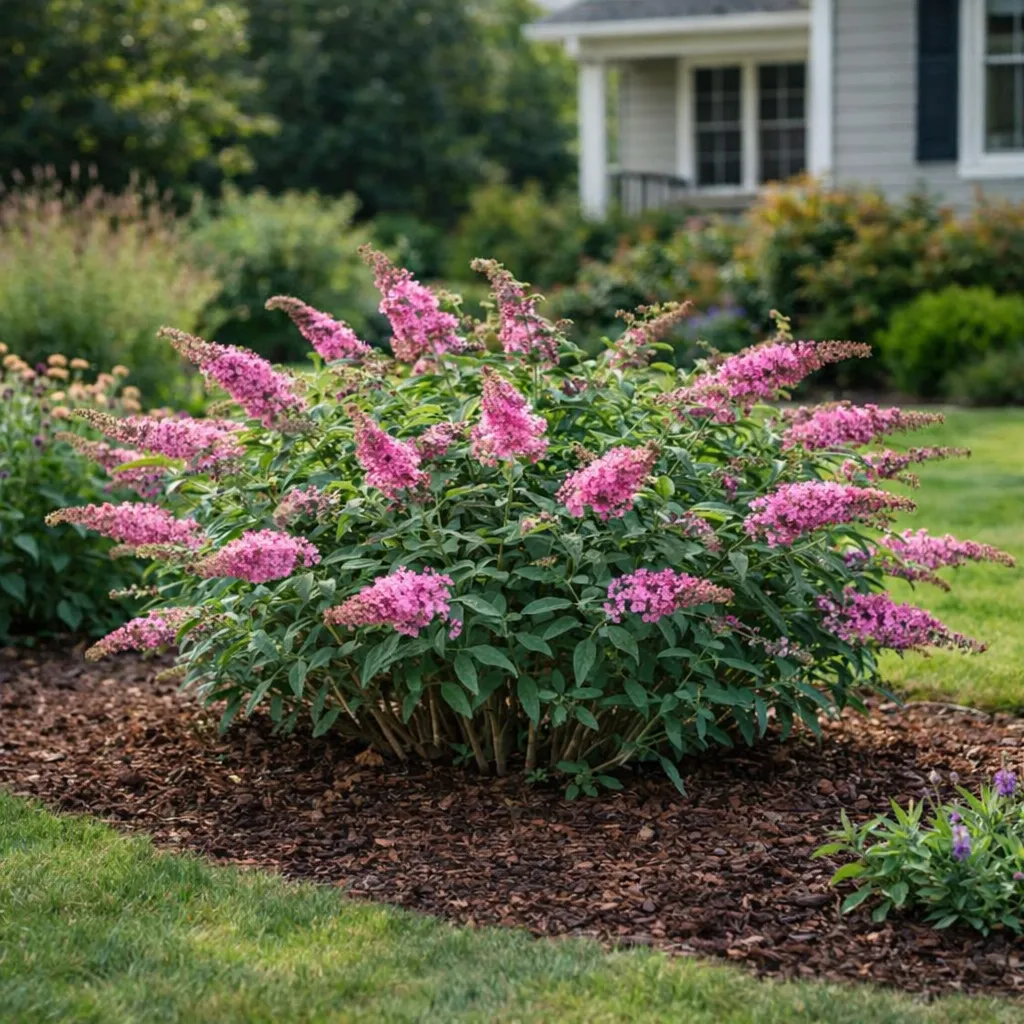
Botanical Name: Buddleja ‘SMNBDBP’

Common Name: Pugster® Pinker® Butterfly Bush

Mature Height and Width:
2–3′ tall × 2–3′ wide

Growth Habit: Compact, dense, rounded deciduous shrub with sturdy, thick stems and tight branching. Naturally forms a low, broad mound with strong structural support for large flower panicles. Moderate growth rate.

Foliage Description: Lance-shaped gray-green leaves with a soft matte texture and lighter undersides. Foliage is dense and proportionally compact relative to plant size.

Flower Description: Thick, cone-shaped panicles in vibrant clear pink, brighter and warmer than magenta-toned cultivars. Flower spikes are proportionally large for the shrub’s compact size and are held upright above the foliage canopy.

Bloom Time: Early summer through early fall (blooms on new wood)

Fall Color: Foliage drops without significant fall coloration.

Light Requirements: Full sun for strongest flowering and compact structure.

Hardiness Zone: USDA Zones 5–9

Notable Landscape Uses:
Front-of-border plantings; patio-edge accents; container plantings; mass plantings; small-space gardens; pollinator gardens; low seasonal hedge.

Deer Resistance: Moderate
Butterfly bush is generally not a preferred browse, though tender new growth may be sampled under heavy pressure. Established plants typically recover well in Zones 5–7.
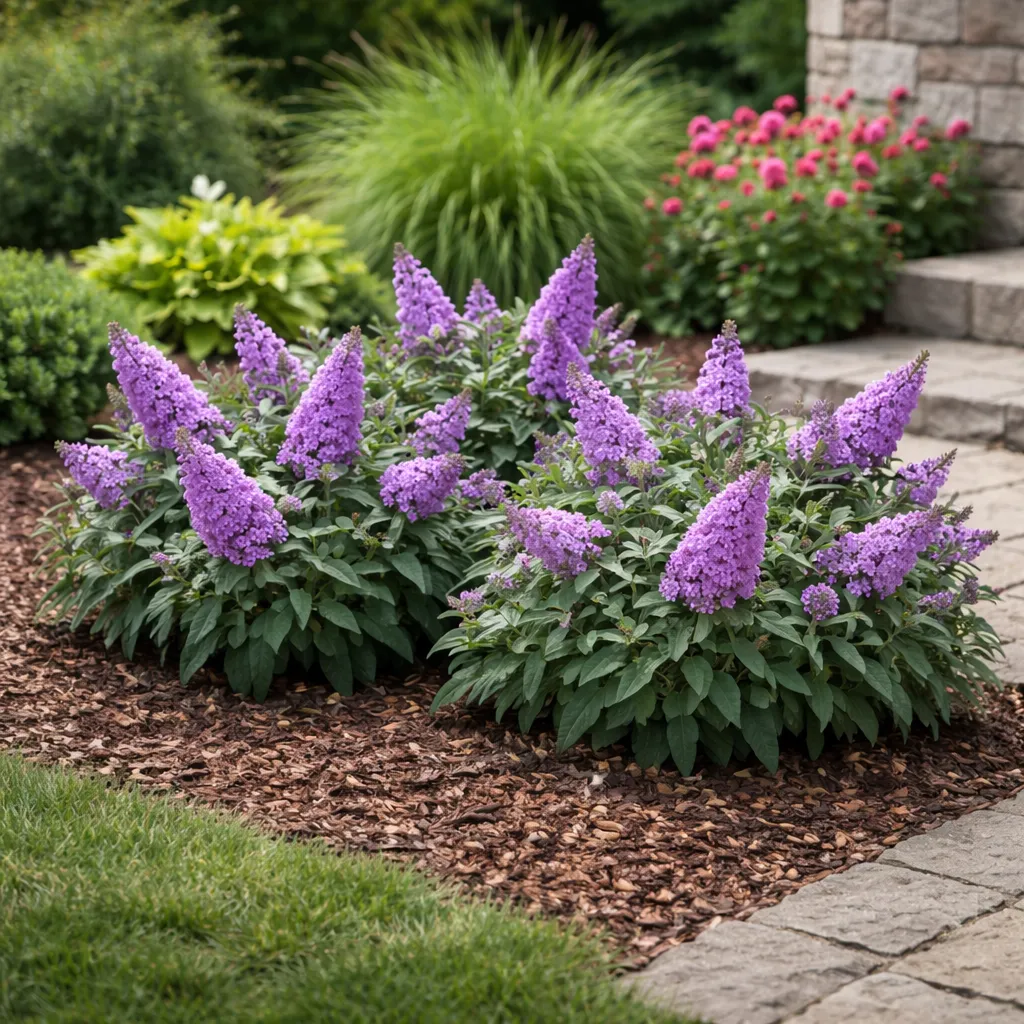
Botanical Name: Buddleja ‘SMNBDBT’

Common Name: Pugster® Amethyst Butterfly Bush

Mature Height and Width:
2–3′ tall × 2–3′ wide

Growth Habit: Compact, dense, rounded deciduous shrub with sturdy, thick stems and tight branching. Naturally low and broad with a solid, compact presence. Moderate growth rate.

Foliage Description: Lance-shaped gray-green leaves with a slightly silvery underside. Leaves are proportionally smaller and more densely arranged than larger butterfly bush cultivars.

Flower Description: Large, thick, cone-shaped panicles in rich amethyst-purple. Flower spikes are proportionally large for the plant’s compact size and are held upright above the foliage canopy.

Bloom Time: Early summer through early fall (blooms on new wood)

Fall Color: Foliage drops without significant fall coloration.

Light Requirements: Full sun for strongest flowering and compact growth.

Hardiness Zone: USDA Zones 5–9

Notable Landscape Uses:
Front-of-border plantings; patio-edge accents; container plantings; mass plantings; small-space gardens; pollinator gardens; low seasonal hedge.

Deer Resistance: Moderate
Butterfly bush is generally not a preferred browse, though tender new growth may be sampled under heavy pressure. Established plants typically recover well in Zones 5–7.
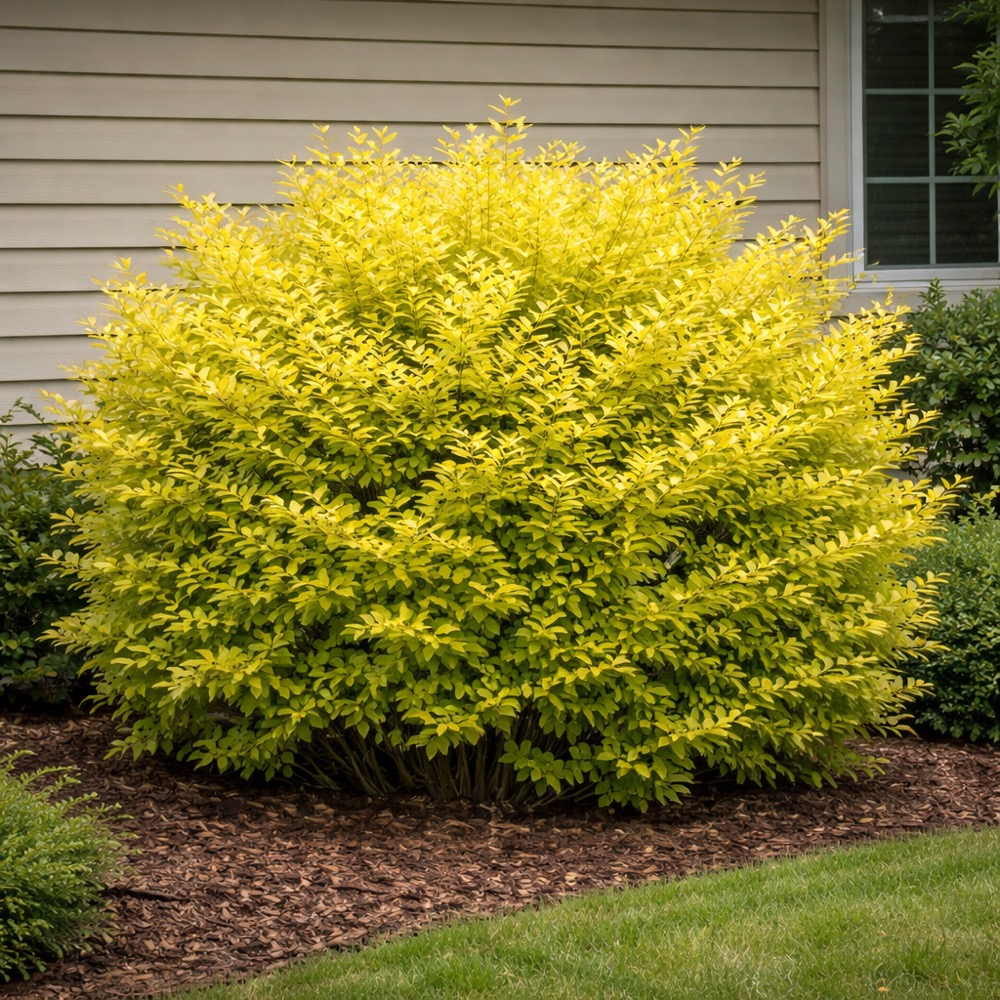
Botanical Name: Ligustrum × vicaryi

Common Name: Golden Vicary Privet

Mature Height and Width: 8–12′ tall × 8–10′ wide

Growth Habit: Upright to broadly rounded deciduous shrub with moderate to fast growth rate. Naturally forms a dense, informal hedge or large massing shrub. Responds well to pruning but can be allowed to grow naturally.

Foliage Description: Ovate leaves emerging bright golden-yellow in spring. Best color develops in full sun. Summer foliage may soften to yellow-green in partial shade. Deciduous in Zones 5–7.

Flower Description: Small white flowers in late spring to early summer; mildly fragrant but not a primary ornamental feature. May produce small dark berries in late summer.

Bloom Time: Late spring to early summer

Fall Color: Yellow-green; foliage drops after frost.

Light Requirements: Full sun for best golden coloration; tolerates partial shade but with reduced intensity.

Hardiness Zone: USDA Zones 5–8

Notable Landscape Uses:
Informal hedges; mass plantings for bold foliage contrast; property line screening; background shrub in mixed borders; color accent in foundation plantings; commercial landscapes.

Deer Resistance: Moderate
Privet is not highly preferred by deer, but tender new growth may be browsed under pressure. Established plants typically recover quickly from light damage in Zones 5–7.
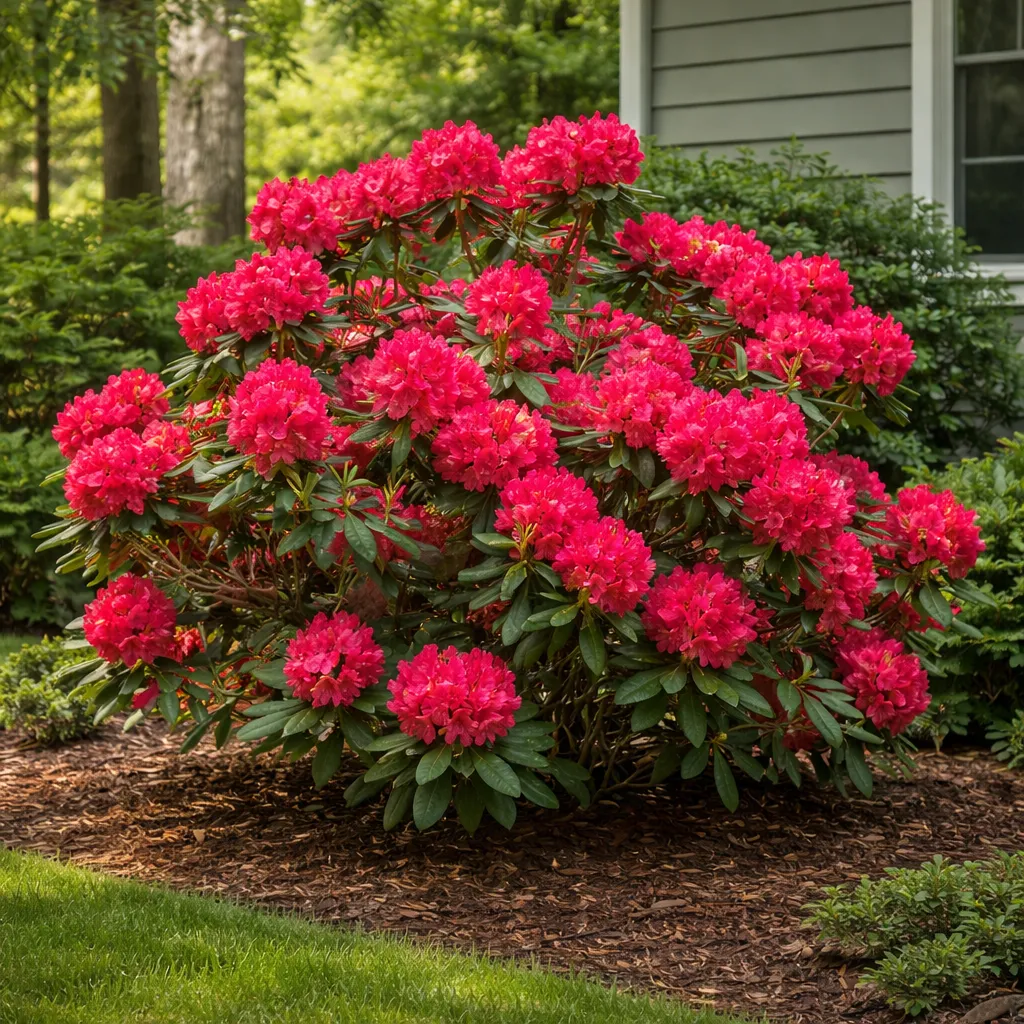
Botanical Name: Rhododendron ‘Nova Zembla’

Common Name: Nova Zembla Rhododendron

Mature Height and Width: 5–8′ tall × 5–8′ wide

Growth Habit: Broad, upright, dense evergreen shrub with a rounded to slightly vase-shaped form. Strong branching structure with layered canopy development. Moderate growth rate.

Foliage Description: Large, leathery, elliptic dark green leaves with a glossy surface. Foliage remains evergreen in Zones 5–7 and maintains a bold, coarse texture year-round.

Flower Description: Large, dome-shaped trusses of deep red flowers with a subtle darker blotch on upper petals. Each truss contains numerous individual blooms, creating a dramatic spring display.

Bloom Time: Mid to late spring

Fall Color: Evergreen; no fall color change, foliage may take on subtle winter bronzing in exposed sites.

Light Requirements: Partial shade to full sun (with adequate moisture); best performance in morning sun and afternoon shade.

Hardiness Zone: USDA Zones 4–8

Notable Landscape Uses:
Foundation plantings; woodland-edge gardens; specimen shrub in partially shaded beds; mass plantings; mixed evergreen borders; focal plant in larger residential landscapes; screening in filtered light conditions.

Deer Resistance: Low to Moderate
Rhododendrons are frequently browsed by deer, particularly flower buds and tender new growth. Protection is recommended in moderate to heavy deer pressure areas in Zones 5–7.
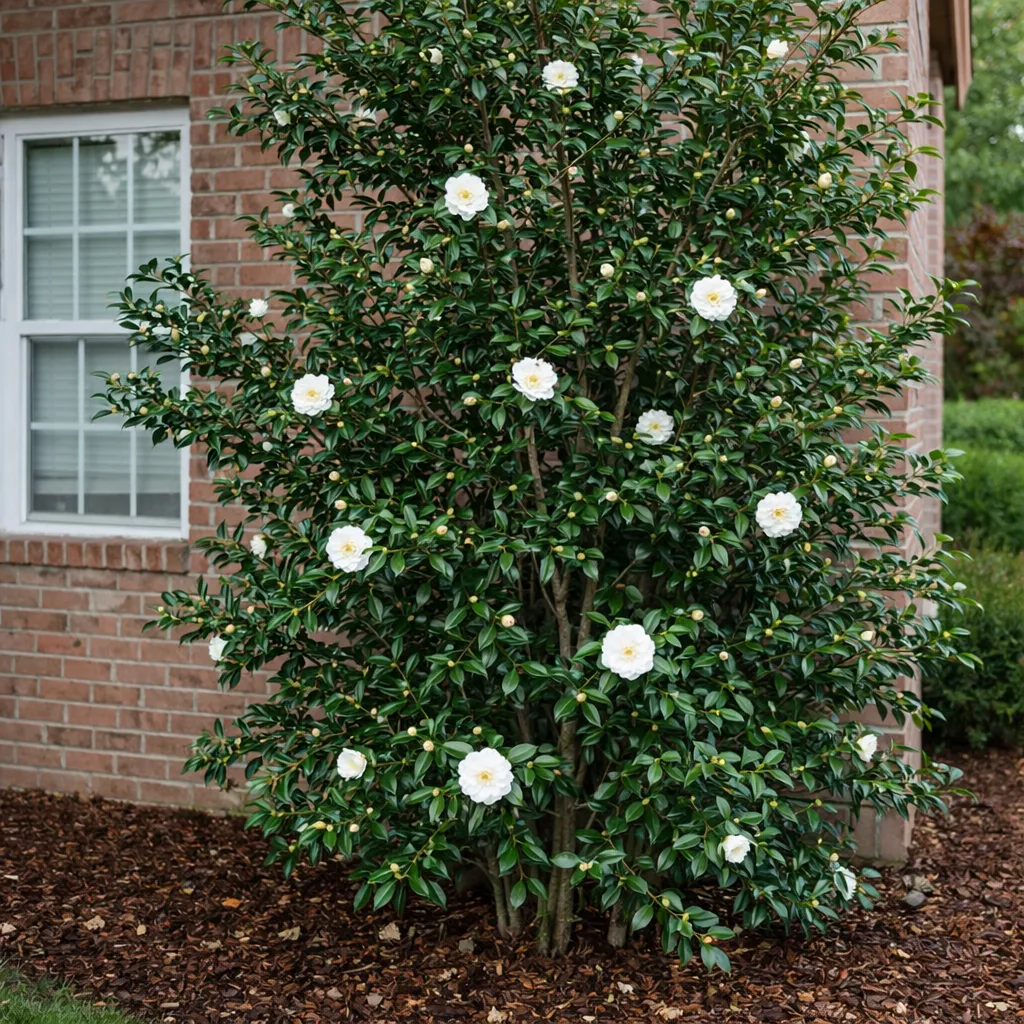
Botanical Name: Camellia japonica ‘Falling Stars’

Common Name: Falling Stars Camellia

Mature Height and Width:
8–12′ tall × 6–8′ wide

Growth Habit: Upright, multi-stemmed evergreen shrub to small tree with strong vertical branching and layered canopy structure. Naturally airy rather than compact. Moderate growth rate.

Foliage Description: Medium to dark glossy green leaves with pronounced sheen. Elliptical shape, moderately spaced along stems allowing visible interior structure.

Flower Description: Single white flowers with visible golden stamens. Blooms appear scattered and star-like across the canopy rather than densely clustered. Petals clean white, slightly rounded, not formal double.

Bloom Time: Late winter to early spring.

Fall Color: Evergreen; foliage remains glossy dark green year-round.

Light Requirements: Partial shade to filtered sun; protected exposure preferred in colder regions.

Hardiness Zone: USDA Zones 7–9 (Zone 6 with strong protection).

Notable Landscape Uses:
Foundation specimen; sheltered courtyard planting; espalier candidate; woodland-edge accent; vertical evergreen structure.

Deer Resistance: Moderate
Evergreen foliage may experience browsing under heavy pressure.
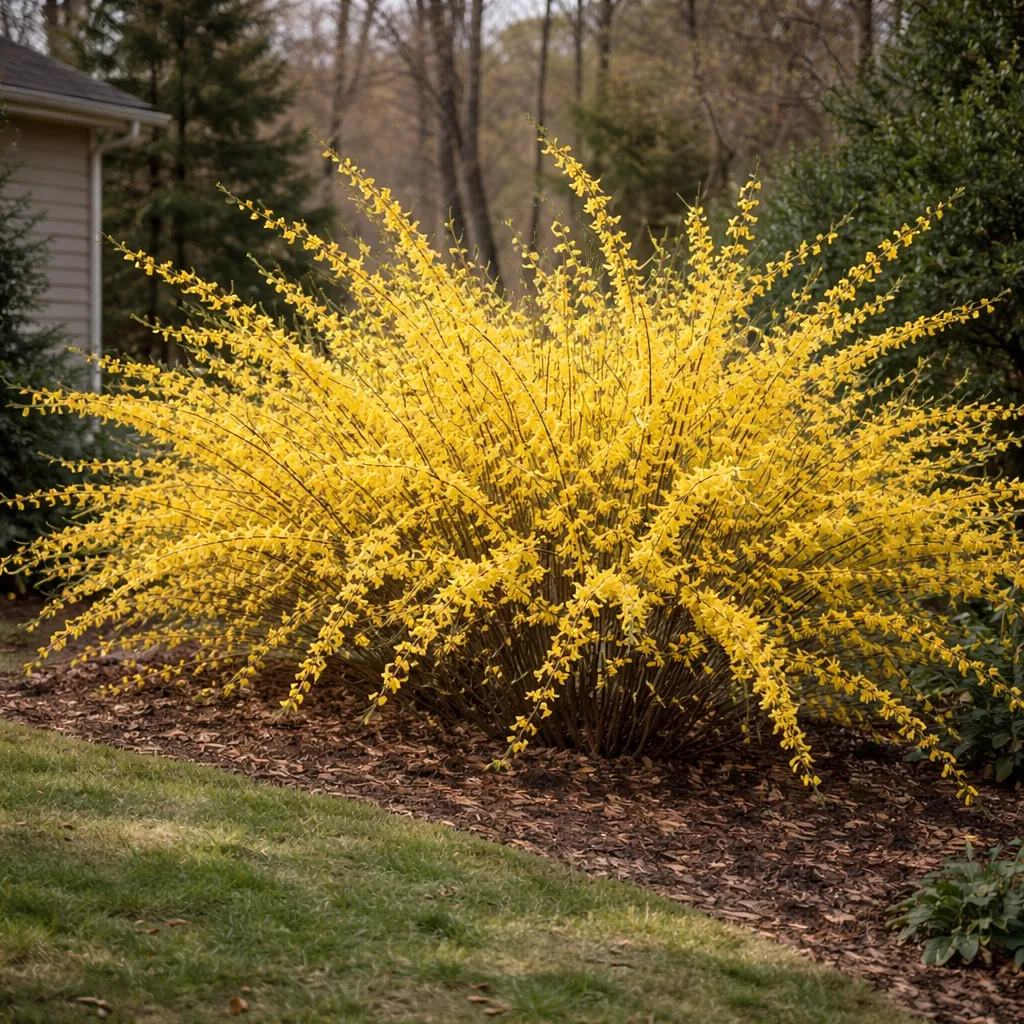
Botanical Name: Forsythia × intermedia (commonly grown hybrid forms)

Common Name: Forsythia

Mature Height and Width:
8–10′ tall × 8–12′ wide (varies by cultivar)

Growth Habit: Fast-growing, arching deciduous shrub with long, outward-curving stems. Broad and spreading with an open interior framework. Naturally informal and not compact.

Foliage Description: Medium green, ovate leaves emerging after bloom. Moderate density with visible stem structure.

Flower Description: Bright yellow, four-petaled flowers borne along bare stems before foliage emerges. Flowers cover stems heavily but do not form clustered trusses.

Bloom Time: Early spring (before leaf-out)

Fall Color: Yellow to yellow-green; not consistently ornamental.

Light Requirements: Full sun for strongest bloom density and structure.

Hardiness Zone: USDA Zones 5–8

Notable Landscape Uses:
Informal hedge; mass planting; slope stabilization; early-spring accent; mixed shrub borders; naturalized plantings; large-scale foundation plantings.

Deer Resistance: Moderate
Forsythia is not typically a preferred browse but may be sampled in winter or under high pressure. Established plants generally recover well.
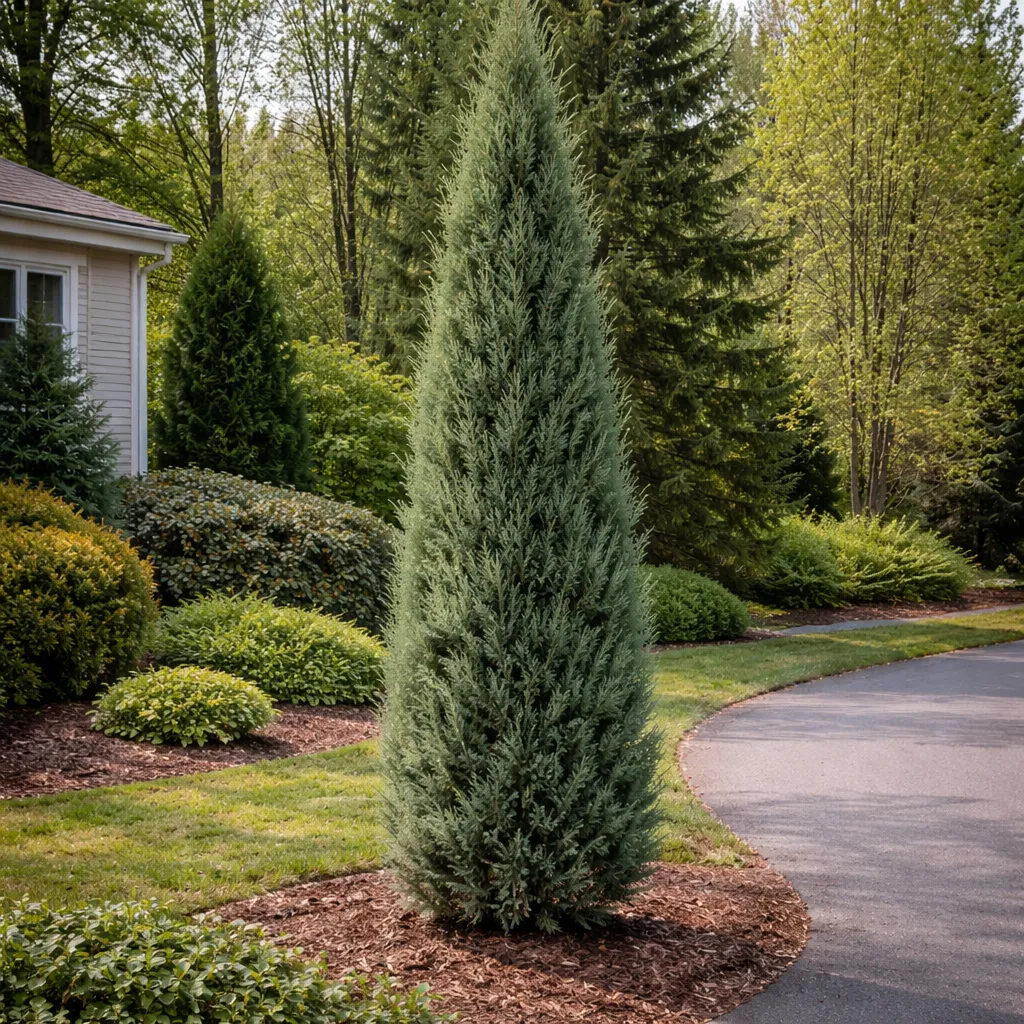
Botanical Name: Juniperus virginiana ‘Taylor’

Common Name: Taylor Juniper

Mature Height and Width:
15–20′ tall × 3–4′ wide

Growth Habit: Narrow, strongly upright columnar evergreen with tight vertical branching. Maintains a slender profile without shearing. Moderate growth rate.

Foliage Description: Fine-textured, scale-like blue-green foliage with a cool cast. Dense along vertical stems, forming a tight column.

Flower Description: Inconspicuous; not grown for ornamental bloom.

Bloom Time: Not applicable

Fall Color: Evergreen

Light Requirements: Full sun for strongest density and color.

Hardiness Zone: USDA Zones 4–9

Notable Landscape Uses:
Privacy screening in narrow spaces; vertical accent; property line screening; driveway edges; formal landscape rhythm planting; windbreak component.

Deer Resistance: High
Eastern red cedar derivatives are generally resistant to deer browsing. Foliage is aromatic and rarely heavily damaged in Zones 5–7.
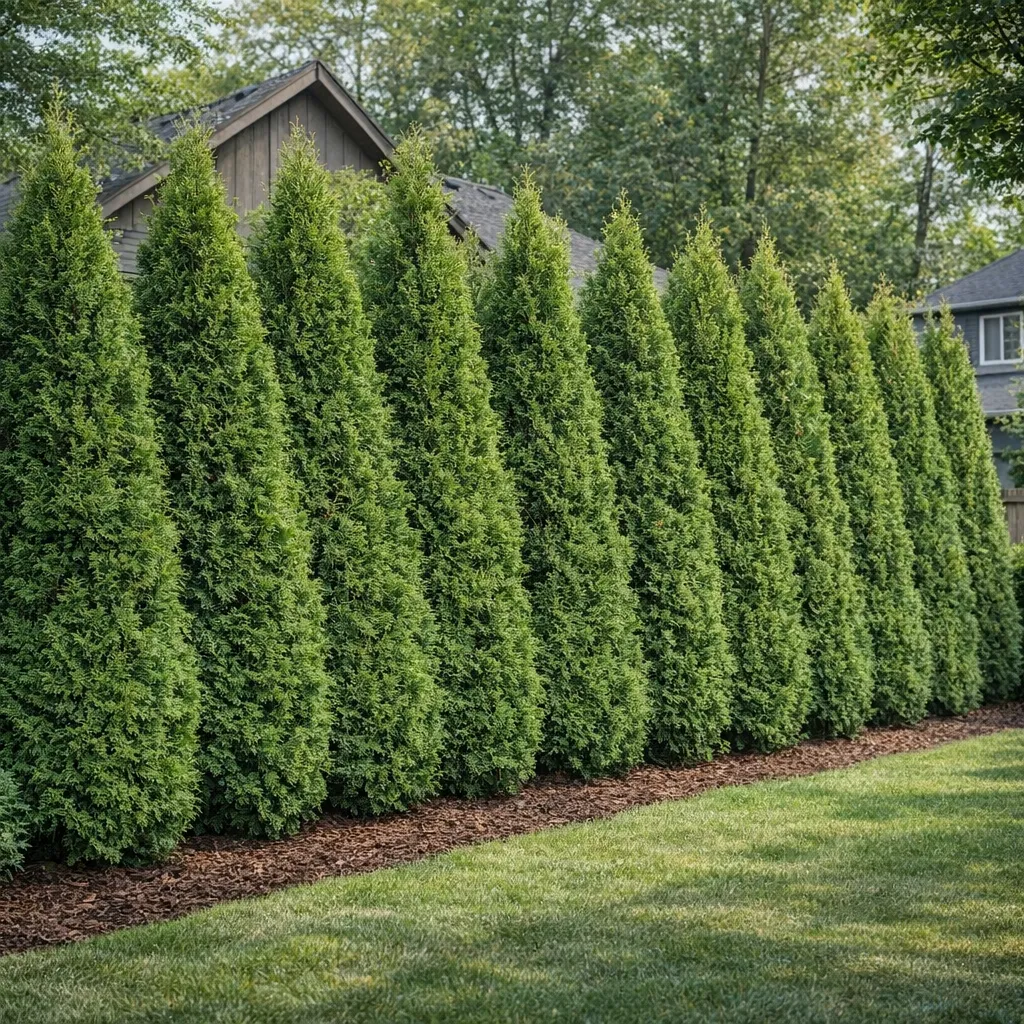
Botanical Name: Thuja occidentalis ‘Smaragd’

Common Name: Emerald Green Arborvitae

Mature Height and Width:
12–15′ tall × 3–4′ wide

Growth Habit: Narrow pyramidal evergreen with a naturally dense, uniform structure. Broader at the base and tapering gradually toward the apex. Moderate growth rate.

Foliage Description: Flat, scale-like sprays in rich medium emerald green. Fine texture with moderate density. Color remains consistent year-round with minimal winter bronzing.

Flower Description: Inconspicuous cones; not grown for ornamental bloom.

Bloom Time: Not applicable

Fall Color: Evergreen

Light Requirements: Full sun to light partial shade; best density in full sun.

Hardiness Zone: USDA Zones 3–7

Notable Landscape Uses:
Privacy screening; foundation plantings; formal hedge; entryway symmetry planting; property line screening; windbreak component; narrow evergreen accent.

Deer Resistance: Moderate-Low
Arborvitae may be browsed in areas with heavy deer pressure. Protection is recommended where deer populations are high.
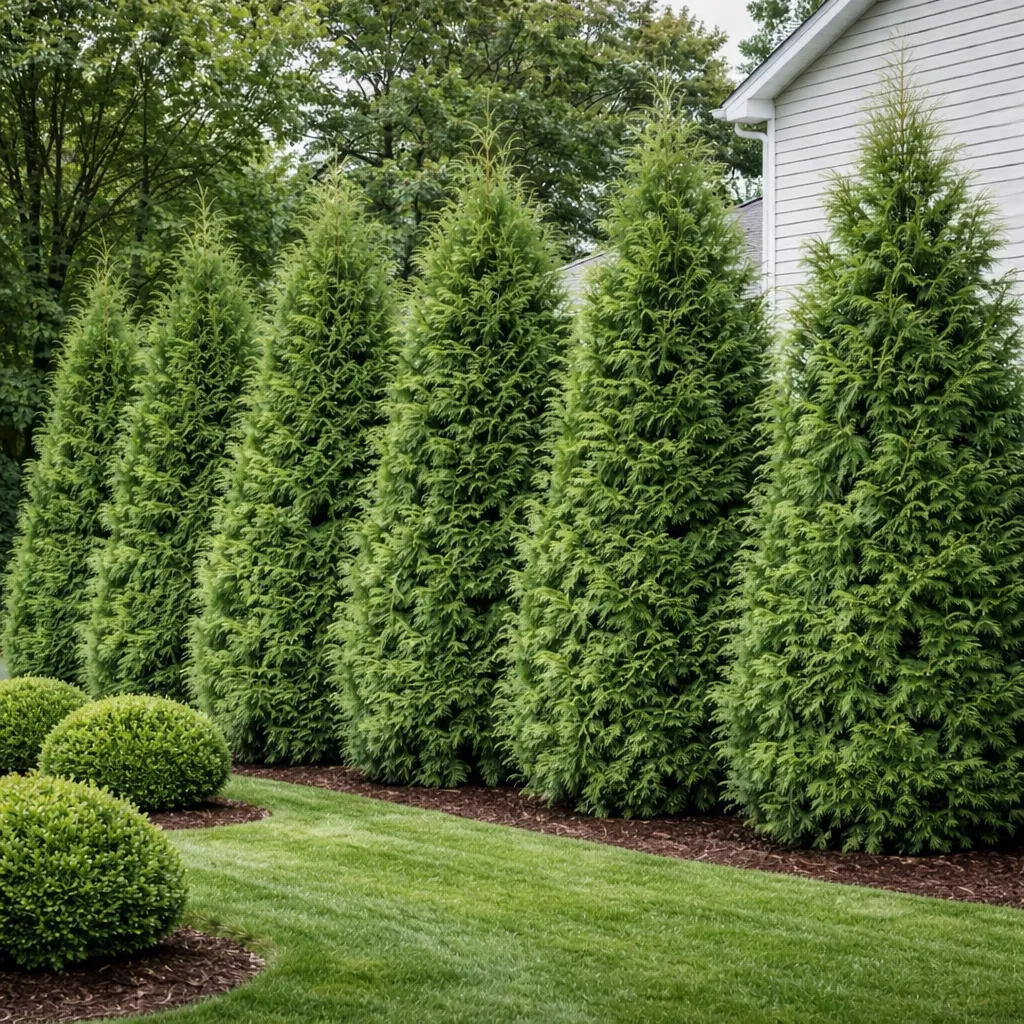
Botanical Name: Thuja standishii × plicata ‘Green Giant’

Common Name: Green Giant Arborvitae

Mature Height and Width: 30-40′ tall × 12–15′ wide

Growth Habit: Strongly upright, broadly pyramidal evergreen with a dense, uniform branching structure. Fast growing with a central leader and consistent taper from base to tip.

Foliage Description: Rich medium to dark green, scale-like foliage with a soft, feathery texture. Maintains color well through winter in Zones 5–7 without significant bronzing. Dense sprays create an effective visual and wind barrier.

Flower Description: Inconspicuous; produces small upright cones that mature to brown, not ornamentally significant.

Bloom Time: Not ornamentally significant.

Fall Color: Evergreen; retains green coloration year-round.

Light Requirements: Full sun to partial shade; optimal density and fastest growth in full sun.

Hardiness Zone: USDA Zones 5–8

Notable Landscape Uses:
Large privacy screens; property line buffers; windbreak plantings; tall evergreen hedges; visual screening for pools or patios; background structure for large residential lots; commercial and municipal screening applications.

Deer Resistance: Moderate to High
Green Giant Arborvitae demonstrates strong resistance in many Northeast landscapes and is significantly less browsed than traditional Thuja occidentalis. However, young plants may experience tip browsing in areas with heavy winter deer pressure. Once established, damage is typically minimal.
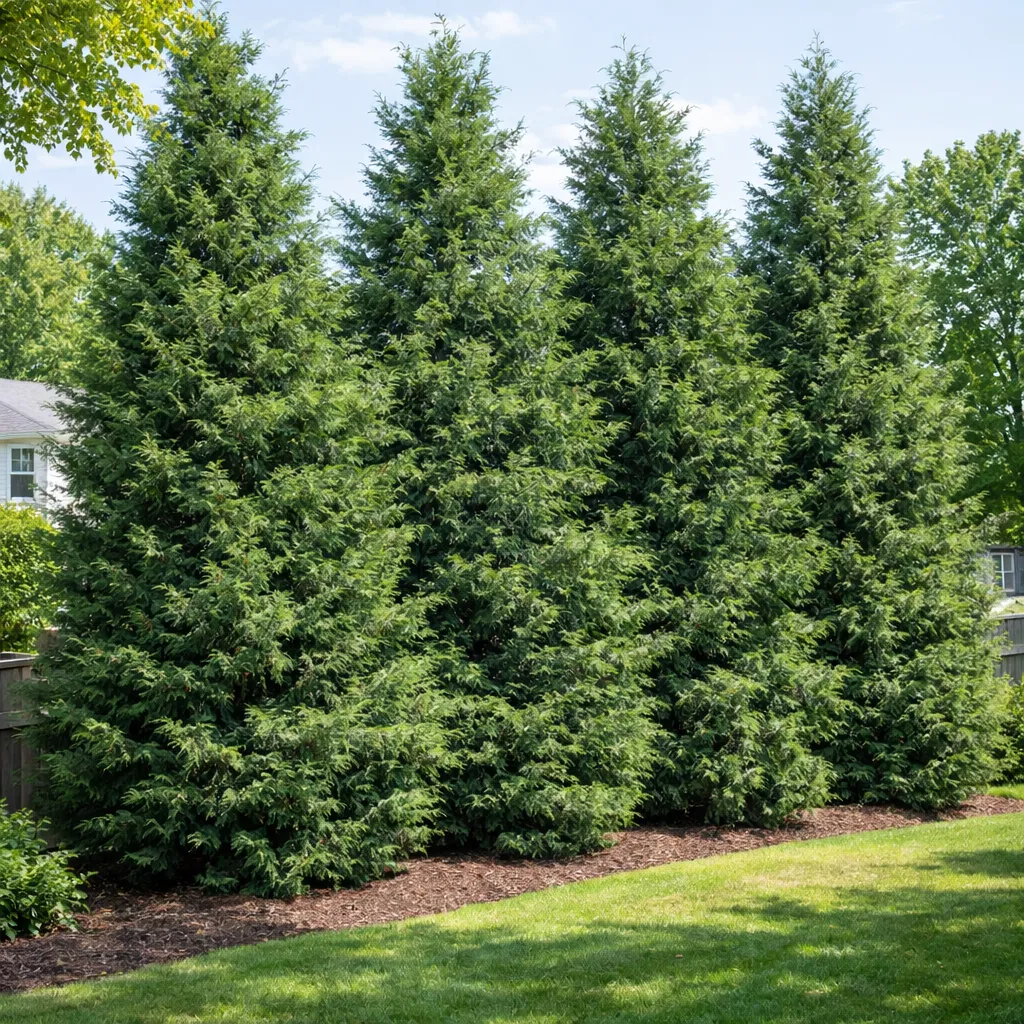
Botanical Name: × Cuprocyparis leylandii

Common Name: Leyland Cypress

Mature Height and Width:
40–60′ tall × 15–25′ wide (unpruned)

Growth Habit: Fast-growing, broad pyramidal evergreen with dense branching and strong vertical structure. Naturally full and substantial; often used as a large-scale screen.

Foliage Description: Soft, feathery scale-like foliage in medium to dark green. Fine texture with layered branch sprays.

Flower Description: Inconspicuous cones; not grown for ornamental bloom.

Bloom Time: Not applicable

Fall Color: Evergreen

Light Requirements: Full sun for strongest density and uniform growth.

Hardiness Zone: USDA Zones 6–10

Notable Landscape Uses:
Large privacy screens; windbreaks; property line buffers; commercial screening; large estate plantings; noise barrier plantings.

Deer Resistance: Moderate-High
Leyland Cypress is not typically a preferred browse but may be sampled under pressure. Established plants generally tolerate minor browsing.
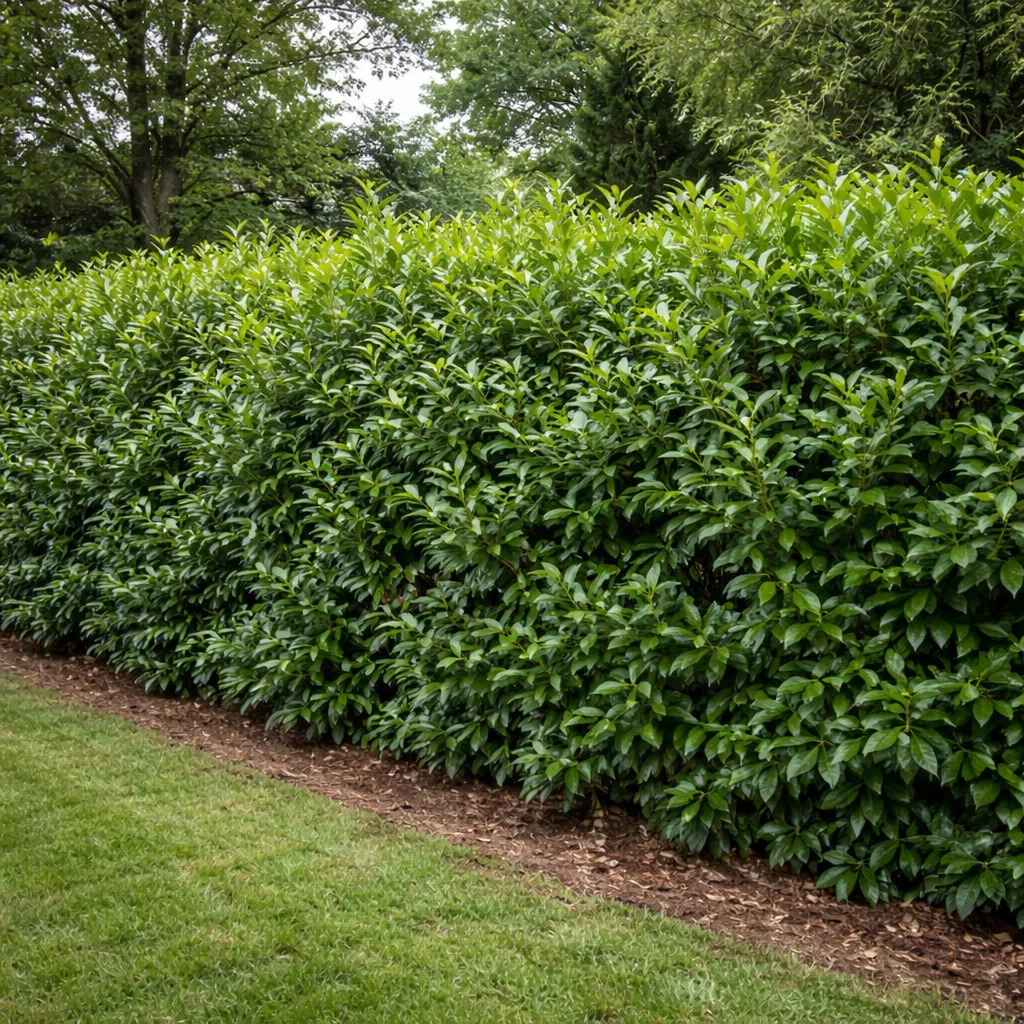
Botanical Name: Prunus laurocerasus ‘Schipkaensis’

Common Name: Schip Laurel (Schip Cherry Laurel)

Mature Height and Width:
10–12′ tall × 6–8′ wide (unpruned)

Growth Habit: Dense, upright to broadly spreading evergreen shrub with strong basal branching. Naturally forms a substantial screening hedge but maintains softer outer contours when untrimmed. Moderate to fast growth rate.

Foliage Description: Narrow, glossy dark green evergreen leaves with smooth margins. More refined and narrower than standard cherry laurel types.

Flower Description: Upright white flower spikes borne in spring; lightly fragrant. Followed by small dark ornamental berries.

Bloom Time: Mid to late spring

Fall Color: Evergreen

Light Requirements: Full sun to partial shade; adaptable and shade tolerant.

Hardiness Zone: USDA Zones 6–9

Notable Landscape Uses:
Privacy screening; foundation hedge; property line buffer; evergreen mass planting; sound barrier planting; structured landscape backdrop.

Deer Resistance: Moderate-High
Generally not a preferred browse, though young growth may be sampled under heavy pressure. Established plants typically recover well.
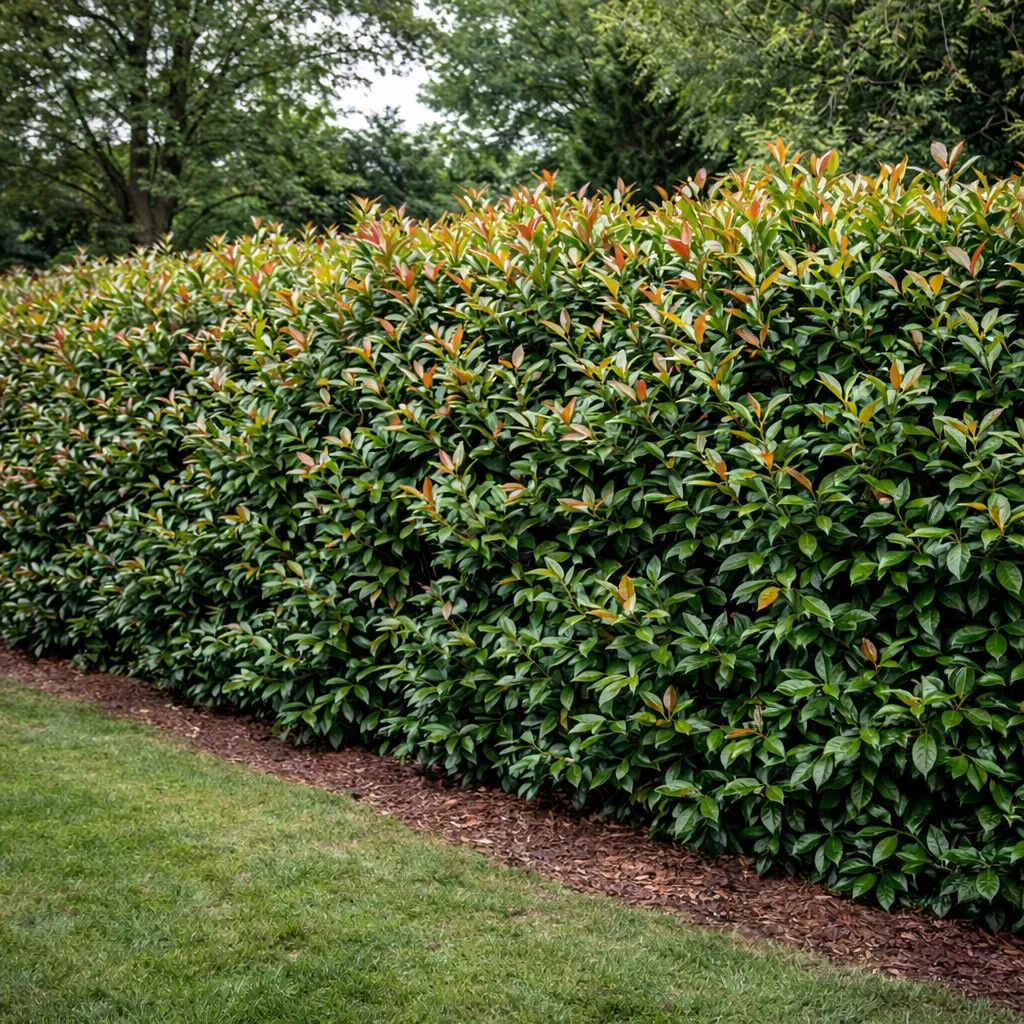
Botanical Name: Prunus laurocerasus ‘Volcano’

Common Name: Volcano Cherry Laurel

Mature Height and Width: 5-7’ Tall x 4-5’ Wide

Growth Habit: Upright when young, maturing to a broad, rounded to pyramidal evergreen tree form. Dense branching with strong central structure; can be maintained as a large shrub or small evergreen tree.

Foliage Description: Large, glossy, dark green leaves with a leathery texture. New growth often emerges lighter green before maturing to deep green. Foliage remains evergreen year-round in Zones 5–7.

Flower Description: Fragrant white flower spikes (racemes) borne upright in mid-spring; followed by small black ornamental fruit in summer (not typically ornamental in residential use).

Bloom Time: Mid-spring

Fall Color: Evergreen; no fall color change.

Light Requirements: Full sun to partial shade; performs well in both exposures in Zones 5–7.

Hardiness Zone: USDA Zones 6–9

Notable Landscape Uses:
Large evergreen screen; privacy hedge; windbreak planting; property border definition; background structure in mixed shrub borders; small evergreen tree for corner lot plantings; commercial buffer planting.

Deer Resistance: High
Volcano Cherry Laurel has proven to be highly resistant to deer browsing in Zones 6–7 and performs reliably in most suburban and semi-rural landscapes. Mature foliage is thick, leathery, and aromatic, making it unpalatable in typical browsing conditions. While no plant is completely deer-proof, significant damage is uncommon once established.
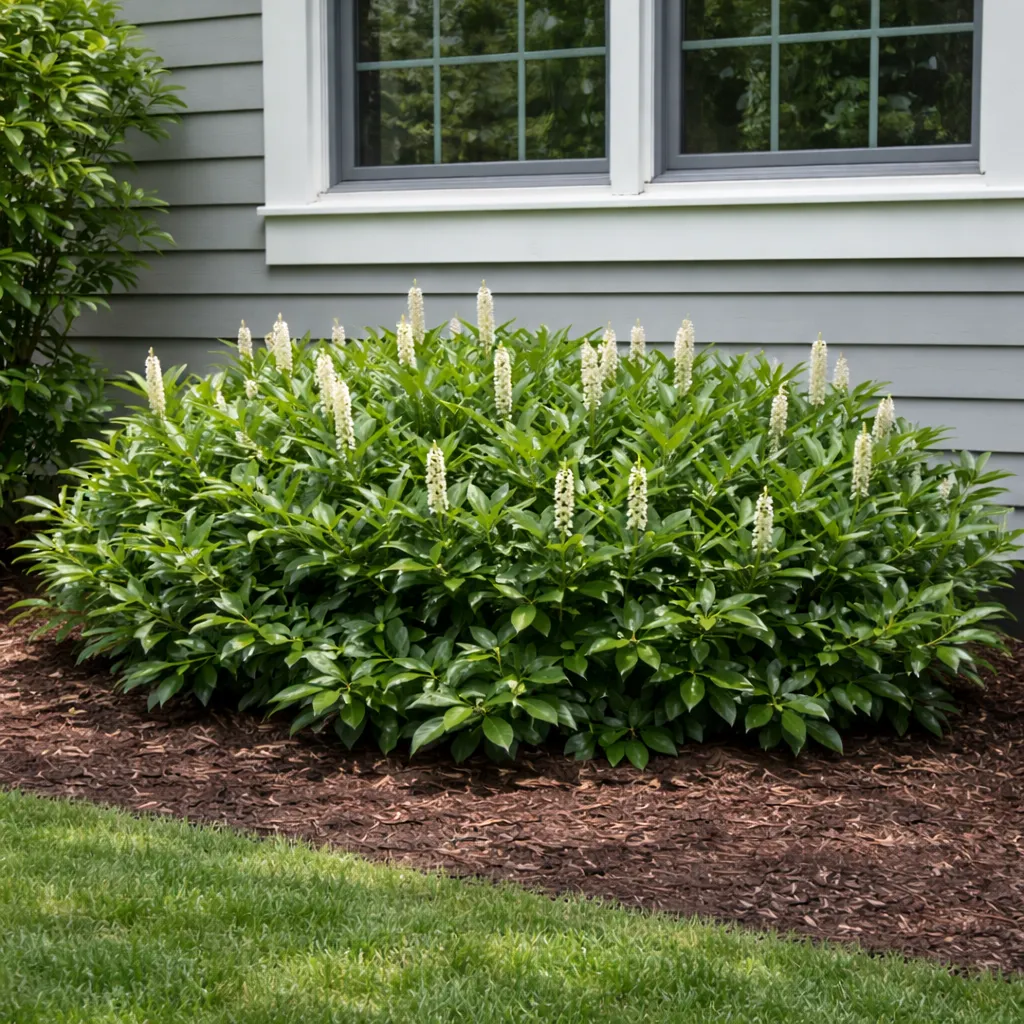
Botanical Name: Prunus laurocerasus ‘Otto Luyken’

Common Name: Otto Luyken Cherry Laurel

Mature Height and Width:
3–4′ tall × 6–8′ wide

Growth Habit: Low, spreading evergreen shrub with a broad, layered structure. Branches grow outward horizontally before gently arching. Dense but not upright. Moderate growth rate.

Foliage Description: Narrow, glossy dark green evergreen leaves with smooth margins. Leaves are more slender than standard cherry laurel types and create a refined texture.

Flower Description: Upright white flower spikes held above the foliage in spring; lightly fragrant.

Bloom Time: Mid to late spring

Fall Color: Evergreen

Light Requirements: Full sun to partial shade; performs well in filtered light.

Hardiness Zone: USDA Zones 6–9

Notable Landscape Uses:
Low foundation plantings; mass plantings; slope stabilization; foreground evergreen layer; low hedge; mixed shrub borders; underplanting for taller evergreens.

Deer Resistance: Moderate-High
Generally not a preferred browse, though tender new growth may be sampled in high-pressure areas. Established plants typically tolerate minor browsing.
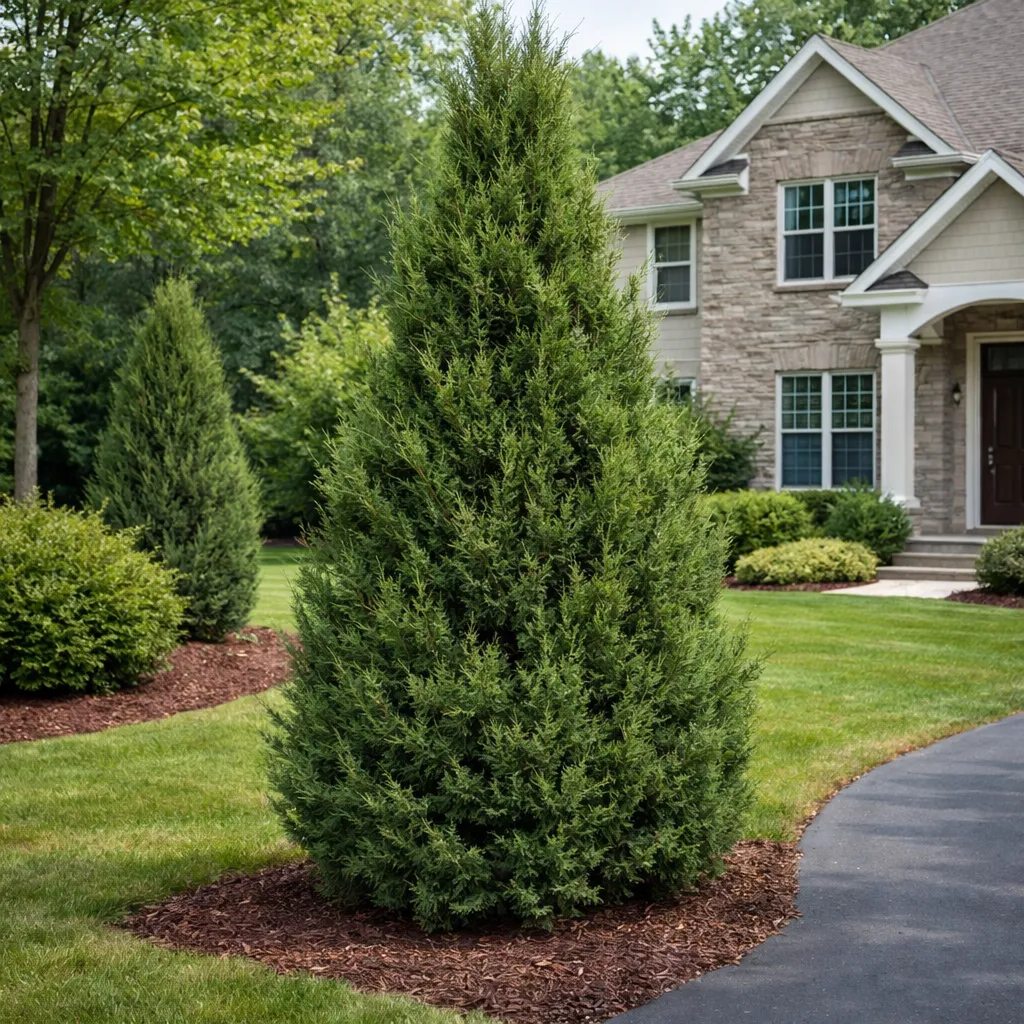
Botanical Name: Juniperus chinensis ‘Spartan’

Common Name: Spartan Juniper

Mature Height and Width:
15–20′ tall × 4–6′ wide

Growth Habit: Upright, dense, narrowly pyramidal evergreen with strong vertical branching and a defined central leader. Noticeably broader and more pyramidal than ultra-narrow columnar junipers. Moderate growth rate.

Foliage Description: Scale-like medium green foliage with slightly coarse texture. Dense outer growth with visible interior branching depth. Color remains green without blue cast.

Flower Description: Inconspicuous; not grown for ornamental bloom. Female plants may produce small blue-gray berry-like cones.

Bloom Time: Spring (non-showy reproductive structures)

Fall Color: Evergreen

Light Requirements: Full sun for strongest density and structural integrity.

Hardiness Zone: USDA Zones 5–9

Notable Landscape Uses:
Formal vertical accent; driveway or entry flanking; narrow privacy screen; foundation planting; structured landscape rhythm planting; windbreak component.

Deer Resistance: High
Aromatic scale foliage is typically avoided by deer. Minor browsing may occur on young plants during winter in Zones 5–7.
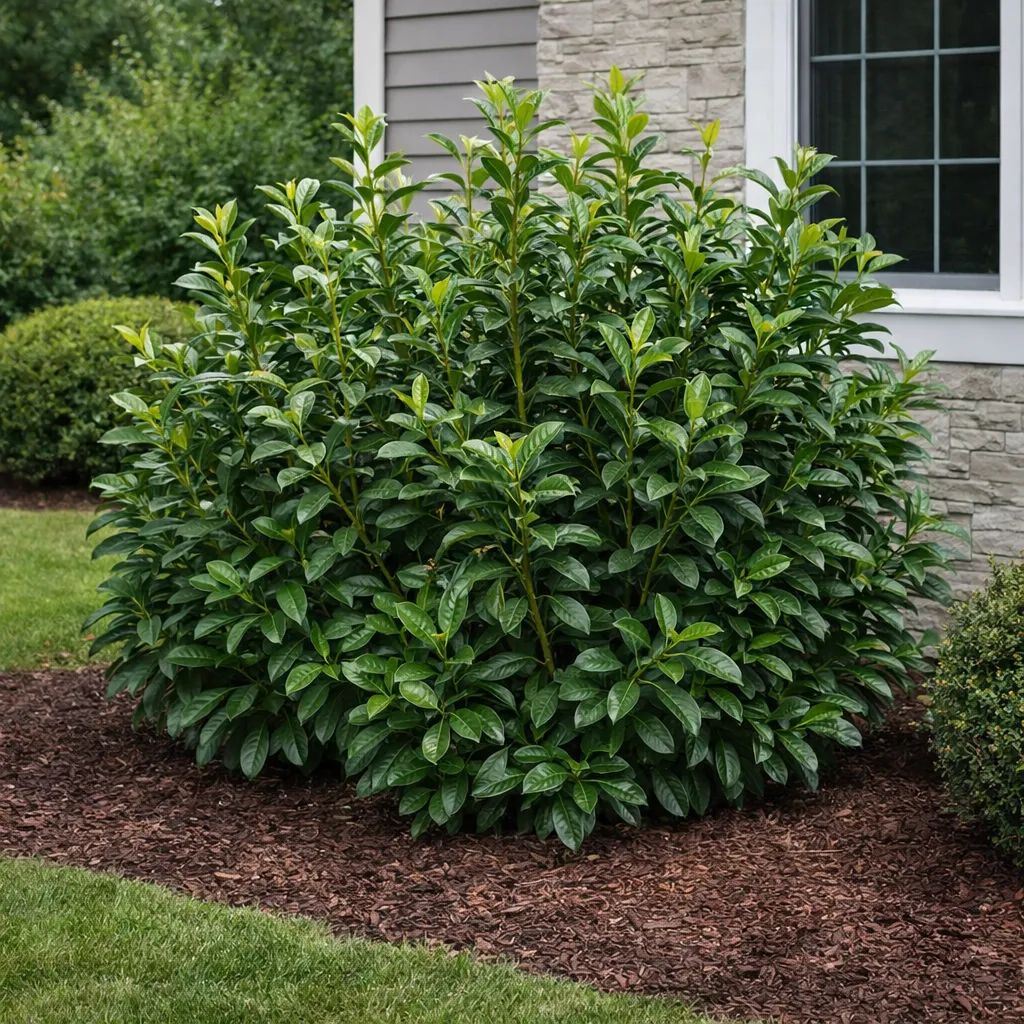
Botanical Name: Prunus laurocerasus ‘Greenfinity’

Common Name: Greenfinity Cherry Laurel

Mature Height and Width:
6–8′ tall × 4–6′ wide

Growth Habit: Dense, upright-rounded evergreen shrub with controlled vertical growth and strong lateral branching. More compact and fuller than standard cherry laurel selections. Maintains a structured form without excessive legginess. Moderate growth rate.

Foliage Description: Broad, glossy, dark green evergreen leaves; thick and leathery with smooth margins. New growth emerges lighter green and matures to deep green. Foliage density is high with layered interior branching.

Flower Description: Upright white flower racemes borne above foliage; individual flowers small and fragrant, arranged in cylindrical clusters.

Bloom Time: Mid to late spring

Fall Color: Evergreen

Light Requirements: Full sun to partial shade; best density achieved with at least 4–6 hours of direct sun.

Hardiness Zone: USDA Zones 6–9

Notable Landscape Uses:
Evergreen foundation planting; structured privacy screening; property line massing; backdrop shrub; courtyard enclosure; formal or informal hedge.

Deer Resistance: Moderate
Foliage is somewhat resistant due to leathery texture, but browsing can occur in high-pressure areas, particularly in winter.
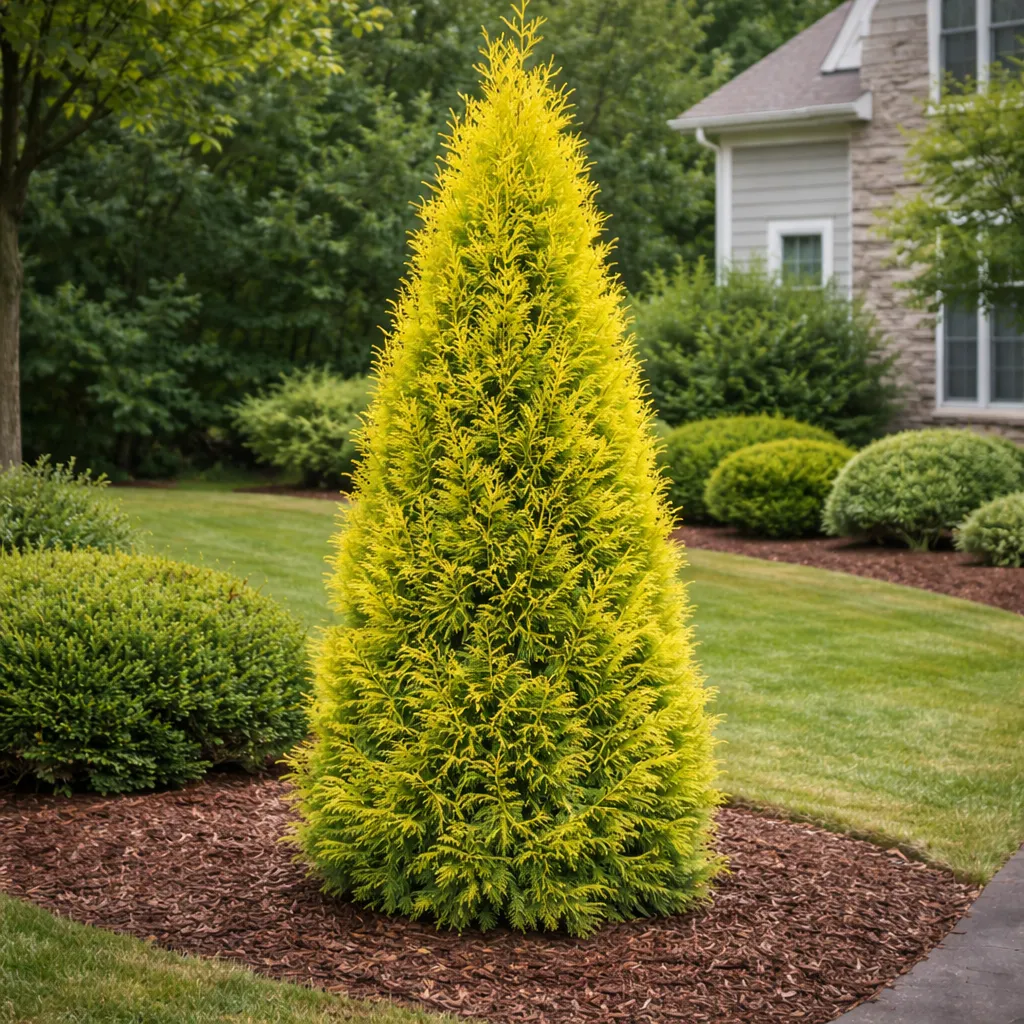
Botanical Name: Thuja plicata ‘Forever Goldy’

Common Name: Forever Goldy Arborvitae

Mature Height and Width:
10–12′ tall × 3–5′ wide

Growth Habit: Upright, narrow pyramidal evergreen with strong central leader and dense vertical branching. Maintains a structured, symmetrical habit without becoming overly broad. Moderate growth rate.

Foliage Description: Soft scale foliage in bright golden-yellow tones; interior growth deeper gold to yellow-green. Color remains vibrant through summer and holds warm golden tone into winter without bronzing heavily. Texture is fine to moderately fine.

Flower Description: Inconspicuous cones; not grown for ornamental bloom.

Bloom Time: Not applicable

Fall Color: Evergreen; maintains golden coloration through winter.

Light Requirements: Full sun for strongest golden coloration and density. Light shade may reduce color intensity.

Hardiness Zone: USDA Zones 5–8

Notable Landscape Uses:
Vertical accent; color contrast in evergreen screens; driveway or entry flanking; foundation planting; property line screening; focal evergreen in mixed borders.

Deer Resistance: Moderate
Arborvitae may experience browsing pressure in Zones 5–7, especially in winter; protection recommended in high-deer areas.
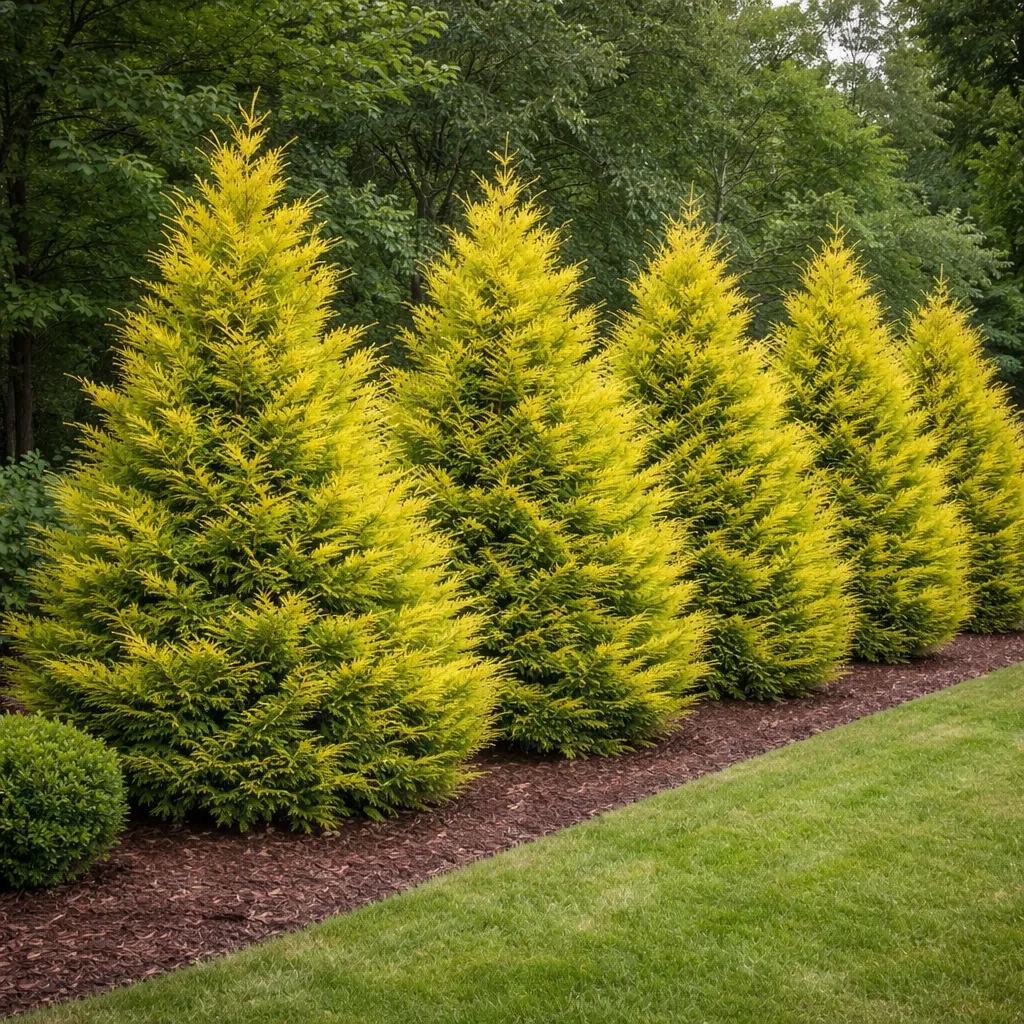
Botanical Name: Cupressocyparis leylandii ‘Gold Rider’

Common Name: Gold Rider Cypress

Mature Height and Width:
30–40′ tall × 10–15′ wide

Growth Habit: Broad pyramidal evergreen with strong central leader and layered lateral branching. Wider and more substantial than narrow columnar conifers. Fast growth rate. Maintains a full lower canopy when properly spaced.

Foliage Description: Flattened sprays of golden-yellow to chartreuse foliage; outer growth brighter gold, interior slightly deeper green-gold. Texture moderately fine but denser and heavier than arborvitae.

Flower Description: Inconspicuous; small cones typical of Leyland cypress.

Bloom Time: Not applicable

Fall Color: Evergreen; retains golden coloration year-round with slight tonal shift in colder months.

Light Requirements: Full sun for strongest gold coloration and dense structure. Partial shade may reduce intensity.

Hardiness Zone: USDA Zones 6–10

Notable Landscape Uses:
Large-scale screening; windbreak rows; property line privacy; estate-scale evergreen massing; background buffer planting.

Deer Resistance: Moderate-High
Leyland types may experience browsing when young in Zones 6–7, though mature trees are less frequently damaged.
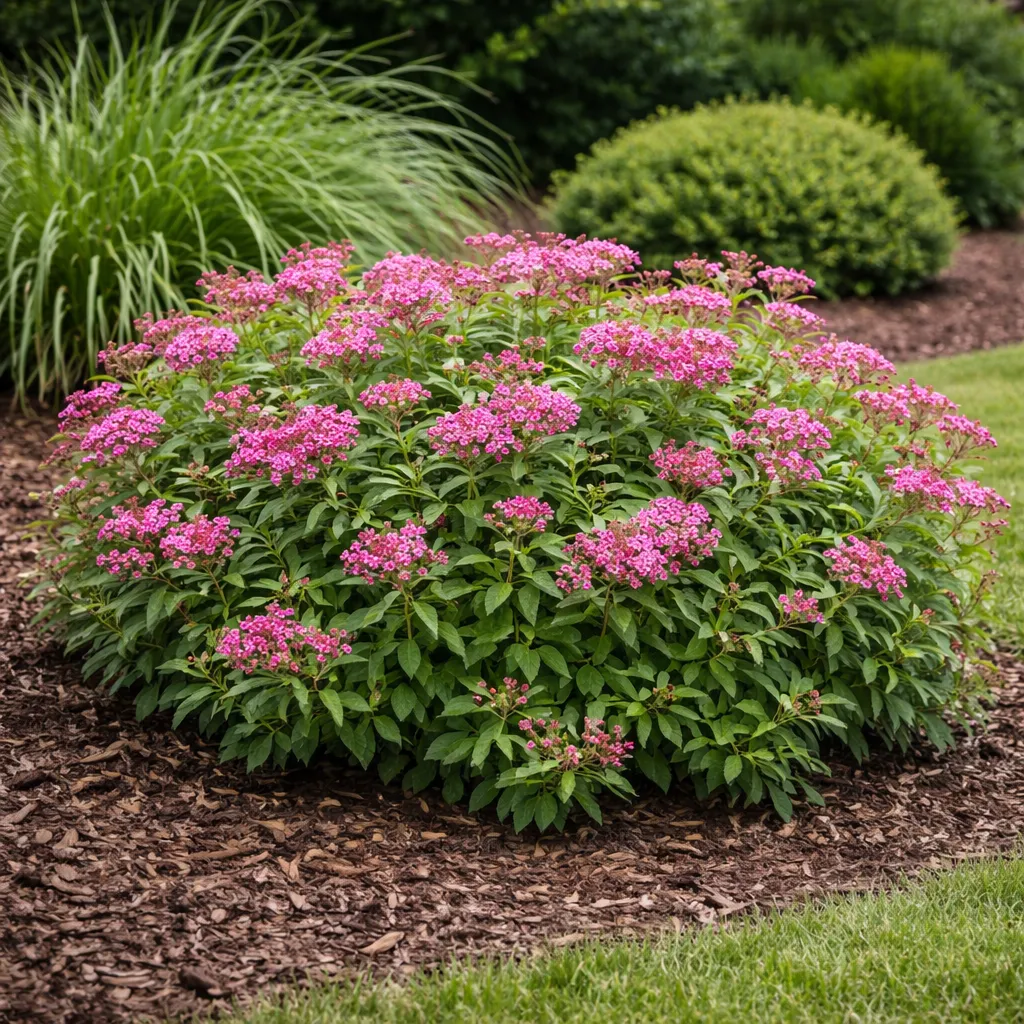
Botanical Name: Spiraea japonica ‘Anthony Waterer’

Common Name: Anthony Waterer Spirea

Mature Height and Width:
2–3′ tall × 3–4′ wide

Growth Habit: Low, mounded deciduous shrub with broad, spreading form. Dense branching with slightly outward-arching stems. Compact but not tight or sheared. Moderate growth rate.

Foliage Description: Narrow, lance-shaped leaves; medium green in summer with occasional reddish new growth. Fine-textured appearance.

Flower Description: Flat-topped corymb clusters of rosy-pink to deep pink flowers borne at stem tips. Individual flowers small; clusters broad and slightly domed but not spherical.

Bloom Time: Late spring to mid-summer; may rebloom lightly if deadheaded.

Fall Color: Yellow to reddish tones, variable.

Light Requirements: Full sun for strongest flowering and compact habit.

Hardiness Zone: USDA Zones 4–8

Notable Landscape Uses:
Low border planting; foundation massing; walkway edge; perennial border companion; low informal hedge; erosion control on gentle slopes.

Deer Resistance: Moderate
Young growth may be browsed in high-pressure areas, but established plants typically recover quickly.
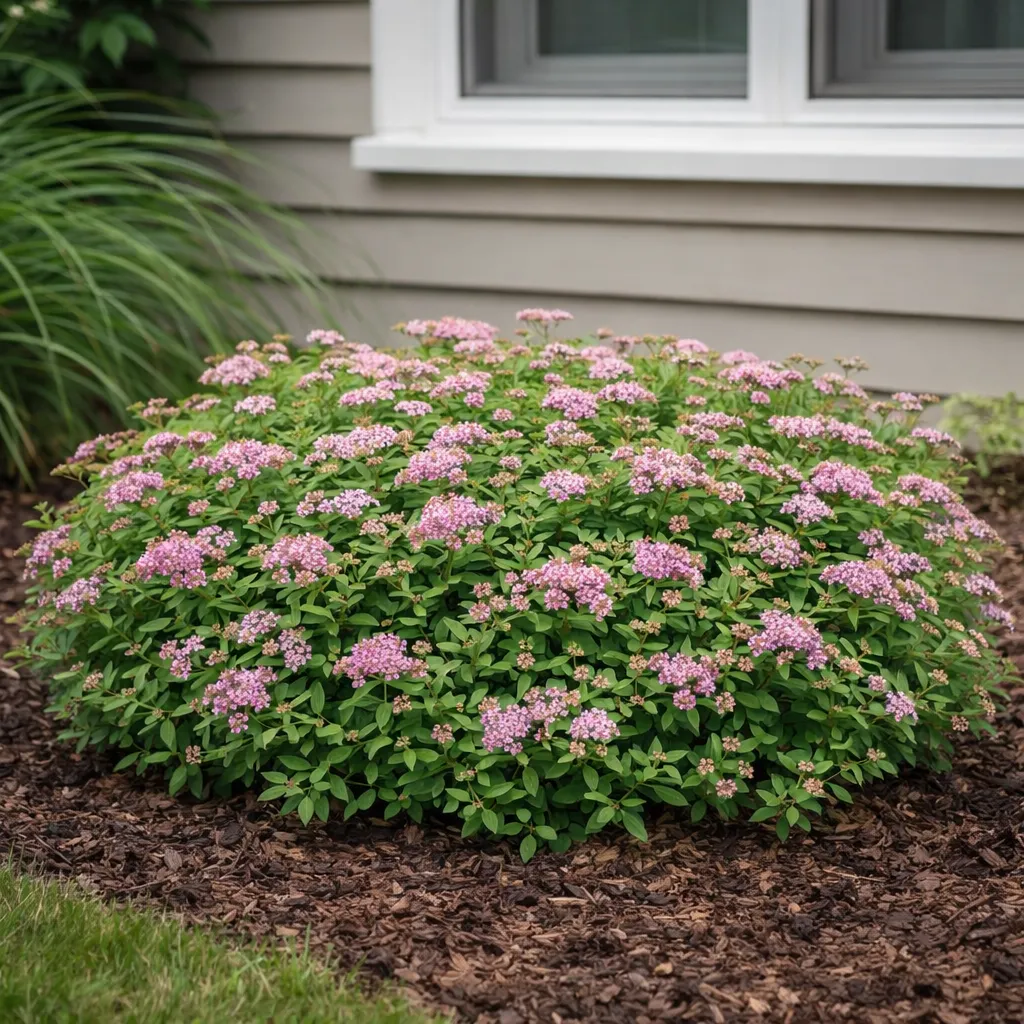
Botanical Name: Spiraea japonica ‘Little Princess’

Common Name: Little Princess Spirea

Mature Height and Width:
18–24″ tall × 2–3′ wide

Growth Habit: Compact, low mounded deciduous shrub with fine branching and a tight, rounded outline. Broader than tall. Slower and more compact than ‘Anthony Waterer’.

Foliage Description: Small, narrow oval to lance-shaped leaves; medium green; fine-textured. New growth may emerge slightly lighter green.

Flower Description: Flat-topped clusters (corymbs) of soft pink flowers borne above foliage; clusters smaller and more numerous than ‘Anthony Waterer’.

Bloom Time: Late spring to mid-summer; may lightly rebloom if deadheaded.

Fall Color: Yellow to bronze tones, variable.

Light Requirements: Full sun for strongest flowering and densest form.

Hardiness Zone: USDA Zones 4–8

Notable Landscape Uses:
Low border edging; foundation planting; mass groundcover shrub; walkway lining; perennial border foreground; low informal hedge.

Deer Resistance: Moderate
New growth may be browsed in high-pressure areas, though plants typically recover due to dense branching.
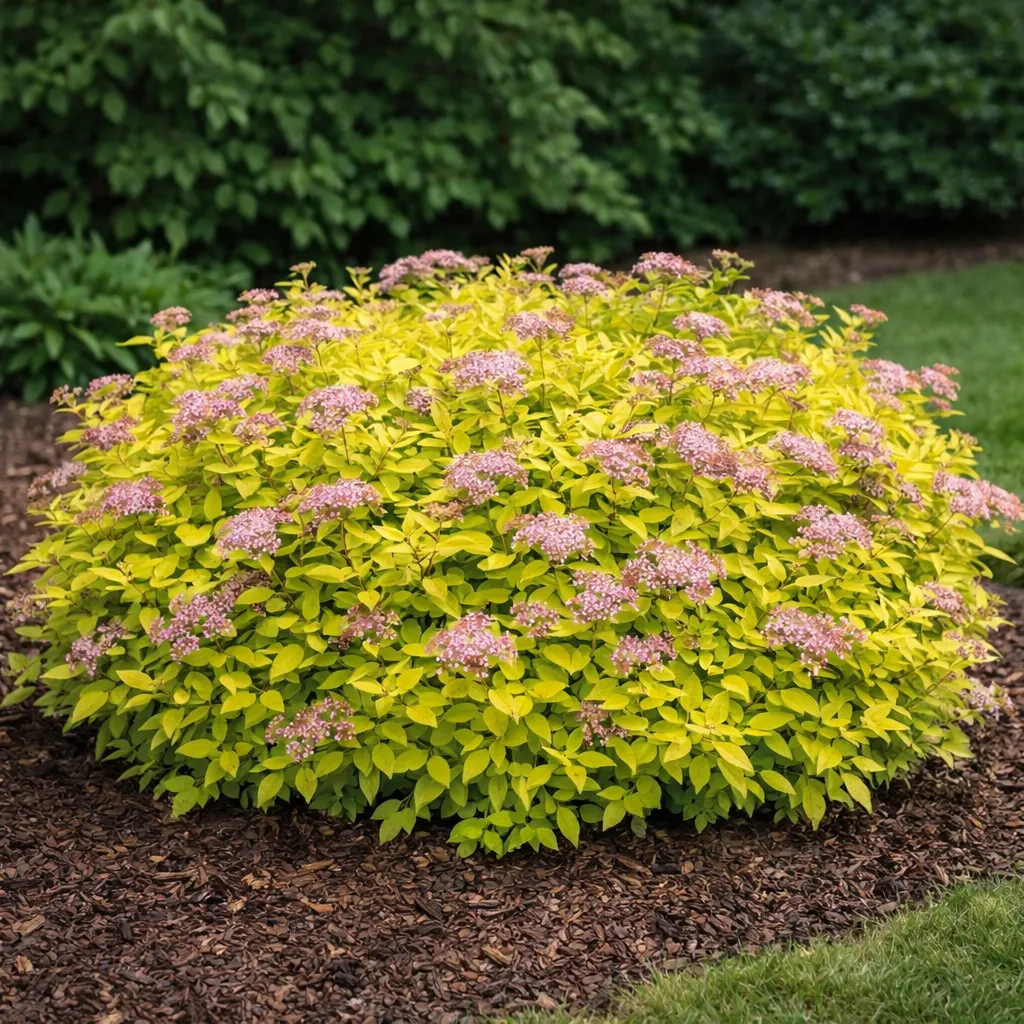
Botanical Name: Spiraea japonica ‘Goldmound’

Common Name: Gold Mound Spirea

Mature Height and Width:
18–24″ tall × 2–3′ wide

Growth Habit: Low, compact mounded deciduous shrub with dense fine branching. Broader than tall with a rounded but not tight hemispherical form. Moderate growth rate.

Foliage Description: Bright golden-yellow foliage throughout the growing season; new growth especially vivid. Leaves small, narrow oval to lance-shaped with fine texture. Color strongest in full sun.

Flower Description: Flat-topped corymb clusters of soft pink flowers borne above foliage; moderate cluster size, not large.

Bloom Time: Late spring to mid-summer; may rebloom lightly with pruning.

Fall Color: Yellow to orange tones, often muted compared to summer color.

Light Requirements: Full sun for best gold coloration and compact habit. Partial shade may reduce foliage intensity.

Hardiness Zone: USDA Zones 4–8

Notable Landscape Uses:
Color contrast in foundation beds; low border edging; mass planting; perennial border foreground; slope stabilization; walkway lining.

Deer Resistance: Moderate
Tender new growth may be browsed in high-pressure areas, though plants typically recover due to dense branching.
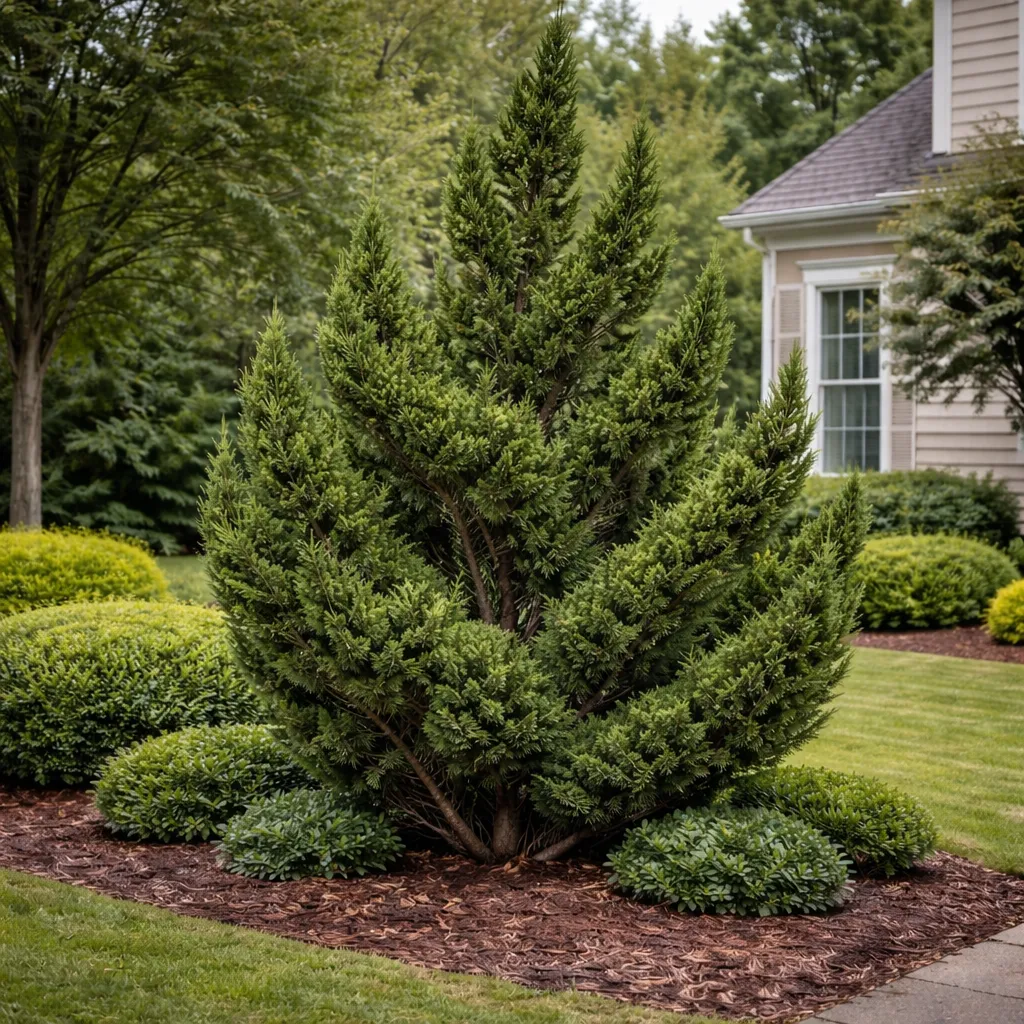
Botanical Name: Juniperus chinensis ‘Torulosa’

Common Name: Hollywood Juniper

Mature Height and Width:
15–20′ tall × 10–15′ wide

Growth Habit: Irregular upright evergreen with twisting, contorted branching and multiple leaders. Broad pyramidal to vase-like form with strong sculptural character. Fast to moderate growth rate.

Foliage Description: Scale-like medium to deep green foliage with moderately coarse texture. Dense along branch sprays but broken by twisting structural gaps.

Flower Description: Inconspicuous; female plants may produce small blue-gray berry-like cones.

Bloom Time: Spring (non-showy reproductive structures)

Fall Color: Evergreen; maintains green coloration through winter.

Light Requirements: Full sun for best density and structural development.

Hardiness Zone: USDA Zones 5–9

Notable Landscape Uses:
Specimen accent; courtyard focal tree; Asian-inspired garden element; sculptural evergreen; property corner anchor; coastal or drought-tolerant planting.

Deer Resistance: High
Aromatic scale foliage typically resists browsing; young growth may require protection during establishment.
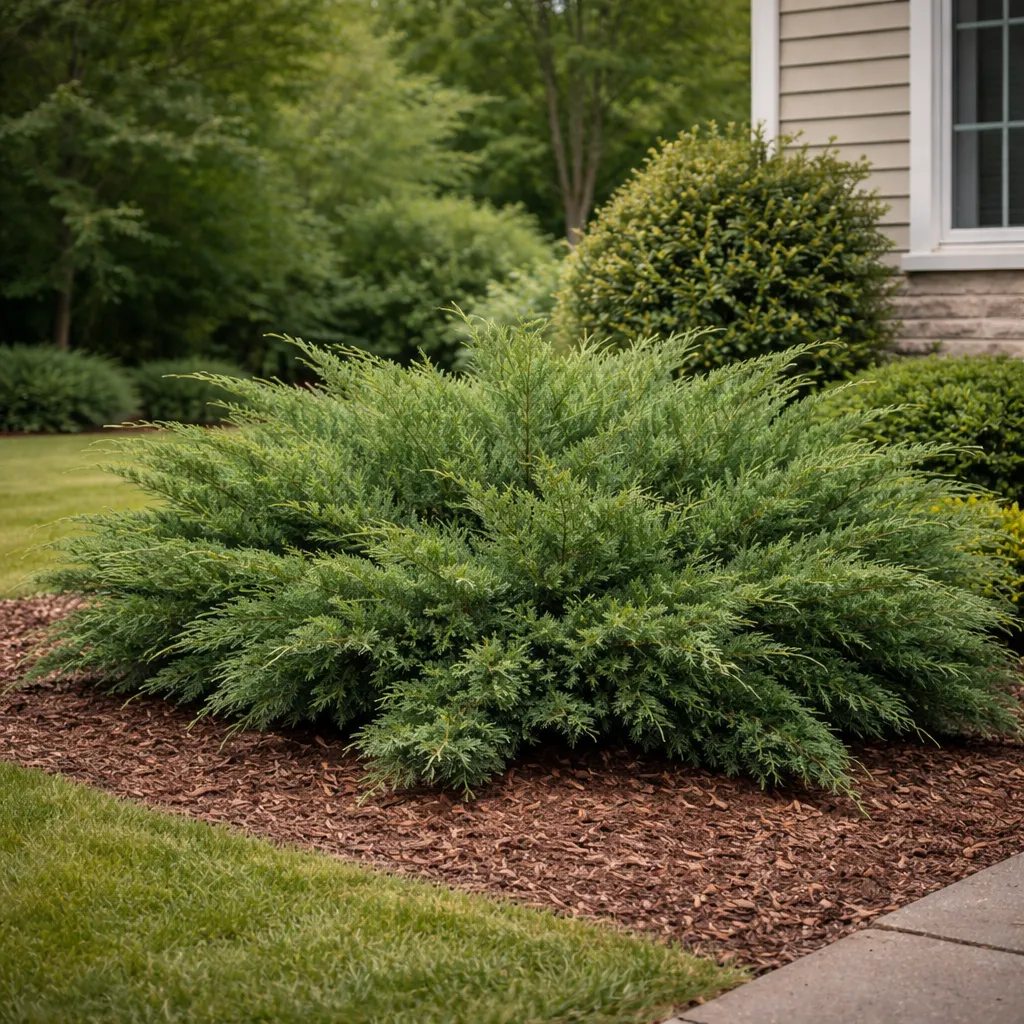
Botanical Name: Juniperus chinensis ‘Sea Green’

Common Name: Sea Green Juniper

Mature Height and Width:
4–6′ tall × 6–8′ wide

Growth Habit: Broad, arching evergreen shrub with fountain-like branching. Wider than tall with layered, sweeping branch structure. Moderate growth rate.

Foliage Description: Scale-like deep green foliage with slight gloss. Outer sprays arch outward and slightly downward. Interior growth moderately dense with visible layering.

Flower Description: Inconspicuous; female plants may produce small blue-gray berry-like cones.

Bloom Time: Spring (non-showy reproductive structures)

Fall Color: Evergreen; maintains deep green coloration through winter.

Light Requirements: Full sun for best density and structure.

Hardiness Zone: USDA Zones 4–9

Notable Landscape Uses:
Foundation massing; slope stabilization; large-scale groundcover; retaining wall spillover; property line planting; evergreen border anchor.

Deer Resistance: High
Aromatic scale foliage is typically resistant to browsing; minor winter damage possible on young plants in high-pressure areas.
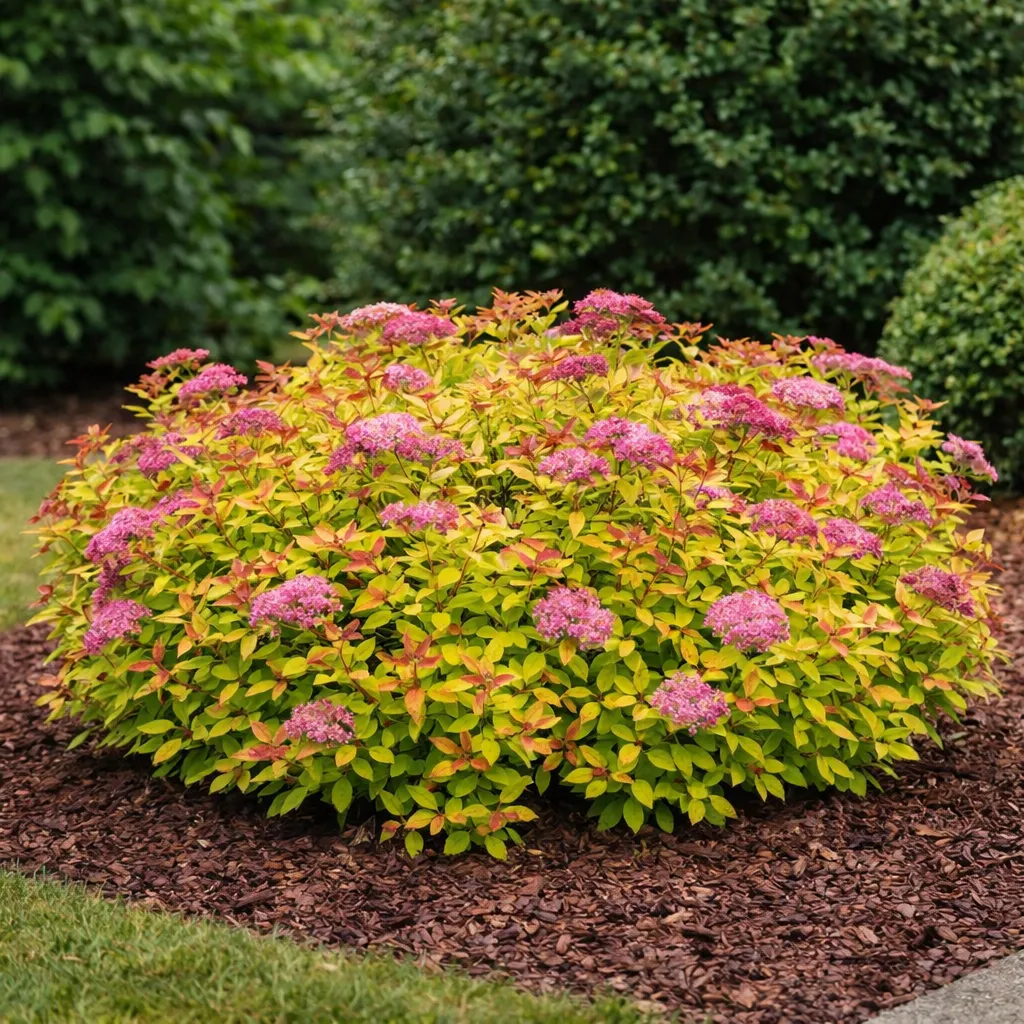
Botanical Name: Spiraea japonica ‘Magic Carpet’

Common Name: Magic Carpet Spirea

Mature Height and Width:
18–24″ tall × 2–3′ wide

Growth Habit: Low, compact mounded deciduous shrub with dense fine branching. Broader than tall with a tight, uniform habit. Slower growing and more compact than ‘Anthony Waterer’.

Foliage Description: Bright chartreuse to golden foliage with reddish-bronze new growth. Leaves small and fine-textured. Color strongest in full sun; may green slightly in partial shade.

Flower Description: Flat-topped clusters (corymbs) of rosy-pink flowers borne above foliage; moderate cluster size.

Bloom Time: Late spring to mid-summer; may lightly rebloom if pruned.

Fall Color: Bronze to reddish tones.

Light Requirements: Full sun for strongest foliage color and compact form.

Hardiness Zone: USDA Zones 4–8

Notable Landscape Uses:
Low border edging; mass planting; foundation foreground; color contrast in mixed beds; slope planting; walkway lining.

Deer Resistance: Moderate
Tender new growth may be browsed under heavy deer pressure, though plants generally recover due to dense branching.
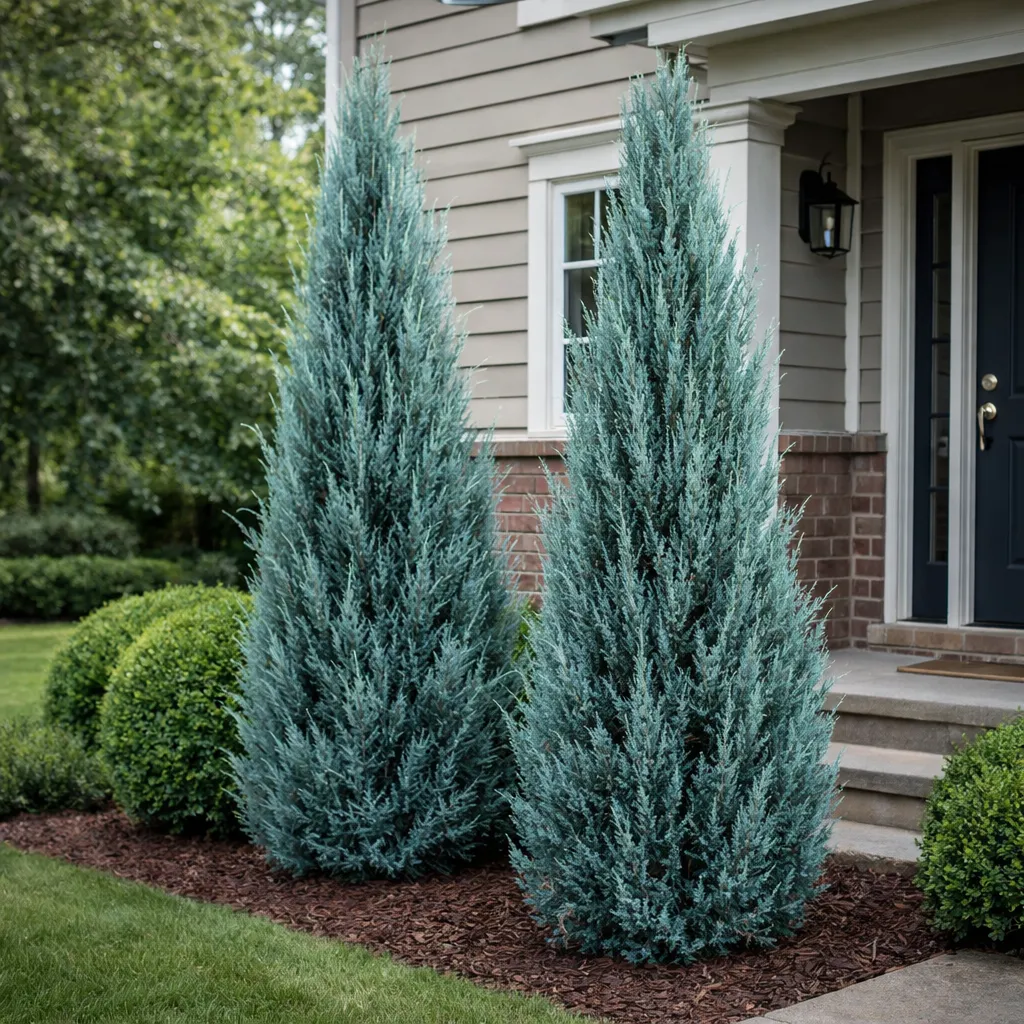
Botanical Name: Juniperus scopulorum ‘Blue Arrow’

Common Name: Blue Arrow Juniper

Mature Height and Width: 12–15′ tall × 2–3′ wide

Growth Habit: Very narrow, strongly columnar form with tight, vertical branching. Maintains a dense, upright silhouette with minimal lateral spread.

Foliage Description: Fine-textured, scale-like foliage with intense silvery-blue coloration. Color remains consistent through winter in Zones 5–7, often deepening slightly in colder weather. Dense branching creates a clean, architectural look.

Flower Description: Inconspicuous; male and female cones borne on separate plants. Female plants may produce small blue berry-like cones if pollinated.

Bloom Time: Not ornamentally significant.

Fall Color: Evergreen; maintains blue-gray coloration year-round.

Light Requirements: Full sun; requires direct sunlight for best density and color retention.

Hardiness Zone: USDA Zones 4–9

Notable Landscape Uses:
Vertical accent in foundation plantings; framing entryways; flanking garage doors; narrow privacy screens; driveway edge planting; formal garden structure; wind-tolerant planting in exposed sites.

Deer Resistance: High
Junipers are rarely browsed due to aromatic foliage and texture. Occasional tip browsing may occur in extreme winter pressure, but significant damage is uncommon in Zones 5–7.
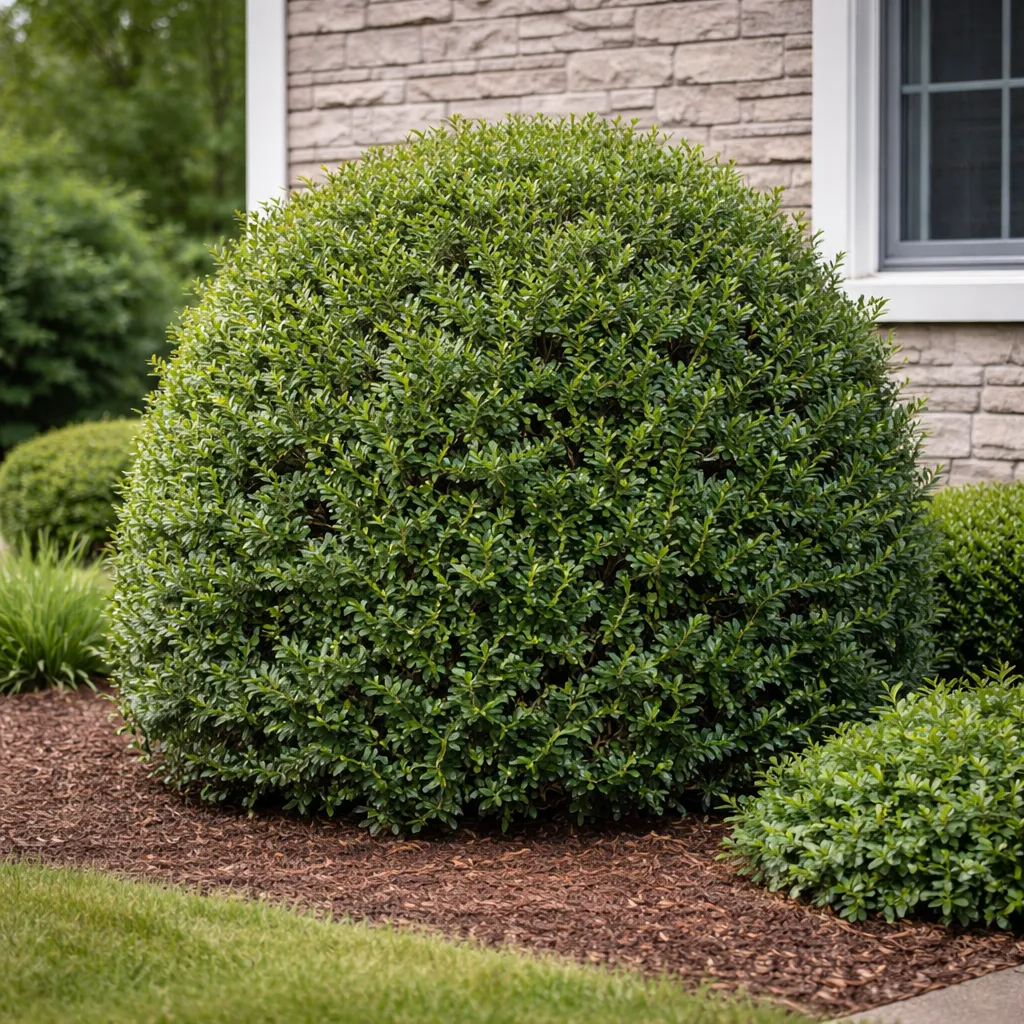
Botanical Name: Buxus sempervirens

Common Name: Common Boxwood

Mature Height and Width:
15–20′ tall × 8–15′ wide (unpruned); typically maintained much smaller in landscape settings

Growth Habit: Broad, upright to rounded evergreen shrub with dense, fine branching. Naturally oval to irregularly upright when unpruned. Responds well to shearing and shaping. Moderate growth rate.

Foliage Description: Small, opposite, oval leaves; dark glossy green above, lighter beneath. Fine texture overall with tight branching.

Flower Description: Small, pale yellow-green flowers; lightly fragrant but not showy.

Bloom Time: Early to mid-spring

Fall Color: Evergreen; may bronze slightly in exposed winter conditions.

Light Requirements: Full sun to partial shade; best foliage color in partial sun with protection from harsh winter exposure.

Hardiness Zone: USDA Zones 5–8

Notable Landscape Uses:
Formal hedge; foundation planting; parterre garden structure; topiary; border edging; courtyard enclosure; knot garden planting.

Deer Resistance: Moderate-High
Foliage may rarely be browsed in high-pressure areas, particularly during winter; damage varies by region and deer population.
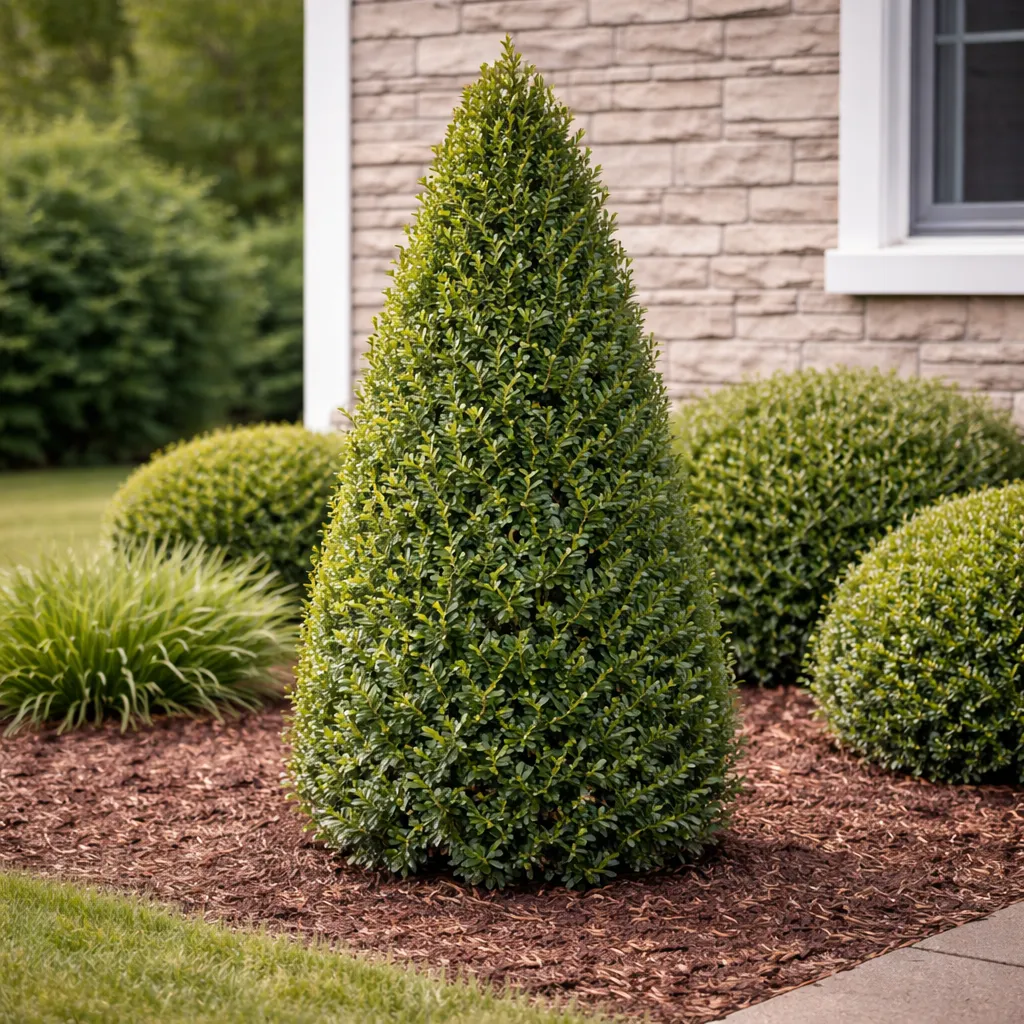
Botanical Name: Buxus × ‘Green Mountain’

Common Name: Green Mountain Boxwood

Mature Height and Width:
4–6′ tall × 2–3′ wide

Growth Habit: Upright, narrowly pyramidal to columnar evergreen shrub with dense, fine branching. Naturally maintains a vertical form with slight taper from base to apex. Moderate growth rate.

Foliage Description: Small, oval leaves; medium to dark green with slight natural gloss. Fine texture with dense interior branching. Holds green color well through winter with minimal bronzing compared to other boxwoods.

Flower Description: Small, pale yellow-green flowers; lightly fragrant but not showy.

Bloom Time: Early to mid-spring

Fall Color: Evergreen; retains green coloration into winter.

Light Requirements: Full sun to partial shade; best performance with some winter protection from drying winds.

Hardiness Zone: USDA Zones 5–8

Notable Landscape Uses:
Formal vertical accent; entry framing; structured hedge; foundation planting; parterre gardens; container topiary forms; narrow rhythm planting.

Deer Resistance: Moderate-High
Boxwoods may rarely be browsed in high-pressure areas, particularly during winter.
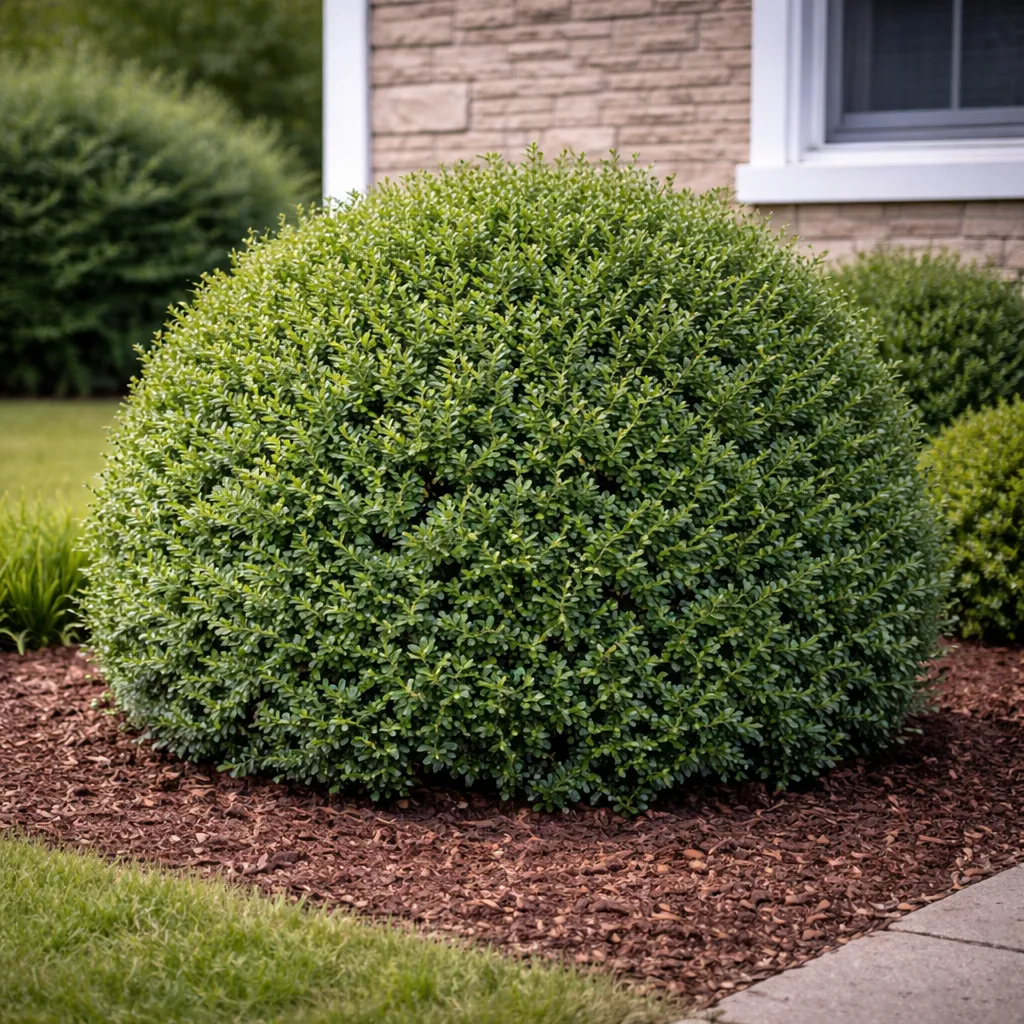
Botanical Name: Buxus × ‘Green Velvet’

Common Name: Green Velvet Boxwood

Mature Height and Width:
3–4′ tall × 3–4′ wide

Growth Habit: Dense, rounded evergreen shrub with naturally globe-shaped form. Fine branching and compact structure. Maintains uniform outline with minimal pruning. Moderate growth rate.

Foliage Description: Small, oval leaves; medium to dark green with slight natural gloss. Fine texture. Excellent winter color retention with minimal bronzing in Zones 5–7.

Flower Description: Small, pale yellow-green flowers; lightly fragrant but not showy.

Bloom Time: Early to mid-spring

Fall Color: Evergreen; retains rich green coloration through winter.

Light Requirements: Full sun to partial shade; performs well in partial sun exposures common in foundation settings.

Hardiness Zone: USDA Zones 5–8

Notable Landscape Uses:
Low formal hedge; foundation planting; parterre garden structure; border edging; mass planting; low courtyard enclosure.

Deer Resistance: High
Boxwoods are reliably deer resistant in Northeast Zones 5–7. Significant browsing is uncommon in established plantings.
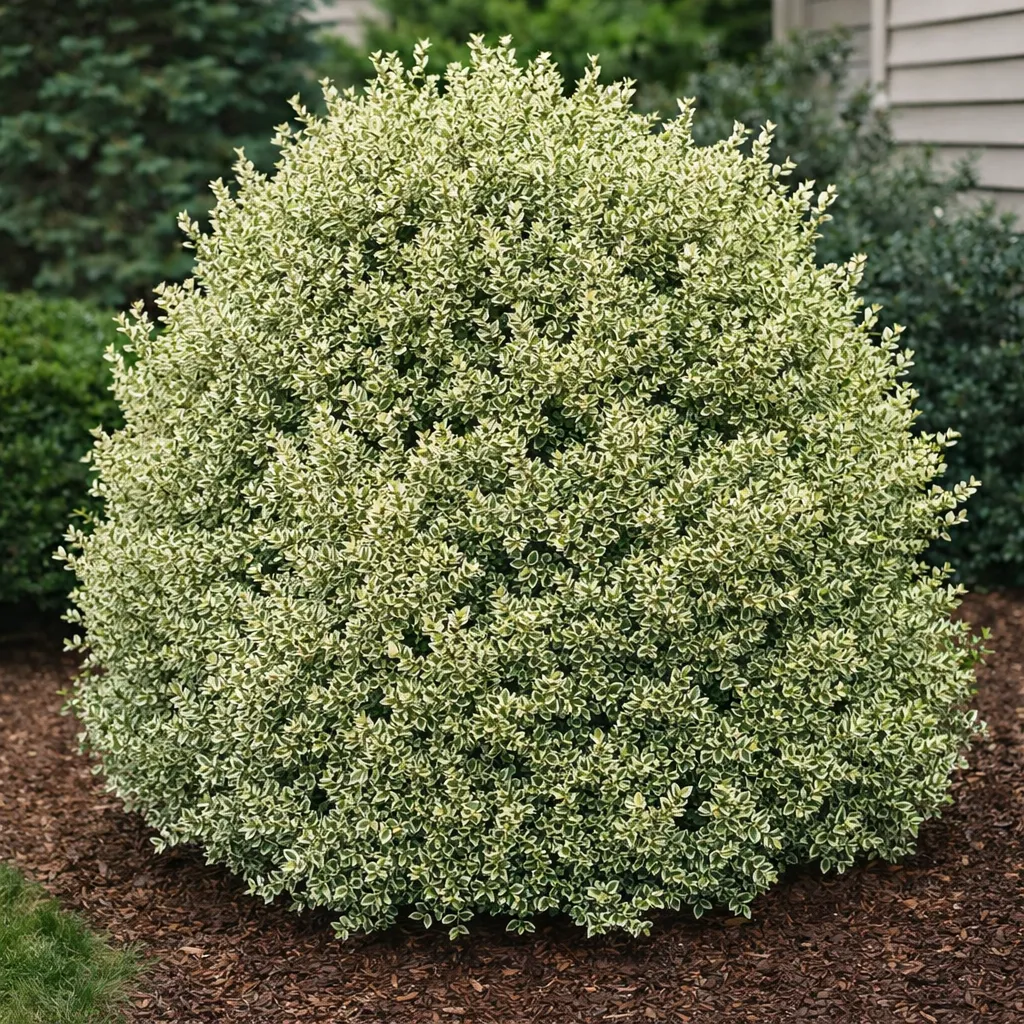
Botanical Name: Buxus sempervirens ‘Variegata’

Common Name: Variegated Boxwood

Mature Height and Width:
5–8′ tall × 4–6′ wide

Growth Habit: Upright-rounded evergreen shrub with dense fine branching. Slightly looser and more open than solid green boxwood selections. Moderate growth rate.

Foliage Description: Small oval leaves with irregular creamy-white margins and medium green centers. Variegation most pronounced on outer growth. Fine texture overall. Winter color retention good in Zones 5–7 with minimal bronzing.

Flower Description: Small, pale yellow-green flowers; lightly fragrant but not showy.

Bloom Time: Early to mid-spring

Fall Color: Evergreen; variegation persists year-round.

Light Requirements: Full sun to partial shade. Best variegation intensity in full sun; avoid deep shade which may reduce contrast.

Hardiness Zone: USDA Zones 5–8

Notable Landscape Uses:
Accent shrub; foundation contrast planting; courtyard planting; mixed evergreen border; formal or informal hedge; lightening element in darker evergreen massing.

Deer Resistance: High
Boxwoods are reliably deer resistant in Northeast Zones 5–7. Significant browsing is uncommon in established plantings.
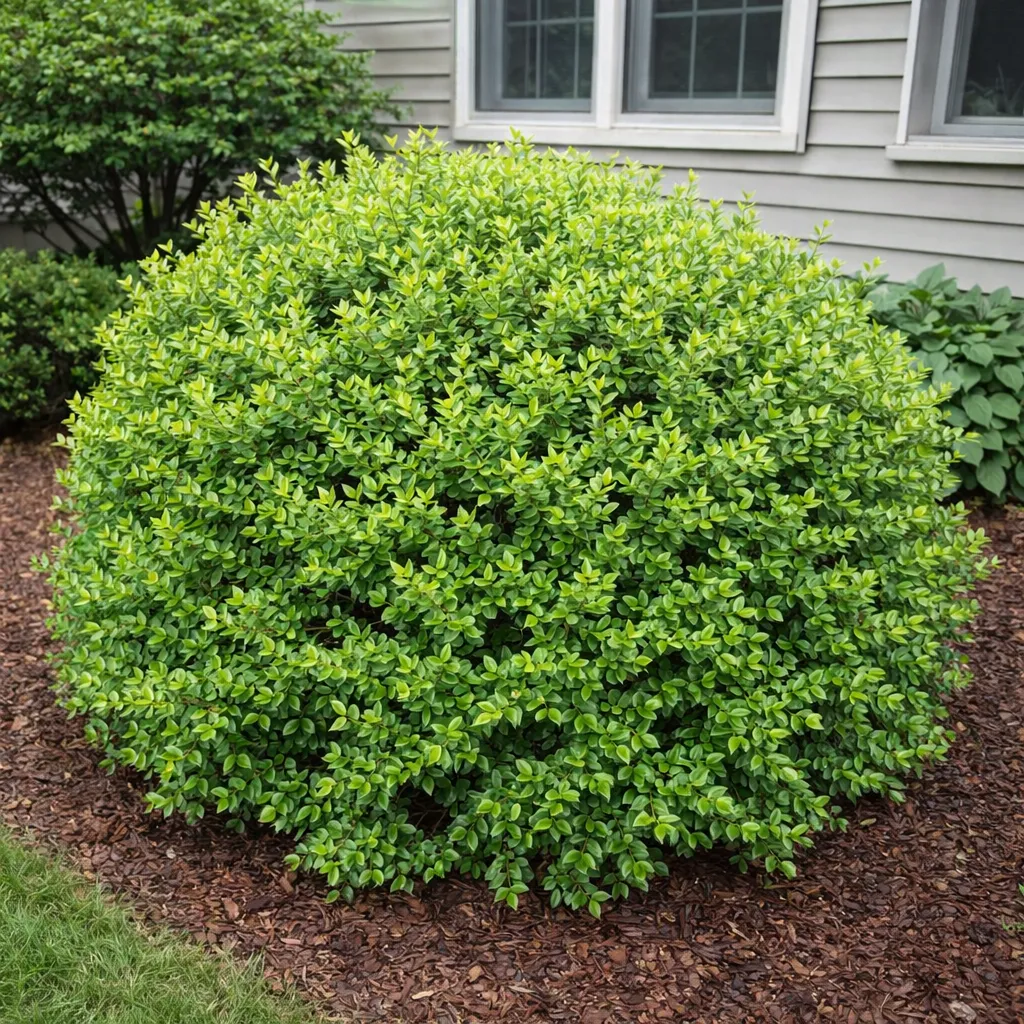
Botanical Name: Buxus microphylla var. japonica ‘Winter Gem’

Common Name: Winter Gem Boxwood

Mature Height and Width:
4–6′ tall × 4–6′ wide

Growth Habit: Dense, rounded evergreen shrub with compact branching. Naturally globe-shaped to broadly mounded. Moderate growth rate with good recovery after pruning.

Foliage Description: Small, oval leaves; medium green in growing season. May develop slight bronze cast in colder winter exposure but returns to green in spring. Fine-textured overall.

Flower Description: Small, pale yellow-green flowers; lightly fragrant but not showy.

Bloom Time: Early to mid-spring

Fall Color: Evergreen; may bronze slightly in winter depending on exposure.

Light Requirements: Full sun to partial shade; tolerates a range of exposures.

Hardiness Zone: USDA Zones 5–9

Notable Landscape Uses:
Low hedge; foundation massing; border edging; parterre gardens; courtyard planting; general evergreen structure shrub.

Deer Resistance: High
Boxwoods are reliably deer resistant in Northeast Zones 5–7. Significant browsing is uncommon in established plantings.

Perennials
Black Mondo GrassOphiopogon planiscapus ‘Nigrescens’ Mature Size: 6–8″ H × 10–12″ W Light Requirements: Part shade to full shade; tolerates morning sun Ideal Soil Conditions: Moist, well‑drained, organically rich soil Notable Characteristics: Dramatic deep black foliage in low mounding clumps. Produces small lilac flowers and blue berries. Excellent contrast plant in shade borders, rock gardens, or containers. Deer Resistance: Moderate to High
Trees & Shrubs
Botanical Name: Cornus kousaCommon Name: Kousa Dogwood Mature Height and Width:15–25' tall × 15–25' wide Growth Habit:Small deciduous ornamental tree with upright form in youth maturing to a broad, layered, horizontal branching structure; develops sculptural multi-tiered canopy with moderate interior openness. Foliage Description:Medium to dark green ovate foliage with subtle surface texture and opposite arrangement; dense summer canopy transitioning to attractive fall coloration. Flower Description (if applicable):Showy creamy white to soft blush four-bracted blooms appearing after leaf emergence; bracts pointed and slightly overlapping with greenish true flowers at center. Bloom Time:Late spring to early summer Fall Color (if applicable):Attractive red to burgundy fall coloration with occasional purple tones. Light Requirements:Full sun to partial shade Hardiness Zone:5–8 Notable Landscape Uses:Specimen tree, patio tree, lawn accent, woodland edge planting, courtyard focal point, layered understory tree, residential foundation accent. Deer Resistance:Low to moderate; young growth may be browsed in Northeast landscapes.
Botanical Name: Ilex crenata ‘Steeds’ Common Name: Steeds Japanese Holly Mature Height and Width: 6–8' tall × 4–5' wide Growth Habit: Upright, narrow pyramidal evergreen shrub with dense branching. Maintains a naturally refined vertical form without heavy shearing. Moderate growth rate. Foliage Description: Small, oval, smooth-edged leaves with a deep glossy green color. Dense foliage creates a fine-textured appearance and strong evergreen structure. Evergreen in Zones 5–8. Flower Description: Small white flowers in late spring; inconspicuous. Female plants may produce small black berries if pollinated, though fruiting is typically light in landscape use. Bloom Time: Late spring Fall Color: Evergreen; retains dark green coloration through winter. Light Requirements: Full sun to partial shade; best density and color in full sun. Hardiness Zone: USDA Zones 5–8 Notable Landscape Uses:Narrow foundation plantings; low privacy screens; formal hedges; driveway edge accents; framing entryways; structured background planting in mixed shrub beds; commercial landscape structure. Deer Resistance: ModerateJapanese holly is generally not a preferred deer browse, though light tip browsing may occur in winter under heavy pressure. Established plants typically experience minimal long-term damage in Zones 5–7.
Botanical Name: Ilex crenata ‘Glow Stick’ Common Name: Glow Stick® Japanese Holly (Gold Sky Pencil Type) Mature Height and Width: 6–8' tall × 1–2' wide Growth Habit: Very narrow, upright, columnar evergreen with tight vertical branching. Maintains a pencil-thin silhouette similar to ‘Sky Pencil’ but with brighter foliage coloration. Foliage Description: Small, oval, smooth-edged leaves in bright golden-yellow to chartreuse tones. Color is strongest in full sun and softens slightly in partial shade. Dense foliage held tightly along upright stems creates a refined, architectural appearance. Evergreen in Zones 5–7. Flower Description: Small white spring flowers; inconspicuous. Female plants may produce small black berries if pollinated, though fruit is not typically ornamental. Bloom Time: Late spring Fall Color: Evergreen; maintains golden-yellow to chartreuse coloration through winter with minimal color shift. Light Requirements: Full sun to partial shade; best gold coloration develops in full sun with adequate moisture. Hardiness Zone: USDA Zones 5–8 Notable Landscape Uses:Vertical accent in narrow foundation beds; flanking entryways; framing garage doors; formal garden structure; modern landscape designs; container accents; small-space privacy screening. Deer Resistance: ModerateJapanese holly is generally not highly preferred by deer, though upright forms may experience occasional tip browsing in winter under heavy pressure. Established plants typically suffer minimal damage in Zones 5–7.
Botanical Name: Ilex glabra Common Name: Inkberry Holly Mature Height and Width: 5–8' tall × 5–8' wide (species); compact cultivars vary from 3–4' tall Growth Habit: Rounded, upright native evergreen shrub with fine branching. Naturally somewhat open at maturity unless maintained or selected cultivar is used. Tends to sucker slowly over time, forming colonies in natural settings. Foliage Description: Narrow, oblong, spineless dark green leaves with a smooth margin. Leaves are concentrated toward stem tips, giving older plants a slightly looser interior unless pruned. Evergreen in Zones 5–7. Flower Description: Small white spring flowers; not ornamentally significant. Female plants produce small black berries that persist into winter and provide wildlife value. Bloom Time: Late spring Fall Color: Evergreen; maintains deep green foliage through winter. Light Requirements: Full sun to partial shade; adaptable to wet soils and tolerates periodic flooding once established. Hardiness Zone: USDA Zones 4–9 Notable Landscape Uses:Native foundation plantings; rain gardens; wetland edge plantings; mass plantings; naturalized borders; low evergreen hedges (when pruned); coastal landscapes; wildlife-friendly gardens. Deer Resistance: ModerateInkberry is not typically a preferred browse species, though deer may sample new growth under pressure. Mature plants generally sustain minimal long-term damage in Zones 5–7.
Botanical Name: Ilex crenata ‘Green Luster’ Common Name: Green Luster Japanese Holly Mature Height and Width: 3–5' tall × 6–8' wide Growth Habit: Low, spreading, broad-mounded evergreen shrub. Wider than tall, forming a dense, ground-hugging mass with arching lateral branching. Foliage Description: Small, oval, smooth-edged leaves with a glossy dark green surface. Fine texture with dense branching that creates a uniform, spreading appearance. Evergreen in Zones 5–7. Flower Description: Small white flowers in late spring; not ornamentally significant. Female plants may produce small black berries if pollinated, though fruiting is generally minimal in landscape settings. Bloom Time: Late spring Fall Color: Evergreen; retains rich dark green color through winter with minimal bronzing. Light Requirements: Full sun to partial shade; adaptable to a range of exposures, though best density occurs in full sun. Hardiness Zone: USDA Zones 5–8 Notable Landscape Uses:Low evergreen hedge; mass plantings; foundation plantings; bank stabilization; slope plantings; edging for larger shrub beds; background evergreen filler; commercial landscapes requiring low-maintenance structure. Deer Resistance: ModerateJapanese holly is generally less preferred by deer compared to broadleaf evergreens with softer foliage. While not immune to browsing, Green Luster typically sustains only light damage in Zones 5–7 unless deer pressure is severe.
Botanical Name: Ilex × ‘Nellie R. Stevens’ Common Name: Nellie R. Stevens Holly Mature Height and Width: 15–25' tall × 8–12' wide Growth Habit: Upright, pyramidal evergreen with a strong central leader and dense branching. Moderate to fast growth rate with a naturally symmetrical outline when unpruned. Foliage Description: Glossy, dark green leaves with prominent spines along margins. Foliage is dense, leathery, and holds color well through winter. Evergreen in Zones 6–9 (marginal Zone 5 in protected sites). Flower Description: Small white flowers in spring; not ornamentally significant. Produces abundant bright red berries on female plants without need for a separate pollinator, making it highly ornamental in fall and winter. Bloom Time: Late spring Fall Color: Evergreen; bright red berries provide strong seasonal interest from fall into winter. Light Requirements: Full sun to partial shade; best berry production occurs in full sun. Hardiness Zone: USDA Zones 6–9 (protected Zone 5 sites) Notable Landscape Uses:Large privacy screens; evergreen property borders; specimen tree in front lawns; holiday interest plantings; windbreaks; tall foundation corners; commercial buffer plantings; background structure in large landscapes. Deer Resistance: HighNellie R. Stevens Holly demonstrates strong deer resistance due to its thick, spiny foliage. While no plant is completely deer-proof, browsing is uncommon and typically limited to light sampling in high-pressure areas. Established plants sustain minimal long-term damage in Zones 6–7.
Botanical Name: Ilex crenata ‘Sky Pencil’ Common Name: Sky Pencil Japanese Holly Mature Height and Width: 6–10' tall × 2–3' wide Growth Habit: Very narrow, upright, columnar evergreen with tight vertical branching. Maintains a pencil-thin profile with minimal lateral spread. Slow to moderate growth rate. Foliage Description: Small, oval, smooth-edged leaves in deep glossy green. Fine texture with dense foliage held closely along upright stems. Evergreen in Zones 6–8 (marginal in protected Zone 5 sites). Flower Description: Small white flowers in late spring; inconspicuous. Female plants may produce small black berries if a pollinator is present. Bloom Time: Late spring Fall Color: Evergreen; retains dark green color through winter. Light Requirements: Full sun to partial shade; best density and structure in full sun. Hardiness Zone: USDA Zones 6–8 (protected Zone 5 locations) Notable Landscape Uses:Vertical accent in narrow foundation beds; flanking entryways or garage doors; formal garden structure; container plantings; small-space privacy screens; modern landscape designs; driveway edge plantings. Deer Resistance: ModerateJapanese holly is generally less preferred by deer, but the narrow upright form can be susceptible to winter tip browsing in high-pressure areas. Established plants typically recover well from light damage.
Botanical Name: Ilex crenata ‘Soft Touch’ Common Name: Soft Touch Japanese Holly Mature Height and Width: 2–3' tall × 3–4' wide Growth Habit: Low, mounded, spreading evergreen shrub with a soft, refined texture. Naturally dense without rigid structure; maintains a gentle, cushion-like form. Foliage Description: Small, slightly elongated oval leaves with a smooth margin and soft matte finish. Foliage is medium to dark green and notably softer in appearance than many other Ilex crenata cultivars. Evergreen in Zones 5–7. Flower Description: Small white flowers in late spring; not ornamentally significant. Female plants may produce small black berries if pollinated, though fruit is typically minimal in landscape use. Bloom Time: Late spring Fall Color: Evergreen; retains consistent green coloration through winter with minimal bronzing. Light Requirements: Full sun to partial shade; performs well in filtered light and is adaptable to a range of exposures. Hardiness Zone: USDA Zones 5–8 Notable Landscape Uses:Foundation plantings; low hedges; border edging; mass plantings; understory evergreen filler; mixed shrub beds; woodland edge plantings; container use in shaded patios. Deer Resistance: ModerateJapanese holly is generally less preferred by deer compared to broadleaf evergreens with softer foliage. While not completely deer-proof, browsing is usually limited in Zones 5–7 except under heavy winter pressure.
Touch of Gold™ HollyIlex crenata 'ANNYS1' (Touch of Gold™) Mature Size: 2–3′ H × 3–4′ W Light Requirements: Full sun to part shade; brightest golden color in full sun Ideal Soil Conditions: Moist, well-drained, slightly acidic soil; adaptable to clay or sandy soils, but avoid soggy conditions Notable Characteristics: Compact, mounding evergreen with dense golden-yellow foliage that holds its color year-round. Finer texture than most hollies and excellent color contrast in borders, low hedges, or foundation plantings. Naturally tidy with little maintenance. Deer Resistance: Moderate to High — rarely browsed once established.
Botanical Name: Ilex crenata ‘Helleri’ Common Name: Helleri Japanese Holly Mature Height and Width: 3–4' tall × 4–6' wide Growth Habit: Low, broad-mounded evergreen shrub with a dense, compact branching structure. Naturally wider than tall, forming a tight cushion-like mass without aggressive vertical growth. Slow to moderate growth rate. Foliage Description: Small, oval, smooth-edged leaves with a deep green, slightly glossy finish. Fine texture and dense interior branching provide a solid evergreen presence year-round. Flower Description: Small white flowers in late spring; not ornamentally significant. Female plants may produce small black berries if pollinated, though fruit is typically minimal in landscape settings. Bloom Time: Late spring Fall Color: Evergreen; retains consistent dark green color through winter with minimal bronzing. Light Requirements: Full sun to partial shade; maintains best density in full sun. Hardiness Zone: USDA Zones 5–8 Notable Landscape Uses:Low foundation plantings; mass plantings; low evergreen borders; commercial landscapes; bank stabilization; foreground shrub in layered plantings; substitute for boxwood in deer-prone areas. Deer Resistance: ModerateHelleri Japanese Holly is generally less preferred by deer compared to softer broadleaf evergreens. While occasional browsing may occur in high-pressure areas, established plants typically sustain limited damage in Zones 5–7.
Botanical Name: Ilex × ‘Conaf’ Common Name: Oakleaf Holly Mature Height and Width: 14–20' tall × 8-10' wide Growth Habit: Upright, pyramidal evergreen with a strong central leader and dense, layered branching. Moderate to fast growth rate. Maintains a tree-like form when left unpruned. Foliage Description: Distinctive oak-shaped leaves with multiple lobes and spined margins. Foliage emerges bronze-red in spring before maturing to glossy dark green. Thick, leathery texture provides year-round structure. Flower Description: Small white flowers in late spring; not ornamentally significant. Female plants produce abundant bright red berries that persist into winter. Bloom Time: Late spring Fall Color: Evergreen; seasonal interest comes from red berries and occasional bronze winter tones in new growth. Light Requirements: Full sun to partial shade; best berry production and dense growth in full sun. Hardiness Zone: USDA Zones 6–9 (protected Zone 5 sites) Notable Landscape Uses:Large privacy screens; evergreen specimen tree; corner lot anchor planting; tall foundation planting; property border screening; windbreak; year-round structure in mixed evergreen plantings. Deer Resistance: HighOakleaf Holly has strong deer resistance due to its thick, spiny foliage. Browsing is uncommon even in moderate to high-pressure deer areas. Established plants typically sustain minimal damage in Zones 6–7.
Botanical Name: Ilex × ‘Magland’ Common Name: Oakland™ Holly Mature Height and Width: 12–20' tall × 8–12' wide Growth Habit: Upright, pyramidal evergreen with a strong central leader and dense, uniform branching. Slightly more refined and compact than Oakleaf Holly. Moderate to fast growth rate. Foliage Description: Glossy, dark green leaves with a distinctive oak-shaped, multi-lobed form and subtle spines along the margins. New growth emerges burgundy to bronze-red before maturing to deep green. Thick, leathery texture provides year-round structure. Flower Description: Small white flowers in late spring; not ornamentally significant. Female plants produce bright red berries that persist into winter, adding seasonal interest. Bloom Time: Late spring Fall Color: Evergreen; seasonal interest provided by red berries and occasional bronze tones in new growth. Light Requirements: Full sun to partial shade; best berry production and densest growth occur in full sun. Hardiness Zone: USDA Zones 6–9 (protected Zone 5 sites) Notable Landscape Uses:Evergreen privacy screens; tall foundation corner planting; specimen tree in suburban lawns; property line buffer; windbreak; structured backdrop in mixed evergreen landscapes; commercial screening. Deer Resistance: HighOakland Holly demonstrates strong deer resistance due to its thick, spined foliage and leathery texture. While no plant is completely immune, significant browsing is uncommon in Zones 6–7 once plants are established.
Botanical Name: Rhododendron ‘Robleg’ Common Name: Encore® Azalea Autumn Angel® Mature Height and Width: 3–4' tall × 3–4' wide Growth Habit: Compact, rounded, mounded evergreen shrub with dense branching. Maintains a tidy form with minimal pruning. Moderate growth rate. Foliage Description: Small, elliptic dark green evergreen leaves with a fine texture. Foliage remains attractive year-round in Zones 6–7, often taking on slight bronze tones in colder weather. Flower Description: Large, pure white single blooms with a soft ruffled edge and light yellow throat. Flowers are showy and abundant, often covering the plant during peak bloom cycles. Bloom Time: Spring (primary heavy bloom), with repeat blooming in summer and fall. Fall Color: Evergreen; no significant fall color change. Light Requirements: Full sun to partial shade; best rebloom performance occurs with at least 5–6 hours of direct sunlight. Hardiness Zone: USDA Zones 6–9 Notable Landscape Uses:Foundation plantings; low evergreen borders; mass plantings; front entry accents; patio edge plantings; woodland garden edges; seasonal color focal points; suitable for containers in protected settings. Deer Resistance: Low to ModerateAzaleas are commonly browsed by deer, especially tender new growth and flower buds. Protection is recommended in high-pressure deer areas in Zones 6–7.
Botanical Name: Rhododendron ‘Roblez’ Common Name: Encore® Azalea Autumn Bonfire® Mature Height and Width: 3–4' tall × 3–4' wide Growth Habit: Compact, rounded, mounded evergreen shrub with dense branching. Naturally forms a low, slightly irregular dome with visible branch structure beneath bloom coverage. Moderate growth rate. Foliage Description: Small, elliptic dark green evergreen leaves with fine texture. Foliage may develop slight bronze tones in colder weather but generally retains rich green color year-round in Zones 6–7. Flower Description: Semi-double to double, vibrant true red flowers with a full, layered petal structure. Blooms are saturated red without strong pink or orange undertones. Bloom Time: Heavy spring bloom, followed by repeat flowering in summer and fall. Fall Color: Evergreen; no significant fall color change. Light Requirements: Full sun to partial shade; best rebloom performance with at least 5–6 hours of direct sun. Hardiness Zone: USDA Zones 6–9 Notable Landscape Uses:Foundation plantings; mass plantings for bold color impact; patio edge accents; low evergreen borders; entryway focal points; mixed shrub beds; container plantings in protected areas. Deer Resistance: Low to ModerateAzaleas are frequently browsed by deer, particularly tender new growth and flower buds. Protection is recommended in areas with moderate to heavy deer pressure in Zones 6–7.
Botanical Name: Rhododendron ‘Roblec’ Common Name: Encore® Azalea Autumn Carnation® Mature Height and Width: 4–5' tall × 4–5' wide Growth Habit: Upright to broadly rounded evergreen shrub with moderate density. Slightly taller and more open than compact Encore selections, forming a refined but natural dome over time. Foliage Description: Small to medium elliptic dark green evergreen leaves with a fine texture. Foliage remains attractive year-round in Zones 6–7, occasionally developing light bronze winter tones. Flower Description: Semi-double, soft pink blooms with ruffled petals and a slightly deeper pink center. Flowers are abundant during peak cycles but allow interior foliage visibility. Bloom Time: Heavy spring bloom with repeat flowering in summer and fall. Fall Color: Evergreen; no significant fall color change. Light Requirements: Full sun to partial shade; best rebloom performance with 5–6 hours of direct sun. Hardiness Zone: USDA Zones 6–9 Notable Landscape Uses:Foundation plantings; mass plantings for seasonal color; courtyard gardens; patio edge plantings; mixed shrub borders; soft transitional plant in layered evergreen beds. Deer Resistance: Low to ModerateAzaleas are commonly browsed by deer, particularly new growth and flower buds. Protection is recommended in areas with moderate to heavy deer pressure in Zones 6–7.
Create a highly realistic, photorealistic landscape photograph of a mature Encore® Azalea Autumn Chiffon® (Rhododendron ‘Robeld’) in a Northeast U.S. residential landscape (Zones 6–7). The shrub should be approximately 2.5–3 feet tall and 3–4 feet wide with a low, compact, naturally mounded form. Reflect its true growth habit — refined but not sheared. Include mild asymmetry and subtle extension growth visible at branch tips. Show the plant in peak spring bloom with abundant soft light pink single flowers featuring slightly deeper pink throats. Bloom coverage should be generous but not completely solid — allow visible evergreen foliage and natural interior depth. Foliage must be dark green and visible beneath blooms. Placement: small front courtyard planting near a brick entry step. Use a unique residential context. Do not reuse previous landscape compositions. Vary hardscape material, mulch bed contour, companion shrubs, and background home style. Brown hardwood mulch bed with organic edging.Soft natural spring daylight with gentle shadows.Slight background blur for depth.Shrub fills 80–90% of square 1:1 frame. Avoid perfectly symmetrical or geometric plant shapes.Avoid cloned, identical plant forms.Maintain professional nursery-catalog realism. No text, watermark, labels, or layout graphics. Standalone photograph only.
Botanical Name: Ilex crenata ‘NCVX1’ Common Name: Glow Pop® Japanese Holly Mature Height and Width: 2–3' tall × 2–3' wide Growth Habit: Naturally rounded, dense, globe-shaped evergreen shrub with tight branching and uniform structure. Maintains compact form without shearing. Foliage Description: Small, oval to slightly rounded leaves with a smooth edge. Foliage is bright lime-green to chartreuse, holding vibrant color through the growing season. Fine-textured and dense. Evergreen in Zones 5–7. Flower Description: Small white spring flowers; not ornamentally significant. May produce small black berries on female plants if pollinated, though fruiting is not a primary ornamental feature. Bloom Time: Late spring Fall Color: Evergreen; maintains bright chartreuse-green color through winter. Light Requirements: Full sun to partial shade; best color development in full sun with adequate moisture. Hardiness Zone: USDA Zones 5–8 Notable Landscape Uses:Low foundation plantings; border edging; mass plantings; modern landscape designs; color contrast in mixed evergreen beds; walkway accents; structured formal gardens; container use. Deer Resistance: Moderate to HighJapanese holly is generally less preferred by deer due to small, firm foliage. While not completely deer-proof, browsing pressure is typically light in Zones 5–7 compared to broadleaf evergreens with softer foliage.
Botanical Name: Ilex crenata ‘Compacta’ Common Name: Compacta Japanese Holly Mature Height and Width: 6–8' tall × 6–8' wide Growth Habit: Dense, upright to broadly rounded evergreen shrub. Naturally compact with fine branching, forming a full, refined canopy. Moderate growth rate. Foliage Description: Small, oval, smooth-edged leaves with a rich dark green, glossy finish. Dense foliage provides a fine-textured appearance and strong evergreen structure. Flower Description: Small white flowers in late spring; not ornamentally significant. Female plants may produce small black berries if pollinated, though fruit is typically sparse in landscape use. Bloom Time: Late spring Fall Color: Evergreen; maintains deep green coloration through winter. Light Requirements: Full sun to partial shade; best density and fullness in full sun. Hardiness Zone: USDA Zones 5–8 Notable Landscape Uses:Foundation plantings; medium evergreen hedges; privacy screens; background shrub in mixed borders; formal garden structure; mass plantings; commercial landscapes; adaptable substitute for boxwood in deer-prone areas. Deer Resistance: ModerateJapanese holly is generally less preferred by deer than boxwood or softer broadleaf evergreens. While not immune to browsing, established Compacta plants typically experience limited damage in Zones 5–7 except under severe winter pressure.
Botanical Name: Rhododendron ‘Conleb’ Common Name: Encore® Azalea Autumn Embers® Mature Height and Width: 3–4' tall × 3–4' wide Growth Habit: Compact, rounded evergreen shrub with dense branching. Naturally forms a tidy but slightly layered mound. Moderate growth rate. Foliage Description: Small, elliptic dark green evergreen leaves with a fine texture. Foliage may develop subtle bronze undertones in cooler months in Zones 6–7. Flower Description: Semi-double to double blooms in rich, deep red with velvety tones. Flowers are full and layered, creating a bold, saturated spring display. Bloom Time: Heavy spring bloom with repeat flowering in summer and fall. Fall Color: Evergreen; foliage may bronze slightly in winter but does not produce traditional fall color. Light Requirements: Full sun to partial shade; best rebloom performance with at least 5–6 hours of direct sunlight. Hardiness Zone: USDA Zones 6–9 Notable Landscape Uses:Foundation plantings; mass plantings for bold color impact; patio-edge plantings; mixed shrub borders; courtyard gardens; low evergreen hedges; container use in protected settings. Deer Resistance: Low to ModerateAzaleas are commonly browsed by deer, particularly new growth and flower buds. Protection is recommended in moderate to heavy deer pressure areas in Zones 6–7.
Botanical Name: Rhododendron ‘Girard’s Crimson’ Common Name: Girard’s Crimson Azalea Mature Height and Width: 2–3' tall × 3–4' wide Growth Habit: Low, compact, mounded evergreen shrub with dense branching. Naturally forms a tight cushion shape that is slightly wider than tall. Slow to moderate growth rate. Foliage Description: Small, elliptic dark green evergreen leaves with a smooth texture. Foliage often develops rich burgundy-bronze winter coloration in Zones 5–7, adding seasonal interest. Flower Description: Abundant single, deep crimson-red blooms with slightly ruffled petal edges. Flowers are bold and saturated, creating a strong spring display. Bloom Time: Mid-spring Fall Color: Evergreen; foliage develops burgundy-bronze winter tones. Light Requirements: Full sun to partial shade; best flowering with 4–6 hours of direct sunlight. Hardiness Zone: USDA Zones 5–8 Notable Landscape Uses:Low foundation plantings; mass plantings for dramatic spring color; border edging; slope plantings; woodland garden edges; small-space evergreen shrub; container use in protected areas. Deer Resistance: Low to ModerateAzaleas are frequently browsed by deer, particularly new growth and flower buds. Protection is recommended in moderate to heavy deer pressure areas in Zones 5–7.
SECTION 1 — Professional Plant Specifications Botanical Name: Ilex aquifolium ‘Goshiki’ Common Name: Goshiki Holly Mature Height and Width: 4-5' tall × 3-4' wide Growth Habit: Upright, dense evergreen shrub with a broadly pyramidal to oval form. Moderate growth rate with strong branching and a naturally refined structure. Foliage Description: Distinctive variegated foliage with green centers and irregular creamy-yellow margins. New growth emerges flushed with pink to rose tones, creating a multi-colored effect (“Goshiki” translates to “five colors”). Leaves are thick, glossy, and lightly spined. Evergreen in Zones 6–8. Flower Description: Small white flowers in late spring; not ornamentally significant. Female plants may produce red berries if pollinated, though fruiting is often light. Bloom Time: Late spring Fall Color: Evergreen; seasonal interest comes from variegated foliage and occasional berry display rather than fall color. Light Requirements: Full sun to partial shade; best variegation and pink new growth color develop in full sun. Hardiness Zone: USDA Zones 6–8 Notable Landscape Uses:Foundation anchor shrub; mixed evergreen borders; winter interest plantings; accent shrub in courtyard gardens; property line screens; focal point in smaller residential landscapes; container specimen in protected settings. Deer Resistance: HighGoshiki Holly demonstrates strong deer resistance due to its thick, spined foliage. Browsing is uncommon in Zones 6–7, even in moderate deer pressure areas.
Botanical Name: Rhododendron ‘Tradition’ Common Name: Tradition Azalea (Pink) Mature Height and Width: 4–6' tall × 4–6' wide Growth Habit: Upright to broadly rounded evergreen shrub with moderate density. Slightly taller and more open than dwarf Encore types, forming a natural, softly structured mound over time. Moderate growth rate. Foliage Description: Medium-sized elliptic dark green evergreen leaves with a slightly glossy surface. Foliage may develop bronze to burgundy tones in winter in Zones 6–7. Flower Description: Large, single to semi-double bright pink flowers with a deeper pink to red blotch on upper petals. Blooms are showy and abundant in spring, with broad petals creating a bold display. Bloom Time: Mid to late spring Fall Color: Evergreen; foliage may bronze in winter but does not exhibit traditional fall color. Light Requirements: Full sun to partial shade; best flowering with 4–6 hours of direct sun. Hardiness Zone: USDA Zones 6–9 Notable Landscape Uses:Foundation plantings; mass plantings; woodland garden edges; slope plantings; focal shrub in mixed borders; larger courtyard plantings; seasonal spring color anchor in residential landscapes. Deer Resistance: Low to ModerateAzaleas are frequently browsed by deer, especially tender new growth and flower buds. Protection is recommended in areas with moderate to heavy deer pressure in Zones 6–7.
Botanical Name: Rhododendron ‘Hershey Red’ Common Name: Hershey Red Azalea Mature Height and Width: 4–6' tall × 4–6' wide Growth Habit: Upright to broadly rounded evergreen shrub with moderate density. Forms a natural, slightly open mound with visible interior branching as it matures. Moderate growth rate. Foliage Description: Medium-sized elliptic dark green evergreen leaves with a slightly glossy surface. Foliage may take on bronze tones in winter in Zones 6–7. Flower Description: Large, single, vibrant red flowers with a subtle darker red blotch on upper petals. Blooms are bold and showy, creating a strong spring color display. Bloom Time: Mid to late spring Fall Color: Evergreen; foliage may bronze slightly in winter but does not produce fall color. Light Requirements: Full sun to partial shade; best flowering occurs with 4–6 hours of direct sunlight. Hardiness Zone: USDA Zones 6–9 Notable Landscape Uses:Foundation plantings; mass plantings for strong spring color; woodland edge gardens; mixed shrub borders; focal shrub in medium-sized residential beds; courtyard plantings. Deer Resistance: Low to ModerateAzaleas are frequently browsed by deer, particularly tender new growth and flower buds. Protection is recommended in moderate to heavy deer pressure areas in Zones 6–7.
Botanical Name: Rhododendron ‘Apple Blossom’ Common Name: Apple Blossom Azalea Mature Height and Width: 4–6' tall × 4–6' wide Growth Habit: Upright to broadly rounded evergreen shrub with moderate density. Develops a natural, slightly open mound over time with visible interior branching. Moderate growth rate. Foliage Description: Medium-sized elliptic dark green evergreen leaves with a light gloss. Foliage may develop bronze to burgundy winter tones in Zones 6–7. Flower Description: Large single blooms opening soft blush pink with deeper rose-pink edging, often fading lighter toward the center. Petals are broad and slightly overlapping, creating a full but natural spring display. Bloom Time: Mid-spring Fall Color: Evergreen; foliage may bronze in winter but does not produce traditional fall color. Light Requirements: Full sun to partial shade; best flowering with 4–6 hours of direct sunlight. Hardiness Zone: USDA Zones 6–9 Notable Landscape Uses:Foundation plantings; mass plantings for soft seasonal color; woodland-edge gardens; mixed shrub borders; courtyard accents; transitional shrub in layered evergreen beds. Deer Resistance: Low to ModerateAzaleas are commonly browsed by deer, particularly tender new growth and flower buds. Protection is recommended in moderate to heavy deer pressure areas in Zones 6–7.
Botanical Name: Rhododendron ‘Delaware Valley White’ Common Name: Delaware Valley White Azalea Mature Height and Width: 3–4' tall × 4–5' wide Growth Habit: Low, spreading evergreen shrub with a broad, rounded form. Naturally wider than tall, forming a dense but soft mound over time. Moderate growth rate. Foliage Description: Small, elliptic dark green evergreen leaves with a slightly glossy finish. Foliage may develop subtle bronze winter tones in Zones 6–7. Flower Description: Large, single, pure white blooms with lightly ruffled petals. Flowers are showy and abundant, creating a bright spring display. Bloom Time: Mid-spring Fall Color: Evergreen; foliage may bronze slightly in winter but does not produce traditional fall color. Light Requirements: Full sun to partial shade; best flowering with 4–6 hours of direct sunlight. Hardiness Zone: USDA Zones 6–8 Notable Landscape Uses:Foundation plantings; mass plantings for clean spring contrast; woodland-edge gardens; mixed shrub borders; low evergreen borders; courtyard gardens; transitional shrub in layered evergreen beds. Deer Resistance: Low to ModerateAzaleas are frequently browsed by deer, especially tender new growth and flower buds. Protection is recommended in moderate to heavy deer pressure areas in Zones 6–7.
Botanical Name: Rhododendron ‘Karen’ Common Name: Karen Azalea Mature Height and Width: 3–4' tall × 4–5' wide Growth Habit: Compact, rounded, slightly spreading evergreen shrub with moderate density. Naturally broader than tall with a soft, informal mounded shape. Moderate growth rate. Foliage Description: Small, elliptic dark green evergreen leaves with a slightly matte texture. Foliage often develops a burgundy-bronze tint in fall and winter in Zones 5–7, adding seasonal interest. Flower Description: Abundant single lavender-pink flowers with deeper magenta spotting on upper petals. Flowers are medium-sized and slightly ruffled, creating a soft spring display. Bloom Time: Mid to late spring Fall Color: Evergreen; foliage may take on burgundy-bronze winter tones. Light Requirements: Full sun to partial shade; best flowering with 4–6 hours of direct sunlight. Hardiness Zone: USDA Zones 5–8 Notable Landscape Uses:Foundation plantings; woodland garden edges; mass plantings; low evergreen borders; slope plantings; spring focal points in mixed shrub beds; adaptable to smaller residential landscapes. Deer Resistance: Low to ModerateAzaleas are commonly browsed by deer, especially new growth and flower buds. Karen Azalea should be protected in moderate to heavy deer pressure areas in Zones 5–7.
Botanical Name: Rhododendron yedoense var. poukhanense Common Name: Korean Azalea (Poukhanense Azalea) Mature Height and Width: 3–6' tall × 4–6' wide Growth Habit: Broad, spreading deciduous azalea with an open, natural branching structure. Forms a soft, informal mound with layered growth and visible interior framework. Moderate growth rate. Foliage Description: Small, narrow elliptic green leaves during the growing season. Deciduous in Zones 5–7, with foliage often developing attractive reddish-bronze fall coloration before dropping. Flower Description: Funnel-shaped lavender to rosy-purple single flowers with deeper spotting on upper petals. Blooms are slightly smaller than many hybrid azaleas and appear before or just as foliage emerges. Bloom Time: Early to mid-spring Fall Color: Reddish-bronze to burgundy before leaf drop. Light Requirements: Full sun to partial shade; best flowering in full sun with adequate moisture. Hardiness Zone: USDA Zones 4–8 Notable Landscape Uses:Naturalized woodland plantings; slope stabilization; mass plantings; mixed shrub borders; early spring color in informal gardens; transitional shrub in native-inspired landscapes; foundation plantings in colder regions. Deer Resistance: Low to ModerateLike most azaleas, Poukhanense may be browsed by deer, particularly tender new growth and flower buds. Protection is recommended in areas with moderate to heavy deer pressure in Zones 5–7.
Botanical Name: Euonymus japonicus ‘Silver Queen’ Common Name: Silver Queen Euonymus Mature Height and Width: 8–12' tall × 6–8' wide Growth Habit: Upright, broadly oval evergreen shrub with moderately dense branching. Can be maintained as a hedge or allowed to develop into a large, informal shrub. Moderate growth rate. Foliage Description: Large, glossy, oval leaves with dark green centers and creamy-white margins. Variegation is bold and clearly defined, providing strong year-round contrast. Evergreen in Zones 6–9 (marginal in protected Zone 6 sites). Flower Description: Small greenish-white flowers in late spring; not ornamentally significant. Bloom Time: Late spring Fall Color: Evergreen; maintains variegated foliage through winter. Light Requirements: Full sun to partial shade; best variegation and density occur in full sun. Hardiness Zone: USDA Zones 6–9 Notable Landscape Uses:Foundation screening; informal hedges; mixed evergreen borders; corner anchor planting; privacy plantings; coastal landscapes; contrast shrub in modern designs. Deer Resistance: Low to ModerateEuonymus is occasionally browsed by deer, particularly tender new growth. Damage levels vary by region; protection may be necessary in high-pressure areas in Zones 6–7.
Botanical Name: Abelia × grandiflora ‘Edward Goucher’ Common Name: Edward Goucher Abelia Mature Height and Width: 4–6' tall × 4–6' wide Growth Habit: Gracefully arching, rounded deciduous to semi-evergreen shrub with a fine-textured, open branching structure. Forms a soft, fountain-like mound with gently cascading outer stems. Moderate growth rate. Foliage Description: Small, glossy, oval leaves emerging bronze to reddish in spring, maturing to medium green in summer. Foliage may retain a reddish-bronze tint into fall and winter in Zones 6–7. Flower Description: Small, trumpet-shaped lavender-pink flowers with rosy sepals that persist after petals drop, extending ornamental interest. Blooms are lightly fragrant and attractive to pollinators. Bloom Time: Late spring through early fall Fall Color: Bronze to reddish tones in cooler weather; semi-evergreen in protected Zone 6 sites. Light Requirements: Full sun to partial shade; best flowering and densest habit occur in full sun. Hardiness Zone: USDA Zones 6–9 Notable Landscape Uses:Foundation plantings; informal hedges; mixed shrub borders; pollinator gardens; patio-adjacent plantings; mass plantings; transitional shrub in layered landscapes. Deer Resistance: ModerateAbelia is generally not a preferred browse, though tender new growth may be sampled in high-pressure deer areas. Established plants typically recover well from minor browsing in Zones 6–7.
Botanical Name: Abelia × grandiflora ‘Kaleidoscope’ Common Name: Kaleidoscope Abelia Mature Height and Width: 2–3' tall × 3–4' wide Growth Habit: Low, compact, spreading shrub with a dense but slightly arching habit. Naturally wider than tall, forming a refined but informal mound. Moderate growth rate. Foliage Description: Variegated foliage with bright golden-yellow centers and medium green margins. In summer, foliage maintains strong gold coloration; in fall and winter, leaves often develop orange to reddish tones. Fine texture with dense branching. Semi-evergreen in Zones 6–7. Flower Description: Small white trumpet-shaped flowers with soft pink sepals that persist after bloom. Flowers are lightly fragrant and appear above the foliage. Bloom Time: Late spring through summer Fall Color: Orange to reddish tones develop as temperatures cool. Light Requirements: Full sun to partial shade; best gold coloration occurs in full sun. Hardiness Zone: USDA Zones 6–9 Notable Landscape Uses:Low foundation plantings; mass plantings; border edging; slope plantings; patio-edge accents; mixed perennial beds; color contrast in modern landscapes; container plantings. Deer Resistance: ModerateAbelia is generally not heavily browsed, though tender new growth may be sampled in high-pressure deer areas. Established plants typically sustain only minor damage in Zones 6–7.
SECTION 1 — Professional Plant Specifications Botanical Name: Abelia × grandiflora ‘Little Richard’ Common Name: Little Richard Abelia Mature Height and Width: 3–4' tall × 3–4' wide Growth Habit: Compact, rounded shrub with dense branching and a slightly arching outer habit. More upright and tighter than ‘Edward Goucher,’ forming a refined but natural mound. Moderate growth rate. Foliage Description: Small, glossy, deep green oval leaves with a fine texture. New growth may show a soft bronze tint in spring. Semi-evergreen in Zones 6–7, with some foliage retained in milder winters. Flower Description: Small white to pale pink trumpet-shaped flowers borne in clusters at branch tips. Rosy sepals persist after petals drop, extending ornamental interest. Lightly fragrant and attractive to pollinators. Bloom Time: Late spring through summer Fall Color: Foliage may develop light bronze to purplish tones in cooler weather. Light Requirements: Full sun to partial shade; best flowering and densest growth occur in full sun. Hardiness Zone: USDA Zones 6–9 Notable Landscape Uses:Foundation plantings; low informal hedges; mass plantings; patio-adjacent borders; mixed shrub beds; pollinator gardens; compact accent in smaller residential landscapes. Deer Resistance: ModerateAbelia is generally not a preferred browse species. Light sampling of new growth may occur in high-pressure deer areas, but established plants typically sustain minimal long-term damage in Zones 6–7.
Botanical Name: Abelia × grandiflora ‘Radiance’ Common Name: Radiance Abelia Mature Height and Width: 2–3' tall × 3–4' wide Growth Habit: Low, compact, spreading shrub with a refined but slightly arching form. Naturally wider than tall, forming a soft, layered mound with fine branching. Moderate growth rate. Foliage Description: Variegated foliage with medium green centers and creamy white margins. New growth often emerges with a soft pink blush, especially in spring and fall. Leaves are small, glossy, and finely textured. Semi-evergreen in Zones 6–7. Flower Description: Small, tubular white flowers with rosy-pink sepals that persist after bloom, adding extended seasonal interest. Lightly fragrant and attractive to pollinators. Bloom Time: Late spring through summer Fall Color: Foliage may develop soft pink to reddish tones in cooler weather. Light Requirements: Full sun to partial shade; best variegation and flowering occur in full sun. Hardiness Zone: USDA Zones 6–9 Notable Landscape Uses:Low foundation plantings; mass plantings; border edging; slope plantings; patio-edge accents; mixed perennial beds; color contrast in evergreen groupings; container plantings. Deer Resistance: ModerateAbelia is generally not heavily browsed. Occasional sampling of tender new growth may occur under heavy deer pressure, but established plants typically sustain minimal long-term damage in Zones 6–7.
SECTION 1 — Professional Plant Specifications Botanical Name: Aucuba japonica ‘Variegata’ Common Name: Gold Dust Aucuba Mature Height and Width: 6–10' tall × 4–6' wide Growth Habit: Upright to broadly oval evergreen shrub with moderate density. Forms a naturally layered structure with strong vertical stems and slightly arching outer branches. Moderate growth rate. Foliage Description: Large, glossy, leathery dark green leaves heavily speckled with bright yellow variegation (“gold dust”). Leaves are broad, oval, and thick-textured. Evergreen in Zones 6–9 (protected Zone 6 sites recommended). Flower Description: Small purplish-maroon flowers in early spring; not highly ornamental. Female plants may produce bright red berries in fall if pollinated. Bloom Time: Early spring Fall Color: Evergreen; seasonal interest comes from variegated foliage and potential red berries. Light Requirements: Partial shade to full shade; best foliage quality and variegation retention occur in filtered light. Can tolerate morning sun but avoid harsh afternoon exposure. Hardiness Zone: USDA Zones 6–9 Notable Landscape Uses:Shade foundation plantings; woodland garden accents; north-side plantings; courtyard gardens; mixed evergreen borders; contrast foliage in shaded beds; container use in protected settings. Deer Resistance: ModerateAucuba is generally not a preferred deer browse due to its thick, leathery foliage. While not completely immune, established plants typically experience minimal damage in Zones 6–7.
Botanical Name: Cryptomeria japonica ‘Globosa Nana’ Common Name: Dwarf Japanese Cedar Mature Height and Width: 3–4' tall × 4–5' wide Growth Habit: Dense, globose to broadly rounded evergreen shrub. Naturally compact and refined with soft-textured foliage and layered interior branching. Slow growth rate. Foliage Description: Fine, awl-shaped evergreen foliage with a soft, feathery texture. Summer color is rich medium green; foliage often develops attractive bronze to purplish tones in winter in Zones 5–7. Flower Description: Not ornamentally significant; produces inconspicuous cones typical of the species. Bloom Time: Not applicable Fall Color: Evergreen; develops bronze to reddish-purple winter coloration. Light Requirements: Full sun to partial shade; best density and winter color in full sun. Hardiness Zone: USDA Zones 5–9 Notable Landscape Uses:Foundation plantings; low evergreen borders; rock gardens; mass plantings; front-of-border accent; Japanese-inspired gardens; courtyard plantings; container use in protected settings. Deer Resistance: Moderate to HighCryptomeria is generally not heavily browsed by deer. While occasional sampling may occur, established plants typically sustain minimal damage in Zones 5–7.
Botanical Name: Euonymus japonicus ‘Aureomarginatus’ Common Name: Golden Euonymus Mature Height and Width: 6–10' tall × 4–6' wide Growth Habit: Upright to broadly oval evergreen shrub with moderate density. Naturally forms a structured but informal shape; can be maintained as a hedge or allowed to develop into a specimen shrub. Moderate growth rate. Foliage Description: Glossy, oval leaves with dark green centers and bright golden-yellow margins. Variegation is bold and high-contrast. New growth may emerge lighter yellow before maturing. Evergreen in Zones 6–9 (marginal in protected Zone 6 sites). Flower Description: Small greenish-white flowers in late spring; not ornamentally significant. May produce small pinkish capsules with orange seeds in fall, though fruiting is inconsistent in residential settings. Bloom Time: Late spring Fall Color: Evergreen; maintains bold variegated foliage through winter. Light Requirements: Full sun to partial shade; best color intensity and densest growth in full sun. Hardiness Zone: USDA Zones 6–9 Notable Landscape Uses:Foundation plantings; informal hedges; privacy borders; mixed evergreen shrub beds; bold color contrast in modern landscapes; coastal plantings; commercial landscapes. Deer Resistance: Low to ModerateEuonymus may experience browsing on tender new growth, particularly in areas with high deer pressure. Established plants typically recover well from light damage in Zones 6–7.
Botanical Name: Rhododendron ‘Conled’ Common Name: Encore® Azalea Autumn Coral® Mature Height and Width: 2.5–3' tall × 3–4' wide Growth Habit: Low, compact, mounded evergreen shrub with dense branching. Naturally forms a broad cushion shape, slightly wider than tall. Moderate growth rate. Foliage Description: Small, elliptic dark green evergreen leaves with a fine texture. Foliage remains attractive year-round in Zones 6–7 and may take on slight bronze tones in colder weather. Flower Description: Single, soft coral-pink blooms with warm peach undertones and a subtle deeper throat. Flowers are medium-sized and produced abundantly during peak bloom cycles. Bloom Time: Heavy spring bloom with repeat flowering in summer and fall. Fall Color: Evergreen; no significant fall color change. Light Requirements: Full sun to partial shade; best rebloom performance with at least 5–6 hours of direct sun. Hardiness Zone: USDA Zones 6–9 Notable Landscape Uses:Front-of-border plantings; foundation accents; mass plantings; low evergreen borders; patio-edge plantings; seasonal color in small residential beds; container use in protected settings. Deer Resistance: Low to ModerateAzaleas are commonly browsed by deer, especially tender new growth and flower buds. Protection is recommended in areas with moderate to heavy deer pressure in Zones 6–7.
Botanical Name: Rhododendron ‘Conleb’ Common Name: Encore® Azalea Autumn Empress® Mature Height and Width:3–4' tall × 3–4' wide Growth Habit: Compact, rounded evergreen shrub with dense branching and a naturally refined mound. Moderate growth rate. Forms a full but slightly layered structure rather than a tight, clipped ball. Foliage Description: Small, elliptic dark green evergreen leaves with fine texture. Foliage may develop light bronze tones in cooler weather in Zones 6–7. Flower Description: Large, semi-double to double blooms in clear soft pink with a slightly deeper pink center. Flowers are full and layered, producing a lush spring display. Bloom Time: Heavy spring bloom with repeat flowering in summer and fall. Fall Color: Evergreen; foliage may bronze slightly in winter but does not produce traditional fall color. Light Requirements: Full sun to partial shade; best rebloom performance with 5–6+ hours of direct sunlight. Hardiness Zone: USDA Zones 6–9 Notable Landscape Uses:Foundation plantings; mass plantings; front-of-border color; patio-edge plantings; courtyard gardens; mixed evergreen borders; container plantings in protected settings. Deer Resistance: Low to ModerateAzaleas are commonly browsed by deer, especially flower buds and tender new growth. Protection is recommended in moderate to heavy deer pressure areas in Zones 6–7.
Botanical Name: Picea glauca ‘Conica’ Common Name: Dwarf Alberta Spruce Mature Height and Width:8–12' tall × 4–6' wide (very slow growing) Growth Habit: Naturally narrow, dense, pyramidal evergreen with tight branching and fine texture. Maintains a conical form without pruning, though slight irregularity develops with age. Very slow growth rate. Foliage Description: Short, soft-textured, bright green needles held densely along stems. Fine texture creates a smooth visual surface from a distance. Flower Description: Inconspicuous cones; not grown for ornamental flowering. Bloom Time: Not applicable Fall Color: Evergreen Light Requirements: Full sun to light partial shade; best density in full sun. Hardiness Zone: USDA Zones 3–8 Notable Landscape Uses:Formal foundation plantings; entryway accents; container plantings; symmetrical pairings; small-scale evergreen anchor; rock gardens; courtyard plantings. Deer Resistance: ModerateNot typically a preferred browse, though young plants may be sampled under heavy pressure. Dense growth generally limits severe damage in Zones 5–7.
Botanical Name: Cortaderia selloana Common Name: White Pampas Grass Mature Height and Width:6–8' tall × 6–8' wide (foliage)8–12' tall in bloom Growth Habit: Large, bold, clump-forming ornamental grass with a dense basal crown and strongly arching blades. Forms a substantial, fountain-like mass with dramatic vertical plume display. Fast-growing in warm climates. Foliage Description: Long, coarse-textured, gray-green blades with sharp margins. Leaves arch outward aggressively from a dense central clump, creating a wide footprint. Semi-evergreen in mild winters (Zone 7); foliage may brown back in colder winters. Flower Description: Large, feathery white plumes held well above the foliage on tall, sturdy stems. Plumes are full, soft, and upright at emergence, gradually loosening slightly with age. Bloom Time: Late summer to early fall Fall Color: Foliage may transition to tan; plumes persist into winter if left standing. Light Requirements: Full sun for best plume production and strongest structure. Hardiness Zone: USDA Zones 7–10 (marginal Zone 6 with protection) Notable Landscape Uses:Large specimen grass; property line screening; driveway island focal point; coastal plantings; bold architectural accent; large-scale massing; modern landscape designs. Deer Resistance: HighLarge ornamental grasses such as Pampas are rarely browsed by deer. Established plants typically experience minimal damage even in moderate pressure areas.
Botanical Name: Pennisetum alopecuroides ‘Hameln’ Common Name: Hameln Fountain Grass Mature Height and Width:2–3' tall × 2–3' wide3–4' tall in bloom Growth Habit: Compact, rounded fountain-shaped ornamental grass with a dense base and gracefully arching foliage. Forms tidy clumps with strong basal density and soft outward flare. Moderate growth rate. Foliage Description: Fine-textured, narrow medium-green blades forming a soft, flowing mound. Foliage emerges upright from the base and arches outward evenly, maintaining a refined but natural structure. Flower Description: Abundant soft tan to buff-colored bottlebrush plumes held just above the foliage. Plumes are compact and cylindrical, appearing fluffy and upright before arching slightly with age. Bloom Time: Mid to late summer Fall Color: Foliage transitions to warm golden-tan in fall; plumes persist into early winter. Light Requirements: Full sun for best form and bloom production. Hardiness Zone: USDA Zones 5–9 Notable Landscape Uses:Mass plantings; driveway edge beds; border edging; patio plantings; mixed perennial borders; low privacy screens; modern and naturalistic landscapes; erosion control on slopes. Deer Resistance: HighFountain grasses are generally avoided by deer. Established clumps of ‘Hameln’ typically experience minimal browsing in Zones 5–7.
Botanical Name: Miscanthus sinensis ‘Zebrinus’ Common Name: Zebra Grass Mature Height and Width:4–6' tall × 4–5' wide (foliage)6–8' tall in bloom Growth Habit: Bold, upright clump-forming ornamental grass with arching upper blades and a strong vertical presence. Forms a dense base with a slightly flaring, vase-shaped silhouette. Moderate growth rate. Foliage Description: Broad green blades distinctly banded with irregular horizontal yellow striping across the leaf surface. Variegation appears uneven and naturally spaced along each blade. Foliage is coarse-textured and architectural. Flower Description: Soft coppery-pink plumes in late summer that mature to tan. Plumes rise above the foliage and gradually lighten as they age. Bloom Time: Late summer to early fall Fall Color: Foliage transitions to golden-tan; plumes persist into winter. Light Requirements: Full sun for best striping intensity and strongest vertical habit. Hardiness Zone: USDA Zones 5–9 Notable Landscape Uses:Specimen grass in open lawn; driveway island beds; privacy screens; mixed perennial borders; bold architectural accent in modern landscapes; fall structure and seasonal interest; mass plantings. Deer Resistance: HighMiscanthus species are generally not preferred by deer. Established Zebra Grass clumps typically experience minimal browsing in Zones 5–7.
Botanical Name: Pennisetum alopecuroides ‘Piglet’ Common Name: Piglet Dwarf Fountain Grass Mature Height and Width:12–18" tall × 18–24" wide (foliage)18–24" tall in bloom Growth Habit: Compact, low-growing, fountain-shaped ornamental grass forming tight clumps with a dense basal crown. Naturally rounded with gently arching blades. Moderate growth rate. Foliage Description: Fine-textured, narrow green blades emerging upright and arching outward evenly. Foliage maintains a soft, flowing appearance through summer before transitioning to warm tan in fall. Flower Description: Abundant soft buff to light tan bottlebrush plumes held just above the foliage. Plumes are compact and cylindrical, appearing earlier and lower than larger fountain grass cultivars. Bloom Time: Mid to late summer Fall Color: Foliage transitions to golden-tan; plumes persist into fall and early winter. Light Requirements: Full sun for best density and bloom production. Hardiness Zone: USDA Zones 5–9 Notable Landscape Uses:Front-of-border plantings; mass plantings; edging along walkways; patio plantings; small-space gardens; container plantings; low-maintenance landscapes; slope plantings. Deer Resistance: HighFountain grasses are generally not preferred by deer. ‘Piglet’ typically experiences minimal browsing even in moderate deer pressure areas in Zones 5–7.
Botanical Name: Miscanthus sinensis ‘Variegatus’ Common Name: Variegated Japanese Silver Grass Mature Height and Width:4–6' tall × 3–5' wide (foliage)6–8' tall in bloom Growth Habit: Upright, vase-shaped clump-forming ornamental grass with arching upper blades. Forms a dense base with a graceful outward flare. Moderate growth rate. Foliage Description: Narrow green blades with bold creamy-white vertical striping along the margins. Variegation appears clean and consistent, creating a bright, luminous texture in the landscape. Fine to medium texture with strong vertical presence. Flower Description: Soft reddish-copper plumes emerging in late summer, maturing to silvery-tan. Plumes are airy and held above the foliage canopy. Bloom Time: Late summer to early fall Fall Color: Foliage transitions to golden-tan; plumes persist into winter. Light Requirements: Full sun for best variegation intensity and strongest upright structure. Hardiness Zone: USDA Zones 5–9 Notable Landscape Uses:Specimen grass in open lawn; mass plantings; privacy screening; mixed perennial borders; architectural accent in modern landscapes; seasonal structure in fall gardens; driveway island beds. Deer Resistance: HighMiscanthus species are generally not preferred by deer. Established clumps of Variegated Japanese Silver Grass typically sustain minimal browsing in Zones 5–7.
Botanical Name: Carex oshimensis ‘Evergold’ Common Name: Evergold Sedge Mature Height and Width: 12–18" tall × 18–24" wide Growth Habit: Low, arching, clump-forming evergreen sedge. Forms a graceful, cascading mound with blades that spill outward from a dense central crown. Slow to moderate growth rate. Foliage Description: Narrow, arching blades with creamy yellow centers and dark green margins. Variegation is bold and high-contrast. Foliage remains evergreen in Zones 6–7 and maintains strong color through winter. Fine texture with soft movement. Flower Description: Inconspicuous brownish flower spikes in spring; not ornamentally significant. Bloom Time: Mid to late spring Fall Color: Evergreen; maintains variegated coloration year-round. Light Requirements: Partial shade to full shade; tolerates morning sun but prefers protection from harsh afternoon sun. Hardiness Zone: USDA Zones 5–9 Notable Landscape Uses:Shade foundation plantings; woodland garden edges; border edging; container plantings; groundcover in shaded beds; underplanting for trees and shrubs; Japanese-inspired gardens; courtyard plantings. Deer Resistance: Moderate to HighSedges are generally not a preferred deer browse. ‘Evergold’ typically sustains minimal damage in Zones 5–7, though tender new growth may occasionally be sampled.
Botanical Name: Leymus arenarius ‘Blue Dune’ Common Name: Blue Dune Lyme Grass Mature Height and Width: 2–3' tall × 3–4' wide (spreading) Growth Habit: Clump-forming ornamental grass with strong horizontal rhizomes. Forms upright, arching blades in dense clumps but will gradually spread in open soils. Bold, structural presence. Foliage Description: Broad, strap-like blades in powdery silver-blue to steely blue. Leaves are thick-textured and upright to slightly arching, maintaining color throughout the growing season. Flower Description: Upright wheat-like tan flower spikes held above foliage in early to mid-summer. Flower heads age to light straw color. Bloom Time: Early to mid-summer Fall Color: Foliage remains blue into fall; may tan slightly in winter. Semi-evergreen in milder areas. Light Requirements: Full sun for best blue coloration and strongest structure. Hardiness Zone: USDA Zones 4–9 Notable Landscape Uses:Coastal plantings; dune stabilization; driveway island beds; xeriscape designs; modern landscapes; mass plantings; erosion control; bold texture contrast in perennial borders. Deer Resistance: HighOrnamental grasses are generally avoided by deer, and Blue Dune Lyme Grass is rarely browsed. Established plants sustain minimal damage even in higher-pressure areas in Zones 5–7.
Black Mondo GrassOphiopogon planiscapus ‘Nigrescens’ Mature Size: 6–8″ H × 10–12″ W Light Requirements: Part shade to full shade; tolerates morning sun Ideal Soil Conditions: Moist, well‑drained, organically rich soil Notable Characteristics: Dramatic deep black foliage in low mounding clumps. Produces small lilac flowers and blue berries. Excellent contrast plant in shade borders, rock gardens, or containers. Deer Resistance: Moderate to High
Botanical Name: Miscanthus sinensis ‘Gracillimus’ Common Name: Gracillimus Maiden Grass Mature Height and Width:4–6' tall × 3–4' wide (foliage)6–7' tall in bloom Growth Habit: Upright, narrow vase-shaped clump with fine-textured foliage and a refined, flowing silhouette. Forms a dense base with a soft outward flare at mid-height. Moderate growth rate. Foliage Description: Very narrow, fine-textured green blades with a subtle silvery midrib. More delicate and airy in appearance than broader Miscanthus cultivars. Maintains strong vertical structure through summer. Flower Description: Coppery-pink plumes emerging in late summer, maturing to silvery-tan. Plumes are narrower and more refined than many other cultivars, rising just above the foliage canopy. Bloom Time: Late summer to early fall Fall Color: Foliage transitions to warm golden-tan; plumes persist into winter. Light Requirements: Full sun for best density and flowering. Hardiness Zone: USDA Zones 5–9 Notable Landscape Uses:Specimen grass in island beds; driveway edges; mass plantings; privacy screening; mixed perennial borders; modern landscapes; fall-structure focal point; large-scale plantings. Deer Resistance: HighMiscanthus cultivars are generally not preferred by deer. Established clumps of ‘Gracillimus’ typically sustain minimal browsing in Zones 5–7.
Botanical Name: Callicarpa americana Common Name: American Beautyberry Mature Height and Width:4–6' tall × 4–6' wide Growth Habit: Upright, arching deciduous shrub with a naturally loose, open structure. Forms a rounded but airy mound with graceful outward-curving stems. Moderate growth rate. Foliage Description: Medium green, ovate leaves with lightly serrated margins. Foliage has a soft, matte texture and may yellow slightly before leaf drop. Deciduous in Zones 5–7. Flower Description: Small, pale pink to lavender flowers borne in tight clusters along the stems at leaf nodes. Flowers are not highly showy individually but precede the ornamental fruit. Bloom Time: Late spring to early summer Fruit: Bright metallic purple berry clusters encircling the stems at leaf nodes. Berries appear in late summer and persist into fall, creating the primary ornamental display. Fall Color: Yellow-green; foliage drops while berries remain visible. Light Requirements: Full sun to partial shade; best berry production occurs in full sun. Hardiness Zone: USDA Zones 6–10 (protected Zone 5 sites possible) Notable Landscape Uses:Pollinator gardens; woodland-edge plantings; naturalized borders; fall-interest shrub in mixed beds; backyard wildlife gardens; native landscape designs; mass plantings for berry display. Deer Resistance: ModerateBeautyberry is not typically a preferred browse, though young stems may be sampled under pressure. Established plants generally recover well and sustain limited long-term damage in Zones 6–7.
Botanical Name: Callicarpa dichotoma ‘Early Amethyst’ Common Name: Early Amethyst Beautyberry Mature Height and Width:3–4' tall × 3–5' wide Growth Habit: Low, arching, deciduous shrub with a graceful, fountain-like form. More compact and refined than C. americana, with thinner stems and a softer outline. Moderate growth rate. Foliage Description: Small, narrow ovate green leaves with a fine texture. Foliage is lighter and more delicate than American Beautyberry. Deciduous in Zones 5–7. Flower Description: Small pale pink flowers borne along stems at leaf nodes. Not showy individually but precede ornamental fruit. Bloom Time: Late spring to early summer Fruit: Abundant clusters of vivid amethyst-purple berries forming tightly along arching stems. Fruit sets earlier than other beautyberry selections, often coloring in late summer. Fall Color: Soft yellow before leaf drop, exposing berry-laden stems. Light Requirements: Full sun to partial shade; best berry production and density occur in full sun. Hardiness Zone: USDA Zones 5–8 Notable Landscape Uses:Front-of-border plantings; mass plantings; slope plantings; mixed shrub borders; woodland-edge gardens; fall-interest accent; small-space landscapes. Deer Resistance: ModerateBeautyberry is generally not heavily browsed, though young growth may be sampled in high-pressure areas. Established plants typically sustain limited long-term damage in Zones 5–7.
Botanical Name: Camellia japonica ‘Alabama Beauty’ Common Name: Alabama Beauty Camellia Mature Height and Width:8–12' tall × 6–8' wide Growth Habit: Upright, dense, broad evergreen shrub with a naturally pyramidal to oval form. Slow to moderate growth rate. Structure is layered and refined, not loose or airy. Foliage Description: Glossy, dark green evergreen leaves with a leathery texture and serrated margins. Foliage remains deep green year-round. Flower Description: Formal double, deep red blooms with tightly layered petals arranged symmetrically in a peony-like form. Flowers are 3–5 inches across and held singly along branches. Bloom Time: Late winter to early spring (depending on exposure) Fall Color: Evergreen; no fall color change. Light Requirements: Partial shade; best performance in morning sun and afternoon shade. Protect from harsh winter winds in Zones 6–7. Hardiness Zone: USDA Zones 7–9 (marginal 6 with protection) Notable Landscape Uses:Foundation plantings; courtyard gardens; specimen shrub in protected locations; evergreen screening in mild climates; southern-style formal gardens; patio-edge plantings. Deer Resistance: ModerateCamellias are not a primary deer preference, though flower buds may be sampled in high-pressure areas. Established plants generally sustain limited structural damage but may lose buds if unprotected. Note: Best planted in a protected location in Zone 7. Shelter from winter wind and strong afternoon sun helps preserve buds and foliage.
Botanical Name: Camellia japonica ‘Leslie Ann’ Common Name: Leslie Ann Camellia Mature Height and Width:8–12' tall × 6–8' wide Growth Habit: Upright, dense, broadly pyramidal to oval evergreen shrub. Naturally layered branching with a refined but not rigid structure. Slow to moderate growth rate. Foliage Description: Glossy, dark green, leathery evergreen leaves with fine serration along margins. Maintains strong year-round structure and color. Flower Description: Large, formal double blooms in soft light pink. Petals are tightly layered in a symmetrical rosette pattern, 4–5 inches across. Flowers are borne singly along stems. Bloom Time: Late winter to early spring Fall Color: Evergreen; no fall color change. Light Requirements: Partial shade; best with morning sun and afternoon shade. Protect from winter winds in Zones 6–7. Hardiness Zone: USDA Zones 7–9 (protected Zone 6 microclimates possible) Notable Landscape Uses:Foundation plantings in protected sites; courtyard gardens; formal shrub borders; evergreen specimen; southern-style garden designs; patio-edge plantings; focal point in winter-interest landscapes. Deer Resistance: ModerateCamellias are generally not a preferred browse, though flower buds may be sampled in higher-pressure areas. Established plants typically maintain structure but may lose some blooms without protection. Note: Best planted in a protected location in Zone 7. Shelter from winter wind and strong afternoon sun helps preserve buds and foliage.
Botanical Name: Camellia japonica ‘Our Linda’ Common Name: Our Linda Camellia Mature Height and Width:6–8' tall × 5–7' wide Growth Habit: Upright, dense, broadly oval evergreen shrub with a refined but naturally layered structure. More cold-tolerant and compact than many traditional japonicas. Moderate growth rate. Foliage Description: Glossy, dark green, leathery evergreen leaves with a strong central vein and fine serration. Maintains year-round structure and deep coloration. Flower Description: Large, semi-double to formal double blooms in bright rose-pink with prominent golden-yellow stamens visible in semi-double forms. Flowers typically 4–5 inches across. Bloom Time: Early to mid-spring (often slightly later than traditional japonicas in colder climates) Fall Color: Evergreen; no fall color change. Light Requirements: Partial shade; best with morning sun and protection from harsh winter winds. Hardiness Zone: USDA Zones 6–9 Notable Landscape Uses:Protected foundation plantings; courtyard gardens; evergreen focal shrub; mixed evergreen borders; winter-to-spring interest gardens; sheltered patio plantings; Southern-style garden accents adaptable to colder climates. Deer Resistance: ModerateCamellias are not typically a preferred browse, though flower buds may be sampled in higher-pressure areas. Established plants generally retain structure but may require protection during bloom in deer-heavy sites. Note: Best planted in a protected location in Zone 7. Shelter from winter wind and strong afternoon sun helps preserve buds and foliage.
Botanical Name: Camellia sasanqua ‘Shishi Gashira’ Common Name: Shishi Gashira Camellia Mature Height and Width:4–5' tall × 5–6' wide Growth Habit: Low, spreading evergreen shrub with dense branching and slightly arching outer stems. Broader than tall with compact, refined structure. Slow to moderate growth rate. Foliage Description: Small to medium dark green leaves with glossy surface and fine serration. Dense evergreen canopy with tight leaf arrangement. Flower Description: Semi-double to loose double pink flowers with visible golden stamens. Blooms moderately sized and borne abundantly across outer canopy. Petals slightly ruffled, not fully formal double. Bloom Time: Fall into early winter. Fall Color: Evergreen; foliage remains dark green year-round. Light Requirements: Full sun to partial shade; best flowering with morning sun and protection from harsh afternoon exposure in colder regions. Hardiness Zone: USDA Zones 7–9 (marginal in protected Zone 6). Notable Landscape Uses:Foundation planting; low evergreen hedge; espalier; container planting; fall seasonal accent; entry planting. Deer Resistance: ModerateEvergreen foliage may experience browsing under heavy pressure, though generally not highly preferred.
Botanical Name: Miscanthus sinensis ‘Graziella’ Common Name: Graziella Maiden Grass Mature Height and Width:4–5' tall × 3–4' wide (foliage)6–7' tall in bloom Growth Habit: Upright, vase-shaped ornamental grass with strong vertical structure and arching upper blades. Forms a dense clump with a narrow base and slightly flaring crown. Moderate growth rate. Foliage Description: Fine-textured, narrow green blades with a subtle silvery midrib. Foliage maintains clean vertical lines through summer before developing soft tan tones in fall. Flower Description: Tall, soft tan to creamy plumes held above foliage. Plumes are feathery and full but not overly heavy, aging to a light buff color. Bloom Time: Late summer to early fall Fall Color: Foliage transitions to golden-tan tones, with plumes persisting into winter. Light Requirements: Full sun for strongest vertical habit and best flowering. Hardiness Zone: USDA Zones 5–9 Notable Landscape Uses:Specimen grass in open lawn; driveway island plantings; large mixed borders; privacy screens; seasonal structure in modern landscapes; fall interest focal point; mass plantings. Deer Resistance: HighOrnamental grasses, including Miscanthus, are rarely browsed by deer. Established clumps typically sustain minimal damage even in higher-pressure areas in Zones 5–7.
Botanical Name: Buddleja davidii ‘White Profusion’ Common Name: White Profusion Butterfly Bush Mature Height and Width:6–10' tall × 5–8' wide Growth Habit: Upright, arching deciduous shrub with an open, vase-shaped structure. Long flowering panicles are borne on new growth. Naturally loose and slightly airy, not dense or compact. Fast-growing. Foliage Description: Lance-shaped gray-green leaves with a slightly silvery underside. Medium texture with a soft, matte finish. Deciduous in Zones 5–7. Flower Description: Long, tapering panicles of pure white flowers with small yellow-orange eyes. Flower spikes can reach 8–12 inches long and arch slightly outward. Highly attractive to pollinators. Bloom Time: Mid-summer through early fall (on new wood) Fall Color: Foliage typically drops without significant fall coloration. Light Requirements: Full sun for best flowering and strongest structure. Hardiness Zone: USDA Zones 5–9 Notable Landscape Uses:Pollinator gardens; mixed shrub borders; backyard focal plant; mass plantings; informal hedges; cottage gardens; summer color anchor; naturalized plantings. Deer Resistance: ModerateButterfly bush is not typically a preferred browse, though tender new growth may be sampled under pressure. Established plants usually recover quickly from minor damage in Zones 5–7.
Botanical Name: Rhododendron ‘Roblezd’ Common Name: Encore® Azalea Autumn Fire® Mature Height and Width:2.5–3' tall × 3–3.5' wide Growth Habit: Compact, low, dense evergreen shrub with a refined rounded form. Naturally tight branching with a slightly flattened crown when mature. Moderate growth rate. Foliage Description: Small, elliptic dark green evergreen leaves with fine texture. Foliage remains dense and attractive year-round and may develop subtle bronze tones in winter in Zones 6–7. Flower Description: Rich, deep red single to semi-double blooms with slightly darker undertones. Flowers are 2.5–3 inches wide and held evenly across the canopy. Color reads darker and more saturated than many red Encores. Bloom Time: Heavy spring bloom with repeat flowering in summer and fall. Fall Color: Evergreen; may bronze slightly in cooler weather. Light Requirements: Full sun to partial shade; best rebloom performance with 5–6+ hours of direct sunlight. Hardiness Zone: USDA Zones 6–9 Notable Landscape Uses:Front-of-border plantings; mass plantings; low evergreen hedge; patio-edge plantings; foundation accents; container plantings; small-space gardens. Deer Resistance: Low to ModerateAzaleas are commonly browsed by deer, particularly flower buds and tender new growth. Protection is recommended in moderate to heavy deer pressure areas in Zones 6–7.
Botanical Name: Rhododendron ‘Conlep’ (Encore® Autumn Twist®) Common Name: Encore® Azalea Autumn Twist® Mature Height and Width:3–4' tall × 3–4' wide Growth Habit: Compact, rounded evergreen shrub with a moderately dense but slightly layered structure. Forms a refined mound but should not appear tightly clipped. Moderate growth rate. Foliage Description: Small, elliptic dark green evergreen leaves with fine texture. Foliage remains dense year-round and may develop subtle bronze tones in cooler weather in Zones 6–7. Flower Description: Semi-double blooms featuring white petals with irregular purple-pink streaking and blotching. Each bloom varies in striping pattern and intensity, creating a dynamic, painterly appearance. Flowers are approximately 2.5–3 inches wide. Bloom Time: Heavy spring bloom with repeat flowering in summer and fall. Fall Color: Evergreen; may bronze lightly in winter. Light Requirements: Full sun to partial shade; best rebloom performance with 5–6+ hours of direct sunlight. Hardiness Zone: USDA Zones 6–9 Notable Landscape Uses:Foundation plantings; front-of-border seasonal color; patio-edge accents; mixed evergreen borders; cottage gardens; container plantings in protected settings. Deer Resistance: Low to ModerateAzaleas are commonly browsed by deer, especially flower buds and tender new growth. Protection is recommended in moderate to heavy deer pressure areas in Zones 6–7.
Botanical Name: Rhododendron ‘Robx1’ Common Name: Encore® Azalea Autumn Lily® Mature Height and Width:2.5–3' tall × 3–3.5' wide Growth Habit: Compact, rounded evergreen shrub with dense branching and a slightly refined mound. Moderate growth rate. Naturally forms a low, uniform structure but should not appear tightly clipped. Foliage Description: Small, elliptic dark green evergreen leaves with fine texture. Foliage may develop subtle bronze tones in cooler weather in Zones 6–7. Flower Description: Pure white single blooms with a soft, clean appearance and faint yellow-green throats. Flowers are approximately 2.5–3 inches wide and appear bright against dark foliage. Bloom Time: Heavy spring bloom with repeat flowering in summer and fall. Fall Color: Evergreen; may bronze slightly in winter but retains structure year-round. Light Requirements: Full sun to partial shade; best rebloom performance with 5–6+ hours of direct sunlight. Hardiness Zone: USDA Zones 6–9 Notable Landscape Uses:Foundation plantings; front-of-border massing; patio-edge plantings; courtyard gardens; mixed evergreen borders; formal white garden schemes; container plantings in protected sites. Deer Resistance: Low to ModerateAzaleas are frequently browsed by deer, especially flower buds and tender new growth. Protection is recommended in moderate to heavy deer pressure areas in Zones 6–7.
Good — this one needs to read as the bold, larger-scale Encore so it doesn’t blend with the 3' compact types. SECTION 1 — Professional Plant Specifications Botanical Name: Rhododendron ‘Robzam’ Common Name: Encore® Azalea Autumn Majesty® Mature Height and Width:4–5' tall × 4–5' wide Growth Habit: Larger, upright-rounded evergreen shrub with a broader, more substantial presence than compact Encore selections. Naturally full with layered branching and moderate growth rate. Foliage Description: Small, elliptic dark green evergreen leaves with fine texture. Foliage remains dense and attractive year-round and may develop light bronze tones in winter in Zones 6–7. Flower Description: Large, semi-double to double blooms in bright lavender-purple with deeper pink-purple centers. Flowers are fuller and slightly larger than many compact Encore types. Bloom Time: Heavy spring bloom with repeat flowering in summer and fall. Fall Color: Evergreen; may bronze slightly in cooler weather but maintains structure. Light Requirements: Full sun to partial shade; best rebloom performance with 5–6+ hours of direct sunlight. Hardiness Zone: USDA Zones 6–9 Notable Landscape Uses:Foundation anchor shrub; mass plantings; larger front-yard plantings; mixed evergreen borders; patio-edge focal plant; informal low hedge; seasonal color structure in medium-scale landscapes. Deer Resistance: Low to ModerateAzaleas are commonly browsed by deer, especially flower buds and tender new growth. Protection is recommended in moderate to heavy deer pressure areas in Zones 6–7.
Botanical Name: Rhododendron ‘Conlep’ Common Name: Encore® Azalea Autumn Princess® Mature Height and Width:3–4' tall × 3–4' wide Growth Habit: Compact, rounded evergreen shrub with a balanced, softly layered structure. Moderate growth rate. Naturally refined but not rigid; maintains a neat presence without appearing clipped. Foliage Description: Small, elliptic dark green evergreen leaves with fine texture. Foliage remains dense and attractive year-round and may develop light bronze tones in winter in Zones 6–7. Flower Description: Clear medium pink single blooms with a slightly darker pink throat. Flowers are moderately sized (approximately 2.5–3 inches wide) and lighter in tone than deeper pink Encore selections. Bloom Time: Heavy spring bloom with repeat flowering in summer and fall. Fall Color: Evergreen; may bronze lightly in cooler weather. Light Requirements: Full sun to partial shade; best rebloom performance with 5–6+ hours of direct sunlight. Hardiness Zone: USDA Zones 6–9 Notable Landscape Uses:Foundation plantings; mass plantings; front-of-border seasonal color; patio-edge plantings; mixed evergreen borders; small-scale landscape accents; container plantings in protected settings. Deer Resistance: Low to ModerateAzaleas are commonly browsed by deer, especially flower buds and tender new growth. Protection is recommended in moderate to heavy deer pressure areas in Zones 6–7.
Botanical Name: Rhododendron ‘Conlec’ Common Name: Encore® Azalea Autumn Royalty® Mature Height and Width:3–4' tall × 3–4' wide Growth Habit: Compact, rounded evergreen shrub with dense branching and a balanced, layered structure. Moderate growth rate. Naturally forms a refined mound but should not appear clipped or geometric. Foliage Description: Small, elliptic dark green evergreen leaves with fine texture. Foliage remains dense year-round and may develop light bronze undertones in cooler weather in Zones 6–7. Flower Description: Single rich royal purple blooms with subtle darker centers. Flowers are approximately 2.5–3 inches wide and held evenly across the canopy. Color is deeper and cooler-toned than pink Encore selections. Bloom Time: Heavy spring bloom with repeat flowering in summer and fall. Fall Color: Evergreen; may bronze slightly in winter. Light Requirements: Full sun to partial shade; best rebloom performance with 5–6+ hours of direct sunlight. Hardiness Zone: USDA Zones 6–9 Notable Landscape Uses:Foundation plantings; mass plantings; patio-edge accents; mixed evergreen borders; courtyard gardens; low seasonal hedge; front-of-border color anchor. Deer Resistance: Low to ModerateAzaleas are frequently browsed by deer, particularly flower buds and tender new growth. Protection is recommended in moderate to heavy deer pressure areas in Zones 6–7.
Botanical Name: Rhododendron ‘Roblez’ Common Name: Encore® Azalea Autumn Starburst® Mature Height and Width:3–4' tall × 3–4' wide Growth Habit: Compact, rounded evergreen shrub with dense branching and a refined, slightly layered structure. Forms a full mound but should not appear tightly sheared. Moderate growth rate. Foliage Description: Small, elliptic dark green evergreen leaves with fine texture. Foliage may take on subtle bronze tones in winter in Zones 6–7. Flower Description: Semi-double white blooms with irregular pink striping and variegation radiating from the center. Each flower is slightly unique in striping pattern. Blooms are 2.5–3 inches wide and moderately full. Bloom Time: Heavy spring bloom with repeat flowering in summer and fall. Fall Color: Evergreen; foliage may bronze lightly in cooler weather. Light Requirements: Full sun to partial shade; best rebloom performance with at least 5–6 hours of direct sunlight. Hardiness Zone: USDA Zones 6–9 Notable Landscape Uses:Foundation plantings; mass plantings for patterned bloom effect; patio-edge plantings; mixed shrub borders; courtyard gardens; front-of-border seasonal color; container use in protected settings. Deer Resistance: Low to ModerateAzaleas are commonly browsed by deer, particularly flower buds and tender new growth. Protection is recommended in moderate to heavy deer pressure areas in Zones 6–7.
Botanical Name: Rhododendron ‘Roblet’ Common Name: Encore® Azalea Autumn Sunburst® Mature Height and Width:3–4' tall × 3–4' wide Growth Habit: Compact, rounded evergreen shrub with a slightly upright center and softly layered branching. Moderate growth rate. Forms a structured but not rigid mound. Foliage Description: Small, elliptic dark green evergreen leaves with fine texture. Foliage may develop subtle bronze undertones in cooler weather. Flower Description: Semi-double blooms in bright pink with crisp white margins (bi-color pattern). Petal edging is irregular and varies slightly bloom-to-bloom. Flowers are 2.5–3 inches wide and moderately full. Bloom Time: Heavy spring bloom with repeat flowering in summer and fall. Fall Color: Evergreen; may bronze lightly in winter. Light Requirements: Full sun to partial shade; best rebloom performance with 5–6+ hours of direct sun. Hardiness Zone: USDA Zones 6–9 Notable Landscape Uses:Foundation plantings; mass plantings; front-of-border seasonal color; patio-edge plantings; courtyard gardens; mixed evergreen borders; container use in protected settings. Deer Resistance: Low to ModerateAzaleas are frequently browsed by deer, particularly flower buds and tender new growth. Protection is recommended in moderate to heavy deer pressure areas in Zones 6–7.
Botanical Name: Buddleja davidii ‘Black Knight’ Common Name: Black Knight Butterfly Bush Mature Height and Width:6–8' tall × 5–7' wide Growth Habit: Upright, arching deciduous shrub with an open, vase-shaped structure. Produces long flowering panicles on new growth. Naturally airy and layered with visible interior branching. Fast-growing. Foliage Description: Lance-shaped gray-green leaves with a slightly silvery underside. Medium texture with a soft matte appearance. Deciduous in Zones 5–7. Flower Description: Long, tapering panicles in deep, dark violet-purple — among the darkest of butterfly bush cultivars. Flowers feature small orange centers. Panicles typically 8–12 inches long and arch slightly outward. Bloom Time: Mid-summer through early fall (blooms on new wood) Fall Color: Foliage drops without significant fall coloration. Light Requirements: Full sun for best flowering and strongest structure. Hardiness Zone: USDA Zones 5–9 Notable Landscape Uses:Pollinator gardens; mixed shrub borders; backyard focal shrub; informal hedges; cottage gardens; summer anchor plant; naturalized plantings; large-scale perennial borders. Deer Resistance: ModerateButterfly bush is generally not a preferred browse, though tender new growth may be sampled under pressure. Established plants typically recover well in Zones 5–7.
Botanical Name: Buddleja davidii ‘Royal Red’ Common Name: Royal Red Butterfly Bush Mature Height and Width:6–8' tall × 5–6' wide Growth Habit: Upright, arching deciduous shrub with an open, vase-shaped structure. Produces long flowering panicles on new growth. Naturally airy and layered rather than dense or mounded. Fast-growing. Foliage Description: Lance-shaped gray-green leaves with a soft, matte texture and slightly lighter undersides. Medium texture. Deciduous in Zones 5–7. Flower Description: Long, tapering panicles of deep magenta-purple flowers with small orange throats. Flower spikes are typically 8–12 inches long and arch outward slightly. Color reads richer and darker than many standard purple selections. Bloom Time: Mid-summer through early fall (blooms on new wood) Fall Color: Foliage drops without significant fall coloration. Light Requirements: Full sun for best bloom production and strongest structure. Hardiness Zone: USDA Zones 5–9 Notable Landscape Uses:Pollinator gardens; backyard focal shrub; mass plantings; informal hedges; cottage gardens; summer color anchor in mixed borders; wildlife gardens; naturalized plantings. Deer Resistance: ModerateButterfly bush is generally not a preferred browse, though tender new growth may be sampled in high-pressure areas. Established plants typically recover quickly from minor browsing in Zones 5–7.
Botanical Name: Buddleja davidii ‘Miss Molly’ Common Name: Miss Molly Butterfly Bush Mature Height and Width:4–5' tall × 4–5' wide Growth Habit: Compact, upright-rounded deciduous shrub with dense branching and a strong central framework. More substantial and upright than dwarf series selections. Moderate growth rate. Foliage Description: Lance-shaped dark green leaves with a slightly lighter underside. Foliage is proportionally broader and denser than smaller dwarf cultivars. Deciduous in Zones 5–7. Flower Description: Thick, cone-shaped panicles in vibrant raspberry-red to magenta-red. Flower spikes are dense, upright, and highly saturated in color. Typically 6–10 inches long. Bloom Time: Early to mid-summer through early fall (blooms on new wood) Fall Color: Foliage drops without significant fall coloration. Light Requirements: Full sun for strongest color and bloom production. Hardiness Zone: USDA Zones 5–9 Notable Landscape Uses:Pollinator gardens; mixed shrub borders; patio-edge plantings; mass plantings; cottage gardens; backyard focal shrub; low informal hedge. Deer Resistance: ModerateButterfly bush is generally not a preferred browse, though new growth may be sampled in high-pressure areas. Established plants typically recover well in Zones 5–7.
Botanical Name: Buddleja davidii ‘Nanho Blue’ Common Name: Nanho Blue Butterfly Bush Mature Height and Width:4–6' tall × 3–5' wide Growth Habit: Upright, airy deciduous shrub with a somewhat narrower, vase-shaped structure. More refined and open than larger, heavier-blooming cultivars. Moderate growth rate. Foliage Description: Narrow, lance-shaped gray-green leaves with a soft matte texture and lighter undersides. Finer texture than many standard Buddleja selections. Flower Description: Slender, elongated panicles of soft violet-blue flowers with small orange throats. Flower spikes are narrower and lighter in appearance than thick, heavy cultivars like Miss Molly. Bloom Time: Mid-summer through early fall (blooms on new wood) Fall Color: Foliage drops without significant fall coloration. Light Requirements: Full sun for best flowering and structure. Hardiness Zone: USDA Zones 5–9 Notable Landscape Uses:Pollinator gardens; mixed perennial borders; informal hedges; cottage gardens; mass plantings; wildlife gardens; summer color anchor in medium-scale landscapes. Deer Resistance: ModerateButterfly bush is generally not a preferred browse, though tender new growth may be sampled in high-pressure areas. Established plants typically recover well in Zones 5–7.
Botanical Name: Buddleja davidii ‘Nanho Purple’ Common Name: Nanho Purple Butterfly Bush Mature Height and Width: 4–6' tall × 4–6' wide Growth Habit: Upright to arching, airy shrub with slender, outward-spreading branches. Open framework with a soft, fountain-like appearance. Moderate to fast growth rate. Foliage Description: Narrow, lance-shaped gray-green leaves with a slightly silvery underside. Foliage has a fine texture and contrasts well with flowering spikes. Deciduous in Zones 5–7. Flower Description: Long, slender panicles of soft lavender-purple flowers with orange throats. Flower spikes are narrower and more refined than older butterfly bush cultivars. Highly attractive to pollinators. Bloom Time: Mid-summer through early fall (blooms on new wood). Fall Color: Insignificant; foliage drops after frost. Light Requirements: Full sun; requires direct sunlight for best flowering and compact growth. Hardiness Zone: USDA Zones 5–9 (may die back to ground in Zone 5 winters and regrow from base). Notable Landscape Uses:Perennial borders; pollinator gardens; mass plantings; informal hedges; cottage gardens; mixed shrub borders; summer color accent in foundation beds; patio-adjacent plantings where fragrance and pollinator activity are desired. Deer Resistance: HighButterfly bush is generally avoided by deer due to aromatic foliage and texture. Browsing is uncommon in Zones 5–7, even in moderate deer pressure areas.
Botanical Name: Buddleja davidii ‘Pink Delight’ Common Name: Pink Delight Butterfly Bush Mature Height and Width:6–8' tall × 5–7' wide Growth Habit: Upright, arching deciduous shrub with an open, vase-shaped structure. Strong vertical stems with outward-curving secondary branching. Fast-growing. Foliage Description: Lance-shaped gray-green leaves with lighter undersides. Medium texture with slightly looser foliage spacing than compact cultivars. Flower Description: Long, tapered panicles in bright rosy-pink. Flower spikes are slender to moderately thick and typically 8–12 inches long, often arching slightly outward. Bloom Time: Mid-summer through early fall (blooms on new wood) Fall Color: Foliage drops without significant fall coloration. Light Requirements: Full sun for strongest flowering and upright structure. Hardiness Zone: USDA Zones 5–9 Notable Landscape Uses:Pollinator gardens; mixed shrub borders; informal hedges; summer anchor plant; cottage gardens; naturalized plantings; large-scale perennial borders. Deer Resistance: ModerateButterfly bush is generally not a preferred browse, though tender new growth may be sampled in high-pressure areas. Established plants typically recover well in Zones 5–7.
Botanical Name: Buddleja x ‘SMNBDBT’ (Pugster® Blue) Common Name: Pugster Blue Butterfly Bush Mature Height and Width: 2–3' tall × 2–3' wide Growth Habit: Compact, mounded habit with thick, sturdy stems. Unlike older butterfly bush types, maintains a dense, dwarf form without becoming leggy. Foliage Description: Lance-shaped gray-green leaves with a slightly silvery cast. Dense foliage held tightly along sturdy stems. Deciduous in Zones 5–7. Flower Description: Large, full violet-blue flower panicles with bright orange eyes. Blooms are disproportionately large relative to plant size, held upright on thick stems. Highly attractive to pollinators. Bloom Time: Early summer through fall (blooms on new wood). Fall Color: Insignificant; foliage drops after frost. Light Requirements: Full sun; requires at least 6+ hours of direct sunlight for best flowering and compact growth. Hardiness Zone: USDA Zones 5–9 Notable Landscape Uses:Front-of-border perennial beds; small foundation plantings; patio edge plantings; pollinator gardens; mass plantings for summer color; container use; compact accent in tight residential spaces. Deer Resistance: HighButterfly bush is generally avoided by deer due to aromatic foliage and coarse texture. Browsing is uncommon even in moderate deer pressure areas in Zones 5–7.
Botanical Name: Buddleja ‘SMNBDBP’ Common Name: Pugster® Pinker® Butterfly Bush Mature Height and Width:2–3' tall × 2–3' wide Growth Habit: Compact, dense, rounded deciduous shrub with sturdy, thick stems and tight branching. Naturally forms a low, broad mound with strong structural support for large flower panicles. Moderate growth rate. Foliage Description: Lance-shaped gray-green leaves with a soft matte texture and lighter undersides. Foliage is dense and proportionally compact relative to plant size. Flower Description: Thick, cone-shaped panicles in vibrant clear pink, brighter and warmer than magenta-toned cultivars. Flower spikes are proportionally large for the shrub’s compact size and are held upright above the foliage canopy. Bloom Time: Early summer through early fall (blooms on new wood) Fall Color: Foliage drops without significant fall coloration. Light Requirements: Full sun for strongest flowering and compact structure. Hardiness Zone: USDA Zones 5–9 Notable Landscape Uses:Front-of-border plantings; patio-edge accents; container plantings; mass plantings; small-space gardens; pollinator gardens; low seasonal hedge. Deer Resistance: ModerateButterfly bush is generally not a preferred browse, though tender new growth may be sampled under heavy pressure. Established plants typically recover well in Zones 5–7.
Botanical Name: Buddleja ‘SMNBDBT’ Common Name: Pugster® Amethyst Butterfly Bush Mature Height and Width:2–3' tall × 2–3' wide Growth Habit: Compact, dense, rounded deciduous shrub with sturdy, thick stems and tight branching. Naturally low and broad with a solid, compact presence. Moderate growth rate. Foliage Description: Lance-shaped gray-green leaves with a slightly silvery underside. Leaves are proportionally smaller and more densely arranged than larger butterfly bush cultivars. Flower Description: Large, thick, cone-shaped panicles in rich amethyst-purple. Flower spikes are proportionally large for the plant’s compact size and are held upright above the foliage canopy. Bloom Time: Early summer through early fall (blooms on new wood) Fall Color: Foliage drops without significant fall coloration. Light Requirements: Full sun for strongest flowering and compact growth. Hardiness Zone: USDA Zones 5–9 Notable Landscape Uses:Front-of-border plantings; patio-edge accents; container plantings; mass plantings; small-space gardens; pollinator gardens; low seasonal hedge. Deer Resistance: ModerateButterfly bush is generally not a preferred browse, though tender new growth may be sampled under heavy pressure. Established plants typically recover well in Zones 5–7.
Botanical Name: Ligustrum × vicaryi Common Name: Golden Vicary Privet Mature Height and Width: 8–12' tall × 8–10' wide Growth Habit: Upright to broadly rounded deciduous shrub with moderate to fast growth rate. Naturally forms a dense, informal hedge or large massing shrub. Responds well to pruning but can be allowed to grow naturally. Foliage Description: Ovate leaves emerging bright golden-yellow in spring. Best color develops in full sun. Summer foliage may soften to yellow-green in partial shade. Deciduous in Zones 5–7. Flower Description: Small white flowers in late spring to early summer; mildly fragrant but not a primary ornamental feature. May produce small dark berries in late summer. Bloom Time: Late spring to early summer Fall Color: Yellow-green; foliage drops after frost. Light Requirements: Full sun for best golden coloration; tolerates partial shade but with reduced intensity. Hardiness Zone: USDA Zones 5–8 Notable Landscape Uses:Informal hedges; mass plantings for bold foliage contrast; property line screening; background shrub in mixed borders; color accent in foundation plantings; commercial landscapes. Deer Resistance: ModeratePrivet is not highly preferred by deer, but tender new growth may be browsed under pressure. Established plants typically recover quickly from light damage in Zones 5–7.
Botanical Name: Rhododendron ‘Nova Zembla’ Common Name: Nova Zembla Rhododendron Mature Height and Width: 5–8' tall × 5–8' wide Growth Habit: Broad, upright, dense evergreen shrub with a rounded to slightly vase-shaped form. Strong branching structure with layered canopy development. Moderate growth rate. Foliage Description: Large, leathery, elliptic dark green leaves with a glossy surface. Foliage remains evergreen in Zones 5–7 and maintains a bold, coarse texture year-round. Flower Description: Large, dome-shaped trusses of deep red flowers with a subtle darker blotch on upper petals. Each truss contains numerous individual blooms, creating a dramatic spring display. Bloom Time: Mid to late spring Fall Color: Evergreen; no fall color change, foliage may take on subtle winter bronzing in exposed sites. Light Requirements: Partial shade to full sun (with adequate moisture); best performance in morning sun and afternoon shade. Hardiness Zone: USDA Zones 4–8 Notable Landscape Uses:Foundation plantings; woodland-edge gardens; specimen shrub in partially shaded beds; mass plantings; mixed evergreen borders; focal plant in larger residential landscapes; screening in filtered light conditions. Deer Resistance: Low to ModerateRhododendrons are frequently browsed by deer, particularly flower buds and tender new growth. Protection is recommended in moderate to heavy deer pressure areas in Zones 5–7.
Botanical Name: Camellia japonica ‘Falling Stars’ Common Name: Falling Stars Camellia Mature Height and Width:8–12' tall × 6–8' wide Growth Habit: Upright, multi-stemmed evergreen shrub to small tree with strong vertical branching and layered canopy structure. Naturally airy rather than compact. Moderate growth rate. Foliage Description: Medium to dark glossy green leaves with pronounced sheen. Elliptical shape, moderately spaced along stems allowing visible interior structure. Flower Description: Single white flowers with visible golden stamens. Blooms appear scattered and star-like across the canopy rather than densely clustered. Petals clean white, slightly rounded, not formal double. Bloom Time: Late winter to early spring. Fall Color: Evergreen; foliage remains glossy dark green year-round. Light Requirements: Partial shade to filtered sun; protected exposure preferred in colder regions. Hardiness Zone: USDA Zones 7–9 (Zone 6 with strong protection). Notable Landscape Uses:Foundation specimen; sheltered courtyard planting; espalier candidate; woodland-edge accent; vertical evergreen structure. Deer Resistance: ModerateEvergreen foliage may experience browsing under heavy pressure.
Botanical Name: Forsythia × intermedia (commonly grown hybrid forms) Common Name: Forsythia Mature Height and Width:8–10' tall × 8–12' wide (varies by cultivar) Growth Habit: Fast-growing, arching deciduous shrub with long, outward-curving stems. Broad and spreading with an open interior framework. Naturally informal and not compact. Foliage Description: Medium green, ovate leaves emerging after bloom. Moderate density with visible stem structure. Flower Description: Bright yellow, four-petaled flowers borne along bare stems before foliage emerges. Flowers cover stems heavily but do not form clustered trusses. Bloom Time: Early spring (before leaf-out) Fall Color: Yellow to yellow-green; not consistently ornamental. Light Requirements: Full sun for strongest bloom density and structure. Hardiness Zone: USDA Zones 5–8 Notable Landscape Uses:Informal hedge; mass planting; slope stabilization; early-spring accent; mixed shrub borders; naturalized plantings; large-scale foundation plantings. Deer Resistance: ModerateForsythia is not typically a preferred browse but may be sampled in winter or under high pressure. Established plants generally recover well.
Botanical Name: Juniperus virginiana ‘Taylor’ Common Name: Taylor Juniper Mature Height and Width:15–20' tall × 3–4' wide Growth Habit: Narrow, strongly upright columnar evergreen with tight vertical branching. Maintains a slender profile without shearing. Moderate growth rate. Foliage Description: Fine-textured, scale-like blue-green foliage with a cool cast. Dense along vertical stems, forming a tight column. Flower Description: Inconspicuous; not grown for ornamental bloom. Bloom Time: Not applicable Fall Color: Evergreen Light Requirements: Full sun for strongest density and color. Hardiness Zone: USDA Zones 4–9 Notable Landscape Uses:Privacy screening in narrow spaces; vertical accent; property line screening; driveway edges; formal landscape rhythm planting; windbreak component. Deer Resistance: HighEastern red cedar derivatives are generally resistant to deer browsing. Foliage is aromatic and rarely heavily damaged in Zones 5–7.
Botanical Name: Thuja occidentalis ‘Smaragd’ Common Name: Emerald Green Arborvitae Mature Height and Width:12–15' tall × 3–4' wide Growth Habit: Narrow pyramidal evergreen with a naturally dense, uniform structure. Broader at the base and tapering gradually toward the apex. Moderate growth rate. Foliage Description: Flat, scale-like sprays in rich medium emerald green. Fine texture with moderate density. Color remains consistent year-round with minimal winter bronzing. Flower Description: Inconspicuous cones; not grown for ornamental bloom. Bloom Time: Not applicable Fall Color: Evergreen Light Requirements: Full sun to light partial shade; best density in full sun. Hardiness Zone: USDA Zones 3–7 Notable Landscape Uses:Privacy screening; foundation plantings; formal hedge; entryway symmetry planting; property line screening; windbreak component; narrow evergreen accent. Deer Resistance: Moderate-LowArborvitae may be browsed in areas with heavy deer pressure. Protection is recommended where deer populations are high.
Botanical Name: Thuja standishii × plicata ‘Green Giant’ Common Name: Green Giant Arborvitae Mature Height and Width: 30-40' tall × 12–15' wide Growth Habit: Strongly upright, broadly pyramidal evergreen with a dense, uniform branching structure. Fast growing with a central leader and consistent taper from base to tip. Foliage Description: Rich medium to dark green, scale-like foliage with a soft, feathery texture. Maintains color well through winter in Zones 5–7 without significant bronzing. Dense sprays create an effective visual and wind barrier. Flower Description: Inconspicuous; produces small upright cones that mature to brown, not ornamentally significant. Bloom Time: Not ornamentally significant. Fall Color: Evergreen; retains green coloration year-round. Light Requirements: Full sun to partial shade; optimal density and fastest growth in full sun. Hardiness Zone: USDA Zones 5–8 Notable Landscape Uses:Large privacy screens; property line buffers; windbreak plantings; tall evergreen hedges; visual screening for pools or patios; background structure for large residential lots; commercial and municipal screening applications. Deer Resistance: Moderate to HighGreen Giant Arborvitae demonstrates strong resistance in many Northeast landscapes and is significantly less browsed than traditional Thuja occidentalis. However, young plants may experience tip browsing in areas with heavy winter deer pressure. Once established, damage is typically minimal.
Botanical Name: × Cuprocyparis leylandii Common Name: Leyland Cypress Mature Height and Width:40–60' tall × 15–25' wide (unpruned) Growth Habit: Fast-growing, broad pyramidal evergreen with dense branching and strong vertical structure. Naturally full and substantial; often used as a large-scale screen. Foliage Description: Soft, feathery scale-like foliage in medium to dark green. Fine texture with layered branch sprays. Flower Description: Inconspicuous cones; not grown for ornamental bloom. Bloom Time: Not applicable Fall Color: Evergreen Light Requirements: Full sun for strongest density and uniform growth. Hardiness Zone: USDA Zones 6–10 Notable Landscape Uses:Large privacy screens; windbreaks; property line buffers; commercial screening; large estate plantings; noise barrier plantings. Deer Resistance: Moderate-HighLeyland Cypress is not typically a preferred browse but may be sampled under pressure. Established plants generally tolerate minor browsing.
Botanical Name: Prunus laurocerasus ‘Schipkaensis’ Common Name: Schip Laurel (Schip Cherry Laurel) Mature Height and Width:10–12' tall × 6–8' wide (unpruned) Growth Habit: Dense, upright to broadly spreading evergreen shrub with strong basal branching. Naturally forms a substantial screening hedge but maintains softer outer contours when untrimmed. Moderate to fast growth rate. Foliage Description: Narrow, glossy dark green evergreen leaves with smooth margins. More refined and narrower than standard cherry laurel types. Flower Description: Upright white flower spikes borne in spring; lightly fragrant. Followed by small dark ornamental berries. Bloom Time: Mid to late spring Fall Color: Evergreen Light Requirements: Full sun to partial shade; adaptable and shade tolerant. Hardiness Zone: USDA Zones 6–9 Notable Landscape Uses:Privacy screening; foundation hedge; property line buffer; evergreen mass planting; sound barrier planting; structured landscape backdrop. Deer Resistance: Moderate-HighGenerally not a preferred browse, though young growth may be sampled under heavy pressure. Established plants typically recover well.
Botanical Name: Prunus laurocerasus ‘Volcano’ Common Name: Volcano Cherry Laurel Mature Height and Width: 5-7’ Tall x 4-5’ Wide Growth Habit: Upright when young, maturing to a broad, rounded to pyramidal evergreen tree form. Dense branching with strong central structure; can be maintained as a large shrub or small evergreen tree. Foliage Description: Large, glossy, dark green leaves with a leathery texture. New growth often emerges lighter green before maturing to deep green. Foliage remains evergreen year-round in Zones 5–7. Flower Description: Fragrant white flower spikes (racemes) borne upright in mid-spring; followed by small black ornamental fruit in summer (not typically ornamental in residential use). Bloom Time: Mid-spring Fall Color: Evergreen; no fall color change. Light Requirements: Full sun to partial shade; performs well in both exposures in Zones 5–7. Hardiness Zone: USDA Zones 6–9 Notable Landscape Uses:Large evergreen screen; privacy hedge; windbreak planting; property border definition; background structure in mixed shrub borders; small evergreen tree for corner lot plantings; commercial buffer planting. Deer Resistance: HighVolcano Cherry Laurel has proven to be highly resistant to deer browsing in Zones 6–7 and performs reliably in most suburban and semi-rural landscapes. Mature foliage is thick, leathery, and aromatic, making it unpalatable in typical browsing conditions. While no plant is completely deer-proof, significant damage is uncommon once established.
Botanical Name: Prunus laurocerasus ‘Otto Luyken’ Common Name: Otto Luyken Cherry Laurel Mature Height and Width:3–4' tall × 6–8' wide Growth Habit: Low, spreading evergreen shrub with a broad, layered structure. Branches grow outward horizontally before gently arching. Dense but not upright. Moderate growth rate. Foliage Description: Narrow, glossy dark green evergreen leaves with smooth margins. Leaves are more slender than standard cherry laurel types and create a refined texture. Flower Description: Upright white flower spikes held above the foliage in spring; lightly fragrant. Bloom Time: Mid to late spring Fall Color: Evergreen Light Requirements: Full sun to partial shade; performs well in filtered light. Hardiness Zone: USDA Zones 6–9 Notable Landscape Uses:Low foundation plantings; mass plantings; slope stabilization; foreground evergreen layer; low hedge; mixed shrub borders; underplanting for taller evergreens. Deer Resistance: Moderate-HighGenerally not a preferred browse, though tender new growth may be sampled in high-pressure areas. Established plants typically tolerate minor browsing.
Botanical Name: Juniperus chinensis ‘Spartan’ Common Name: Spartan Juniper Mature Height and Width:15–20' tall × 4–6' wide Growth Habit: Upright, dense, narrowly pyramidal evergreen with strong vertical branching and a defined central leader. Noticeably broader and more pyramidal than ultra-narrow columnar junipers. Moderate growth rate. Foliage Description: Scale-like medium green foliage with slightly coarse texture. Dense outer growth with visible interior branching depth. Color remains green without blue cast. Flower Description: Inconspicuous; not grown for ornamental bloom. Female plants may produce small blue-gray berry-like cones. Bloom Time: Spring (non-showy reproductive structures) Fall Color: Evergreen Light Requirements: Full sun for strongest density and structural integrity. Hardiness Zone: USDA Zones 5–9 Notable Landscape Uses:Formal vertical accent; driveway or entry flanking; narrow privacy screen; foundation planting; structured landscape rhythm planting; windbreak component. Deer Resistance: HighAromatic scale foliage is typically avoided by deer. Minor browsing may occur on young plants during winter in Zones 5–7.
Botanical Name: Prunus laurocerasus ‘Greenfinity’ Common Name: Greenfinity Cherry Laurel Mature Height and Width:6–8' tall × 4–6' wide Growth Habit: Dense, upright-rounded evergreen shrub with controlled vertical growth and strong lateral branching. More compact and fuller than standard cherry laurel selections. Maintains a structured form without excessive legginess. Moderate growth rate. Foliage Description: Broad, glossy, dark green evergreen leaves; thick and leathery with smooth margins. New growth emerges lighter green and matures to deep green. Foliage density is high with layered interior branching. Flower Description: Upright white flower racemes borne above foliage; individual flowers small and fragrant, arranged in cylindrical clusters. Bloom Time: Mid to late spring Fall Color: Evergreen Light Requirements: Full sun to partial shade; best density achieved with at least 4–6 hours of direct sun. Hardiness Zone: USDA Zones 6–9 Notable Landscape Uses:Evergreen foundation planting; structured privacy screening; property line massing; backdrop shrub; courtyard enclosure; formal or informal hedge. Deer Resistance: ModerateFoliage is somewhat resistant due to leathery texture, but browsing can occur in high-pressure areas, particularly in winter.
Botanical Name: Thuja plicata ‘Forever Goldy’ Common Name: Forever Goldy Arborvitae Mature Height and Width:10–12' tall × 3–5' wide Growth Habit: Upright, narrow pyramidal evergreen with strong central leader and dense vertical branching. Maintains a structured, symmetrical habit without becoming overly broad. Moderate growth rate. Foliage Description: Soft scale foliage in bright golden-yellow tones; interior growth deeper gold to yellow-green. Color remains vibrant through summer and holds warm golden tone into winter without bronzing heavily. Texture is fine to moderately fine. Flower Description: Inconspicuous cones; not grown for ornamental bloom. Bloom Time: Not applicable Fall Color: Evergreen; maintains golden coloration through winter. Light Requirements: Full sun for strongest golden coloration and density. Light shade may reduce color intensity. Hardiness Zone: USDA Zones 5–8 Notable Landscape Uses:Vertical accent; color contrast in evergreen screens; driveway or entry flanking; foundation planting; property line screening; focal evergreen in mixed borders. Deer Resistance: ModerateArborvitae may experience browsing pressure in Zones 5–7, especially in winter; protection recommended in high-deer areas.
Botanical Name: Cupressocyparis leylandii ‘Gold Rider’ Common Name: Gold Rider Cypress Mature Height and Width:30–40' tall × 10–15' wide Growth Habit: Broad pyramidal evergreen with strong central leader and layered lateral branching. Wider and more substantial than narrow columnar conifers. Fast growth rate. Maintains a full lower canopy when properly spaced. Foliage Description: Flattened sprays of golden-yellow to chartreuse foliage; outer growth brighter gold, interior slightly deeper green-gold. Texture moderately fine but denser and heavier than arborvitae. Flower Description: Inconspicuous; small cones typical of Leyland cypress. Bloom Time: Not applicable Fall Color: Evergreen; retains golden coloration year-round with slight tonal shift in colder months. Light Requirements: Full sun for strongest gold coloration and dense structure. Partial shade may reduce intensity. Hardiness Zone: USDA Zones 6–10 Notable Landscape Uses:Large-scale screening; windbreak rows; property line privacy; estate-scale evergreen massing; background buffer planting. Deer Resistance: Moderate-HighLeyland types may experience browsing when young in Zones 6–7, though mature trees are less frequently damaged.
Botanical Name: Spiraea japonica ‘Anthony Waterer’ Common Name: Anthony Waterer Spirea Mature Height and Width:2–3' tall × 3–4' wide Growth Habit: Low, mounded deciduous shrub with broad, spreading form. Dense branching with slightly outward-arching stems. Compact but not tight or sheared. Moderate growth rate. Foliage Description: Narrow, lance-shaped leaves; medium green in summer with occasional reddish new growth. Fine-textured appearance. Flower Description: Flat-topped corymb clusters of rosy-pink to deep pink flowers borne at stem tips. Individual flowers small; clusters broad and slightly domed but not spherical. Bloom Time: Late spring to mid-summer; may rebloom lightly if deadheaded. Fall Color: Yellow to reddish tones, variable. Light Requirements: Full sun for strongest flowering and compact habit. Hardiness Zone: USDA Zones 4–8 Notable Landscape Uses:Low border planting; foundation massing; walkway edge; perennial border companion; low informal hedge; erosion control on gentle slopes. Deer Resistance: ModerateYoung growth may be browsed in high-pressure areas, but established plants typically recover quickly.
Botanical Name: Spiraea japonica ‘Little Princess’ Common Name: Little Princess Spirea Mature Height and Width:18–24" tall × 2–3' wide Growth Habit: Compact, low mounded deciduous shrub with fine branching and a tight, rounded outline. Broader than tall. Slower and more compact than ‘Anthony Waterer’. Foliage Description: Small, narrow oval to lance-shaped leaves; medium green; fine-textured. New growth may emerge slightly lighter green. Flower Description: Flat-topped clusters (corymbs) of soft pink flowers borne above foliage; clusters smaller and more numerous than ‘Anthony Waterer’. Bloom Time: Late spring to mid-summer; may lightly rebloom if deadheaded. Fall Color: Yellow to bronze tones, variable. Light Requirements: Full sun for strongest flowering and densest form. Hardiness Zone: USDA Zones 4–8 Notable Landscape Uses:Low border edging; foundation planting; mass groundcover shrub; walkway lining; perennial border foreground; low informal hedge. Deer Resistance: ModerateNew growth may be browsed in high-pressure areas, though plants typically recover due to dense branching.
Botanical Name: Spiraea japonica ‘Goldmound’ Common Name: Gold Mound Spirea Mature Height and Width:18–24" tall × 2–3' wide Growth Habit: Low, compact mounded deciduous shrub with dense fine branching. Broader than tall with a rounded but not tight hemispherical form. Moderate growth rate. Foliage Description: Bright golden-yellow foliage throughout the growing season; new growth especially vivid. Leaves small, narrow oval to lance-shaped with fine texture. Color strongest in full sun. Flower Description: Flat-topped corymb clusters of soft pink flowers borne above foliage; moderate cluster size, not large. Bloom Time: Late spring to mid-summer; may rebloom lightly with pruning. Fall Color: Yellow to orange tones, often muted compared to summer color. Light Requirements: Full sun for best gold coloration and compact habit. Partial shade may reduce foliage intensity. Hardiness Zone: USDA Zones 4–8 Notable Landscape Uses:Color contrast in foundation beds; low border edging; mass planting; perennial border foreground; slope stabilization; walkway lining. Deer Resistance: ModerateTender new growth may be browsed in high-pressure areas, though plants typically recover due to dense branching.
Botanical Name: Juniperus chinensis ‘Torulosa’ Common Name: Hollywood Juniper Mature Height and Width:15–20' tall × 10–15' wide Growth Habit: Irregular upright evergreen with twisting, contorted branching and multiple leaders. Broad pyramidal to vase-like form with strong sculptural character. Fast to moderate growth rate. Foliage Description: Scale-like medium to deep green foliage with moderately coarse texture. Dense along branch sprays but broken by twisting structural gaps. Flower Description: Inconspicuous; female plants may produce small blue-gray berry-like cones. Bloom Time: Spring (non-showy reproductive structures) Fall Color: Evergreen; maintains green coloration through winter. Light Requirements: Full sun for best density and structural development. Hardiness Zone: USDA Zones 5–9 Notable Landscape Uses:Specimen accent; courtyard focal tree; Asian-inspired garden element; sculptural evergreen; property corner anchor; coastal or drought-tolerant planting. Deer Resistance: HighAromatic scale foliage typically resists browsing; young growth may require protection during establishment.
Botanical Name: Juniperus chinensis ‘Sea Green’ Common Name: Sea Green Juniper Mature Height and Width:4–6' tall × 6–8' wide Growth Habit: Broad, arching evergreen shrub with fountain-like branching. Wider than tall with layered, sweeping branch structure. Moderate growth rate. Foliage Description: Scale-like deep green foliage with slight gloss. Outer sprays arch outward and slightly downward. Interior growth moderately dense with visible layering. Flower Description: Inconspicuous; female plants may produce small blue-gray berry-like cones. Bloom Time: Spring (non-showy reproductive structures) Fall Color: Evergreen; maintains deep green coloration through winter. Light Requirements: Full sun for best density and structure. Hardiness Zone: USDA Zones 4–9 Notable Landscape Uses:Foundation massing; slope stabilization; large-scale groundcover; retaining wall spillover; property line planting; evergreen border anchor. Deer Resistance: HighAromatic scale foliage is typically resistant to browsing; minor winter damage possible on young plants in high-pressure areas.
Botanical Name: Spiraea japonica ‘Magic Carpet’ Common Name: Magic Carpet Spirea Mature Height and Width:18–24" tall × 2–3' wide Growth Habit: Low, compact mounded deciduous shrub with dense fine branching. Broader than tall with a tight, uniform habit. Slower growing and more compact than ‘Anthony Waterer’. Foliage Description: Bright chartreuse to golden foliage with reddish-bronze new growth. Leaves small and fine-textured. Color strongest in full sun; may green slightly in partial shade. Flower Description: Flat-topped clusters (corymbs) of rosy-pink flowers borne above foliage; moderate cluster size. Bloom Time: Late spring to mid-summer; may lightly rebloom if pruned. Fall Color: Bronze to reddish tones. Light Requirements: Full sun for strongest foliage color and compact form. Hardiness Zone: USDA Zones 4–8 Notable Landscape Uses:Low border edging; mass planting; foundation foreground; color contrast in mixed beds; slope planting; walkway lining. Deer Resistance: ModerateTender new growth may be browsed under heavy deer pressure, though plants generally recover due to dense branching.
Botanical Name: Juniperus scopulorum ‘Blue Arrow’ Common Name: Blue Arrow Juniper Mature Height and Width: 12–15' tall × 2–3' wide Growth Habit: Very narrow, strongly columnar form with tight, vertical branching. Maintains a dense, upright silhouette with minimal lateral spread. Foliage Description: Fine-textured, scale-like foliage with intense silvery-blue coloration. Color remains consistent through winter in Zones 5–7, often deepening slightly in colder weather. Dense branching creates a clean, architectural look. Flower Description: Inconspicuous; male and female cones borne on separate plants. Female plants may produce small blue berry-like cones if pollinated. Bloom Time: Not ornamentally significant. Fall Color: Evergreen; maintains blue-gray coloration year-round. Light Requirements: Full sun; requires direct sunlight for best density and color retention. Hardiness Zone: USDA Zones 4–9 Notable Landscape Uses:Vertical accent in foundation plantings; framing entryways; flanking garage doors; narrow privacy screens; driveway edge planting; formal garden structure; wind-tolerant planting in exposed sites. Deer Resistance: HighJunipers are rarely browsed due to aromatic foliage and texture. Occasional tip browsing may occur in extreme winter pressure, but significant damage is uncommon in Zones 5–7.
Botanical Name: Buxus sempervirens Common Name: Common Boxwood Mature Height and Width:15–20' tall × 8–15' wide (unpruned); typically maintained much smaller in landscape settings Growth Habit: Broad, upright to rounded evergreen shrub with dense, fine branching. Naturally oval to irregularly upright when unpruned. Responds well to shearing and shaping. Moderate growth rate. Foliage Description: Small, opposite, oval leaves; dark glossy green above, lighter beneath. Fine texture overall with tight branching. Flower Description: Small, pale yellow-green flowers; lightly fragrant but not showy. Bloom Time: Early to mid-spring Fall Color: Evergreen; may bronze slightly in exposed winter conditions. Light Requirements: Full sun to partial shade; best foliage color in partial sun with protection from harsh winter exposure. Hardiness Zone: USDA Zones 5–8 Notable Landscape Uses:Formal hedge; foundation planting; parterre garden structure; topiary; border edging; courtyard enclosure; knot garden planting. Deer Resistance: Moderate-HighFoliage may rarely be browsed in high-pressure areas, particularly during winter; damage varies by region and deer population.
Botanical Name: Buxus × ‘Green Mountain’ Common Name: Green Mountain Boxwood Mature Height and Width:4–6' tall × 2–3' wide Growth Habit: Upright, narrowly pyramidal to columnar evergreen shrub with dense, fine branching. Naturally maintains a vertical form with slight taper from base to apex. Moderate growth rate. Foliage Description: Small, oval leaves; medium to dark green with slight natural gloss. Fine texture with dense interior branching. Holds green color well through winter with minimal bronzing compared to other boxwoods. Flower Description: Small, pale yellow-green flowers; lightly fragrant but not showy. Bloom Time: Early to mid-spring Fall Color: Evergreen; retains green coloration into winter. Light Requirements: Full sun to partial shade; best performance with some winter protection from drying winds. Hardiness Zone: USDA Zones 5–8 Notable Landscape Uses:Formal vertical accent; entry framing; structured hedge; foundation planting; parterre gardens; container topiary forms; narrow rhythm planting. Deer Resistance: Moderate-HighBoxwoods may rarely be browsed in high-pressure areas, particularly during winter.
Botanical Name: Buxus × ‘Green Velvet’ Common Name: Green Velvet Boxwood Mature Height and Width:3–4' tall × 3–4' wide Growth Habit: Dense, rounded evergreen shrub with naturally globe-shaped form. Fine branching and compact structure. Maintains uniform outline with minimal pruning. Moderate growth rate. Foliage Description: Small, oval leaves; medium to dark green with slight natural gloss. Fine texture. Excellent winter color retention with minimal bronzing in Zones 5–7. Flower Description: Small, pale yellow-green flowers; lightly fragrant but not showy. Bloom Time: Early to mid-spring Fall Color: Evergreen; retains rich green coloration through winter. Light Requirements: Full sun to partial shade; performs well in partial sun exposures common in foundation settings. Hardiness Zone: USDA Zones 5–8 Notable Landscape Uses:Low formal hedge; foundation planting; parterre garden structure; border edging; mass planting; low courtyard enclosure. Deer Resistance: HighBoxwoods are reliably deer resistant in Northeast Zones 5–7. Significant browsing is uncommon in established plantings.
Botanical Name: Buxus sempervirens ‘Variegata’ Common Name: Variegated Boxwood Mature Height and Width:5–8' tall × 4–6' wide Growth Habit: Upright-rounded evergreen shrub with dense fine branching. Slightly looser and more open than solid green boxwood selections. Moderate growth rate. Foliage Description: Small oval leaves with irregular creamy-white margins and medium green centers. Variegation most pronounced on outer growth. Fine texture overall. Winter color retention good in Zones 5–7 with minimal bronzing. Flower Description: Small, pale yellow-green flowers; lightly fragrant but not showy. Bloom Time: Early to mid-spring Fall Color: Evergreen; variegation persists year-round. Light Requirements: Full sun to partial shade. Best variegation intensity in full sun; avoid deep shade which may reduce contrast. Hardiness Zone: USDA Zones 5–8 Notable Landscape Uses:Accent shrub; foundation contrast planting; courtyard planting; mixed evergreen border; formal or informal hedge; lightening element in darker evergreen massing. Deer Resistance: HighBoxwoods are reliably deer resistant in Northeast Zones 5–7. Significant browsing is uncommon in established plantings.
Botanical Name: Buxus microphylla var. japonica ‘Winter Gem’ Common Name: Winter Gem Boxwood Mature Height and Width:4–6' tall × 4–6' wide Growth Habit: Dense, rounded evergreen shrub with compact branching. Naturally globe-shaped to broadly mounded. Moderate growth rate with good recovery after pruning. Foliage Description: Small, oval leaves; medium green in growing season. May develop slight bronze cast in colder winter exposure but returns to green in spring. Fine-textured overall. Flower Description: Small, pale yellow-green flowers; lightly fragrant but not showy. Bloom Time: Early to mid-spring Fall Color: Evergreen; may bronze slightly in winter depending on exposure. Light Requirements: Full sun to partial shade; tolerates a range of exposures. Hardiness Zone: USDA Zones 5–9 Notable Landscape Uses:Low hedge; foundation massing; border edging; parterre gardens; courtyard planting; general evergreen structure shrub. Deer Resistance: HighBoxwoods are reliably deer resistant in Northeast Zones 5–7. Significant browsing is uncommon in established plantings.
Scroll to Top